Hiking Margherita Peak
Hiking Margherita Peak is an exhilarating experience for adventure seekers. Conquering Margherita Peak involves navigating breathtaking landscapes and rugged terrain. Rising tall at 5109m, Margherita Peak attracts adventure seekers who desire to reach the highest summit of Africa.
As you plan to hike to the Rwenzori Mountain ranges, be ready to be mesmerized by the breathtaking landscapes. The Rwenzori Mountains also have diverse wildlife and an exhilarating challenge ahead. The ultimate guide here helps equip you with everything you require for a successful hike to Margherita Peak.
The ultimate guide to conquering Margherita Peak includes essential gear, travel tips, and enriching hiking trails to the summit. The Guide also covers the best time to go, where to stay, and how to get to the Rwenzori Mountains. This comprehensive guide can help you achieve a successful trek to and from the glaciated Margherita Peak.
Hiking to the Rwenzori Mountains
A hike to Margherita Peak offers a physical challenge and an incredible journey through diverse ecosystems. Lush tropical rainforests, alpine meadows, and bamboo forests also characterize this hike. Additionally, expect to encounter a range of fauna freely roaming around the base of the Rwenzori Mountains. With the diversity of things to experience and the exhilarating adventure awaiting, hiking Margherita Peak is an exceptional opportunity that guarantees complete immersion.
Submitting to Margherita Peak involves trekking from the lower elevation to Mount Stanley. Each trek offers the opportunity to encounter a range of attractions and a place to retire for the day. The trek to the summit of Mt. Rwenzori begins from the designated trails of Rwenzori Central Circuit or Kilembe Trail.
You’ll be able to navigate a scenic landscape with diverse features along the Rwenzori Central Circuit. The circuit has safari huts or camps for climbers to retire for the night. The huts are available at varying elevations. The first hut is Nyabitaba Hut, at an altitude of 2651m, and it is an ideal stopover spot for climbers on short or full treks through the Rwenzori Central Circuit.
Other trekking safari huts include John Matte Hut at 3505m, Bujuku Hut (3962m), Elena Hut at 4023m, Kitandara Hut at 4023m, and Guy Yeoman Hut at 3505m.
Along the Kilembe trail, hikers should expect to experience an exhilarating adventure, and overnight stays can be made at the available camps. The different camps on the Kilembe trail include Sine Hut at 2585m, Kalalama Camp at 3147m, Mutinda Camp at an elevation of 3688m, Bugata Camp at an altitude of 4062m, Butawu Camp at an elevation of 3974m, Margherita Camp at an altitude of 4485m, Kiharo Hut at 3460m, and lastly Hunwick’s Camp at 3874m.

How Many Days do you need to reach Margherita Peak?
The duration of the trek to Margherita Peak may vary depending on the trail you take. The Kilembe hiking trail requires about 7 to 8 days to trek through the diverse ecological zones to the Margherita Peak or other Peaks in the Rwenzori Mountains. Bamboo zones, montane forests, and Alpine vegetation zones characterize the ecological diversity along the Kilembe trail. The journey to the Margherita Peak along the Kilembe trail can start at an altitude of 1450m.
The Rwenzori Central Circuit trail takes about 10-13 days for you to experience a successful trek to the different peaks on Mt. Rwenzori. The hike through the Central Circuit begins from Nyakalengija and introduces you to the scenic forests, bamboo terrains, and other vegetation zones.
The best time to go for the Rwenzori Mountaineering adventure to Margherita Peak
Hiking Margherita Peak is best done during the peak dry seasons, starting from June, July, August, December, January, and February. During these dry months, the skies are clear, the weather conditions are generally stable, and the trekking trails become more accessible. The dry months are far better than the wet or rainy months, which run from March, April, May, and October to November. The damp or rainy seasons come with plenty of rain, and the trail can be muddy or slippery, making the entire adventure more challenging.
Margherita Peak Trekking Tips
Every adventure seeker desires a successful trek to Margherita Peak, but achieving this requires some preparation. The focus should be on gradual acclimatization—embark on a slow ascent, which allows your body to adjust as the elevation increases with thinner air. Listen to your body—often, some signs come, and once you have realized something strange, please inform your guide early enough. Have multiple rests to fully recover your body between the trekking days and allow acclimatization.
Hydration—It is essential to stay hydrated each time you embark on the trek to Margherita Peak. High-energy snacks should accompany hydration to keep you fit as you conquer the different elevations and montane forest terrains.
Essential gear to pack
You can choose the right gear to pack for your Margherita Peak hiking adventure. The packing list should include a headlamp and batteries, layered clothing, proper footwear, preferably waterproof hiking boots, safety gear (including sunglasses, rain gear, a safari hat, sunscreen), crampons, and trekking poles. You may also need a waterproof and straightforward daypack or backpack.
How difficult is hiking Margherita Peak
It requires some fitness to have a successful trek to the Margherita Peak. The hike to the summits involves navigating via the ice passes, steep inclines, outcrops, and a gradient of 60 percent. Overall, expect a challenging adventure compared to the usual Kilimanjaro Mountaineering. At the summit, you will come across the snow-capped peaks. Mt. Rwenzori lies close to the Equator crossing, and as a result, Rwenzori Mountain is strangely the only block mountain range with glaciers or snow on its peak.
Other peaks on Mt. Rwenzori
In addition to Margherita Peak, many other spectacular peaks on Mt. Rwenzori can be conquered. They include Mount Luigi di Savoia at an altitude of 4627m, Mt. Gessi at 4715m, Mt. Speke at 4890m, Mount Emin at 4791m, and Mount Baker at 4844m. The traditional Rwenzori Central Circuit hiking and Kilembe trails can also be used to access these peaks.
Is there wildlife to see in the Rwenzori Mountains?
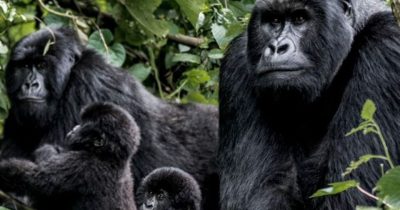
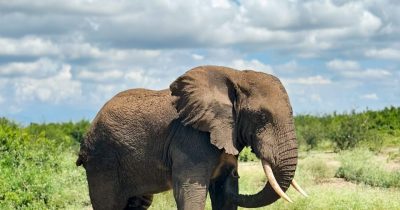
Many faunal and bird species freely roam around at the base of Mount Rwenzori, making the Rwenzori Mountains National Park an exceptional destination. The base of the Rwenzori Mountains features a range of habitats, including savanna and rainforest. These provide refuge to numerous wildlife, including golden cats, red duikers, l’hoest monkeys, bushbucks, blue monkeys, forest elephants, rock hyraxes, genet mongoose, Uganda clawed frogs, Three-horned chameleons, and more.
Bird species –over 217 birds live in the varying habitats of the Rwenzori Mountains National Park. They include strange weaver birds, Mountain buzzards, regal sunbirds, barred long-tailed cuckoos, handsome francolins, Rwenzori turacos, golden-winged sunbirds, blue-headed sunbirds, scarlet-tufted malachite sunbirds, Stuhlmann’s double-collared olive-back, and bamboo warblers.
How to Get to Rwenzori Mountains National Park
Access to the Rwenzori Mountains can be by road or air. By road, you can drive for 7-8 hours through the Masaka-Mbarara-Bushenyi-Kasese route or 6-7 hours along the Kampala-Mityana-Mubende-Fort Portal-Kasese route.