Luxury Lodges in Queen Elizabeth National Park
Queen Elizabeth National Park has some of the best luxury lodges in Uganda. The park is located in western Uganda on the border of Uganda and the Democratic Republic of Congo. This is also the second largest park in Uganda after Murchison Falls National Park. The park was formerly known as the Kazinga National Park, and it was named after the visit of Queen Elizabeth II of England in 1954. It was gazetted in 1952 as a protected area. Queen Elizabeth National Park is the most popular destination in Uganda and the second most visited park in Uganda. It is also among Uganda’s savannah parks. Additionally, this park is home to various Wildlife and landscape features, and the equator crosses it. One of the iconic wildlife species of the park is the rare tree-climbing lions found in the Ishasha Sector.

What are the luxury lodges in Queen Elizabeth National Park?
The park has several luxury lodges where travelers on a Uganda safari can stay. These include;
Mweya safari lodge
Mweya Safari Lodge is located on the Mweya peninsula within the park. It is one of the oldest lodges in the park and belongs to the Marasa Group of Companies, which has lodges in different parks in Uganda. Since it is located in the center of the park, this lodge has the best views of the park, including the Rwenzori Mountains and Lake Edward. Mweya Safari Lodge also has several rooms that suit the luxury standards of travelers.
Katara lodge
This lodge is in Katara village in the Rubizi district, adjacent to the Rift Valley escarpment. It is 16 kilometers from the park’s gate. The lodge has several luxurious rooms and cottages for travelers to use during Uganda safaris in the Queen Elizabeth National Park.
Kyambura Gorge Lodge
Kyambura Gorge Lodge is situated at the edge of the Kyambura Gorge within Queen Elizabeth National Park. It is also part of the Kyambura eco-system project. The lodge is part of a chain of lodges belonging to Volcanoes Safaris in Uganda’s different parks.
Ishasha Wilderness Camp
This camp is located in the park’s southern sector, which is famous for tree-climbing lions and has the best views of the Ntungwe River. The camp is in a remote region of the park, and during a safari, travelers can see tree-climbing lions roaming the area.
Kasenyi Safari Camp
Kasenyi Safari Camp is located in the northern part of the park next to Lake Bunyonyi. During a safari to Queen Elizabeth National Park, you will have great views of the savannah plains of the Kasenyi sector. You will also see some wildlife near the lodge, like lions, elephants, hippos, buffalo, and many others.
During their Uganda safari in Queen Elizabeth National Park, travelers can visit several luxury lodges.

What can you see in Queen Elizabeth National Park (Attractions)?
Wildlife
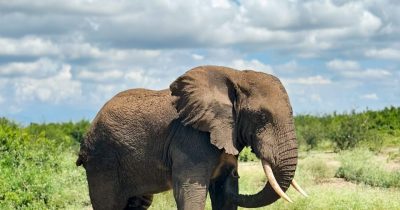
The park is a haven for wildlife enthusiasts, offering unique experiences such as game viewing or game drives in the southern and northern sectors. You can spot various wildlife, including lions, leopards, elephants, hippos, and kobs. The park is also home to a diverse range of primates, with the Kyambura Gorge being a prime spot for chimpanzee sightings.
Kazinga Channel
The Kazinga Channel, a water body that connects Lake George to Lake Edward within the park, is a unique attraction. A boat cruise on the channel offers the opportunity to see various wildlife, including hippos, elephants, crocodiles, and buffalo, in their natural habitat, providing a memorable experience for travelers.
Equator
The park is also home to the equator, a significant geographical feature that adds to the park’s appeal. The New Equator Monument in Queen Elizabeth National Park is a must-see on a Uganda safari. Here, travelers can participate in experiments that demonstrate the unique properties of the equator, such as the water balance and weight loss at different hemispheres of the Earth, providing a fun and educational experience. Crosses cross through the park. This is also another attraction that travelers have on their Uganda safari. The New Equator Monument in Queen Elizabeth National Park is something you need not miss on a Uganda safari. You will participate in experiments like water balance and weight loss at different hemispheres of the Earth. Travelers can visit several other attractions in the park during their Uganda safari to Queen Elizabeth National Park.
Other lodges in Queen Elizabeth National Park
While on the Uganda safari, travelers can also spend nights at several other lodges. These lodges range from midrange to budget facilities. Midrange accommodation facilities have services and amenities that are slightly lower than those of the luxury facilities. These facilities include Elephant Hub, Enjojo Lodge, Bulbul Lodge, Buffalo Lodge, Simba Safari Camp, and many others.
Budget accommodation facilities offer services lower than the midrange, and they are usually good for travelers on a tight budget during their Uganda safari. Budget facilities include Pumba Safari Cottages, Kazinga Green Resort, Ihamba Cottages, and many others.
How do you access Queen Elizabeth National Park?
Queen Elizabeth National Park is easily accessible by both road and air. If you’re traveling by road, you can take the Kampala-Kasese Highway, a journey of about 7 hours from Kampala, or the Kampala-Mbarara Highway, which takes about 7 to 8 hours. Alternatively, you can cross the border from Kigali, Rwanda, via the Kabale – Kihihi, Kabale -Bushenyi route, a journey of about 5 to 6 hours. For those preferring air travel, chartered flights from Entebbe International Airport to the Kasese Airstrip, Mweya Airstrip, or the Kihihi Airstrip are available.
By air, travelers use chartered flights from the Entebbe International Airport to different airstrips near the park. These include: the Kasese Airstrip, Mweya Airstrip, and the Kihihi Airstrip.
What is the best time to visit Queen Elizabeth National Park?
While Queen Elizabeth National Park welcomes visitors year-round, the dry seasons from June to September and December to February are particularly popular. These periods, with their minimal rainfall, are ideal for safari activities. The short and dry vegetation makes game viewing a breeze, and the wildlife is often found near water points, enhancing your chances of memorable sightings.