Bwindi Gorilla Trekking in February
Booking a Bwindi gorilla trekking tour in February is a perfect way to conclude the short dry season. The short dry or peak months/season of the year extend from December to February and come with ideal weather conditions. The favourable weather conditions make it easier for tourists to penetrate the lush forest to locate mountain gorillas in the wild. Explore our latest guide to Bwindi Gorilla Trekking in February, which includes the weather conditions, best locations/sectors to visit gorillas, accommodation, add-ons to gorilla safaris, and getting there.
The Weather Conditions in February
February is a peak dry month with trails kept drier and skies clearer. There are long sunny days than the wet or rainy months. These conditions are more favorable for day treks with mountain gorillas. The daytime temperatures vary from 25 to 26 degrees, and at night, they drop to a range of 15 to 16 degrees Celsius. When you plan to embark on the gorilla trekking session in February, expect some short rainfall, but not as much as it can be during the peak wet or rainy season.
On average, a rainfall record of 169mm can be recorded. The rainy days can extend for about 16 days. Even if it rains, it won’t be as heavy as it can be during the peak rainy or wet months of the year.
Gorilla trekking regions in Bwindi National Park
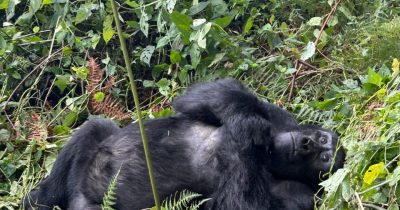
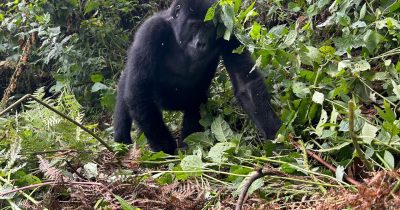
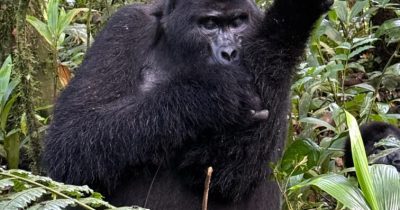
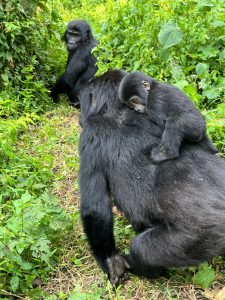
When you think about a gorilla trekking tour to Bwindi in February, the focus should be on exploring the 4 main regions/sectors. These include Nkuringo, Rushaga, Ruhija, and Buhoma. A visit to these regions offers you a chance to explore some of the fully habituated gorilla families. Overall, Bwindi supports a total of 24 habituated groups of mountain gorillas, with a maximum of 8 pax having a chance to visit one.
The day trek with Bwindi gorillas begins after a briefing or orientation about gorilla trekking regulations. The rules and regulations you get oriented about are intended for you to learn more about safety measures or how to enjoy a gorilla trek without impacting the gorillas or their habitats. They are protective measures that play a crucial role in saving both gorillas and humans.
The Updated Gorilla Trekking Regulations
- Visitors must have respect for mountain gorillas and ensure they keep a safe distance of 8-10 meters. Often, gorillas tend to draw themselves close to guests, but regardless, a certain level of distance must be maintained.
- A valid gorilla permit is required for you to engage in the trek with the Bwindi gorillas.
- To not disrupt the normal behavior of gorillas in the wild, consider keeping your voices low.
- Do not be tempted to touch gorillas when you embark on a gorilla trek.
- When photographing gorillas, it is essential not to use a flashlight.
- Try as much as possible to avoid any eye contact with gorillas. Acts such as these can be interpreted as attempts to challenge these apes.
- The limited time visitors are allowed to stay with gorillas is one hour.
- Ensure that your health is regularly monitored and embark on the trek when you are free from any infectious diseases.
- A single gorilla trek involves visiting one habituated gorilla group –this is one of the standard gorilla trekking measures visitors must respect.
- All trekkers in need of tracking gorillas should be above 15 years.
Gorilla Trekking Permits in Bwindi in February
The updated rates of gorilla permits in Uganda currently cost US Dollars 800 per person (foreign non-residents), US Dollars 700 for all foreign residents, and shs. 300.000 per guest. The rest of the Africa residents can book a gorilla permit at USD 500 per person, while Ugandans/East African citizens pay UGX 300,000. Still on gorilla permits, visitors can also secure mountain gorilla habituation permits at US Dollars 1500 per person (foreign non-residents), US Dollars 1000 for the foreign residents & rest of Africa residents. Lastly on the gorilla habituation permits, Ugandans or East African citizens are charged UGX 750,000.
Gorilla permits shouldn’t be left out when planning a gorilla safari. Book your permit in advance with Native Africa Tours. Start the journey to witness the Great Apes in the jungle stress-free.
About Bwindi Impenetrable National Park
Bwindi Impenetrable National Park is strategically lying in extreme Southwestern Uganda. It is also a haven to over 120 species of mammals, 350 bird species, many amphibians, and reptiles. These reside in the same habitat as the endangered mountain gorillas.
The diverse wildlife that make Bwindi a vibrant destination besides gorillas include l’hoest monkeys, elephants, giant forest hogs, black and white colobus monkeys, blue monkeys, duikers, bushbucks, side-striped jackals, African golden cats, African civets, red-tailed monkeys, and more. Bwindi Impenetrable National Park also accounts for over 200 species of butterflies.
Birds to explore in Bwindi include strange weaver, handsome spurfowl, regal sunbirds, Doherty’s bush shrike, Chapin’s flycatchers, African broadbill, Grauer’s warblers, Rwenzori nightjars, white-tailed sunbirds, royal sunbird, Western green tinker birds, bar-tailed trogons, African blue flycatchers, Augur buzzard, and grey cuckoo shrikes.
How to Pack for Bwindi Gorilla Trekking in February
A simple packing list for a gorilla trekking safari in Bwindi comprises waterproof hiking boots, a safari hat, a daypack, thick socks, gardening gloves, long trousers, long-sleeved shirts, a first aid kit, insect repellents, a rain jacket, energy-giving snacks, a camera, toiletries, a bottle of drinking water, and many others.
Plan where to stay during your gorilla trek tour.
A gorilla tour to Bwindi in February shouldn’t go without planning for the lodges/accommodation options. The accommodation alternatives to consider for overnight include budget, midrange, and luxury. The comfortable accommodations include, Buhoma Lodge, Nkuringo Gorilla Lodge, Clouds Mountain Gorilla Lodge, Gorilla Forest Camp, & Sabyinyo Lodge. The Park also features lodges such as Chameleon Hill Lodge, Four Gorillas Lodge, Ichumbi Gorilla Lodge, and others.
How to Reach Bwindi for Gorilla Trekking Tour in February
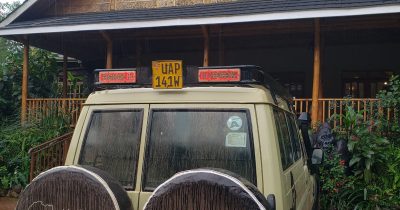
Plan your safari connectivity to and from Bwindi Impenetrable National Park. The available access options to and from Bwindi are: road and air. Departing for Bwindi from Kampala/Entebbe or Kigali is best done in a 4×4 tourist car. Getting to Bwindi by road can take only 8-9 hours and from Kigali, you can only have 4-5 hours. Kigali road trip to Bwindi Impenetrable National Park includes crossing the safe borders of Rwanda –Uganda.
What to add to the Bwindi gorilla trekking safari
Gorilla habituation experience. This is a perfect addition to the traditional gorilla trekking safari experience in Bwindi Impenetrable National Park. During gorilla habituation, visitors focus on exploring the semi-habituated gorilla group with trackers/conservationists. It is an ideal experience for tourists interested in spending more time with gorillas while exploring their distinct behaviors and taking photos.
Forest/nature walks –A guided walk offers deep exploration into the lush Bwindi National Park for you to interact with the diversity of species in most of the hidden habitats. Bwindi is ranked among the world’s top destinations with the best hiking trails. Top hiking trails to conquer during a nature walk in Bwindi include the Kashasha River trail, Buhoma-Nkuringo trail, Bamboo trail, Ivy River trail, and Munyanga. Additional nature walk trails include Habinyanja, Muzubajiro Loop, Mubwindi Swamp Trail, and Waterfall Trail.