Which Country is Best for Gorilla trekking for the Elderly and Disabled?
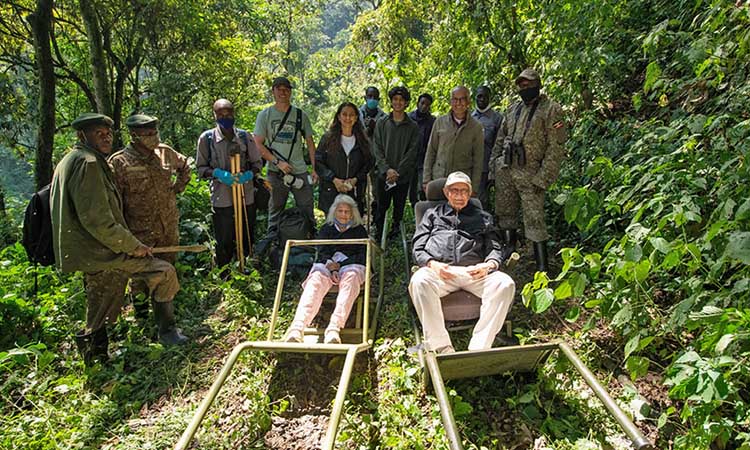
Uganda is arguably the best country for gorilla trekking for the elderly and disabled, specifically in the Buhoma Gorilla Sector of Bwindi Impenetrable National Park. This is because this sector of Buhoma has relatively stable and accessible flat terrain compared to other gorilla trekking destinations. The Buhoma gorilla sector also has improved infrastructure, from the roads to the accommodation facilities. Bwindi Impenetrable National Park also has sedan chair or seat services where porters carry the disabled or elderly visitors to the gorilla trekking destination and back.
Rwanda, Uganda, and the Democratic Republic of Congo are the world’s leading destinations for gorilla trekking safaris. Each country has an arranged gorilla trekking experience for the elderly and disabled. These gorilla destinations have measures that allow even the physically impaired and weak to have a favorable time with the mountain gorillas in their natural environment. This aligns with the idea that disability is not inability, and it is never too late to have an incredible time in the wilderness with the endangered mountain gorillas.

About Gorilla Trekking
Gorilla trekking refers to the tourist activity of venturing into dense forests in search of endangered mountain gorillas and spending an hour in their presence. However, this activity is not as easy as it may sound because it can take about 4-5 hours to move in the forest. Trekking mountain gorillas in the wild is every visitor’s dream, and we at Native Africa Tours make this dream possible.
Gorilla trekking is an outdoor activity that always begins with a pre-trekking briefing. This briefing highlights the rules and regulations of Gorilla trekking and directs the visitors on the expected code of conduct, especially in the presence of mountain gorillas. Since mountain gorillas are an endangered primate species, they are approached with absolute caution. This briefing is followed by grouping the visitors into groups of 8 people and assigning a guide ranger for each group.
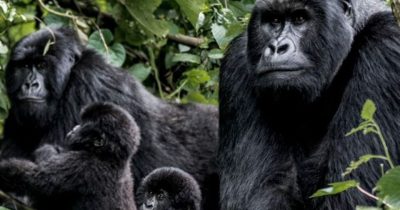
Mountain gorillas are social animals that stay in groups called Gorilla families. Eight people per day visit each Gorilla family, and this is done not to stress the primates with many people, as it may frighten them to flee or become aggressive. It is essential to remember that these mountain gorillas, though they may be habituated and ready to be trekked, are still wild and can express their wild side if triggered. This is also why an hour with the Mountain Gorillas is seen as enough so that they do not feel invaded on their territory.
Gorilla Trekking Destinations
The mountain gorilla trekking destinations are all part of the Virunga Conservation Area, the world’s remaining mountain gorilla habitat. It cuts across the three East African countries of Uganda, Rwanda, and the Democratic Republic of Congo. These countries have the remaining population of mountain gorillas scattered in their gorilla destinations, ready for trekking. These destinations include the following.
Bwindi Impenetrable National Park
Among the gorilla destinations in the Virunga Conservation Area, Bwindi Impenetrable National Park has stood tall as the best gorilla destination. It is situated in Uganda’s southwestern region, stretching for over 321 square kilometers. With over 459 mountain gorillas living in its Bwindi Impenetrable National Park, it holds the highest population of this endangered primate species. It was established in 1991, covering the districts of Kabale, Kanungu, and Kisoro. Gorilla trekking in Bwindi Impenetrable National Park is done in the four gorilla sectors that make up the park. These gorilla sectors include Buhoma, Nkuringo, Ruhija, and Rushaga. Bwindi Impenetrable National Park also hosts over 50 gorilla families. However, only 24 families are habituated and available for trekking.
Virunga National Park
Of all the gorilla destinations in the Virunga Conservation Area, Virunga National Park is the biggest. It covers an area of approximately 7,769 square kilometers in the Albertine Rift region. Virunga National Park was gazetted in 1925, making it one of the oldest national parks not just in the Virunga Massif but also in Africa. The park hosts about 200 mountain gorillas with over eight habituated gorilla families. Visitors can trek with these families, with the help of a ranger guide, through the park’s dense vegetation and rugged terrain.
Mgahinga Gorilla National Park
Mgahinga Gorilla National Park runs along the southwestern border of Uganda, close to Rwanda. The park is part of the Virunga Conservation Area and hosts about 100 mountain gorillas. Mgahinga is the smallest gorilla destination in this conservation area, spanning 33.7 square kilometers. Three years after its establishment, it gained world recognition as a UNESCO site in 1994. Mgahinga Gorilla National Park houses only one gorilla family called Nyakagezi.
Volcanoes National Park
Spread across 160 square kilometers on the northern side of Rwanda, Volcanoes National Park is a fantastic gorilla trekking destination. It harbors over 300 mountain gorillas and about 13 habituated mountain gorilla families ready to be trekked. It was established in 1925 and is also the oldest national park in Rwanda. Together with its counterpart, Virunga National Park, it is one of the oldest gorilla trekking destinations. Volcanoes National Park proudly hosted Dian Fossey, a renowned primatologist and conservationist, who is believed to be the mother of mountain gorillas. Gorilla trekking is possible today in Volcanoes National Park because of her direct efforts in conservation.
When is the best time for Gorilla trekking for the Elderly and Disabled?
Since mountain gorillas live in mountainous regions with uneven terrain, the dry season is the best time for gorilla trekking for the elderly and disabled. The dry season is characterized by dry weather and humid temperatures that make the trekking trails dry and navigable. Also, the vegetation remains sparse, aiding visibility. The dry trekking trails enable the elderly and disabled visitors to navigate easily. The dry season runs from June to August and from December to February.