
Nyandungu Eco-Tourism Park
Everything you must know about the Nyandungu Eco-Tourism Park. In the heart of East Africa, Kigali has long garnered international acclaim for its cleanliness, orderliness, and progressive urban planning. The Rwandan capital, often referred to as the “Singapore of Africa,” is a city of hills that has undergone a remarkable transformation over the last three decades. However, amidst the concrete, glass, and tarmac of this bustling metropolis, a profound new narrative is unfolding – one that seeks to reconcile rapid urbanization with the urgent need for environmental restoration. This narrative finds its physical expression in the Nyandungu Eco-Tourism Park, a stunning 121-hectare landscape that has risen from the ashes of environmental degradation to become the city’s premier green sanctuary.
Opened to the public in 2022, the Nyandungu Eco-Tourism Park is not merely a recreational space; it is a bold statement of intent. It represents Rwanda’s commitment to the “Green City” agenda, showcasing how wetland restoration can combat urban flooding, bolster biodiversity, and provide a serene refuge for residents and visitors alike. For travelers arriving at Kigali International Airport, it is increasingly becoming the first stop—a “welcome mat” that introduces them to the country’s overwhelming natural beauty before they even reach the city center.
The Rebirth of a Wasteland
To truly appreciate the magnificence of Nyandungu, one must understand what it was. Located in the Gasabo District, straddling the busy highway that connects the airport to the city center, Nyandungu was once a bleak picture of environmental neglect. For years, this area served as an illegal mining site where sand and gravel were extracted relentlessly, leaving behind gaping scars in the earth. It was also a dumping ground for industrial and domestic waste, and a site for unauthorized brick-making activities. The wetland, which naturally acted as a sponge for rainwater, was choked with invasive species, most notably the water hyacinth. During heavy rains, the degraded wetland could no longer perform its function, leading to severe flooding in downstream neighborhoods, including the busy Nyabugogo business hub.
The transformation began in 2016, spearheaded by the Rwanda Environment Management Authority (REMA). Funded by the Green Climate Fund and the Government of Rwanda, the project aimed to turn an ecological liability into a public asset. The vision was holistic: restore the hydrological system, rehabilitate the soil, and reintroduce native flora while creating infrastructure for eco-tourism. After years of careful earthmoving, planting, and construction, the site was officially inaugurated in July 2022 by Prime Minister Édouard Ngirente. It was a victory for nature, proving that with political will and scientific intervention, damaged ecosystems can be brought back to life.
A Landscape Designed for Harmony
Today, Nyandungu Eco-Tourism Park is a tapestry of different ecosystems woven together. The park is divided into two main zones: the wetland zone and the recreational zone. The design philosophy prioritizes the “flow” of water and people. Where there were once stagnant pools choked by weeds, there are now meandering water channels filtered by purification gardens.
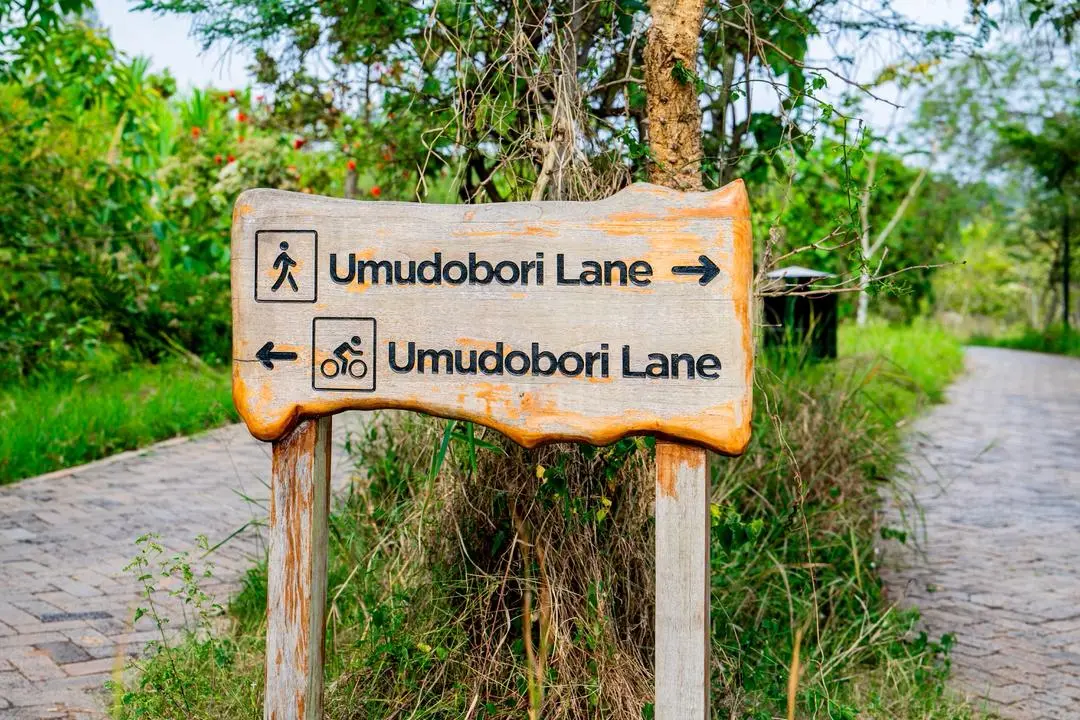
The landscape architecture here is noteworthy. The park features a network of paved walkways and cycling trails that stretch over 10 kilometers, allowing visitors to traverse the park without disturbing the delicate vegetation. Small wooden bridges arch over crystal-clear streams, offering perfect vantage points for photography or quiet contemplation. The topography varies, offering gentle hills that provide panoramic views of the surrounding city skyline, reminding visitors that this is an urban oasis, not a wilderness removed from civilization.
One of the central features is the imposing “Central Valley,” a large open space surrounded by lush hills, designed to serve as a venue for events and gatherings. Scattered throughout the park are modern, eco-friendly structures including an information center, a cafeteria, and sanitary facilities, all built using sustainable materials and designed to blend seamlessly with the environment. Solar lighting is used extensively, ensuring the park remains safe at night without a heavy carbon footprint.
The Medicinal Garden and Biodiversity
For those interested in botany and traditional medicine, the Nyandungu Medicinal Garden is a highlight. Rwanda has a rich heritage of herbal medicine, and this garden serves as a conservatory for that knowledge. It features a collection of indigenous plants known for their healing properties, clearly labeled with their scientific and local names. It serves an educational purpose, bridging the gap between traditional wisdom and modern conservation science.
The return of biodiversity is perhaps the park’s greatest success story. As the vegetation recovered, so did the wildlife. Birdwatchers now flock to Nyandungu to spot some of the 120+ bird species that have returned to the area. The park is rapidly becoming a hotspot for ornithology. Here, one can see the Grey-headed Bushshrike, the White-collared Oliveback, and various sunbirds flitting between the calliandra and albizia trees. Small mammals, including reptiles and amphibians, have also reclaimed the wetland, creating a functioning ecosystem that serves as a living laboratory for students and researchers.
Recreation and Wellness in the City
Beyond its ecological credentials, Nyandungu is a place of joy and leisure. It has quickly become a favorite spot for Kigali’s residents. On weekends, the park comes alive with energy. Families spread out picnic blankets on the manicured lawns; children run through the playgrounds; and fitness enthusiasts utilize the jogging and cycling tracks for their morning workouts.
There is a sense of peace that permeates the park. Despite its proximity to the main airport road, the thick vegetation buffers the noise pollution, creating a surprisingly tranquil atmosphere. The “Green Corner” restaurant and lounge area offers a place to relax with a coffee or a meal, overlooking the serene waters of the wetland. It is a space that promotes mental well-being, offering a respite from the stress of urban living.
For international tourists, Nyandungu offers a unique “soft adventure” experience. It is accessible year-round, easy to navigate, and provides a taste of Rwanda’s natural beauty without the need for a long journey into the countryside. It is an excellent location for a morning walk, a bike ride, or a sunset picnic.
A Model for Urban Resilience
The significance of Nyandungu extends far beyond its boundaries. It is a flagship project for the “Green City Kigali” initiative. It aims to make the capital a regional hub for green urbanization. In a continent facing the dual challenges of rapid population growth and climate change, Nyandungu serves as a proof-of-concept.
The park functions as a massive sponge. By restoring the wetland’s natural hydrology, the park effectively traps and retains floodwater during the rainy season, releasing it slowly into the drainage system. This has significantly reduced the risk of flooding in the downstream areas of Kigali, protecting businesses and homes. Furthermore, the vegetation acts as a carbon sink and a natural air filter, improving the air quality for the city.
The park also has an economic dimension. It creates jobs for local communities, from rangers and maintenance staff to those working in the hospitality outlets within the park. It boosts tourism, adding another compelling reason to visit Kigali.
Visiting Nyandungu Eco Park
Located just a 10-minute drive from Kigali International Airport, the park is incredibly accessible. It is open daily from 7:00 AM to 6:00 PM. A nominal entrance fee is charged, which contributes to the maintenance of the park. Visitors are encouraged to bring comfortable walking shoes, a hat, and perhaps a picnic basket. While it is possible to explore the park unguided, hiring a guide at the entrance can enrich the experience. They can point out specific bird species and explain the details of the restoration project.
Conclusion
Nyandungu Eco-Tourism Park is more than just a pretty face; it is the heartbeat of a new, greener Kigali. It stands as a testament to what is possible when a country decides to invest in its natural heritage. It is a story of redemption, where a wasteland became a wonderland.
For the traveler, it offers a moment of pause, a breath of fresh air, and a connection to nature amidst the journey. For the city, it offers a shield against floods and a sanctuary for biodiversity. As the sun sets over the hills of Nyandungu, painting the sky in hues of orange and purple, one realizes that this park is not just a recreation of the past, but a cultivation of the future. It is a living symbol of Rwanda’s resilience, innovation, and enduring love for the land.