Why Uganda Offers Better Gorilla Trekking Value than Rwanda
Reasons why Uganda offers better gorilla trekking value than Rwanda. Planning your first gorilla trekking safari? We get it- The endangered mountain gorillas are one of the most sought-after wildlife species during African safaris. With three countries offering four National Parks where you can get up close and personal with these Giant Apes, narrowing down to which place to go can feel immensely daunting.
And so, the age-old question usually arises: “What is the best gorilla trekking safari destination?” While this is a broad question, for us, the answer is usually clear: Uganda and Rwanda.
Of course, it is not always as simple as just picking a country and calling it a day. This answer is a little more layered than that. Now, don’t get us wrong, everyone (including us) loves these two countries. While we know we shouldn’t play favorites (like any fair and good parent), if we are making a case for which country is best, then Uganda makes a pretty compelling argument.
Now let’s delve into it. Here is why we believe Uganda offers better gorilla trekking value than Rwanda.
First, let’s talk numbers (population of mountain gorillas)
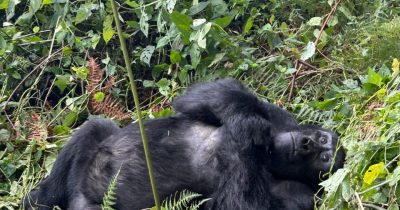
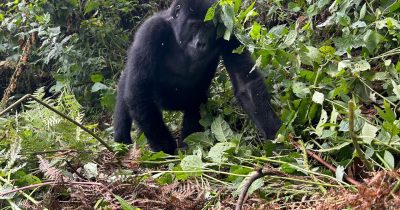
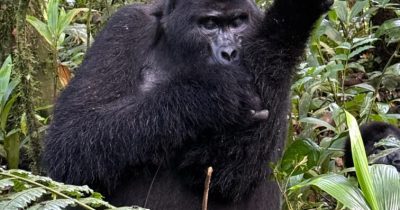
Bwindi Impenetrable Forest and Mgahinga Gorilla National Park are near-perfect examples of why Uganda offers better gorilla trekking value than Rwanda.
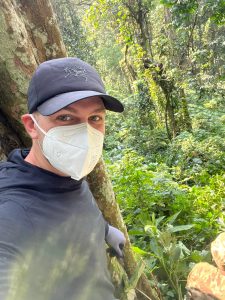
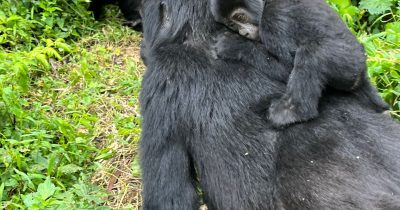
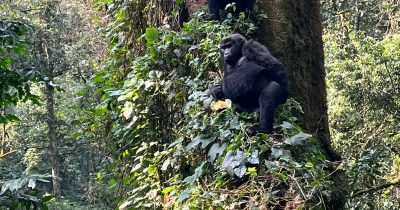
These are the two places where these Giant Apes live and can be tracked, and together provide shelter to almost half the World’s population of these incredible creatures. While Rwanda also has mountain gorillas, there are only about 35% of them, and there’s only one place to get up close and personal with mountain gorillas.
Uganda, on the other hand, has two locations where you can visit them. Therefore, visitors have a choice of where they would like to do gorilla trekking. In total, over 200 gorilla permits are issued each day by Uganda Wildlife Authority for gorilla trekking in Uganda (because over 25 gorilla families are open for trekking in both locations), while in Rwanda, only 96 gorilla permits are issued each day by Rwanda Development Board for tracking the 12 habituated gorilla families in Volcanoes National Park.
The option for Gorilla Habituation Experience
Uganda is the only place where visitors have an opportunity to undertake the Gorilla Habituation Experience. This is where semi-habituated (partially habituated) mountain gorillas are visited to experience their wilder side, and involves spending more time with them (4 hours instead of the one hour during standard gorilla trekking adventures).
The Gorilla Habituation Experience provides a more intimate encounter with Giant Apes. With only four visitors allowed to spend time with these Giant Apes each day. Hence, it provides a more exclusive encounter.
Unlike standard gorilla treks that you can undertake in all places sheltering these Giant Apes, the Gorilla Habituation Experience is only available in the southern sector (particularly the Rushaga sector), where only one gorilla family has been reserved for it.
Gorilla trekking permit costs
It is worth mentioning that gorilla trekking is a highly regulated adventure. It calls for participants to first obtain valid gorilla permits, documents that are only issued by Wildlife regulating Authorities in respective countries.
Another reason why Uganda offers better gorilla trekking value than Rwanda is that gorilla permit costs are considerably lower.
For the amount you pay for a gorilla trekking permit in Rwanda (at $1500 per person), you can actually get two gorilla trekking permits for Uganda. This is because permits cost $800 per person for foreign non-residents, $700 per person for foreign residents, and Shs. 300,000 per person for East African Community Citizens. This actually gives you an incredible saving for other logistics (transport and accommodation, among others).
Scenery and natural environment
It is no brainer that Uganda, especially Bwindi Impenetrable Forest, provides an exceptionally beautiful natural environment. Even from its name, “Impenetrable”, you should picture tall trees and thick undergrowth, with a more “shut-in” setting and canopies, hence evoking a feeling of “Tropical Garden of Eden”.
Rwanda, on the other hand, boasts a more open area involving trailheads passing through Agricultural land, especially along the edges of the Park. This is followed by bamboo-covered foothills, volcanic slopes until encountering thicker foliage. Volcanoes National Park’s landscape is also covered with African rosewood in shades of emerald, hence providing a different gorilla trekking experience from Bwindi, which requires maneuvering through an impenetrable Forest.
Additional activities beyond gorilla trekking
Another reason why Uganda offers better gorilla trekking value than Rwanda is that there are a lot more experiences you can enjoy in Uganda.
For instance, if you plan a 21-day Uganda safari, you will have so much to do that this time won’t even be enough to cover even half of what the country offers. For Rwanda, even 14 days are enough to cover the top safari destinations in the country.
While in Uganda, you can add classic wildlife safaris to your itinerary. These tours can lead you to one (or more) of the four savannah parks. The lesser-visited Kidepo Valley National Park. Murchison Falls National Park, Lake Mburo National Park, Queen Elizabeth National Park, or even the Semliki National Park with both savannah and forest ecosystems.
You can also add adrenaline tours such as kayaking, whitewater rafting, Bungee jumping, ziplining, horseback rides, canoeing, Quad bike rides, Paddleboarding, and mountaineering, among others. Talking of mountaineering, you can choose between the snow-capped Rwenzori Mountains (Africa’s third-highest peak), Mount Elgon, Mount Moroto, and the Virunga Volcanoes (especially Mount Gahinga, Muhabura, and Sabyinyo).
Uganda also has more than five places you can visit for chimpanzee tracking tours. These include Kibale Forest National Park, Kyambura Gorge, Budongo Forest, Kalinzu Forest, and Toro-Semliki Reserve, among others.
When it comes to boat safaris, you will definitely be spoilt for choice as there are many places to enjoy this adventure. These include the Kazinga Channel in Queen Elizabeth National Park, Victoria Nile boat ride to the bottom of Murchison Falls, Lake Victoria boat cruises, as well as Lakes Bunyonyi and Mutanda, among others.
Rwanda offers
Rwanda, on the other hand, mainly provides chimpanzee tracking in Nyungwe Forest. While the activity that launched in the newly-created Gishwati-Mukura National Park, the adventure isn’t well developed, and there’s a lower chance of encountering these Great Apes.
Still in Rwanda, Big Game safaris are only offered in the 112200-hectare Akagera National Park. This limits clients’ choices, although there are great chances of encountering the Big Five Game- elephants, Rhinos, Buffaloes, Lions, and Leopards, Masai giraffes, warthogs, impalas, bushbucks, spotted hyenas, Topis, duikers, Olive baboons, and others.
When it comes to Mountain climbing, you can choose to take on Mount Bisoke or Mount Karisimbi, which are both part of the Virunga massif. Boat cruises in Rwanda are mainly available at Lake Kivu and Lake Ihema in Akagera National Park.