
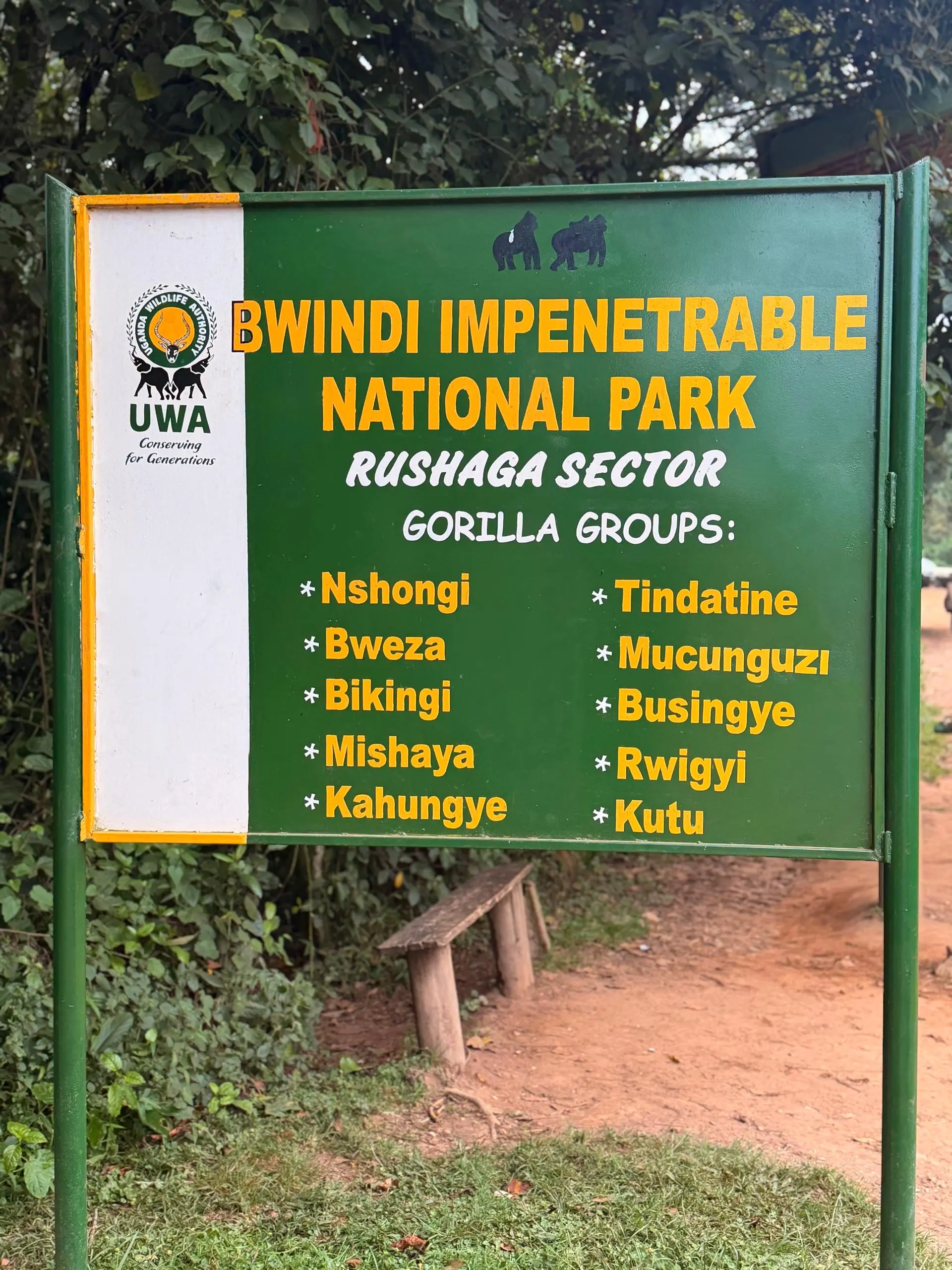
The Wild Animals of Bwindi Impenetrable National Park
Deep within the southwest of Uganda, where the mist clings to the rugged contours of the Albertine Rift, lies a verdant mystery that has stood sentinel for millennia. Bwindi Impenetrable National Park is a name that commands respect. The word “impenetrable” is not merely a romantic adjective; it is a physical reality. This is a forest of dense thickets, tangled vines, and towering trees that create a fortress of greenery. While the world knows Bwindi primarily as the sanctuary of the majestic mountain gorilla, referring to it solely as a gorilla park does a disservice to the complex, teeming ecosystem that thrives within its boundaries. To walk into Bwindi is to enter one of the most biologically diverse places on the African continent, a sanctuary for a spectacular array of wild animals that have evolved in isolation.
Why is Bwindi National Park Famous?
Bwindi is a UNESCO World Heritage Site, recognised globally for its biodiversity. It covers an area of about 331 square kilometres of montane and lowland forest. Because the forest has existed for over 25,000 years, surviving the ice age, it has become an incredible reservoir of endemic species. Wild Animals in Bwindi have evolved distinct traits found nowhere else on Earth. While the gorillas may be the celebrities that draw the crowds, the supporting cast of mammals, birds, and reptiles creates a rich ecological tapestry that defines the true spirit of the Impenetrable Forest.
The Giants of the Mist, of course, no discussion of Bwindi’s wildlife is complete without acknowledging its most famous inhabitants: the Mountain Gorillas. Bwindi is home to roughly half of the world’s remaining population of these gentle giants. Unlike their lowland gorilla cousins, the mountain gorillas have thicker, longer fur to help them withstand the colder temperatures found at higher altitudes.
Gorilla Trekking in Bwindi is a profound, humbling experience. There is a tranquillity to them that belies their immense strength. The dominant silverback, weighing up to 400 pounds, moves with a surprising grace that shakes the ground beneath him. He is the protector, the decision-maker, and the centre of the family’s social universe. Around him, females nurse infants, and juveniles engage in riotous play, tumbling down slopes and swinging from vines. Their vocalisations pierce the silence of the forest, creating a soundtrack that feels ancient.
In Bwindi, the gorillas are fully habituated to human presence, yet they remain wild. They ignore the clicking cameras and the hushed whispers of tourists, continuing their foraging and grooming, offering a rare window into a society that mirrors our own in so many ways.
Other Primate species in Bwindi
The Primate Chorus Beyond the gorillas, Bwindi is a primate paradise. The forest echoes with the calls of eleven other primate species. Among the most vocal are the Chimpanzees. While they are less frequently sighted than in other Ugandan parks like Kibale, their presence is announced by the deafening pant-hoots that resonate through the canopy in the early morning or late evening. Bwindi’s chimpanzees are nomadic and elusive, often keeping to the deepest, most inaccessible parts of the forest, adding to the park’s wild mystique.
Then there are the monkeys. The Black-and-white Colobus monkey is perhaps the most striking, with its flowing white tail contrasting sharply against its black body. These monkeys are specialised leaf-eaters, and watching them leap effortlessly across the canopy gaps is a sight to behold. They move with acrobatic flair, their white hair tufts flaring like banners in the wind.
The L’Hoest’s monkey, also known as the mountain monkey, is another speciality of the area. With a dark brown coat and a characteristic white beard, they are often seen foraging on the forest floor. They are shy and terrestrial, unlike their canopy-dwelling cousins. The Blue Monkey and the Red-tailed Monkey are also abundant, often found in mixed troops, chattering and squabbling over fruit. The Olive Baboon, a more adaptable and aggressive primate, can sometimes be seen along the forest edges or on the roads leading into the park. This diversity of primates creates a dynamic environment where competition for food is high, and the forest is never truly silent.
Forest Elephants in Bwindi
The Elusive Giants and Forest Dwellers Beneath the canopy, away from the raucous monkeys, live the large, mostly silent mammals of the forest floor. Bwindi is home to the African Forest Elephant, a smaller, hairier, and more elusive subspecies of the savanna elephant. These creatures are the architects of the forest. They push over trees and clear pathways that allow light to reach the forest floor, facilitating new growth. Spotting a forest elephant in Bwindi is a rare privilege; they are shy masters of camouflage, often remaining hidden in the dense vegetation. You are more likely to smell them or hear the cracking of branches than to see them. Their droppings, rich in seeds, serve as a vital mechanism for forest regeneration, making them essential to the park’s health.
Antelopes in Bwindi National Park
Sharing the undergrowth are various species of antelopes, perfectly adapted to life in the thicket. The Yellow-backed Duiker, a robust antelope with a distinctive patch of yellow on its rump, is a resident of the dense forest. They are solitary creatures, darting away into the underbrush at the slightest disturbance. Smaller still is the Bushbuck, often seen near the park lodges or clearings, their large, expressive eyes watching with cautious curiosity.
The forest also supports a population of Bushpigs, identifiable by their distinctive white manes running down their backs. They forage in the roots and soil, often accompanied by the excited calls of birds alerting others to their presence. While not as glamorous as the elephants or gorillas, these smaller mammals form the backbone of the forest’s grazing hierarchy, maintaining the balance of vegetation.
Birds in Bwindi Impenetrable National Park
The Avian Wonderland. For the ornithologist, Bwindi is nothing short of a heaven. It is regarded as the most important forest in Uganda for bird conservation, boasting over 350 species. The park is a bird-watcher’s dream, particularly because it contains 23 of the 24 Albertine Rift endemics found nowhere else in the world.
The most coveted sighting for many birders is the African Green Broadbill. It is a small, green bird that is incredibly difficult to spot against the foliage. Another gem is the Shelley’s Crimsonwing, a vibrant crimson bird that is rarely seen and remains somewhat of a mystery to researchers. The sound of the forest is often dominated by the turacos. The Great Blue Turaco, with its chaotic call and brilliant blue and yellow plumage, is a noisy, undeniable presence. The Rwenzori Turaco is equally striking, a bird of deep green and red that moves through the trees like a fleeting shadow.
Hornbills glide effortlessly over the canopy, their heavy casques making a distinctive whooshing sound as they fly. The Cinnamon-chested Bee-eater adds a splash of colour to the mid-story, while the Bar-tailed Trogon, with its crimson belly and intricate markings, sits motionless on high branches. Birds here are not just background noise; they are integral characters in the forest, pollinating flowers, dispersing seeds, and controlling insect populations.
The Hidden World (Reptiles, Amphibians, and Insects)
To truly appreciate the biodiversity of Bwindi, one must look closely at the smaller, often overlooked inhabitants. The park is a hotspot for butterflies, with over 200 species recorded. On a sunny morning, the forest trails are awash with colour as Bicyclus, Acraea, and Charaxes butterflies flutter in the shafts of sunlight that pierce the canopy. The massive African Giant Swallowtail, with its wingspan of up to 20 centimetres, is a magnificent sight, gliding with regal slowness.
The damp, dark recesses of the forest floor and the trees are home to a myriad of frogs and reptiles. The dense humidity creates a perfect amphibian habitat. The distinctive call of the river frogs echoes near the streams, while chameleons, masters of camouflage, grip twigs with their zygodactylous feet, their eyes rotating independently to scan for insects. The Three-horned Chameleon, found in the high-altitude areas, is a fascinating prehistoric-looking creature.
The insect life in Bwindi is staggering and forms the foundation of the food web. From the industrious driver ants that march in military lines across the trails to the metallic beetles that scuttle under the leaves, the forest is alive on a microscopic level. It is this abundance of insect life that supports the incredible diversity of birds and small mammals.
The Circle of Life in Bwindi
Life and death are interwoven in a perpetual cycle. Predators are present, though they are rarely seen. Leopards, the apex predators of the forest, roam the darkness, their presence sometimes betrayed by a scrape on a tree trunk or the alarm calls of monkeys. They keep the antelope and monkey populations in check, ensuring the genetic health of the herds.
Conclusion
Today, the wild animals of Bwindi face new threats, primarily from habitat pressure and climate change. The isolation of the Bwindi park means that wild animals cannot easily migrate to other areas if resources become scarce. This makes the protection of the existing habitat vital. The park rangers act as the guardians of this wilderness, patrolling the boundaries to prevent snares and illegal logging.
Every creature, from the smallest beetle to the massive forest elephant, plays a role in this complex web of life. They are the custodians of an ancient ecosystem that has survived the ravages of time. Protecting them is not just about saving individual species; it is about preserving a library of biological diversity. This holds secrets we have yet to even begin to understand. In the heart of Africa, the Impenetrable Forest stands as a fortress of life, a wild, breathing, and utterly irreplaceable monument to the natural world.