
A Guide to Bird Watching Safaris in Rwanda
When the world speaks of Rwanda, the conversation is almost inextricably tethered to the majestic mountain gorilla. The “Land of a Thousand Hills” is famous for its mist-shrouded volcanoes and the gentle giants that inhabit them. However, for the ornithologically inclined traveler, Rwanda offers a parallel universe that is equally captivating yet distinctly different. Beneath the canopy of its ancient forests and within the wetlands of its savannahs lies one of Africa’s most compact yet biodiverse birding destinations. With over 703 species recorded and a staggering 29 Albertine Rift endemics, bird-watching safaris in Rwanda are a journey into a kaleidoscope of feathers, song, and colour that remains one of the continent’s best-kept secrets.
The Albertine Rift Endemics of Nyungwe National Park
The centerpiece of any serious birding itinerary is Nyungwe National Park. This is one of the oldest rainforests in Africa, a vast expanse of bamboo, grassland, and swamps that protects the largest block of montane forest in East and Central Africa. For birders, Nyungwe is not just a park; it is a pilgrimage site. It is the heart of the Albertine Rift, a western arm of the Great Rift Valley rich in endemic species found nowhere else on Earth.
The thrill of birding in Nyungwe lies in the challenge and the reward. The forest is dense, the terrain steep, but the payoff is the opportunity to sight the “Big 5” birds of the Albertine Rift. The prize catch is often the Rwenzori Turaco (Rwenzori Touraco). A vision of violet and crimson, this bird moves with an elegant, bounding flight through the canopy, its call echoing through the mist like a primitive horn. Then there is the Red-collared Mountain Babbler, a gregarious and charismatic bird that performs acrobatic feats in the undergrowth.
Nyungwe is also home to the handsome Regal Sunbird and the vibrant Blue-headed Sunbird, whose iridescent throats catch the scattered sunlight piercing the forest canopy. The park offers a unique vantage point for birders: the Canopy Walkway. Suspended 60 meters above the forest floor, this suspension bridge allows you to observe tree-top species at eye level. From this height, you can spot the Bar-tailed Trogon and the Purple-breasted Sunbird, as well as watching the clouds roll over the 16 peaks visible from the walk. It is a surreal experience, walking among the giants of the forest while small flashes of color dart through the leaves around you.
The Wetland Wonder of Akagera National Park
While Nyungwe offers the forest specialties, Akagera National Park provides a classic savannah birding experience, enriched by a labyrinth of lakes, papyrus swamps, and rolling highlands. Located in the east of the country along the border with Tanzania, Akagera is a landscape of startling contrasts, and its birdlife is equally diverse.
The star attraction here, the one that sends shivers down the spines of twitchers, is the prehistoric-looking Shoebill Stork. Akagera is one of the most reliable places in East Africa to find this elusive bird. Standing up to five feet tall with a shoe-shaped bill that looks like it belongs in a dinosaur exhibit, the Shoebill is a master of stillness. Finding one often requires a quiet boat trip along the shores of Lake Ihema, gliding through floating papyrus islands as the mist burns off the water. The sight of a Shoebill statue-still in the reeds, waiting to lunge at a lungfish, is a moment of pure birding ecstasy.
But the Shoebill is just the tip of the iceberg. Akagera’s wetlands teem with life. The Papyrus Gonolek, a striking bird with a black crown, yellow back, and crimson breast, sings a duet with its mate that sounds like a metallic bell tolling in the swamp. The majestic Saddle-billed Stork and the vivid African Jacana (the “Jesus bird” that walks on lily pads) are common sightings. The park also hosts a healthy population of raptors, including the Bateleur Eagle and the Martial Eagle, soaring over the savannah in search of prey. Birding in Akagera is often combined with game drives, allowing you to tick off elephants and lions between checking off your bird list.
The Volcanic Heights of Volcanoes National Park
While famous for gorillas, Volcanoes National Park in the northwest offers high-altitude birding that is distinct from the lowland forests of Nyungwe. The habitat here comprises bamboo forest and afro-alpine moorland on the slopes of the Virunga Mountains.
The birding here is rugged and rewarding, often involving hiking into the higher elevations. The primary target for many visitors is the Scarlet-tufted Malachite Sunbird, a dazzling creature of bright green and scarlet that flits around the giant lobelias high on the slopes. Another specialty is the Rwenzori Double-collared Sunbird, a distinct subspecies found only in these mountains. The Dusky Crimson-wing and the Rwenzori Batis are also highlights. The air here is thin and cool, and the birding requires patience, but the backdrop of the volcanoes creates a dramatic stage that is unmatched anywhere else.
Accessibility of Bird watching Areas in Rwanda
One of the greatest advantages of bird watching safaris in Rwanda is the accessibility. In a country where you can drive from west to east in a matter of hours, you can wake up to the songs of the turaco in the rainforest and fall asleep to the calls of the hippo in the savannah. The infrastructure is superb, with good roads connecting the major parks, and a high standard of eco-lodges that cater specifically to nature lovers.
Furthermore, Rwanda has positioned itself as a global leader in conservation. The birding safaris in Rwanda are deeply intertwined with this ethos. The restoration of Akagera, once decimated by poaching, now stands as a testament to successful park management, resulting in the return of rare species. Similarly, the expansion of the Gishwati-Mukura National Park is creating new corridors for forest birds. When you bird in Rwanda, you are supporting a tourism model that prioritizes the protection of habitat.
Birding Tips in Rwanda
To make the most of a Rwanda bird watching safaris, timing is key. The breeding season runs from May to September, which is also the dry season. During this time, birds are in full breeding plumage and are more vocal, making them easier to locate. The migratory species from Europe and North Africa arrive from November to April, adding another layer of diversity to the checklist.
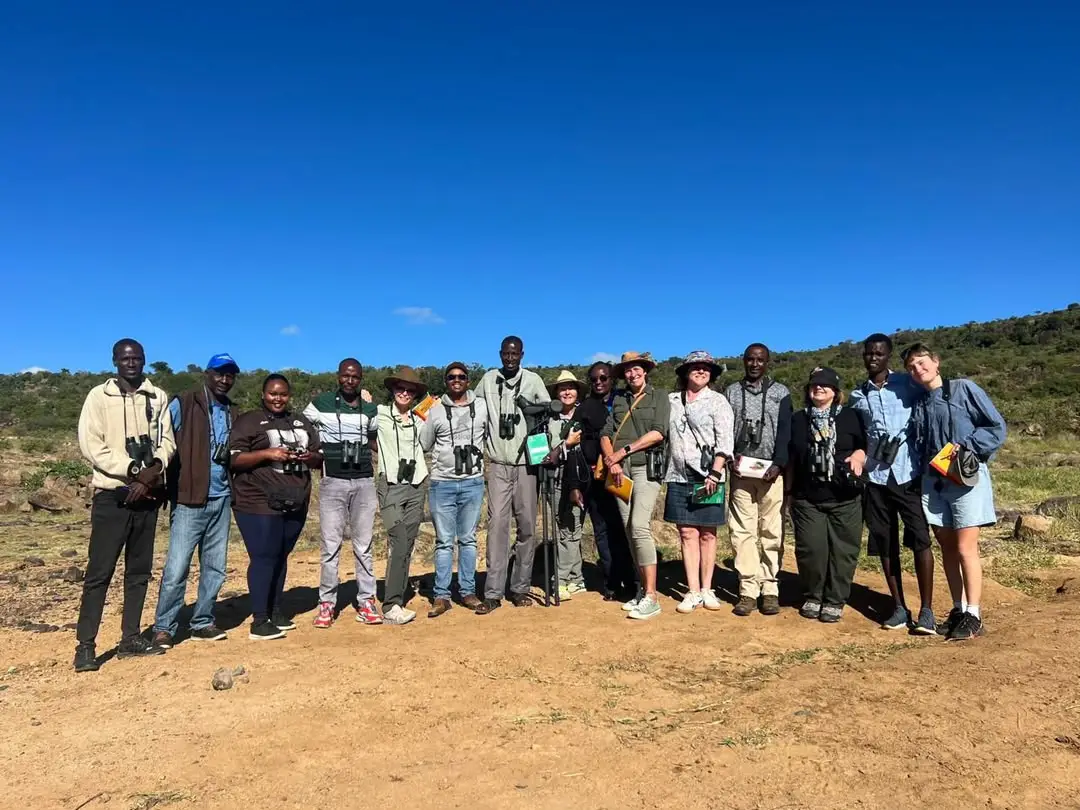
A good pair of binoculars is non-negotiable, as is a field guide specific to East Africa. However, the most important asset you can have is a local guide. Rwanda’s birding guides are among the best trained on the continent. Their ability to mimic calls, spot a moving leaf 100 meters away, and identify a bird by its faintest chip note is nothing short of wizardry. They don’t just show you birds; they weave stories about their behavior, ecology, and local names.
Beyond the Checklist
Ultimately, bird watching safaris in Rwanda offer something deeper than simply ticking names off a list. It is an immersion into the rhythm of the wild. It is the silence of the swamp broken only by the splash of a fishing eagle, the chaotic chatter of a mixed-species flock moving through the canopy, and the golden light of the savannah illuminating the wings of a bee-eater.