
Booking a Mountain Gorilla Safari
Few wildlife encounters on our planet rival the intensity of staring into the deep, brown eyes of a mountain gorilla. Separated from humans by a mere strand of DNA, these gentle giants inhabit the mist-shrouded volcanic slopes of Central and East Africa. For many, booking a Mountain Gorilla safari is a lifelong dream – a bucket-list item that sits at the very pinnacle of travel aspirations.
However, transforming this dream into reality requires more than just a passport and a sense of adventure. It requires meticulous planning, strategic timing, and a solid understanding of the logistics involved. Unlike a standard safari, where you can roll up to a gate and buy a ticket, a gorilla Safari revolves around one of the scarcest commodities in the travel world: the gorilla permit. Booking a trip to see mountain gorillas is a complex process, but navigating it is the first step toward what is often described as a life-changing experience.
Understanding the Landscape – Where to Go?
The first decision a traveller must make is geographical. Mountain gorillas do not live in zoos; they cannot be found in the wild outside of the transboundary conservation area that spans Uganda, Rwanda, and the Democratic Republic of Congo (DRC).
Rwanda is often the choice for the luxury traveller or those with limited time. The Volcanoes National Park is just a two-hour drive from Kigali International Airport. The infrastructure here is excellent, the lodges are high-end, and the trekking terrain, while steep, is generally well-maintained. However, this exclusivity comes at a price. Rwanda famously raised its permit fees to $1,500 per person, making it the most expensive destination.
Uganda offers a more rugged and varied adventure. Mountain Gorillas are found in Bwindi Impenetrable National Park and Mgahinga Gorilla National Park. Bwindi is a vast, primordial rainforest that is home to roughly half of the world’s mountain gorilla population. The permits here are significantly more affordable, currently priced at $800 for foreign non-residents in high season (June to October and December to March) and $600 during low season (April – May and November). The trade-off is travel time; Bwindi is a long drive from Entebbe or a flight to a nearby airstrip. This journey can be cut short by coming through Kigali, Rwanda, which is 3 to 4 hours.
A Gorilla Safari in the Democratic Republic of Congo offers the most budget-friendly option at $400 per permit in Virunga National Park. While the park is stunning and the gorillas magnificent, political instability and security concerns in the eastern DRC mean that booking here requires careful risk assessment and reliance on specialised tour operators who monitor safety conditions daily.
Securing Your Permit
The single most critical aspect of booking a gorilla safari is securing the permit. You cannot trek without one, and they are strictly controlled to protect the gorillas from stress and disease. In Uganda and Rwanda, permits are issued by the government wildlife authorities (UWA and RDB, respectively) through reputable tour operators like Native Africa Tours.
The demand for these permits far outstrips the supply, especially during the peak seasons of June to September and December to February. For Rwanda, it is advisable to book permits 4 to 6 months in advance, and even up to a year for peak dates. For Uganda, the competition is slightly less fierce but still intense; booking 3 to 5 months ahead is recommended.
You can attempt to book directly through the wildlife authorities, but this process is often fraught with bureaucratic hurdles, slow response times, and outdated payment systems. The most efficient route is almost always through a reputable local tour operator. They have the systems in place to secure permits instantly and can offer crucial advice on which sector or gorilla family to request based on your fitness level.
Choosing Your Travel Style
Once the permit is secured, the rest of the booking process falls into place around that pivotal date. You must decide how you want to experience the region.
The Fly-In Safari: For those short on time or preferring comfort, flying is the best option. In Rwanda, you drive from Kigali. In Uganda, you can fly from Entebbe to Kihihi or Kisoro airstrips. This avoids the long, bumpy 8-10 hour drives across the country and maximises your time at the lodge.
The Road Trip: Driving through the Ugandan countryside is an experience in itself. You pass through the Equator, see the rolling terraced hills of the southwest, and get a ground-level view of rural African life. It is cost-effective but physically taxing.
The Lodges: Accommodation in the gorilla highlands ranges from basic campsites to ultra-luxury eco-lodges. Because these properties are located in specific areas adjacent to the parks, availability is often linked to permit availability. It is crucial to book your lodge simultaneously with your permit. Finding out you have a trekking date but nowhere to stay within a two-hour radius is a common mistake for first-time planners.
Physical Preparation and Packing
Booking the Gorilla Safari is the intellectual challenge; the trek itself is the physical one. Do not underestimate the “Impenetrable” nature of Bwindi or the altitudes of the Virungas. You may be hiking at elevations of 2,500 to 3,000 meters (8,000 to 10,000 feet).
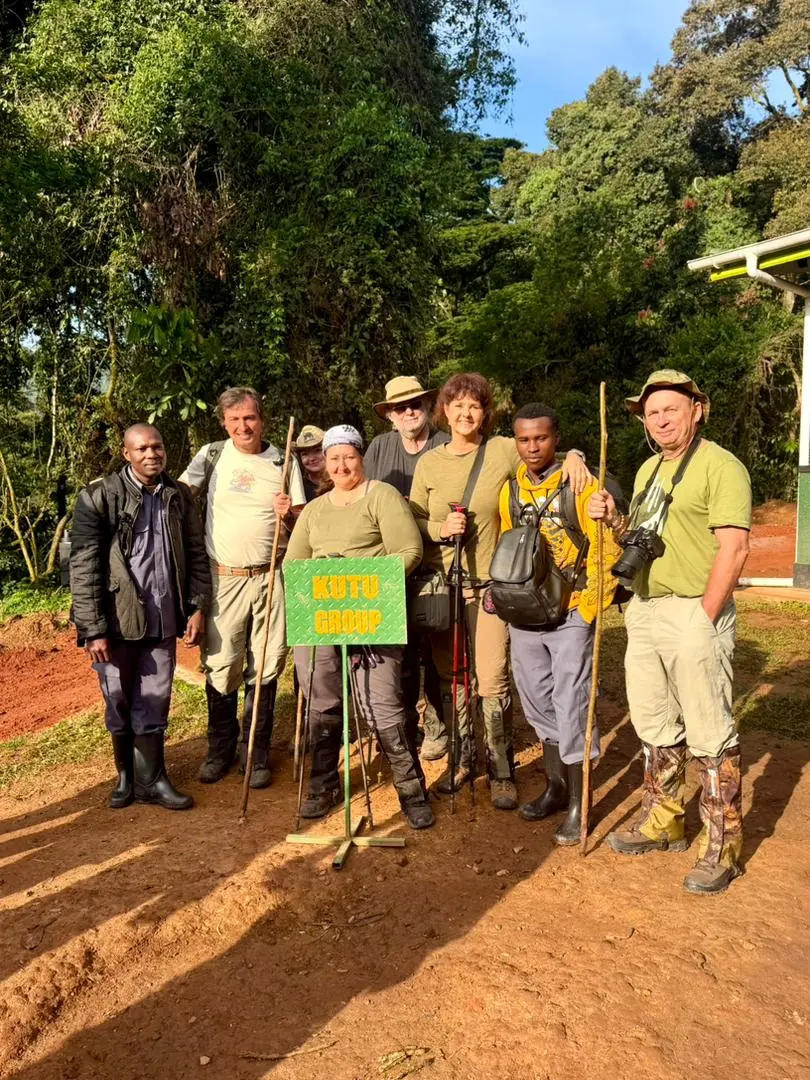
When booking, be honest with yourself and your tour operator about your fitness level. Different gorilla families are located at different distances from the trailheads. Some require a 30-minute walk; others require a six-hour hike through mud, thorns, and dense vines. If you book a “hard” group and are unfit, you will not enjoy the experience. You can request a group that requires less walking, though this is never guaranteed, as the animals move daily.
Packing is another part of the booking logistics. You need to acquire specific gear long before you get on the plane. Hiking boots with good ankle support are non-negotiable. Waterproof rain gear is essential, as you are in a rainforest. Garden gloves are a pro-tip for gripping the stinging nettles and vegetation you will pull yourself through. Porters can be booked at the trailhead for a small fee; hiring one is highly recommended not only to help carry your bag but to pull you up the steep slopes.
Conclusion
Booking a Gorilla Safari is not as simple as clicking a “buy now” button on a website. It is a logistical puzzle that requires patience, financial commitment, and careful selection of partners. However, the complexity of the booking process is actually a blessing. It acts as a filter, ensuring that only those who are truly dedicated make the journey.
The effort put into securing the permit, choosing the lodge, and preparing for the hike pays dividends the moment you hear the chest-beat of a silverback echoing through the forest. It is a raw, humbling, and profoundly moving experience that stays with you forever. So, start planning, secure that permit, and prepare to enter the mist. The mountain gorillas are waiting.