
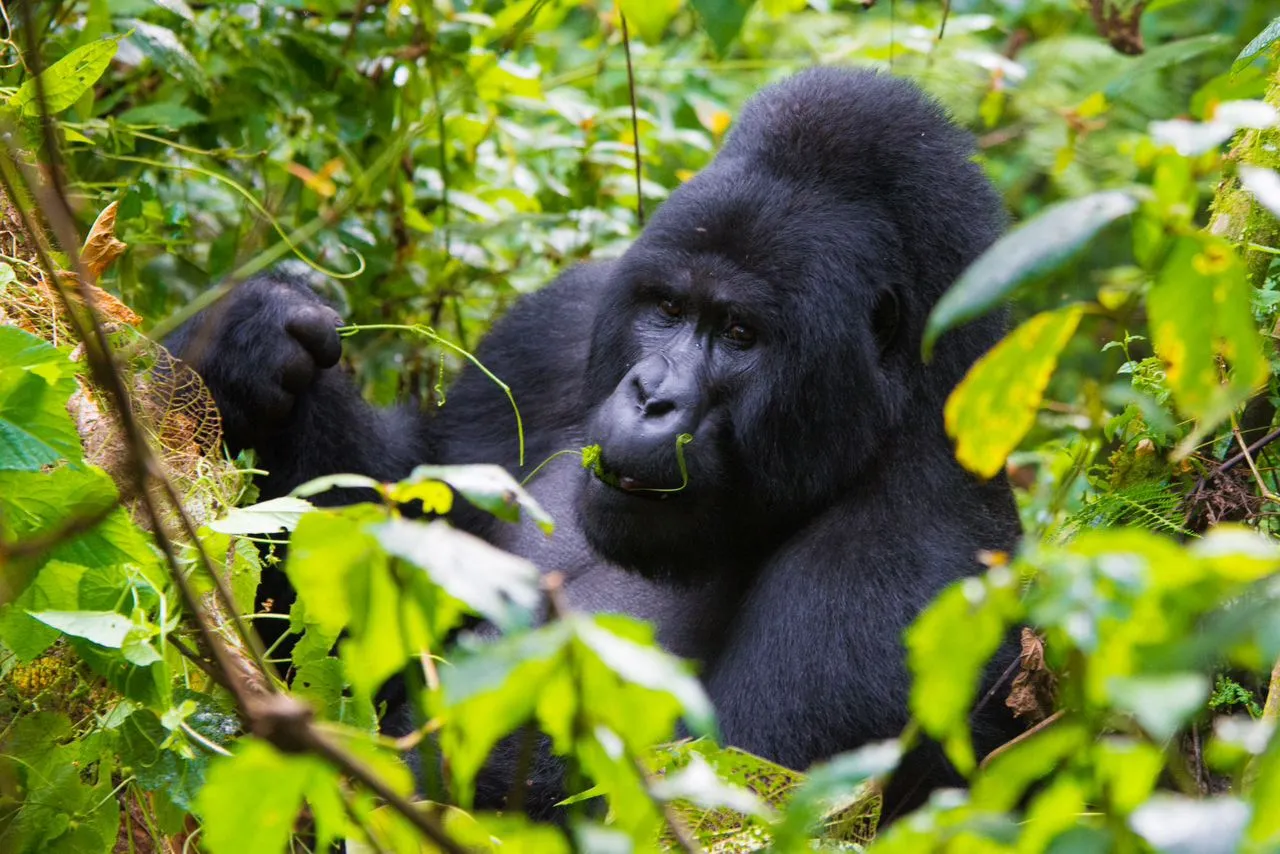
Gorilla Habituation in the Rushaga Sector
In the southwestern corner of Uganda, where the mist clings to the jagged peaks of the Virunga Massif, lies the Bwindi Impenetrable National Park. This UNESCO World Heritage Site is a sanctuary for roughly half of the world’s remaining population of endangered mountain gorillas. While thousands of tourists flock to Bwindi annually for the standard gorilla trekking experience, a select group of adventurers seeks something deeper, more raw, and more immersive. They head to the Rushaga Sector, the only place in the world where you can participate in the Gorilla Habituation Experience.
Unlike traditional trekking, which limits your time with the gorillas to one hour, the habituation experience allows you to spend up to four hours in the presence of a wild gorilla family. This is not just a safari; it is a journey into the heart of primate research and conservation. Here is why the Rushaga Sector is the premier destination for this life-changing encounter.
Understanding Gorilla Habituation
To appreciate the magnitude of this experience, one must first understand what “habituation” actually means. Gorilla habituation is the painstakingly slow process of training wild gorillas to get used to the presence of human beings. Before a gorilla family can be visited by tourists, they undergo this rigorous process, which can take anywhere from two to five years.
In the standard trekking experience, you visit a “fully habituated” family. These gorillas are entirely comfortable with humans; they often ignore visitors completely, going about their daily business of eating and sleeping. In contrast, the Gorilla Habituation Experience involves visiting a family that is currently undergoing this training. This experience was officially launched by the Uganda Wildlife Authority (UWA) to cater to the growing demand for more in-depth primate interactions. Crucially, it is currently exclusive to the Rushaga sector of Bwindi.
Why Rushaga Sector in Southern Bwindi?
Bwindi Impenetrable National Park is divided into four main sectors for gorilla tourism: Buhoma in the north, Ruhija in the east, Nkuringo in the south, and Rushaga in the south.
Rushaga has emerged as the undisputed capital of gorilla tourism in Uganda for several reasons. First, it boasts the highest concentration of mountain gorillas in the entire park. While other sectors might have two or three families, Rushaga is home to multiple families, including several that are specifically designated for the habituation experience.
The topography of Rushaga is also distinct. It features a mix of steep ridges and lush valleys, creating a dramatic, amphitheatre-like setting. The vegetation here is dense, living up to the name “Impenetrable,” but it is also incredibly rich in biodiversity, offering hikers a chance to see countless bird species, butterflies, and monkeys along the way.
Furthermore, the accommodation infrastructure in Rushaga has developed rapidly. From luxury lodges perched on hilltops to budget-friendly campsites, the sector caters to all types of travellers, making it a convenient and comfortable base for the habituation adventure.
The Habituation Process
The Habituation Experience begins much earlier than a standard trek. While standard trekkers might report to the park headquarters at 7:00 or 8:00 AM, those participating in habituation often head out at dawn. The goal is to meet the gorillas as they are waking up in their nests.
You are accompanied by a team that includes researchers, trackers, rangers, and sometimes armed guards for protection. This team is the backbone of the habituation process. They visit these gorillas almost every day, learning their individual temperaments, health status, and social dynamics.
The trek to find the family can take anywhere from 30 minutes to several hours, depending on where the gorillas nested the previous night. Because these gorillas are not yet fully habituated, they move away from humans more quickly than fully habituated groups. This means the hiking can be more physically demanding, often requiring hikers to navigate off-trail through thick undergrowth.
However, the effort is rewarded with a display of authentic wild behaviour. When you first encounter a semi-habituated gorilla, the reaction is vastly different from the tame indifference of a fully habituated group. The Silverback might beat its chest to assert dominance. The females might gather the infants and hide behind thick foliage. There is a palpable tension, a sense that you are a guest in a wild, unruled kingdom.
As the hours pass, a magical transformation occurs. The gorillas begin to realise that the humans are not a threat. The curiosity takes over. Youngsters might peek out from behind their mothers, inching closer to get a look at the visitors. The adults resume their feeding.
The Four-Hour Privilege
The defining feature of the Rushaga habituation experience is the time. Four hours might sound like a long time, but in the jungle, it flies by.
This extended duration allows you to move beyond the “checklist” mentality of tourism. You aren’t just rushing to get a photo and leave. Instead, you sit, watch, and learn. You see the gorillas when they are active, and you see them when they rest. You witness the politics of the group, how the Silverback mediates disputes, how the mothers discipline the juveniles, and how the bonds of family are reinforced through grooming.
For photographers, this is a golden opportunity. In a one-hour trek, the lighting might be bad, or the gorillas might be sleeping. With four hours, you have the luxury of waiting for the perfect moment. You can capture the gleam in a gorilla’s eye as it chews on celery, or the texture of the fur as the sun breaks through the canopy.
Moreover, because the group size is limited to only four people (compared to eight in standard trekking), the experience feels incredibly exclusive and private. You are not jostling for position with other tourists; you are part of the research team.
The Families of Rushaga
While the specific Gorilla families available for habituation can change as groups graduate to “fully habituated” status, Rushaga is famous for certain clans. The Bikingi family and the Bushaho family are often the stars of the habituation show.
The Bikingi family, for instance, was named after the stream where it was first sighted. It is a large group with several energetic juveniles and a powerful Silverback. Observing the dynamics of a group like Bikingi provides insight into the future of the species. You are watching a family that will one day be visited by thousands, but for now, you are one of the few who know them.
Conclusion
Gorilla trekking in Bwindi is a world-renowned activity, but Gorilla Habituation in the Rushaga Sector is in a league of its own. It strips away the barriers between the human world and the wild. It offers a rare glimpse into the complex social lives of these magnificent creatures as they stand on the threshold between two worlds.
By choosing the Rushaga sector for your habituation experience, you are choosing the road less travelled. You are choosing patience over instant gratification, depth over breadth, and wildness over comfort. As you sit on the forest floor, watching a Silverback lead his family through the mist, four hours will feel like a fleeting moment. But the memory of that connection will last a lifetime. If you seek the ultimate primate adventure, Rushaga awaits.