
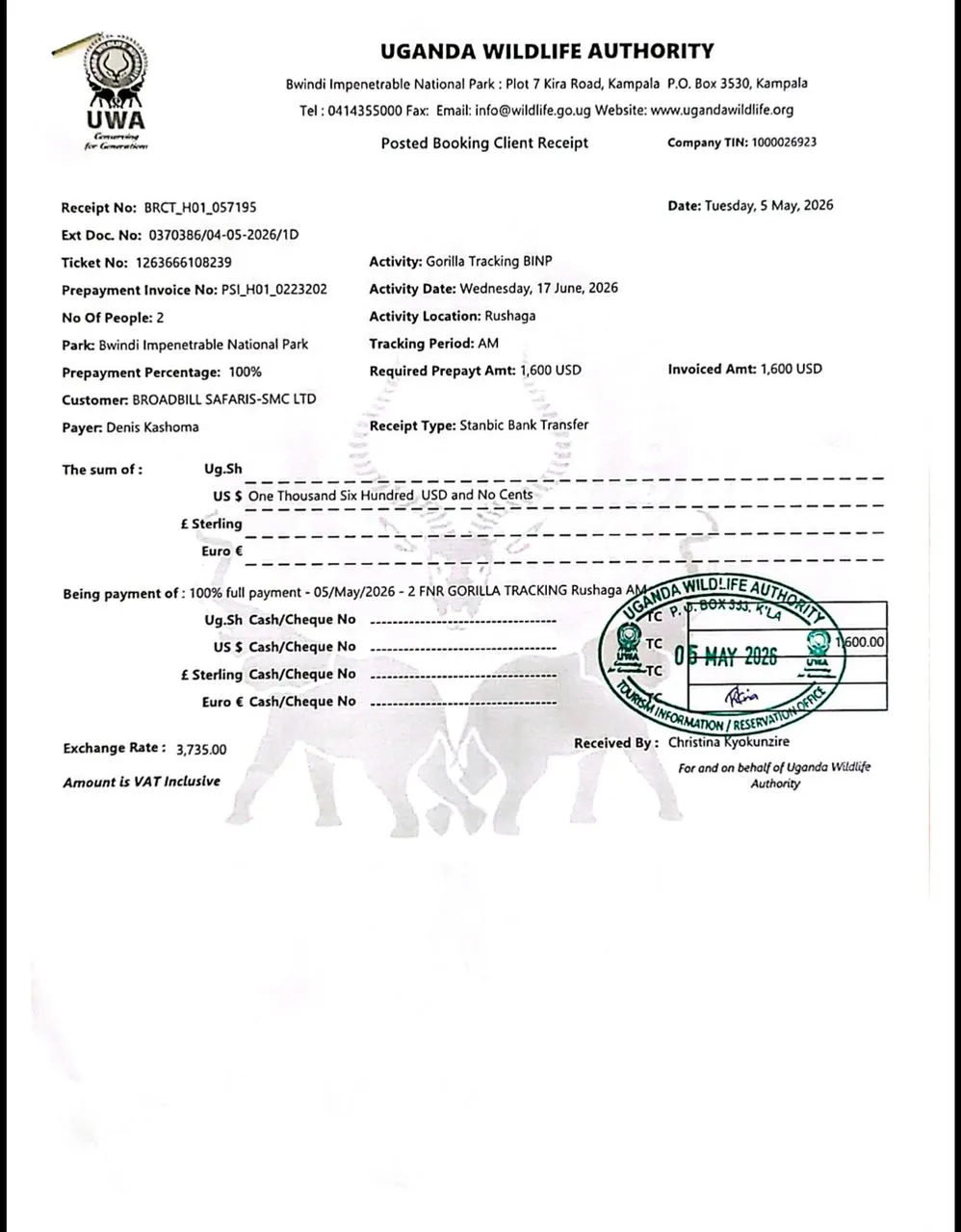
Cancellation and Refunds for Gorilla Permits in Uganda
Securing a gorilla trekking permit in Uganda is often the culmination of a lifelong dream. It is the golden ticket to encounter the endangered mountain gorillas of Bwindi Impenetrable National Park and Mgahinga Gorilla National Park. However, with the price of a permit fixed at $800 for foreign non-residents (and subject to periodic increases), it is a significant financial investment. It is also a scarce resource; with only a limited number of permits issued per day, it is in high demand. Understanding the cancellation and refunds policy for Gorilla permits in Uganda is not just bureaucratic reading; it is a crucial part of trip planning.
Life, however, is unpredictable. Flights get cancelled, illnesses arise, and global events can disrupt the best-laid plans. Unlike a standard hotel booking that might offer free cancellation up to 24 hours prior, gorilla permits are governed by strict regulations set by the Uganda Wildlife Authority (UWA). Navigating these rules requires a clear understanding of timelines, the role of tour operators, and the safety net of travel insurance.
The 90-Day Window
The most important thing to understand about the cancellation and refunds policy for Gorilla permits in Uganda is the “90-Day Rule.” In the eyes of the UWA, there is a distinct line in the sand three months before your trek.
If you cancel your permit more than 90 days before the tracking date, you are in a relatively safe zone. Historically, UWA has allowed for refunds in this window, often retaining a cancellation or administrative fee (typically around 10% to 20%, though this is subject to the specific tariff of the year). This means that if you have a change of heart six months out, you can likely recoup most of your money, allowing the permit to be sold to another eager trekker on the waiting list.
However, once you cross that threshold into the less than 90-day window, the rules become draconian. Under the standard UWA tariff policy, permits cancelled within 0 to 90 days of the trekking date are typically non-refundable. This is because, by this stage, the authority assumes that the slot has been held off the market for too long to be resold easily. If you break your leg two weeks before the trip, or if a family emergency keeps you home, the standard response from UWA is a forfeiture of the full $800.
This strictness is born of necessity. The gorilla tourism model relies on high-cost, low-impact tourism. The revenue generated is vital for conservation efforts and community support. If permits were easily refundable at the last minute, the parks would face financial instability and empty slots that cannot be filled.
Rescheduling
While cancellation results in a financial loss, UWA is often more lenient when it comes to rescheduling. If you cannot make your trip but still intend to go in the future, rescheduling is frequently the best route.
According to UWA regulations, a permit can be rescheduled to a future date, subject to availability. Often, if you reschedule well in advance (again, adhering to that 90-day benchmark), there may be a small administrative fee, or sometimes no fee at all if it is a one-time change.
However, rescheduling within the 90-day window is still risky. While UWA has occasionally shown flexibility, travellers should not rely on goodwill. The standard expectation is that a permit is a fixed commitment. If you reschedule, you are still bound by the availability of permits for your new chosen dates. Since Bwindi often sells out months in advance, finding a slot for your rescheduled dates can be logistically difficult, even if the authority allows the change in principle.
The Role of Tour Operators and “Sold” Permits
The vast majority of travellers book their permits through local tour operators like Native Africa Tours, rather than directly buying them from UWA. When you book through an operator, you are entering into a contract with that company, not just UWA. While the operator must follow UWA’s non-refundable rules, they also have their own business policies. Reputable tour operators often have their own cancellation policies that mirror UWA’s but may include additional service fees or handling charges for the paperwork involved in a cancellation or reschedule.
Crucially, many tour operators buy permits in bulk to secure dates for their clients. If you cancel a permit that an operator has already paid for, they are left holding a $000 asset that they might struggle to resell on short notice. This is why many operators will ask for a non-refundable deposit at the time of booking, often ranging from 30% to 50%, with full payment required 60 to 90 days before the trek.
The Substitution Option
One of the few “loopholes” in the rigid system is the ability to substitute a traveller. While permits are technically non-transferable between random parties to prevent scalping, UWA generally allows names on a permit to be changed if the request is made in writing.
If you cannot travel but have a friend or family member who can take your place, this is often a far better financial outcome than cancelling. You can transfer the permit to them, usually for a small administrative fee (often around $50 to $100). This allows the trip to proceed as planned without losing the $800. However, this must be arranged with the help of your tour operator or directly with the UWA reservations office well before the trekking date. Showing up at the park headquarters with a permit that has someone else’s name on it will result in being denied trekking.
Practical Steps for the Cautious Traveller
To protect your investment in a gorilla permit, consider the following strategy:
Book with Flexibility: If possible, avoid booking your international flights until your permit is confirmed. While you need the permit to book the trip, try to build in buffers.
Buy Insurance Immediately: Travel insurance must be purchased within 14 to 21 days of making your initial trip deposit (usually the permit deposit) to be most effective for pre-existing conditions and coverage maximisation.
Use a Reputable Operator: A good operator will act as your advocate. While they cannot waive UWA rules, they can help facilitate a name change (substitution) quickly or help navigate the paperwork for a reschedule.
Have a Plan B: If you are travelling with a companion, discuss what happens if one of you cannot trek. Can the other continue? How will you handle the logistics?
Conclusion
The system of Cancellation and Refunds for Gorilla Permits in Uganda is designed with a singular focus: the conservation of the gorillas and the stability of the park revenue. It is a strict, no-nonsense system that places the onus of risk on the traveller. While the $800 price tag is steep, the non-refundable nature of the permit makes it an even higher-stakes purchase.
The key to a stress-free gorilla trekking experience is not just hoping for good health and good weather, but preparing for the opposite. By understanding the rigid timelines, leveraging the option of substitution, and securing comprehensive travel insurance, you can embark on your journey into the Impenetrable Forest knowing that your investment is protected. The magic of seeing a silverback is priceless, but securing the permit to see him requires a very practical, grounded approach.