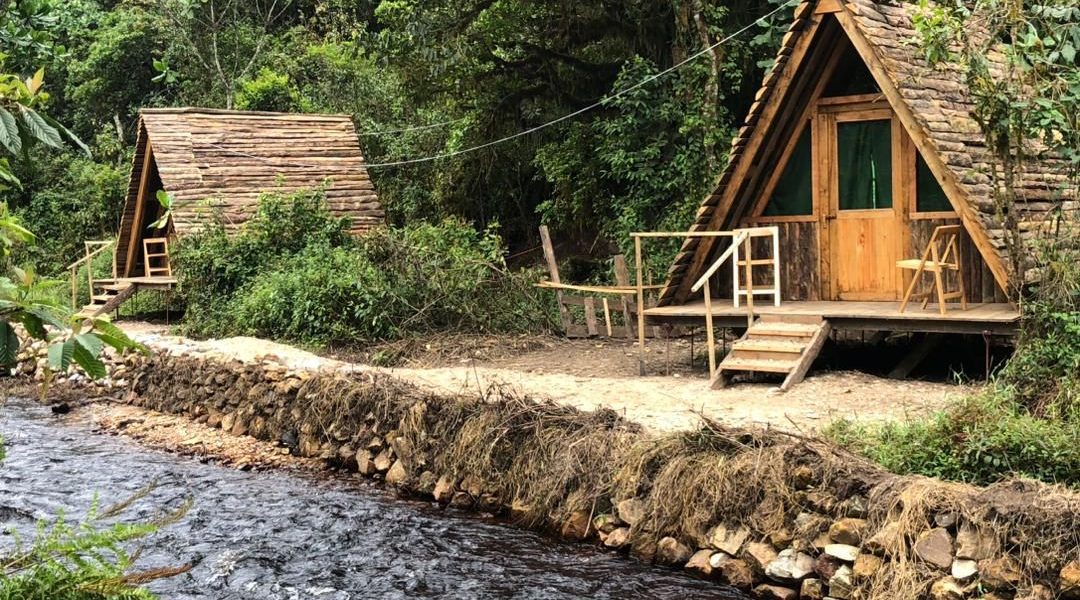
The Cyinzobe Trail in Nyungwe National Park
In the southwestern reaches of Rwanda, where the land seems to dissolve into an endless sea of rolling hills, lies one of Africa’s best-kept natural secrets: Nyungwe National Park. Often overshadowed by the celebrity status of the mountain gorillas in the Volcanoes National Park to the north, Nyungwe is a biodiversity hotspot of staggering proportions. It is one of the oldest rainforests on the continent, a verdant ark that has survived the ice ages and centuries of human encroachment. While many visitors flock here for the famous canopy walkway or the chimpanzee tracking, the true soul of Nyungwe is found deep in its undergrowth. To find it, you must lace up your boots and venture onto the Cyinzobe Trail in Nyungwe National Park.
The Cyinzobe Trail in Nyungwe Forest is not merely a walk; it is an immersive odyssey into the heart of the Albertine Rift. Spanning approximately 4.7 kilometres (roughly 3 miles) one way, it is often described as a “transitional” hike, moderate enough for the active novice but rugged enough to satisfy the seasoned trekker. It serves as a vital connector between the park’s main reception centre and the remote, wild beauty of the Kamiranzovu Swamp. However, to view it merely as a connector is to do it a disservice. The trail is a destination in itself, offering a masterclass in the flora, fauna, and primordial atmosphere of the Montane rainforest.
The Journey Begins
The adventure typically begins at the Uwinka Reception Centre, the nerve centre of Nyungwe’s trail network. Standing on the deck of the centre, looking out over the carpet of green stretching to the horizon, the air feels noticeably thinner and cooler than in the rest of Rwanda, a refreshing 15 to 20 degrees Celsius year-round.
As you step onto the trailhead, the transition is immediate. The sounds of modernity fade, replaced by the rhythmic hum of the forest. The Cyinzobe Trail starts with a deceptive, gentle slope, luring hikers into a sense of ease. The path is well-defined, winding through a dense thicket of trees that seem to compete aggressively for sunlight. Here, the vegetation is lush and almost tangible; giant ferns unfurl like prehistoric fountains, and old man’s beard lichens drape elegantly from the branches, filtering the sunlight into a soft, ethereal glow.
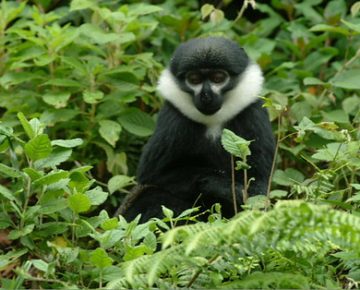
Within the first few hundred meters, the sensory overload begins. Your eyes scan the canopy for movement, and your ears strain to identify the source of the rustling leaves. This is the domain of the Angolan colobus monkey, a species endemic to these high-altitude forests. Unlike their louder cousins, the chimpanzees, the colobus move with a ghostly grace. Seeing a troop of them leaping across the canopy in their striking black and white coats, a visual explosion of contrast against the deep greens, is one of the trail’s early rewards. They watch you with curious, unblinking eyes, unbothered by the human presence, before continuing their foraging for leaves.
The Ascent and the Symphony of Birds
As the trail progresses, the gentle incline begins to sharpen. The Cyinzobe Trail in Nyungwe Forest is undulating, characterised by steep ridges that drop into deep river valleys. This topography is what makes Nyungwe such a vital water catchment area; the rain that falls here flows west into the Congo and east into the Nile. Hiking here, you are literally walking over the roof of Africa.
For the ornithologist, this section of the trail is paradise. Nyungwe is home to over 300 species of birds, many of which are endemic to the Albertine Rift. The air is filled with a complex cacophony of calls, the distinctive “kow-kow” of the Great Blue Turaco, a bird so beautiful it looks unreal with its brilliant blue and yellow plumage and regal crest. If you are lucky, you might spot the Red-collared Mountain Babbler, a rare prize for any birdwatcher. Your guide, an essential companion on this hike, will likely stop frequently, mimicking calls or adjusting binoculars to point out a Rwenzori Apalis or a Regal Sunbird flitting among the epiphytes.
The trail requires focus. The terrain can be muddy and slippery, a reminder that this is, after all, a rainforest that receives upwards of 2,000 millimetres of rain annually. The roots of massive trees crisscross the path like gnarly wooden snakes, acting as natural stairs. Every step demands mindfulness. Yet, there is a meditative quality to this exertion. The physical act of climbing pulls you out of your head and grounds you in the present moment. The smell of the earth, a rich mix of damp humus, decaying wood, and blooming wild orchids, becomes intoxicating.
The Kamiranzovu Connection
One of the unique aspects of the Cyinzobe Trail is its relationship with the Kamiranzovu Swamp. Unlike many mountain wetlands, Kamiranzovu is a montane swamp, a vast, bowl-shaped depression that collects water. As the trail skirts the edges of this ecosystem, the environment shifts subtly. The trees thin slightly, allowing for broader views of the surrounding mountains. The light changes, becoming brighter and more diffuse.
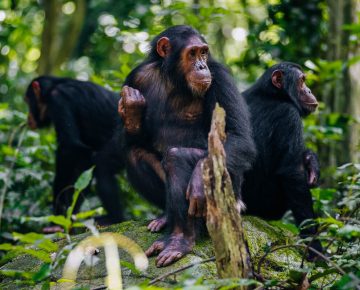
This area is a hotspot for wildlife seeking water and shelter. It is a quieter place, the heavy silence broken only by the distant, booming call of a chimpanzee or the rustle of an elephant, though seeing the latter is rare on this specific trail. It is here, amidst the giant lobelias and carpeted moss, that the sheer scale of Nyungwe becomes apparent. You realise you are a speck in a massive, breathing organism.
The guide will often point out the medicinal plants used by local communities for centuries. The “Umuvumbu” tree, whose roots are used for treating stomach ailments, or the “Umuravumba,” known for its antibacterial properties. The forest is not just a sanctuary for animals; it is a pharmacy for the people who have lived in its shadow for generations. This cultural context adds a layer of depth to the hike, transforming it from a purely physical pursuit into a lesson in ethnobotany.
The Challenge of the Return
Hiking the Cyinzobe Trail is an out-and-back experience, meaning the return journey requires retracing your steps. In many hikes, the return is a tedious anticlimax, but in Nyungwe, the forest looks entirely different when viewed from the opposite direction. The light has shifted; the shadows have lengthened. What was a climb into the unknown becomes a descent into familiarity.
On the return leg, the downhill sections prove to be just as taxing as the ascent. The mud demands a careful, zigzagging gait to prevent sliding. The thigh muscles burn, but the spirit is lifted by the fresh perspective of the landscape. You notice things you missed on the way up: a tiny chameleon clinging to a reed, the intricate pattern of a spider’s web glistening with dew, the panoramic vista through a gap in the foliage revealing the terraced hillsides of Rwanda far below.
This is the time for reflection. Nyungwe Forest National Park plays a critical role in combating climate change, sequestering vast amounts of carbon. Walking the Cyinzobe Trail, you feel the weight of this responsibility. The forest is resilient, yet fragile. The conservation success story of Nyungwe is one of Rwanda’s proudest achievements, and every tourist who walks these paths contributes to the protection of this UNESCO-recognised biosphere reserve.
Emerging from the Wild
As the trail widens and the sounds of the Uwinka Centre drift back into earshot, there is a palpable sense of accomplishment. The Cyinzobe Trail in Nyungwe typically takes 3 days and 2 nights to complete. Emerging from the dense canopy, blinking in the bright sunlight, you feel transformed. The dust of the trail is on your boots, the humid air of the forest clings to your clothes, and your mind is clear.
The hike offers more than just exercise; it provides a connection to a primordial world that has largely vanished from the planet. It reminds us that there are still wild places where nature rules, where silence can be deafening, and where the beauty of the world is measured not in man-made structures, but in the height of a tree and the call of a bird.