
Difference Between Gorilla Trekking in Rwanda and Uganda
In this article, we ought to show you the difference between gorilla trekking in Rwanda and Uganda. With all this information, any reader will choose the perfect destination to visit on their next holiday.
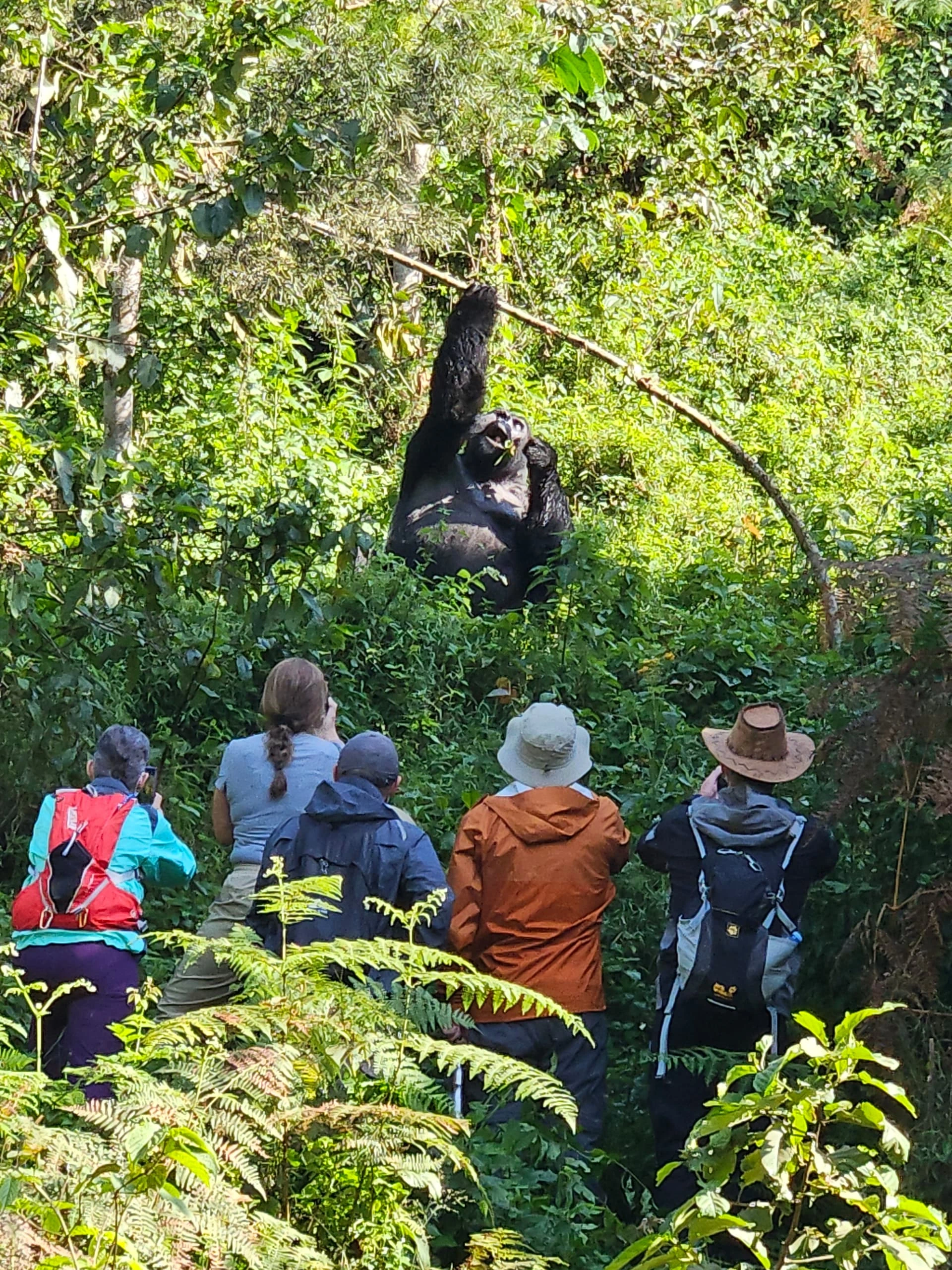
Encountering mountain gorillas in their natural habitats is every visitor’s golden medal. Gorilla trekking is a major tourist activity in Uganda and Rwanda. This epic activity offers a one-on-one interaction with the endangered mountain gorillas.
Gorilla trekking involves traversing through the dense tropical forests searching for mountain gorillas and spending an hour in their presence after encountering them.
Mountain gorillas in the world can only be encountered in the Virunga conservation area. This area is the remaining natural habitat of mountain gorillas and that is why they are considered endangered primate species. The Virunga conservation area stretches from the Virunga National Park in the Democratic Republic of Congo through Rwanda’s Volcanoes National Park to Uganda’s Bwindi Impenetrable and Mgahinga Gorilla National Parks. The gorilla destinations in this Virunga conservation area are perfect for mountain gorilla harboring because of the topography of this conservation area. Rwanda and Uganda are the two most formidable gorilla trekking destinations in the world. They both offer incredible gorilla trekking experiences but with a distinctive feature.
Distinctive Factors Between Gorilla Trekking in Rwanda and Uganda
Gorilla trekking seems to be similar in most of the gorilla trekking destinations in the Virunga conservation area. Uganda and Rwanda are not any different from each other as they have a lot in common. However, various distinctive factors differentiate gorilla trekking in Rwanda from that in Uganda and verse visa. The following are some of these factors:
Gorilla Trekking Permit Prices in Uganda Compared to Rwanda
When embarking on a gorilla trekking Tour in Rwanda or Uganda, you require a gorilla trekking permit. This document allows you access to the gorillas in their natural environments.
In comparison to gorilla permits, Rwanda’s gorilla trekking permits are more expensive, with each costing USD 1,500, while in Uganda, the gorilla permits cost USD 800. This price is for foreign non-residents on Uganda and Rwanda Safaris.
Trekking Experience in Uganda Compared to Rwanda
The trekking experience means the level of difficulty of the gorilla experience. In Uganda, gorilla trekking is done in Bwindi Impenetrable and Mgahinga Gorilla National Park. These two gorilla destinations have rugged topography with highlands, making navigation very difficult.
Rwanda’s Volcanoes National Park offers a slightly difficult trekking experience compared to that of Uganda.
Accommodation and Infrastructure in Rwanda Compared to Uganda
Rwanda has a much-developed accommodation and infrastructure compared to Uganda. The road networks that connect to the city from the Volcanoes National Park are standard thus making it easier to access.
Accommodation in Volcanoes National Park in Rwanda provides a luxury and classy touch of nature to clients.
In Uganda, the road infrastructure is improved but not to the level of Rwanda. Uganda also offers budget and midrange high-end accommodation options compared to Rwanda which provides luxury.
Accessibility of the Destination
In accessing the gorilla destinations, Rwanda comes in the lead since Volcanoes National Park is located about 2-3 hours from the capital city Kigali. This is contrary to Uganda, whose gorilla destinations are over 8-9 hours from the airport. This is more than double the distance of Rwanda hence making Volcanoes National Park easily accessed.
Vegetation Types
Rwanda and Uganda both have a dense montane and lowland tropical type of vegetation type given their proximity to the equator. Their gorilla destinations lie close to the latitude line making them bear the same type of vegetation.
However, Rwanda’s Volcanoes National Park has more bamboo forests, Hagenia-Hypericum forests, and Afro-alpine vegetation as you ascend in the higher altitudes while Bwindi Impenetrable National Park has more swamps and dense montane forests. This vegetation type of Bwindi increases the level of difficulty of the trekking experience given its impenetrability than Volcanoes National Park which has bamboo forests.
Additional Activities after Gorilla Trekking
Uganda and Rwanda both have interesting and incredible activities that would fit any visitor’s bucket list. However, Uganda has more tourist activities since it has more tourist destinations putting it in the lead of Rwanda. Some of these activities can include the top of the falls hike, the source of the Nile boat cruise, gorilla habituation, and chimpanzee habituation to mention but a few.
What is the Best Time for Gorilla Trekking in Uganda and Rwanda?
Rwanda and Uganda are open and free countries that can be accessed any time of the year for gorilla trekking. However, the best time for gorilla trekking is during the dry season which runs from June to September and December to February. These countries have an equatorial climate and thus receive two wet and dry seasons per year because of their proximity to the equator.
The dry season presents itself as the best time because it is characterized by dry and humid temperatures with little or no rainfall patterns. This means the trekking trails in the parks remain dry and navigable. Hence making the trekking process easy compared how it would be in the wet season when the trails are muddy and slippery from the heavy rainfall received.