
Gorilla Trekking Tours to Ruhija
Few experiences on Earth compare to encountering mountain gorillas in their natural habitat, close enough to feel the mountain air, yet distant enough to witness their lives with respect. If Uganda is on your travel radar, the Ruhija sector deserves special attention. Often described as a quieter gateway to gorilla country than some other areas, Ruhija offers an unforgettable combination of wilderness, forest sounds, and the kind of adventure that stays with you long after you’ve returned home. This article explores what gorilla trekking tours to Ruhija are like, what to expect on the trail, how to prepare, where Ruhija fits into Uganda’s conservation story, and how to choose the right tour.
Why Ruhija for Gorilla Trekking?
Ruhija lies within Uganda’s Buhoma–Ruhija ecosystem area of Bwindi Impenetrable National Park, one of the world’s most famous gorilla habitats. The region is popular because it sits in dense montane forest and supports gorilla communities that tourists can track through guided searches led by trained trackers.
What makes Ruhija particularly appealing is its balance of accessibility and wilderness. The terrain around Ruhija can be demanding because gorilla trekking always involves forest travel, but it often feels immersive and less “commercial” than other trailheads. Many travellers describe the Ruhija area as offering a more intimate forest experience: thick vegetation, steep slopes, and the constant sense that you’re truly inside the jungle rather than touring a theme park version of it.
The Experience from Trailhead to Gorilla Moment
Pre-trek briefings and expectations
On trekking day, your guide and park staff typically explain how the tracking process works, gorilla viewing rules, safety guidelines, and what to do if you encounter gorillas at varying distances. These briefings matter. Gorilla trekking tours in Ruhija are thrilling, but it’s also highly regulated to protect the animals and ensure visitor safety. Your briefing will likely emphasise calm behaviour, staying with your group, and minimising sudden movements or loud sounds.
Tracking in the forest
Once you begin, the forest gradually takes over your senses. You may hear birds calling overhead, insects buzzing in the undergrowth, and distant gorilla movements that are sometimes nothing more than a rustle or a faint call.
Trackers (local guides trained to read the forest) work to locate the gorilla group. They look for signs such as gorilla nests or previous feeding areas, fresh tracks, broken vegetation, dung and other indicators left by the troop.
This part of the tour is often where the magic builds. Even before you see gorillas clearly, the anticipation grows. You realise that gorillas aren’t “performing”, they’re simply living. And your journey is about finding them at the right time.
The gorilla encounter
Once the gorillas are found, you’ll follow instructions on how close you can get and how long you can observe them. Depending on the circumstances, such as where the gorillas are moving and how the group behaves, the encounter can be short or extend in a way that feels surprisingly expansive.
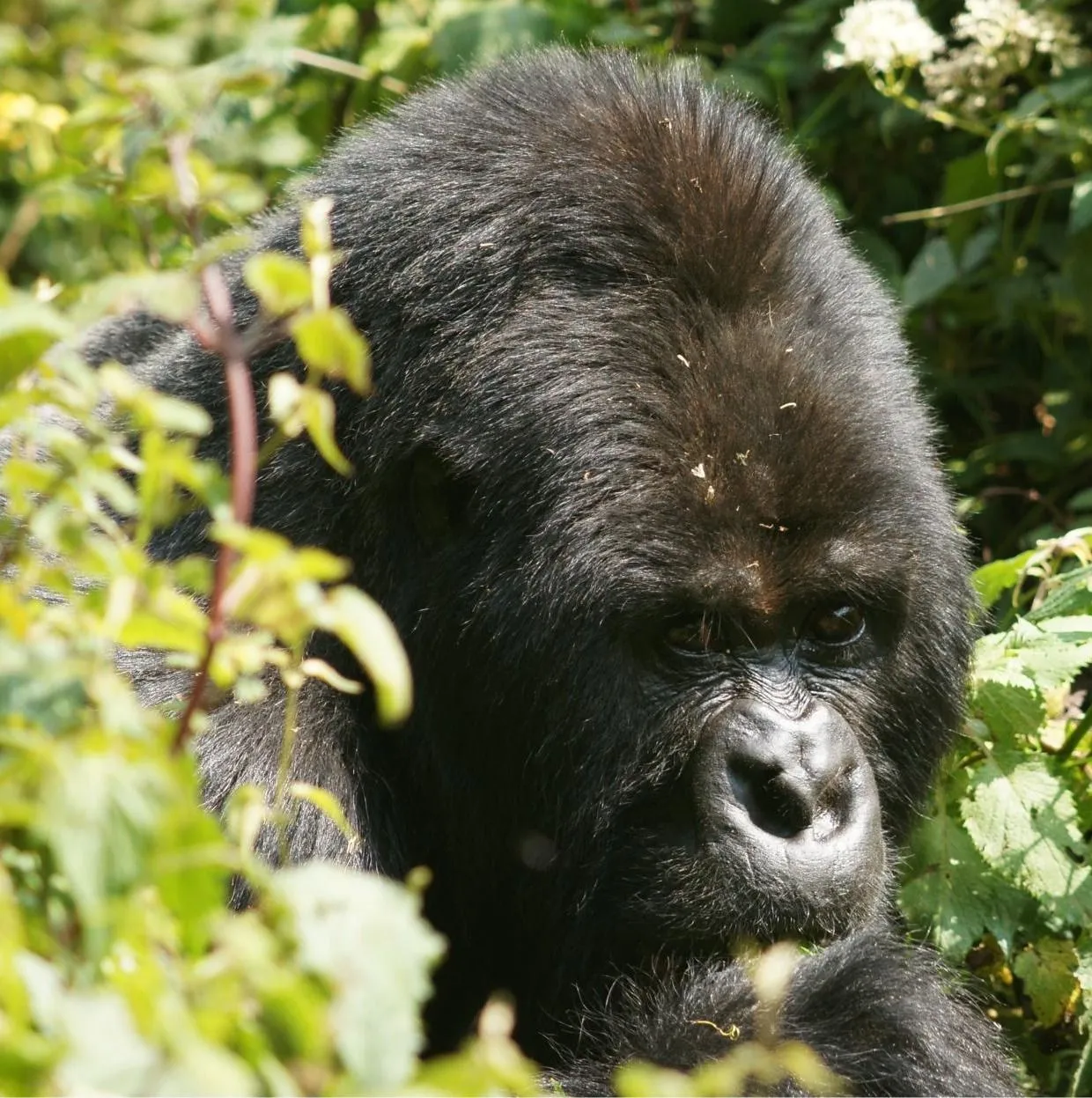
Most visitors experience a mix of emotions: awe, disbelief, quiet joy, and a sense of responsibility. You may notice details you didn’t expect: facial expressions that look almost human, powerful hands and deliberate movements, the way young gorillas interact within the group, and adults gently supporting or repositioning each other. Whether you’re photographing, journaling, or simply watching, the encounter has an almost surreal quality. Many people say it feels like time slows down.
After the trek
After the viewing time ends, your group usually moves out according to park guidance. The journey back may feel easier, or sometimes just as strenuous, depending on the trail conditions. Regardless, the return hike is often quieter than the ascent, because everyone is mentally replaying what they just witnessed. The trekking group is awarded a Gorilla Certificate as proof that they have visited Ruhija.
What Makes the Ruhija Trek Unique?
Dense montane forest scenery
Ruhija is surrounded by a thick forest that changes as you gain altitude. The air can cool noticeably, and the vegetation tends to be lush and layered. You’ll likely see moss and ferns clinging to tree trunks, towering trees forming a canopy, occasional glimpses of misty landscapes, and streams or damp patches that make the trail feel alive.
A sense of remoteness
Because Ruhija can feel less crowded at times (relative to other trailheads), the experience may feel more personal. That doesn’t mean it’s empty, but the forest environment naturally limits noise. When you’re deep inside, conversations quiet down and attention shifts to the environment.
How Difficult Is Gorilla Trekking in Ruhija?
Gorilla trekking isn’t typically described as “easy,” even for experienced hikers, because the route often includes steep climbs, uneven, slippery ground, thick vegetation and roots, and unpredictable weather.
That said, difficulty can vary depending on the gorilla group’s location, the day’s trail conditions, and where you find the troop. Some visitors finish faster than expected, while others spend longer tracking before the gorillas are located.
A common pattern is that the initial climb can feel challenging, the middle portion becomes a rhythm of stepping carefully, and the encounter moment makes the effort feel worthwhile. If you’re considering Ruhija specifically, it helps to train moderately before your trip, especially if you’re travelling from a flat region.
The Emotional Impact of Gorilla Trekking
It is easy to describe the day as an adventure, but many travelers find it deeply emotional. Gorillas are not “characters”, they’re living animals with instincts, relationships, and daily routines. When you watch a group move through the forest or see a juvenile’s curiosity, you connect with the reality that nature is not staged.
In Ruhija, the forest setting amplifies that feeling. The air is cooler, the vegetation is thicker, and the journey to find gorillas feels like a real pursuit through a living ecosystem. You return with stories, photos, and maybe even a new perspective on why conservation matters.
Is Ruhija Worth It?
If you are aiming for a gorilla trekking tour that feels both adventurous and deeply connected to nature, Ruhija is absolutely worth considering. The combination of Bwindi’s breathtaking montane forest, the thrill of tracking, and the unforgettable gorilla encounter creates a trip that feels rare and meaningful.
To make the most of your journey:
- prepare physically for steep, muddy terrain
- pack smart for unpredictable forest conditions
- choose a reputable operator with strong local expertise like Native Africa Tours
- respect the rules designed to protect gorillas
Gorillas are not guaranteed in the way human travel attractions are. But when they appear, when you hear a movement ahead, and the trackers guide your group to a clearing, you’ll understand why so many travellers call gorilla trekking the highlight of their lifetime.