
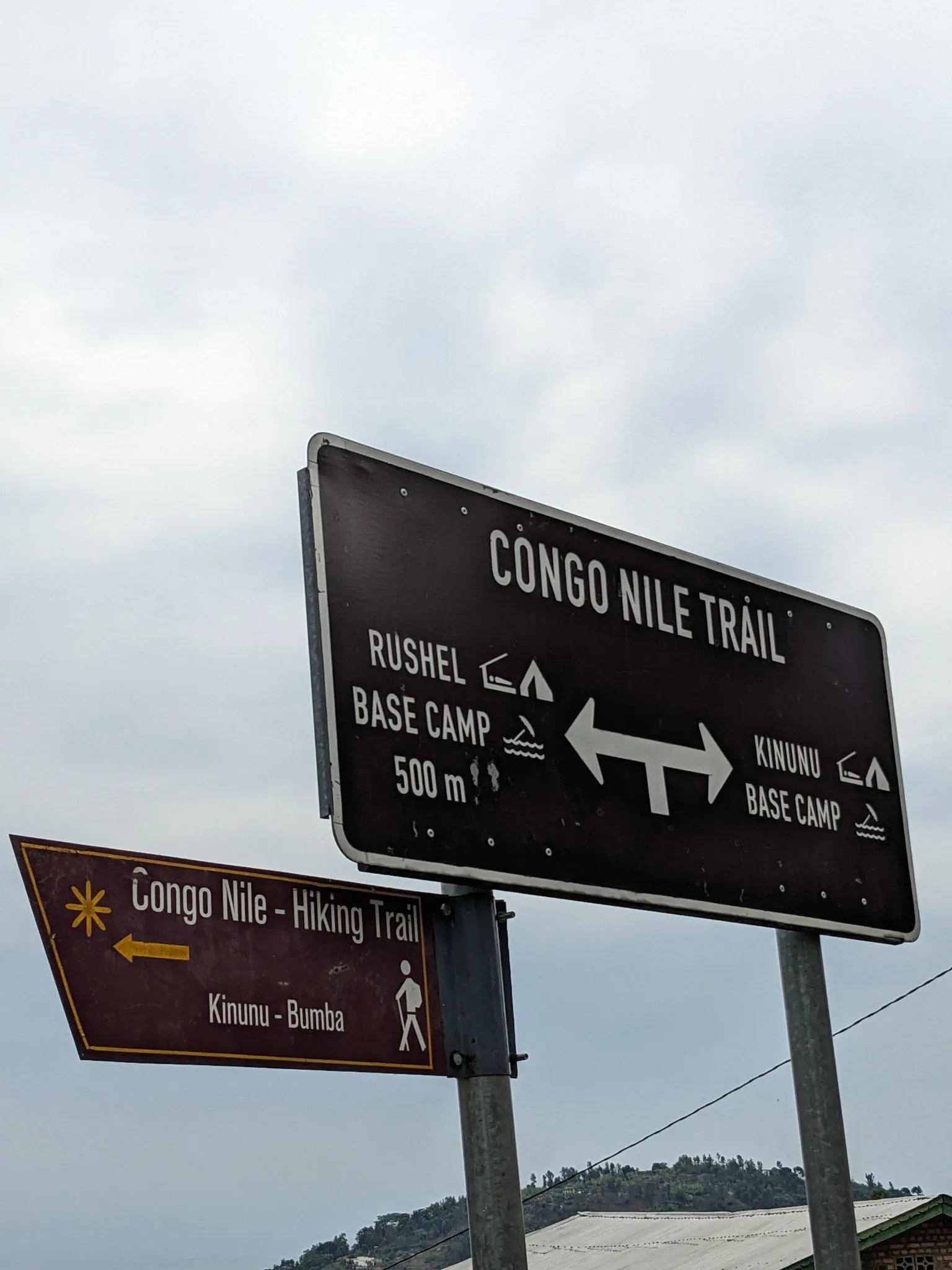
Hiking the Congo Nile Trail in Rwanda
When travelers conjure images of Rwanda, their minds usually drift upward – to the misty peaks of the Virunga volcanoes and the soulful gaze of the mountain gorillas. Yet, there is another side to the “Land of a Thousand Hills” that lies lower, deeper, and arguably more immersive. It is a place where the earth meets the water in a dramatic collision of geology and biology. This is the Lake Kivu belt, and traversing its winding contours on foot via the Congo Nile Trail is one of East Africa’s most rewarding, yet underappreciated, hiking adventures in Rwanda.
Stretching for approximately 227 kilometres along the shores of Lake Kivu, the Congo Nile Trail divides the water catchments of the Nile and the Congo River basins. While the trail can be tackled by bicycle or even 4×4, it is on foot that the landscape truly reveals itself. Hiking the Congo Nile trail is not a sprint; it is a slow, rhythmic meditation through the heart of rural Rwanda, offering a glimpse into a world that has remained unchanged for centuries, even as the nation around it modernises at lightning speed.

The Geography of the Trail
The journey typically begins in the bustling border town of Rubavu (formerly Gisenyi) in the north and concludes in the southern town of Rusizi (formerly Cyangugu), or vice versa. For the hiker, the route is a relentless series of ascents and descents. This is, after all, Rwanda, and flat ground is a rare luxury.
The trail hugs the rim of the Great Rift Valley, offering spectacular vantage points over Lake Kivu. Often referred to as an “inland sea,” the lake is massive, deep, and bordered by steep, verdant hills. As you hike, the lake acts as a constant companion – sometimes glittering in the sun far below you, and at other times rising to meet the path, lapping gently against the rocky shore.
The terrain is varied and challenging. You will find yourself trudging through dense rainforests where the chatter of black-and-white colobus monkeys echoes overhead, and stepping carefully through neat rows of vibrant green tea plantations that carpet the hills in geometric patterns. The red earth of the path contrasts vividly with the purple flowers of the jacaranda trees and the silver sheen of the eucalyptus leaves. It is a sensory overload of colour and texture.
Cultures in the Congo Nile Trail
What sets the Congo Nile Trail apart from a standard national park hike is the profound human element. This is not a wilderness where humans are mere visitors; it is a working landscape. The trail winds through remote villages, clusters of mud-brick houses, and bustling trading centres.
Hiking here offers an unfiltered look at Rwandan rural life. You will encounter farmers balancing impossibly heavy bunches of bananas on their bicycles or their heads. You will see women in colourful kitenge fabrics tending to their gardens or washing clothes in the lake, their laughter carrying across the water. The children, ever curious and enthusiastic, are a highlight of the trek. A chorus of “Hello! Muzungu! (White person)” will follow you, accompanied by high-fives and beaming smiles.
The trail is supported by a network of community cooperatives. This means that your stopovers are often in homestays or community campsites rather than international hotel chains. You might find yourself sleeping in a simple hut, eating a meal of isombe (cassava leaves with spinach and eggplant) and brochettes (goat meat skewers) prepared by a local women’s cooperative. This interaction fosters a sense of connection that is rare in mass tourism. You are not just a spectator; you are a guest in these communities, and your tourism dollars go directly to healthcare, education, and infrastructure projects in the remote areas you pass through.
The Route’s Highlights
While the entire trail is captivating, certain segments stand out. For many, the stretch around Karongi (Kibuye) is the highlight. This central section of the lake is studded with dozens of small islands. The hiking trail here offers breathtaking views of the Amahoro and Napoleon islands. The water is calm and inviting, and after a long day of hiking, a dip in the lake’s bilharzia-free waters is a refreshing reward.
Another highlight is the interaction with Rwanda’s world-class coffee and tea industries. The trail passes through the regions that produce some of the finest coffee in the world. Hikers can stop at washing stations where the bright red coffee cherries are processed. Here, you can witness the journey from bean to cup, participating in a traditional coffee ceremony and tasting the complex, fruity notes of Rwandan bourbon coffee while overlooking the very trees that produced it.
For the geologically minded, the hot springs near Nyamyumba in the north offer a surreal experience. Boiling water bubbles up from the ground, mixing with the cold lake water, and locals cook eggs and corn in the steaming pools. It is a reminder that Lake Kivu sits on a volatile tectonic rift, containing vast amounts of methane gas deep beneath its surface.
How Challenging is the Congo Nile Trail in Rwanda?
It is important to note that hiking the Congo Nile Trail is a physical endeavour. The cumulative elevation gain is significant. Days can last anywhere from four to eight hours of walking. The humidity can be high, and the equatorial sun is strong, even at altitude.
However, the pace is manageable. Most itineraries break the trek down into 10 stages, averaging about 20km a day, though hikers can customise their distance. Porters are available and highly recommended, not just to carry your bag, but to provide companionship and local knowledge. They act as bridges between the hiker and the local community, explaining the intricacies of the crops you pass or the history of a specific hill.
Because the infrastructure is well-developed, you don’t need to carry a tent or heavy camping gear unless you prefer to. There are guesthouses and campsites along the route with amenities ranging from basic to comfortable. This “slackpacking” style allows you to focus on the hike and the scenery rather than the burden of a heavy pack.
The Rhythm of the Trail
Hiking the Congo Nile Trail forces a shift in perspective. In our modern lives, we are often obsessed with speed and destination. On the trail, the rhythm changes to the cadence of footsteps. You wake up with the sun and go to sleep when it gets dark.
There is a profound sense of peace that comes from walking across a landscape. You notice the small things: the iridescent blue of a turaco bird taking flight, the smell of wood smoke in the evening air, the texture of the volcanic soil beneath your boots. The vast expanse of Lake Kivu acts as a mirror, reflecting the changing moods of the sky—moody and grey in the morning, brilliant blue at noon, and painted in gold and violet at sunset.
How to Prepare for this Hiking Adventure
Hiking the Congo Nile Trail in Rwanda, you do not need to be an elite athlete, but you do need to be reasonably fit. The best time to hike is during the dry seasons, from June to September and December to February. During the rainy seasons, the trails can become extremely muddy and slippery, turning the hike into a gruelling slog.
You will need good hiking boots with ankle support, lightweight clothing that dries quickly, and a reliable rain jacket, as sudden downpours are common even in the dry season. Sunscreen and a hat are essential.
It is highly recommended to hire a guide through the Rwanda Development Board or a reputable local tour operator. While the trail is marked, the network of footpaths branching off into villages can be confusing. A guide ensures you stay on track, but more importantly, they facilitate the cultural interactions that make the trip so special. They can translate your questions to the farmers and explain the customs you observe.
While the gorillas may be the stars of Rwanda’s tourism show, the Congo Nile Trail is the beating heart. It offers a raw, authentic, and physically engaging way to experience the country. It strips away the layers of formality and drops you right into the red dust and green hills of everyday life. For the traveller willing to lace up their boots and break a sweat, the Congo Nile Trail offers an adventure that is as spiritually enriching as it is visually spectacular. It is a walk that will stay with you long after you have left the shores of Lake Kivu behind.