How Long Does Gorilla Trekking Last?
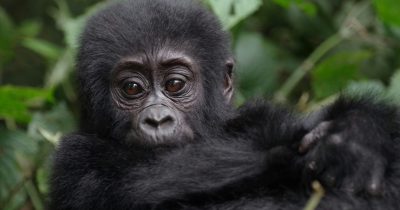
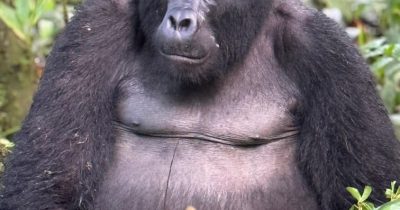
How long does gorilla trekking last? Gorilla Trekking is a once-in-a-lifetime experience that every primate enthusiast will surely enjoy and remember for a lifetime. You and other primate lovers get the opportunity to get up close and personal with some of the jungle’s most majestic and gigantic creatures as they feed, socialise, rest, or even mate. While it is an unforgettable and jaw-dropping sight to witness mountain gorillas in their natural habitat, it can take some time to locate and spot them in the dense forests where they live. These endangered creatures, totalling about 1,080 individuals, are found in only three countries: Uganda (where they reside in Bwindi Impenetrable and Mgahinga Gorilla National Parks), Rwanda (where they live in Volcanoes National Park), and the Democratic Republic of the Congo (where they reside in Virunga National Park).
It is always significant to bear in mind that while out in their natural habitats (high on the mountains, in dense forests), we are in the wild (and not in a confined place like a zoo), and hence we expect anything to happen. While manoeuvring and navigating the forests, we are entering their territory. We can’t predict when the mountain gorillas will be located, so sit back, relax your mind, and relish your time in the forest. You will encounter a diverse range of bird species, other primates, unique tree species, colourful butterflies, and other remarkable creatures while searching for the mountain gorillas. Remember, you will be accompanied by experienced guides who are well-versed in the behaviour and habits of the mountain gorillas, ensuring your safety and enhancing your experience.
When all is said and done, our article will provide additional information on what to expect and how to make your gorilla trekking experience more exciting and memorable.
How long is a gorilla trekking adventure?
Very few tour operators will tell you this. Still, the truth is that the exact timeline of a gorilla trekking adventure varies from time to time, depending on several factors that include- the location/movement of the Giant Apes (this is the main reason), the weather at the time of tracking (as treks will be longer during the wet season whereby trails are muddy and slippery), and the pace of movement. All in all, you should expect a typical gorilla trekking adventure to last anywhere between two and seven hours (including the one hour you will spend in the presence of mountain gorillas). The unpredictability of the trek adds a thrilling element to the adventure, making it even more exciting.
Usually, a typical gorilla trekking adventure will take two to seven hours because you must navigate the forest on foot in search of the endangered Giant Apes. Depending on the time of the year, it might be necessary to venture further into the forest to find the allocated gorilla family.
For instance, you might take a shorter time finding a particular gorilla family in the wet season than in the dry season when they enter deeper into the forest to find food, extending the adventure’s length slightly. While this is true, gorilla treks tend to be longer in the wet season because the pace of trekkers is slower. This is mainly attributed to the heavy rains, which make forest floors damp and muddy, thus making it difficult to navigate through the jungles while searching for the mountain gorillas.
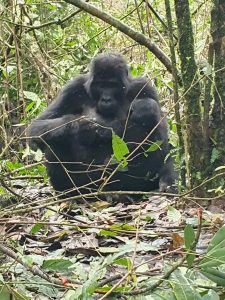
Movement/location of the gorilla family that you are allocated to track
Mountain gorillas live in the wild, which means they are constantly on the move to find food and establish new nests (they create new ones every day). Therefore, the further they are from the starting point, the longer it will take to see them. No one dictates how the mountain gorillas will move on a particular day, so it is sometimes difficult to predict how long the gorilla trekking adventure will last. The closer the mountain gorillas are to the starting point, the shorter the trek; the further they are from the starting point, the longer the trek.
Age of trekkers and walking abilities: The elderly trekkers and those with reduced mobility (due to ankle/hip/knee operations or any other operation that affects walking) will affect the length of the gorilla trek. However, the good news is that visitors can hire porters to be lifted on sedan chairs during gorilla trekking.
Things to do to keep up with gorilla treks
As with any complex undertaking, preparation is essential for gorilla trekking. There are several things you can do to prepare your body and mind for this life-changing adventure. First, it’s crucial to gradually increase the intensity of your workouts (hiking and trekking) as you get closer to your gorilla trekking date. This physical preparation is not just necessary; it’s essential for avoiding injuries and preparing your body for the demands of the activity.
Secondly, intensify cardiovascular activities like swimming, running, and cycling, as they improve your overall fitness levels. Strength training exercises, such as weightlifting, sit-ups, and push-ups, can also help build muscle strength. Additionally, you can improve flexibility by practising yoga, a form of stretching exercise.
During the Gorilla Trek
On a lighter note, you can choose easier gorilla treks. While we say the duration and intensity of gorilla treks are difficult to predict (considering mountain gorillas are always on the move), there are habituated gorilla families that are considered “easier to trek” than others because of their home range. These families are often closer to the starting point, making the trek shorter and less strenuous. For example, the Susa group in Rwanda is known for its relatively more straightforward treks due to its proximity to the starting point. Your tour operator can provide more information on these families and help you choose the one that best suits your fitness level and expectations.
Always listen to your body during gorilla treks. While meeting face-to-face with mountain gorillas is a dream for many travellers, always know your limits and don’t push too hard. Don’t opt for the more challenging treks if you aren’t physically fit, and always feel free to take a break when you feel sore or tired. It is also advisable to stay hydrated at all times, so drinking at least 2 litres of water is recommended. Remember, your safety and comfort are of paramount importance.
Other forest life you will see during gorilla trekking.
While the primary goal of gorilla trekking is to see the endangered mountain gorillas, the adventure offers much more. You’ll have the chance to spot a variety of forest life, including birds like Regal sunbirds, Dusky Crimsonwing, Shelley’s Crimsonwing, handsome francolin, Stripe-breasted tit, Rwenzori batis, Kivu ground thrush, Red-throated alethe, and many others. You’ll also encounter a variety of mammals, butterfly species, and different reptile and amphibian species. With experienced Ranger guides providing comprehensive information, every sighting becomes an exciting learning opportunity, enriching your experience and adding to the thrill of the adventure.
What should you bring with you for gorilla trekking?
When heading out for a gorilla trekking adventure, be sure to pack the necessary items for a memorable experience. Regardless of the season, you should bring a rain jacket because you never can tell when the skies choose to surprise you with rain during trekking. You must also get a good camera because you can’t afford to miss capturing images of an infant gorilla jumping on tree branches or watching them groom each other. You will also need sunscreen, a reliable backpack for carrying essential items during the trek, a good pair of binoculars, long cotton socks, gardening gloves, a safari hat, a packed lunch, sufficient drinking water, and a first aid kit.