
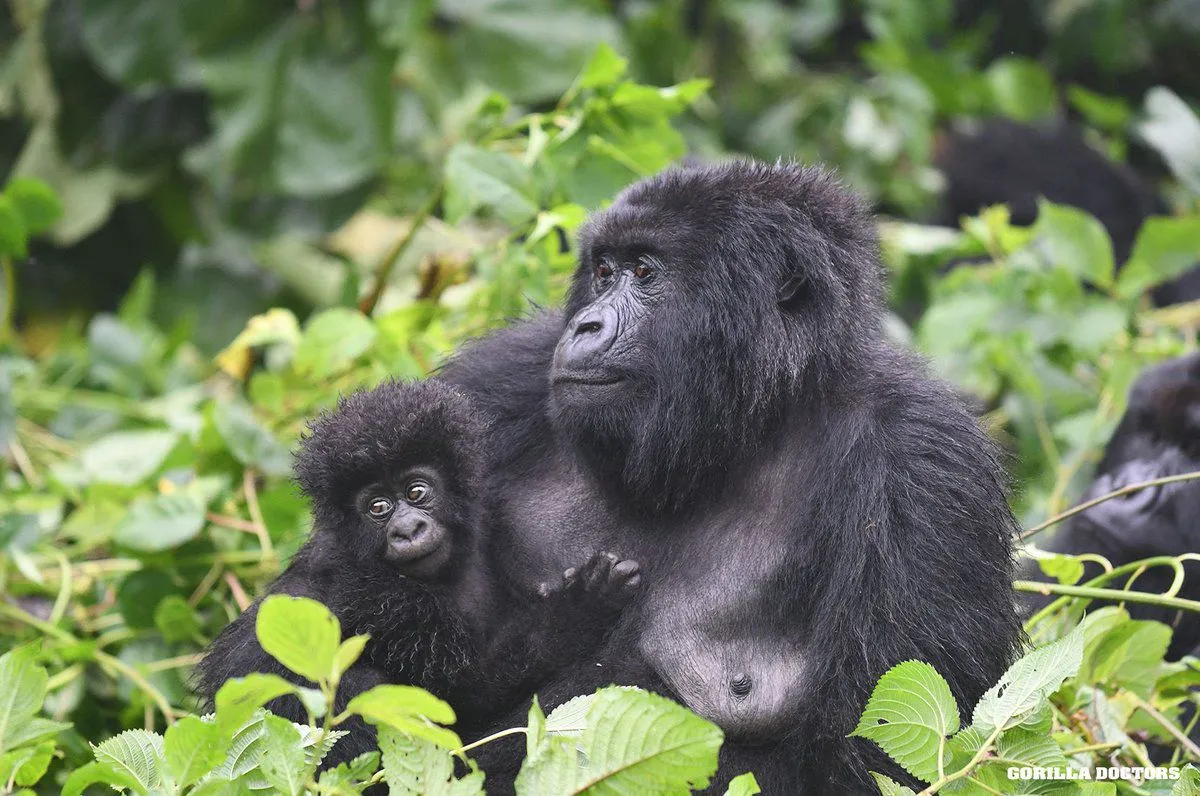
Mountain Gorilla Family
Mountain gorillas (Gorilla beringei beringei) live in cohesive social groups led by experienced males and supported by a network of females and young individuals. Watching a mountain gorilla family, whether in the wild or through conservation-based tourism, can feel like observing a living community rather than a collection of animals. Yet the calm atmosphere you may notice in a moment is built on complex relationships, routines shaped by food availability, and careful social dynamics that keep a group stable in a demanding rainforest environment.
Understanding a mountain gorilla at the family level requires considering three interconnected aspects: structure, social behaviour, and daily life. Together, they explain how groups remain cohesive, how individuals cooperate and communicate, and why the gorilla’s seemingly relaxed pace is actually the result of a sophisticated set of survival strategies. Mountain Gorillas are found only in 3 countries: Uganda, Rwanda, and Congo. To be more specific, you can only see them when you book to see them in the 3 parks of Bwindi Impenetrable Forest National Park in Uganda, Volcanoes in Rwanda and Virunga National Park in Congo.
What is a Mountain Gorilla Family Structure?
A mountain gorilla group is typically composed of several members organised around a dominant silverback. Although group size and composition vary, the structure often includes:
One dominant male (the silverback)
The silverback is usually an adult male that has the strength, maturity, and experience to lead the group. In many cases, he is the father or an uncle to some of the infants and juveniles, though gorilla paternity can be complicated. The silverback’s role is not only to protect the group but also to provide direction in movement, resting decisions, and conflict mediation.
Females
Groups usually include two or more adult females. These females do most of the day-to-day foraging and are crucial to the group’s continuity. Many females are related to each other or may have formed the group through transfers from other groups over time.
Young gorillas
Typically, the group includes infants, juveniles, and sometimes adolescents. Young animals depend on adult care and learning from older family members, especially their mothers and the wider social group.
This family organisation is sometimes described as stable over long periods, but it isn’t rigid. Groups can change due to births, the joining of new females, or changes in the silverback’s status.
Group Stability and Transfers
Female gorillas often transfer between groups at certain life stages, which helps maintain genetic diversity across the population. When females join a new group, they may initially be cautious or reserved, slowly building social connections. Over time, many females develop strong bonds with one another and with the silverback.
New births also strengthen the group’s continuity. Infants are often carried by their mothers early on and gradually begin to move with the group as they grow. The young learn key behaviours through observation, play, and direct social interaction.
What is the Role of a Silverback in a Gorilla Family?
The silverback is often portrayed as the group’s “boss,” but mountain gorilla leadership is more subtle than that. The silverback’s influence is real, yet many day-to-day decisions are shaped by the foraging needs and preferences of females, as well as the group’s overall comfort and safety.
Protection and Deterrence
One of the silverback’s most important functions is defence. Predators are a threat in some environments, and rival gorillas can also challenge group stability. When danger approaches, the silverback may: move between threats and the group, display size and strength through posturing or vocalisations, or use behaviour to discourage potential conflict.
Interestingly, aggressive encounters do not occur constantly. Often, gorillas rely on communication and intimidation rather than physical fighting. This reduces injury risk and preserves energy.
Social Mediation
The silverback may also help reduce tension within the group. If conflict arises, such as a young gorilla acting inappropriately or a female challenging social boundaries, the silverback’s presence and reactions can calm situations. In many cases, his role is to enforce group harmony indirectly, using body language, vocal cues, and proximity.
Movement Decisions
As the group moves through the forest, the silverback influences pacing and route selection, but females remain central to feeding success. If food is scarce or conditions change, the group’s movement pattern adapts quickly. The silverback supports this flexibility rather than overriding it.
Social Life among the Gorillas (Bonds, Communication, and Cooperation)
Mountain gorillas communicate constantly through posture, facial expressions, vocalisations, gestures, and contact. Social behaviour helps maintain stability, especially in the face of limited resources, dense vegetation, and the need to avoid conflict.
Contact, Grooming, and Tolerance
A well-known feature of gorilla social life is tolerance and careful contact. Groups often spend long periods resting together, and during this time, you may see: gentle physical contact, occasional grooming (especially by adults to remove debris or parasites), sitting close and resting in a coordinated way.
Grooming strengthens bonds and helps reduce irritations. It also offers opportunities for young gorillas to observe adult behaviour and develop social “rules” for acceptable interaction.
Vocalisations and Body Language
Gorillas use vocal signals to coordinate and communicate. A silverback may produce deep calls to assert presence or to coordinate group movement. Other members may respond with vocalisations or by altering posture. Body language is equally important: chest-beating or aggressive posture may signal threat, open, relaxed body posture can signal calm, and a mother’s careful handling of an infant may communicate security and patience.
Rainforests are acoustically complex, so communication must be reliable over moderate distances. That’s one reason gorilla social behaviour is so focused on proximity, repeated signals, and consistent group patterns.
Play and Learning in Young Gorillas
Young gorillas learn socially through play. Play can involve chasing, mock sparring, and rolling or tumbling. These behaviours build coordination and teach how to manage energy without causing real harm. At the same time, older gorillas, especially the mother and the broader family, teach boundaries: when play becomes too rough, adults intervene or redirect the young.
Infants, in particular, rely on social learning. They follow adults, test their strength through light play, and gradually begin to forage independently. Mothers often remain the primary emotional anchor, but siblings and other females can also contribute to the young’s comfort and development.
Daily Life of a Gorilla Family
The life of a mountain gorilla family revolves around one central task: finding enough high-quality food to support energy needs. Daily routines are shaped by the availability of leaves, stems, shoots, fruit, and sometimes other plant components.
Morning: Moving and Feeding
A Mountain gorilla family day often begins with movement as the group searches for food. The morning can be active, with individuals travelling through vegetation and selecting feeding sites. Females typically lead much of the foraging attention because their nutritional needs strongly shape where the group should go. The silverback and other members follow closely, ensuring safety and coordinating spacing.
Midday: Rest and Social Interaction
As the day progresses and heat builds or as the group finds a suitable area, the gorillas settle into resting. Rest periods are not simply idle time. They offer: digestion time, social bonding, reduced movement costs, and observation of the environment.
This is when grooming and gentle contact become more visible. It’s also a time when young gorillas practice social behaviours at a slower pace.
Afternoon: Continued Foraging and Flexibility
Feeding continues through the afternoon, and the group may relocate depending on food density. If a particular feeding area has been depleted or weather changes, the group adapts. Mountain gorillas are flexible in their movement patterns, but they remain consistent in their group cohesion. They do not move randomly; they track resources and maintain proximity.
Nest Building: Nighttime as a Carefully Managed Routine
Gorillas build nests every night. A nest is not a single fixed structure; it is a sleeping platform made from branches, leaves, and vegetation found nearby. Nest building is part of daily life and is performed with care, often by individuals in the group.
Building nests requires energy and coordination, but gorillas manage this as part of their natural rhythm. Typically, the group moves to a sleeping area, then individuals settle and construct nests suited to their size and preference.
Reproduction and Maternal Care among a Gorilla Family
A Mountain gorilla family persists over time through reproduction, and maternal care is central to young survival. Female gorillas give birth after lengthy development, and infants require constant attention early in life.
Mother-Infant Bond
Mothers carry and protect infants, gradually easing them into independent movement. This process is gradual: early infant dependence on maternal contact, gradual exploration of the immediate surroundings, and increased participation in group foraging behaviours.
The mother’s presence reduces stress and provides stability. Even when the group moves, she remains the “centre” for the infant’s sense of security.
Conflict and Resolution: How the Group Stays Together
Even cohesive families experience tension. Conflicts may arise from: food competition at feeding sites, competition for social attention, misunderstandings during play or movement, challenges to hierarchy, especially among males.
Resolution often depends on communication rather than violence. When tension escalates, the silverback may intervene through posture, vocalisations, or positioning. The goal is not dominance for its own sake but maintaining group safety. Once conflict is resolved, gorillas return to calmer routines, feeding, resting, grooming, and nest building.