
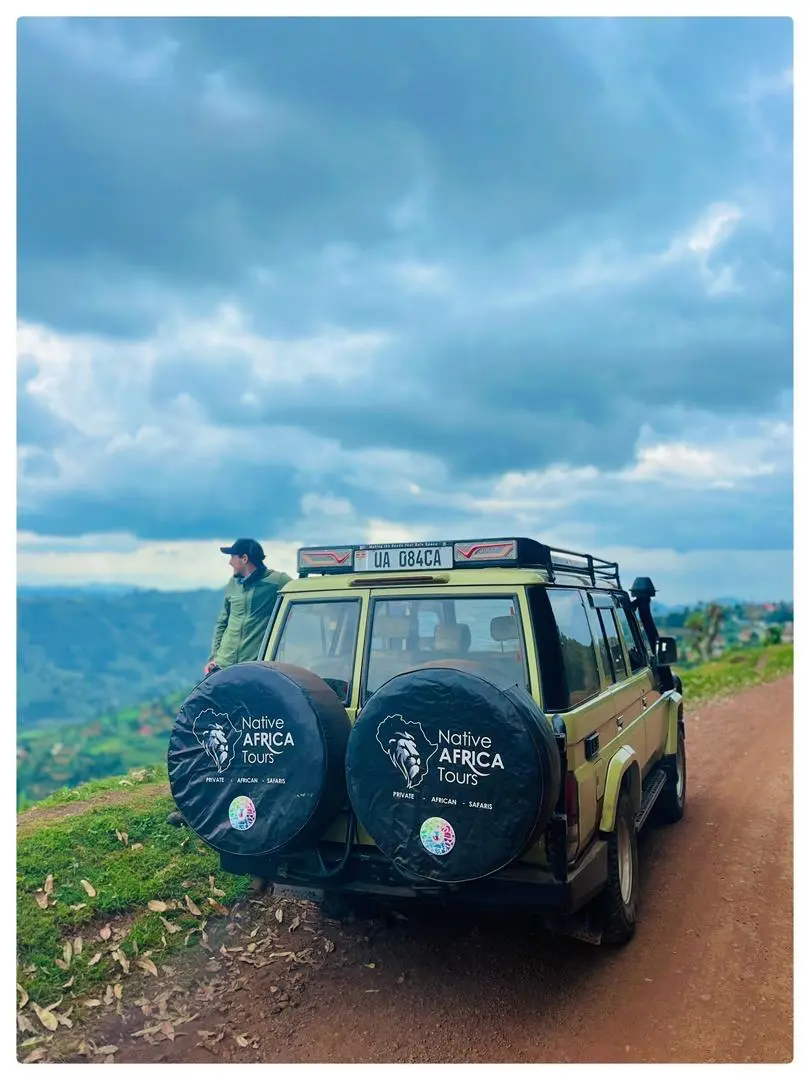
Off the Beaten Path Safari in Uganda
When the global imagination turns to Uganda, the image is almost invariably dominated by the Silverback Mountain Gorilla. The mist-shrouded mountains of Bwindi Impenetrable Forest and the playful chimpanzees of Kibale are indeed world-class attractions that justify the country’s nickname as the “Pearl of Africa.” However, for the seasoned traveller or the adventurous soul seeking solitude and raw wilderness, Uganda harbours secrets that lie far beyond the standard tourist circuit. An off the beaten path safari in Uganda offers travelers a rare opportunity to discover the country’s hidden gems away from the usual tourist crowds.
While the main parks are magnificent, they can often feel crowded with the hum of 4×4 engines and the chatter of excited groups. To experience the true, wild heartbeat of Uganda, one must venture off the beaten path safari. These are the places where the roads are rough, the infrastructure is sparse, and the wildlife is utterly unhabituated to human presence. This is the domain of the explorer, offering a safari experience that feels less like a guided tour and more like a discovery.

Pian Upe Wildlife Reserve
In the northeastern reaches of Uganda, lying on the floodplains of the mountain Nyange, lies Pian Upe Wildlife Reserve. It is the second-largest protected area in the country, yet it receives a fraction of the visitors that flock to Queen Elizabeth or Murchison Falls. For years, this area was ravaged by poaching, but recent intensive conservation efforts have seen it rebound spectacularly.
Pian Upe is a landscape of stark beauty. It is a semi-arid expanse of red earth, rolling savannah, and dramatic inselbergs (isolated rock hills) that rise like islands from the plains. The vegetation is a mix of acacia savannah and grassland, creating an ethereal, open atmosphere reminiscent of Kenyan parks but without the crowds.
The wildlife here is distinct. Pian Upe is home to one of the last remaining populations of Roan Antelope in Uganda, a large, majestic, horse-like antelope rarely seen elsewhere in the country. It is also a stronghold for the endangered Cheetah, which has successfully been reintroduced and is now breeding. Here, you can also find the Lesser Kudu, Oribi, and Striped Hyena. A safari in Pian Upe feels like a private viewing; you can drive for hours without seeing another vehicle, surrounded only by the silence of the plains and the rustle of the wind through the acacia thorns.
Semuliki Valley National Park
Tucked away in the extreme corner of western Uganda, where the Ituri Forest of the Congo drains into the Albertine Rift, lies Semuliki Valley National Park. This is an extension of the vast Ituri rainforest, making it one of the most ecologically diverse areas on the continent. It is a place that feels ancient and slightly primaeval.
Semuliki is famous for two things: its birds and its geothermal activity. The Sempaya Hot Springs are a fascinating geological spectacle, where boiling water jets out of the ground at high pressure. The local community has legends about these springs, and guides can demonstrate how the boiling water can cook an egg in minutes.
But for the true off-beat adventurer, the appeal of Semuliki is the “toxic” forest. It is a lowland tropical rainforest, distinct from the high-altitude forests of Bwindi. This density creates a challenging but rewarding environment for birding. It is the only place in East Africa where you can find the almost mythical Shoebill Stork with some reliability in the marshes of Lake Albert. Furthermore, it hosts 46 Guinea-Congo forest biome species found nowhere else in East Africa, including the Nkulengu Rail and the Spot-breasted Ibis. Walking through the steamy, mosquito-rich forest here feels like entering a different world—a true jungle experience far removed from the sanitised trails of the mainstream parks.
Kidepo Valley National Park
While Kidepo has gained more notoriety in recent years, its remote location in the far northeast, bordering South Sudan and Kenya, keeps it relatively exclusive. It is a long and arduous drive from Kampada, or a flight, but those who make the journey are rewarded with what is arguably the most spectacular scenery in Uganda.
Kidepo is a savannah paradise, flanked by the rugged, volcanic Napore-Nyagia mountain range and the Morungole range. The park’s isolation has preserved a way of life that feels authentically wild. The wildlife here is prolific and includes species found nowhere else in the country, such as the Cheetah, the Ostrich, and the Bat-eared Fox.
The true “off the beaten path” experience in Kidepo lies not just in the game drives, but in the cultural immersion with the Ik people. Living high in the Morungole Mountains, the Ik are one of Uganda’s smallest and most marginalised ethnic groups. A hike to visit them is physically demanding but culturally unparalleled. They have a unique language and a complex social structure that has adapted to their harsh environment. Visiting the Ik is a window into a culture that has resisted assimilation, offering a human connection that is as moving as the wildlife sightings.
Mount Elgon National Park
While hikers flock to the rugged peaks of the Rwenzori Mountains (“Mountains of the Moon”), Mount Elgon remains a peaceful alternative. Located on the eastern border with Kenya, this massive extinct volcano has the largest base of any free-standing mountain in the world.
An off-the-beaten-path safari here involves exploring the caldera, a vast crater bowl roughly 8 kilometres across, which is filled with jagged peaks, hot springs, waterfalls, and cliffs. The trails here are quiet, frequented mostly by hikers and a few hardy campers.
The highlight of a Mount Elgon adventure is the ascent to Wagagai Peak, but the journey through the montane forest is equally rewarding. This is the domain of the Forest Elephant and the Buffalo, but they are rarely seen. Instead, the experience is about the flora: the giant lobelias and groundsels that look like alien plants against the sky. Exploring the caves, particularly Kitum Cave, is a highlight. Elephants venture deep into the caves at night to mine for salt using their tusks, scraping the walls. Visiting these caves during the day, surrounded by the smell of salt and bat guano, is a moody and atmospheric experience.
The Nile’s Corridor
While Murchison Falls National Park is one of Uganda’s oldest and largest, the vast majority of tourists stick to the northern bank for game drives and the ferry crossing. The southern bank, known as the Nile Delta, remains a quiet frontier.
Accessing the Delta usually involves a boat launch from Paraa that heads downstream towards Lake Albert. This area is a labyrinth of papyrus swamps, lagoons, and sandbanks. It is a haven for birders, hosting the rare Shoebill, but it is also a fantastic spot for fishing and silent river safaris. Staying at the small, eco-friendly lodges on the southern bank offers a completely different perspective of the park. Here, you can take night game drives with virtually no other vehicles around, listening to the roar of lions and the whoop of hyenas across the river without the background noise of diesel engines. It is a side of Murchison that feels private and undisturbed.
The Concept of the “Slow Safari”
Travelling off the beaten path on a safari in Uganda requires a shift in mindset. This is not about ticking off the “Big Five” in two days. It is about the “Slow Safari.” It is about taking the time to navigate the red-dust roads, stopping to talk to the cattle-herding Karamojong warriors in the northeast, or watching a thunderstorm roll across the savannah in Pian Upe without another vehicle in sight.
The Slow Safari requires a degree of resilience. The roads can be rough, the facilities basic, and the internet non-existent. But in that lack of connectivity lies the true magic. You are forced to engage with your surroundings – the smell of the rain, the vastness of the sky, and the rawness of nature.
The Off the Beaten Path Safari in Uganda offers a glimpse of a continent that is rapidly vanishing. They are places where the wilderness still rules, and humans are merely visitors. From the baking plains of Pian Upe to the steamy jungles of Semuliki and the rugged peaks of Kidepo, these are the adventures that define a true explorer. In a world that is becoming increasingly mapped and accessible, walking the untrodden paths of Uganda remains one of the ultimate travel experiences.
We at Native Africa Tours excel at designing custom Uganda safaris, balancing adventure, wildlife, culture, and comfort. Our skilled safari guides help travellers discover Uganda’s hidden gems, ensuring safe, ethical, and unforgettable journeys throughout the Pearl of Africa.