
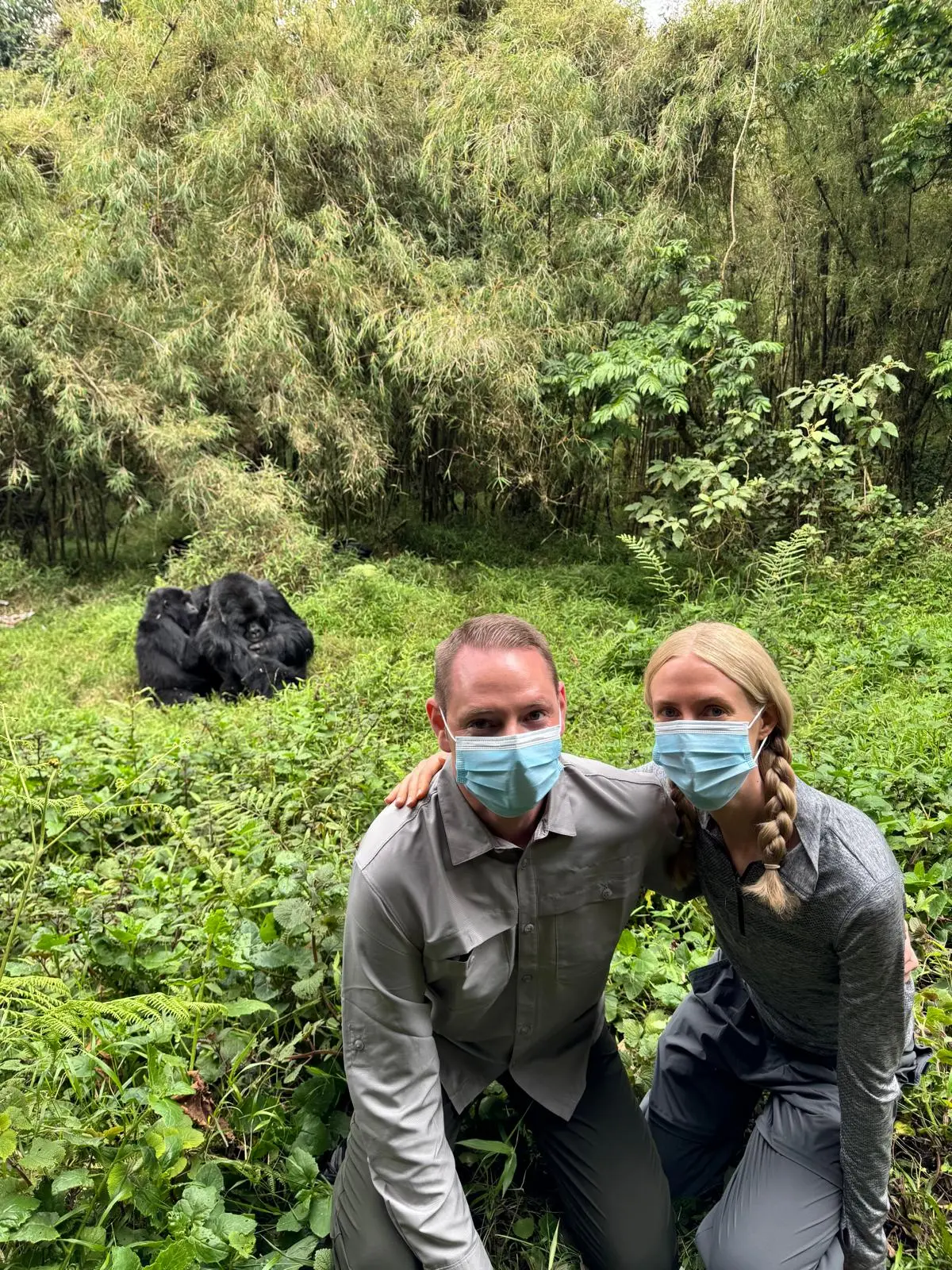
The one-day gorilla trekking Rwanda cost starts with the gorilla trekking permit, currently US$1,500 per adult international non-resident. Your total budget also needs to cover transport from Kigali, meals and any additional services. Understanding these costs before booking helps you compare tour packages and plan your safari with confidence. A complete one-day gorilla trekking tour in Rwanda from Kigali can cost much more than the permit alone because it also includes an early-morning transfer to Volcanoes National Park, a professional driver-guide, and the coordination needed to reach the park headquarters on time. The final price depends on the services included, how many travelers share transport, and whether you need additional arrangements.
For travelers with limited time in Rwanda, a one-day gorilla trekking safari lets you visit mountain gorillas without changing hotels or spending an extra night near the park. However, understand the full cost before booking. A price advertised without the permit may look attractive at first, but it can be misleading if you later discover the largest expense isn’t included.
At Native Africa Tours, we help travelers plan gorilla trekking experiences in Rwanda and Uganda, including private transfers, permits, and tailor-made safari arrangements. If you are considering a one-day trip from Kigali, this guide explains the main costs, gives practical budgeting examples, and shows you what to check before confirming your booking.
How Much Does One-Day Gorilla Trekking in Rwanda Cost?
For an international non-resident, the official Rwanda gorilla trekking permit currently costs US$1,500 per adult. This is the main fixed expense in a one-day gorilla trekking budget. The remaining cost depends on the tour operator, transport arrangements, meals, and optional services.
As a practical planning guide, a complete one-day trip from Kigali may fall around US$1,900 to US$2,100 per person for a private arrangement, depending on the number of travelers and the package inclusions. This is an indicative budgeting range, not a fixed Native Africa Tours quotation or an official industry tariff. The exact price must be confirmed for your travel date.
A solo traveler generally pays more per person because the vehicle, driver-guide, and other transport costs can’t be shared. Two travelers can split those expenses, while a group of four or six may further reduce the transport cost per person. However, each eligible traveler must pay for a gorilla permit, so sharing a vehicle does not reduce the permit fee.
Here is an illustrative comparison to help you understand the budget:
| Expense or Tour Arrangement | Illustrative Amount |
|---|---|
| Gorilla trekking permit per international non-resident adult | US$1,500 |
| Private vehicle and driver-guide for the day | US$250–US$350 per vehicle |
| Lunch, where not included | US$15–US$30 per person |
| Optional porter | Approximately US$10–US$20, subject to local rates |
| Additional personal expenses | Depends on the traveler |
Note: These are illustrative budgeting estimates, not fixed Native Africa Tours prices. Confirm current rates and package inclusions before booking. These transport, meal and porter figures are planning estimates, not official tariffs or a published Native Africa Tours price list. Actual rates can differ by vehicle, service provider, season, and arrangement. Confirm all charges with your operator before paying.
For example, if two travelers share a vehicle costing US$300, each person’s transport share is US$150. Add the US$1,500 permit and an illustrative US$20 lunch, and the subtotal is US$1,670 per person. This is a simple budget calculation, not a complete tour quotation: any applicable taxes, extra services, or costs not covered by the vehicle rate must still be accounted for.
The most important question when comparing prices is therefore not simply, “How cheap is the tour?” It is, “What is included in the total amount I will actually pay?”
1. The Rwanda Gorilla Trekking Permit: US$1,500 Per Person
The gorilla trekking permit is the highest single cost for most international non-resident visitors to Rwanda. The Rwanda Development Board currently lists the standard adult foreign visitor permit at US$1,500.
The permit gives you access to the regulated gorilla-tracking experience in Volcanoes National Park, subject to applicable conditions and a confirmed booking. The park assigns visitors according to its arrangements, and the viewing period is limited to one hour after the gorillas are located.
The permit is not the same thing as a complete safari package. It does not automatically pay for your transfer from Kigali, accommodation, international flights, meals outside the services specified by the operator, travel insurance, or personal purchases. These expenses must be considered separately unless your quotation explicitly includes them.
Because the permit represents such a large share of the total budget, always check whether an advertised one-day tour price includes it. Some operators advertise a transport package that excludes the permit, while others quote an inclusive price that covers both the permit and the main travel arrangements.
Are Rwanda gorilla permits cheaper for residents or African visitors?
Rwanda’s published permit tariff includes different visitor categories. In addition to the US$1,500 foreign visitor rate, the official booking information lists promotional rates for certain categories, including eligible residents and African citizens. However, the applicable conditions and dates matter.
The Rwanda Development Board states that its promotional rates do not apply during June to October 2026. Eligible visitors must meet the relevant documentation requirements, and East African citizens must present acceptable identification. A traveler should never assume that nationality, residence, or a passport alone automatically qualifies them for a particular rate.
Before preparing your budget, verify the tariff that applies to your status and travel date directly with the official booking system or your tour operator. Do not use a promotional rate in your calculations until eligibility has been confirmed. For most overseas visitors planning a one-day gorilla trekking tour from Kigali, the US$1,500 non-resident permit remains the starting point for budgeting.
2. Transport from Kigali to Volcanoes National Park
Transport is the next major component of a one-day gorilla trekking budget. The journey from Kigali to the Kinigi area of Volcanoes National Park generally takes around two to three hours by road, depending on your starting point and road conditions.
Since visitors must report for the morning briefing around 7:00 a.m., the transfer usually begins very early. A pickup around 4:00–4:30 a.m. is common, but confirm the exact time for your tour.
A private vehicle with a professional driver-guide is often the most convenient option. It provides a planned pickup, direct transport to the park, and a driver who can coordinate the return journey after the trek. The cost may depend on the vehicle type, fuel, driver services, route, waiting time, and any additional stops.
For budgeting purposes, an illustrative private vehicle and driver-guide allowance of US$350–US$450 for the day can help demonstrate how the price is calculated. This is an estimate, not a guaranteed market rate. A specialist safari vehicle, a longer route, or additional services may cost more.
Why the number of travelers affects the price
The permit is charged per traveler, but the main vehicle expense is commonly shared. This makes group size an important factor in the final per-person price.
Consider a vehicle costing US$450 for the day. If one traveler pays for the vehicle alone, that traveler is allocated the full US$450. If two people share, the transport allocation falls to US$225 each. If four people share, it falls to US$113 each, and if six people share, it falls to US$75 each.
The table below illustrates the difference. It excludes permits and other expenses so that you can see the effect of sharing transport alone.
| Travelers Sharing a US$300 Vehicle | Transport Cost per Person |
|---|---|
| 1 traveller | US$450 |
| 2 travellers | US$225 |
| 3 travellers | US$105 |
| 4 travellers | US$113 |
| 6 travellers | US$75 |
This is a mathematical example, not a promise that every vehicle or group can be booked at these exact rates. The actual cost depends on the operator’s quotation and vehicle capacity. For couples, friends and families traveling together, sharing a private vehicle can improve the value of the tour. Solo travelers may still prefer a private trip for flexibility and convenience, but they should expect a higher per-person cost.
3. Meals, Drinking Water and Small Expenses
Food and drinking water are smaller expenses than the permit and transport, but they still belong in your budget.
A one-day trek starts early and may continue into the afternoon because the time needed to find the assigned gorilla family varies. Some operators include lunch, while others exclude it or specify that only selected meals are covered. Confirm this before booking rather than assuming that every package includes the same services.
For a simple planning example, allow US$15–US$30 per person for lunch if it is not included. Your actual expenditure may be lower or higher depending on where you eat and what you order. Some operators may arrange a packed meal or include lunch at a restaurant as part of their package.
They may also supply drinking water during the road journey. Check whether the tour price includes it and whether you should bring a refillable bottle. Follow the park’s rules about eating and drinking near the gorillas. Other small expenses may include snacks before or after the trek, tips, souvenirs, and personal purchases. These aren’t required tour costs, but a modest contingency can help avoid surprises.
4. Do You Need to Pay for a Porter?
A porter is optional, but the service can be helpful during a gorilla trek. Porters can carry your daypack and provide assistance on sections of the trail where the footing is difficult.
The terrain can be steep, muddy or slippery, and the walk may last several hours. Hiring a porter can therefore be useful for travelers who prefer not to carry their own belongings or who would appreciate extra support on the trail.
Porter charges are generally separate from the gorilla permit and may not be included in a standard one-day tour. As a rough budget, set aside about US$10–US$20, but confirm the current local charge when making your arrangements. You don’t have to hire a porter just because you are trekking. The decision depends on your comfort, physical needs, and preferences. If you choose to hire one, the service also provides an income opportunity for local community members.
5. Does One-Day Gorilla Trekking in Rwanda Require Accommodation?
A one-day gorilla trekking tour from Kigali is designed to return you to the city the same day, so an overnight stay near Volcanoes National Park isn’t automatically required. However, you should consider where you will sleep before and after the trek. Since the park briefing is scheduled for the early morning, travelers arriving in Rwanda late the previous night may need to stay in Kigali before the tour. You may also need accommodation after the trek if you are not leaving Rwanda immediately.
If your hotel is already booked, check whether the room rate is part of your overall travel budget or included in the tour package. The cost of a hotel in Kigali is separate from the gorilla permit unless your quotation explicitly states otherwise. Staying near Volcanoes National Park the night before trekking can be a more relaxed option, especially for visitors who dislike very early starts. However, it changes the logistics and may increase the total trip cost through accommodation and extra transfers.
Compare the one-day option with a two-day tour before deciding. For travelers with limited time, the Kigali day trip can be convenient. For those who prefer a slower pace, an overnight arrangement may offer a more comfortable experience.
6. What Is the Total Cost for One-Day Gorilla Trekking in Rwanda?
To estimate your total budget, combine the permit, transport, meals, and any additional services that you need. The following examples use the US$1,500 international non-resident permit and illustrative transport and meal figures. They explain the arithmetic and should not be treated as official Native Africa Tours prices.
Example A: One traveler booking a private day trip
Suppose a solo traveler pays for a private vehicle and driver-guide costing US$300. Lunch costs US$20, and the gorilla permit costs US$1,500.
The subtotal is:
-
Gorilla permit: US$1,500
-
Private transport: US$300
-
Lunch: US$20
-
Illustrative subtotal: US$1,970
This example assumes the vehicle price covers the driver-guide and the agreed transport services. If it does not include those services, or if other fees apply, the final cost will be higher. Accommodation, international flights, visa fees, insurance, tips, and personal purchases are not included.
Example B: Two travelers sharing a private vehicle
Now consider a couple traveling together. The same US$300 vehicle cost is shared between two people, reducing the transport allocation to US$150 per person. Each traveler pays for an individual permit and lunch.
The per-person calculation is:
-
Gorilla permit: US$1,500
-
Shared transport: US$225
-
Lunch: US$20
-
Illustrative subtotal per person: US$1,745
For two travelers, the combined subtotal would be US$3,490. This example shows how sharing transport reduces the per-person cost, but the final quotation may differ depending on the services and charges included.
Example C: Four travelers sharing transport
A group of four shares the same illustrative US$300 vehicle cost. Each person’s transport share is US$75.
The per-person calculation is:
-
Gorilla permit: US$1,500
-
Shared transport: US$112.5
-
Lunch: US$20
-
Illustrative subtotal per person: US$1,632.5
The group subtotal would be US$6,530 for four travelers, before any additional costs not included in the example.
This is why group size can make a difference even when everyone pays the same permit rate. However, a lower transport allocation does not mean the entire tour price will fall by the same amount. Vehicle capacity, group requirements, service standards, and other expenses still matter.
Example D: Comparing with a published one-day tour price
For additional context, one operator publicly lists its one-day Rwanda gorilla trekking tour at US$1,970 for a solo traveler, US$1,830 per person for two travelers, US$1,745 for four travelers, and US$1,692 for six travelers. Those prices include the non-resident gorilla permit and specified transport and tour services.
These figures are an example of a competitor’s published pricing, not a Native Africa Tours offer. They show how an inclusive tour quotation can be higher than a simple permit-plus-transport calculation because the package may cover other services, operational costs and taxes.
When comparing quotations, check whether both operators include the same items. A tour advertised for US$450 excluding the permit is not directly comparable with an inclusive tour costing more than US$1,950 per person.
7. Why Is One-Day Gorilla Trekking in Rwanda So Expensive?
The cost is driven primarily by the permit and the logistics of reaching the park in time for the morning briefing. The permit alone accounts for US$1,500 for an international non-resident adult, before transport or meals are considered. Gorilla trekking is a tightly managed wildlife experience. The park limits the number of visitors allowed to observe each habituated gorilla group, and the viewing time is restricted to one hour. These rules reduce disturbance and support gorilla protection.
The transport component is also different from a short city excursion. The driver-guide must collect guests early, make the journey to the park, coordinate the arrangements, and wait while the trekking activity takes place. The return time depends on how long the trek takes, so the vehicle is committed to the excursion for much of the day.
Finally, a complete tour may include permit coordination, fuel, a professional guide, vehicle maintenance, taxes, meals, and administrative arrangements. These services have costs even though the visitor spends only one hour observing the gorillas. The best way to assess value is to look at the full experience and what is included, rather than comparing prices without checking the details.
8. Can You Reduce the Cost of One-Day Gorilla Trekking in Rwanda?
The gorilla permit is the largest expense for most international non-residents, so the biggest savings often come from transport arrangements and other services rather than the permit itself.
Traveling with a partner or group can reduce the transport cost per person when the same vehicle is shared. You can also avoid paying for unnecessary extras by checking which services are already included in your tour quotation.
If your dates are flexible, check permit availability before committing to non-refundable travel arrangements. However, do not assume that a lower advertised rate means that the permit itself is discounted. Some prices exclude the permit entirely.
Travelers who qualify for an official resident or regional tariff should verify their eligibility and documentation with the Rwanda Development Board. The applicable rates depend on visitor category, supporting documents, and the relevant dates.
You may also compare a one-day trip with a two-day itinerary. Staying near Volcanoes National Park may add accommodation costs, but it can reduce the pressure of traveling from Kigali very early in the morning. The better option depends on your schedule, comfort and overall travel plans.
Do not choose an operator solely because the headline price is the lowest. Confirm the permit, transport, guide services, meals, taxes, and cancellation terms before making a payment.
9. Is One-Day Gorilla Trekking in Rwanda Worth the Cost?
For travelers who have always wanted to see mountain gorillas but have limited time, a one-day trip can be worthwhile. It allows you to travel from Kigali to Volcanoes National Park, join the guided trek, and return to the city without arranging an overnight stay near the park.
The experience itself is distinctive. You enter the forest with trained guides and trackers, follow the assigned route, and observe a habituated gorilla family for up to one hour after it is located. You may see adults feeding, mothers caring for young gorillas, juveniles playing, or a silverback overseeing the group.
Nevertheless, a one-day trip is a long day. The drive, briefing, and trek can take many hours, and the walking conditions are not always easy. If you have mobility concerns, a tight flight connection, or prefer relaxed travel, discuss your circumstances with your tour operator before booking.
The trip’s value depends on what you want from your visit. For someone with only a day available, it can be an efficient way to experience Rwanda’s mountain gorillas. For a traveler with more time, an overnight stay near the park may create a less rushed itinerary.
10. What Should You Check Before Booking a One-Day Gorilla Trekking Tour?
Before paying for your trip, request a clear written quotation that identifies the permit cost, transport arrangements and other inclusions. Confirm that the permit is being secured for the correct date and that the names and travel details submitted for the booking are accurate.
Check the pickup time, the expected reporting time at Kinigi, and whether lunch or drinking water is included. Ask whether the price includes a professional driver-guide, fuel, taxes, and any other compulsory charges. Confirm the arrangements for payment, cancellations and changes to the booking.
Also make sure you are eligible to participate. Rwanda’s official guidance sets the minimum age for gorilla tracking at 15 years. Visitors who are unwell with a cold, flu, or another contagious illness may be denied access to protect the gorillas.
Finally, allow enough time for the return journey. Trekking duration depends on where the gorillas are located, and no tour operator can guarantee the exact time you will return to Kigali. Avoid booking an onward flight or important appointment too close to the expected end of the trip.
Frequently Asked Questions About One-Day Gorilla Trekking Rwanda Cost
How much is a Rwanda gorilla trekking permit in 2026?
The Rwanda Development Board currently lists the permit for an international non-resident adult at US$1,500. Other visitor categories may qualify for different tariffs, subject to official conditions and dates. Always verify the current price for your travel date before booking.
How much does a complete one-day gorilla trekking tour from Kigali cost?
The total depends on the permit, transport, meals, and the services included by the operator. As an illustrative planning range, an inclusive private one-day tour may cost around US$1,800–US$2,200 per person for many international visitors. This is not a guaranteed rate or a Native Africa Tours quotation. Request a dated quote to confirm the actual total.
Is the gorilla permit included in every one-day tour price?
No. Some operators advertise a transport-only package and require you to pay for the permit separately. Others include the permit in the total price. Always confirm this before comparing quotations.
Is it cheaper to book one-day gorilla trekking as a couple?
It can be cheaper per person because you can share the vehicle and driver-guide costs. Each traveler still needs an individual gorilla permit. The actual saving depends on the operator’s vehicle rate and the services included.
Can I do gorilla trekking in Rwanda without staying overnight?
Yes, a one-day trip from Kigali is possible with careful planning. You must leave early enough to reach the park headquarters for the morning briefing, and the return time depends on the trek. An overnight stay may be more comfortable if you want to avoid a very early start or have tight onward travel arrangements.
Does the US$1,500 gorilla permit include transport from Kigali?
No. The permit and the road transfer are separate costs unless you purchase a package that combines them. The permit covers the regulated gorilla tracking experience under the applicable park rules; it does not automatically cover your hotel pickup, vehicle, or meals.
Are meals included in a one-day gorilla trekking package?
It depends on the operator. Some tours include lunch, while others exclude it. Check the written quotation to see whether lunch, drinking water, and other meals are included.
Can I get a discount on a Rwanda gorilla trekking permit?
Certain visitor categories may qualify for official promotional rates, subject to eligibility and the applicable dates. Check the Rwanda Development Board booking system for the latest conditions. Don’t assume every foreign resident or African visitor automatically qualifies.
How far in advance should I book?
Book as early as practical, especially if your dates are fixed, or you intend to travel during a busy period. Permit availability is limited, and a confirmed permit is essential to the trip. Secure the permit before making other non-refundable arrangements whenever possible.
Is one-day gorilla trekking in Rwanda worth the price?
For travelers with limited time who want to see mountain gorillas, it can be an excellent experience. The permit is expensive, but the trip combines a guided forest trek with a strictly managed wildlife encounter. Consider the physical demands and the long travel day when deciding whether it suits you.
Book Your One-Day Gorilla Trekking Tour in Rwanda with Native Africa Tours
Knowing the cost of one-day gorilla trekking in Rwanda helps you plan your budget, but the final price should always be based on your travel date, group size, and required services. The most reliable way to compare offers is to confirm whether the permit, private transport, driver-guide, meals, and applicable charges are included in the quotation.
Native Africa Tours can help you coordinate the practical arrangements for your gorilla trekking adventure from Kigali. We can check permit availability, discuss your preferred travel date, and prepare a tailored quotation based on the number of travelers and the services you require.
If you are ready to plan your visit, tell us your travel date, number of people, and pickup location in Kigali. We will help you understand the costs before you confirm your booking. You can also explore our 1 day gorilla trekking tour in Rwanda for itinerary details, or browse our Rwanda safari packages if you would like to combine gorilla trekking with other experiences.
Contact Native Africa Tours today for a personalized quotation for one-day gorilla trekking in Rwanda.