

Top Day Trips from Arusha, Tanzania for Safari & Culture
Need recommendations for top Tanzania day trips from Arusha? Arusha provides effortless access to amazing wildlife parks, cultural attractions, and beautiful scenery, making it ideal for memorable day trips. Day trips from Arusha offer an ideal sampling of Tanzania’s natural and cultural marvels, encompassing Big Five game viewing in Tarangire, Masai cultural encounters, and Ngorongoro Crater exploration. Regardless of your time constraints, these popular Arusha day tours offer options for all travelers.
The Tanzania day trips from Arusha offer a perfect alternative for you to explore the country’s natural beauty and unique heritage. Arusha is usually the main starting point for most of the Tanzania tours. You can arrange unforgettable wildlife tours of Lake Manyara, Arusha, Tarangire, and the Ngorongoro Crater from Arusha. You can also have a thrilling cultural experience.
Tanzania day trips from Arusha are ideal for visitors with the desire to have a quick wildlife tour or prefer short Tanzania safaris. Despite a strict schedule, can you still appreciate Tanzania’s magic? Start your Tanzanian adventure today; it’s a once-in-a-lifetime chance to discover its wonders.
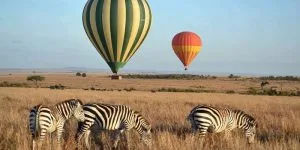
Where to go on day trips in Tanzania, starting from Arusha
From Arusha City, we’ve compiled ideal destinations for your Tanzania day trips. Incredible safari destinations lie near Arusha’s bustling city center. Their ideal locations make Tanzania day tours from Arusha easy to organize and undertake.
Tarangire National Park
Covering a land area of 2600 sq. km, Tanzania lists Tarangire National Park as its 6th biggest National Park. Tarangire National Park is famous for its large elephant herds and a smaller wildlife migration during the dry season.
Swamps, savannas, and giant baobab trees characterize Tarangire’s ecosystem etc. Diverse herbivores are visible, feeding or resting. On the Tarangire wildlife tour, you can encounter lions, cape buffaloes, wild dogs, leopards, zebras, gazelles, wildebeest, and hartebeest, among many other wildlife.
Over 550 bird species call Tarangire National Park’s diverse habitats home. Tarangire National Park’s diverse habitats include the bateleur eagle, guinea fowl, yellow-necked spur fowl, martial eagles, Maccoa ducks, secretary bird, steppe eagle, lappet-faced vulture, grey-crowned cranes, Egyptian vulture, and the Southern ground hornbills.
Tarangire also offers refuge to birds such as the curlew sandpipers, Fischer’s lovebird, olive-headed weavers, black-tailed Godwit, Lesser flamingo, Kori bustard, short-toed eagle, tawny eagle, Temminck’s stint, yellow-collared lovebird, collared pratincole, common cuckoos, African fish eagle, African jacanas, Klaas’s cuckoos, laughing dove, hartlaub’s turacos, emerald-spotted wood dove, common buttonquail, yellow-billed stork, mottled spine tailed swift, Augur buzzard, cattle egret, water thick-knee, and African open bills, etc.
Access to Tarangire from Arusha
From the heart of Arusha, Tarangire National Park is 140 km away. This is roughly equivalent to 3 hours. Because of its proximity to Arusha City, Tanzania’s day trips are easy to plan and take. Alternatively, visitors may choose domestic flights from Arusha to Kuro Airstrip or the nearby Lake Manyara Airstrip.
Lake Manyara National Park
In the Northern Tanzanian circuit, Lake Manyara National Park is renowned for its unique landscape and its tree-climbing lions. West of Arusha town, only 126 km away, lies Lake Manyara National Park, covering a compact 330 sq. km. Nature enthusiasts can explore diverse wildlife, including leopards, tree-climbing lions, zebras, buffaloes, giraffes, wildebeests, and more, during a lush day trip to Lake Manyara National Park.
Lake Manyara Park boasts diverse bird life, such as palm-nut vultures, bee-eaters, hornbills, pelicans, flamingos, and many more. Other bird species to spot include pied avocet, grey-crowned crane, African spoonbill, African hawk-eagle, great white pelicans, Baglafetch weaver, spur-winged goose, saddle-billed storks, and more.
Ngorongoro Conservation Area
Ngorongoro Conservation Area (NCA) is a magnificent protected area in the Northern circuit of Tanzania. The NCA is one of the untouched conservancy areas with all the Big 5 game and breathtaking landscapes. A trip to the Ngorongoro Conservation Area takes visitors only 2-3 hours to navigate via the 170 km route.
At Ngorongoro Conservation Area, a designated UNESCO Site, expect to explore the diversity of wildlife, including wild hunting dogs, black rhinos, golden cats, zebras, grant gazelles, wildebeests, lions, leopards, and more. VCA also supports a range of bird species totaling up to 500, including migratory and resident species. They include ostriches, African black ducks, red-billed ducks, blue-billed teal, spur-winged geese, Egyptian goose, Knob-billed ducks, cape teal, green-winged teal, yellow-billed ducks, and Northern shovelers, etc.
Arusha National Park
Arusha National Park should be the first place to consider for day trips to Tanzania. This park is 25 km away from the heart of Arusha. Road can safely access it. From the Kilimanjaro International Airport, you can spend 40 minutes driving up to the main gate of main gate. Because of its proximity to Arusha and compact size, visitors can enjoy a half-day tour or full day combined with a picnic lunch.
Arusha National Park has abundant wildlife and birds. The different wild animals to find in Arusha include zebras, leopards, colobus monkeys, elephants, and cape buffaloes. Overall, there are 400 species of birds to identify in Arusha National Park, including silvery-cheeked hornbills, African fish eagle, Southern pochard, African olive pigeon, black saw-wing, and bearded vulture, etc.
Serengeti National Park
A day trip to Serengeti National Park is possible, but you can use a flight and land at one airstrip in the park. Located: In the Northern Circuit lies the Serengeti National Park, a UNESCO World Heritage Site. The Serengeti is most famous for its powerful annual animal migration involving over 1.5 million wildebeest. The wildebeest movement also includes zebras, East African fox, elands, lesser kudus, hartebeest, Bohor reedbuck, and Thompson’s gazelles. Arusha is the closest city to Serengeti National Park, about a 4-5 hours’ drive.
At the Serengeti Plains, expect to explore a diversity of wild animals such as gazelles, leopards, elephants, hippos, hyenas, rhinos, buffaloes, giraffes, cheetahs, dik-diks, impalas, and many others. On a day trip in the Serengeti, the unique experiences awaiting you include the Great Migration, game drives, hot-air balloon, nature walks, cultural safaris, bird-watching, and many more.
The best time to go on Tanzania day trips from Arusha
Tanzania enjoys favorable weather, which makes it an all year-round destination in Africa. But to have the best experience in the wilderness, consider embarking on Tanzania day trips during the dry season. The dry months occur from June to October–the best period of the year when most of the destinations experience game viewing experiences free from disturbances or disruptions from rains. The dry season also marks the best period for tourists to witness the Great Migration in the Serengeti National Park.
What to carry for your day tour
The gear and clothes to consider packing for the Tanzania tour include long-sleeved shirts, a camera, a waterproof daypack, long trousers, a first aid kit, sunscreen, sunglasses, bottled drinking water, snacks, and a pair of binoculars. Other items include a safari hat, a sweater, long pants, valid visas, a passport, insect repellents, and many others.
In short, Tanzania’s top day trips from Arusha provide incredible adventures without needing a lengthy itinerary. Tarangire and Ngorongoro Crater offer thrilling game drives, cultural Maasai visits, and scenic Mount Meru views, catering to every traveler. Busy people with big safari dreams will love these quick trips.
Planning an unforgettable day trip from Arusha? Call Native Africa Tours today to begin planning your dream Tanzania trip; we’ll craft an unforgettable experience, one day at a time.