
Visiting Kenya in September
Visiting Kenya in September offers nature lovers a remarkable opportunity to explore the country’s abundant wildlife and other unique attractions. Kenya, East Africa’s premier wildlife tourism destination, is experiencing a transitional phase in its weather patterns. September marks the end of the long dry season. The weather conditions in Kenya in September are ideal for safaris, especially game viewing.
Visiting Kenya in September for game viewing means a great chance to explore some of East Africa’s leading destinations, including the Masai Mara National Reserve, Lake Nakuru National Park, Amboseli National Park, and Tsavo National Parks. Explore Kenya’s finest Parks on a tour to enjoy excellent encounters with the Big 5, antelopes, and birds, and witness the Mara Great Migration.
Conditions in September are favorable to even visitors interested in coastal safari experiences. If you enjoy mountaineering expeditions, September still stands out as the best time to travel to Kenya to explore the country’s breathtaking mountain summits.
The weather in September
On average, September is the month of the year when Nairobi, the capital city of Kenya, records a temperature variation of 12 to 26 degrees Celsius. The coastal region experiences temperature variations of 21 °C and 31 °C. Overall, the dry season in Kenya typically ends in September, and most destinations continue to experience pleasant weather conditions.
Due to low/no rain, Kenya’s breathtaking landscapes remain drier. Visitors are guaranteed mesmerizing views of the country’s finest wildlife and stunning landscapes. Kenya experiences a diverse range of weather conditions. The mornings and early afternoons are typically sunny, accompanied by clear skies. The late afternoons and evenings often experience short rains, but this can still allow visitors to proceed with their game viewing.
September also falls in Kenya’s shoulder season. The peak tourist season extends from July to August, after which the numbers begin to decline. This offers visitors a quieter safari experience as fewer guests come to explore the country’s attractions.
The rainfall amount received in Kenya in September is about 500mm. September also marks the start of the short rainy/wet season. In September, the rain chances increase, and although they are relatively moderate, safaris and hiking can be impacted. September remains a great month to explore Kenya on a safari.
Weather Patterns in Other Regions in Kenya
Northern Kenya experiences warm temperatures in September. The temperatures range from 25 to 30 degrees Celsius. As the night approaches, temperatures begin to drop to 15-20 degrees Celsius.
Central – This area experiences mild to cool temperatures due to its high altitude. Daytime temperatures fluctuate between 15 °C and 20 °C. In the night, temperatures drop to 5 and 10 degrees Celsius. This requires you to travel when prepared with the essential gear.
The coastal region of Kenya tends to be warm in September, with daytime temperatures rising by 25 to 30 degrees Celsius. Temperatures become milder at night, varying around 20 degrees Celsius.
The Crowds and Cost
September, being a month that marks the end of the peak season, you must be prepared for anything. Tourist traffic remains high with accommodations fully booked. The rates for lodges remain, but there is a likelihood of finding a place to stay, unlike during the extreme peak months for the Great Migration – July & August.
Places to Explore in Kenya in September
Abundant opportunities await you while visiting Kenya in September. Places to visit in Kenya include Amboseli National Park, Nairobi National Park, Masai Mara, Lake Nakuru National Park, Samburu National Reserve, Tsavo West National Park, and Tsavo East National Park.
Explore the Masai Mara in September
The Masai Mara is an epic destination, characterized by a spectacular kaleidoscope of wild and rugged landscapes. The reserve doesn’t only come with abundant wildlife but also hospitable people in the surrounding local communities. Wildlife to see includes buffalo, rhinos, leopards, crocodiles, giraffes, zebras, hippos, elephants, lions, and over 470 species of animals.
Diversity of birds to be spotted on a birding tour in Masai Mara include the grey herons, Abdim’s storks, woolly-necked storks, saddle-billed storks, African fish eagles, Ayres’s hawks, Kori bustards, secretary birds, Madagascar squacco herons, common ostriches, pygmy falcon, mariqua sunbirds, collared sunbirds, grey-backed fiscals, southern fiscals, pied kingfishers, bronze sunbirds, Denham’s bustards, ross’s turacos, rufous bellied herons, and others.
Exciting things to do in the Masai Mara include guided game drives, hot air balloon rides, walking tours, witnessing the Great migration, cultural visits, horseback ride tours, bird-watching, photography tours, and many more.
Lake Nakuru National Park
Located in Nakuru, Lake Nakuru National Park is an enriching destination to explore in Kenya. Visit Lake Nakuru National Park for both birding and game viewing. At Lake Nakuru National Park, visitors can observe a diverse range of wildlife, including zebras, lions, leopards, hippos, buffaloes, rhinos, and a variety of bird species.
Over 450 species of birds inhabit the various habitats within Lake Nakuru National Park. They include lesser and greater flamingos, African fish eagles, pelicans, secretary birds, Northern shovelers, Egyptian goose, tufted ducks, cape teal, yellow-billed ducks, red-eyed doves, white-bellied bustards, great and long cormorants, etc. A visit to Lake Nakuru National Park offers the opportunity to experience the best birding tours, game drives, and canoe rides.
Amboseli National Park
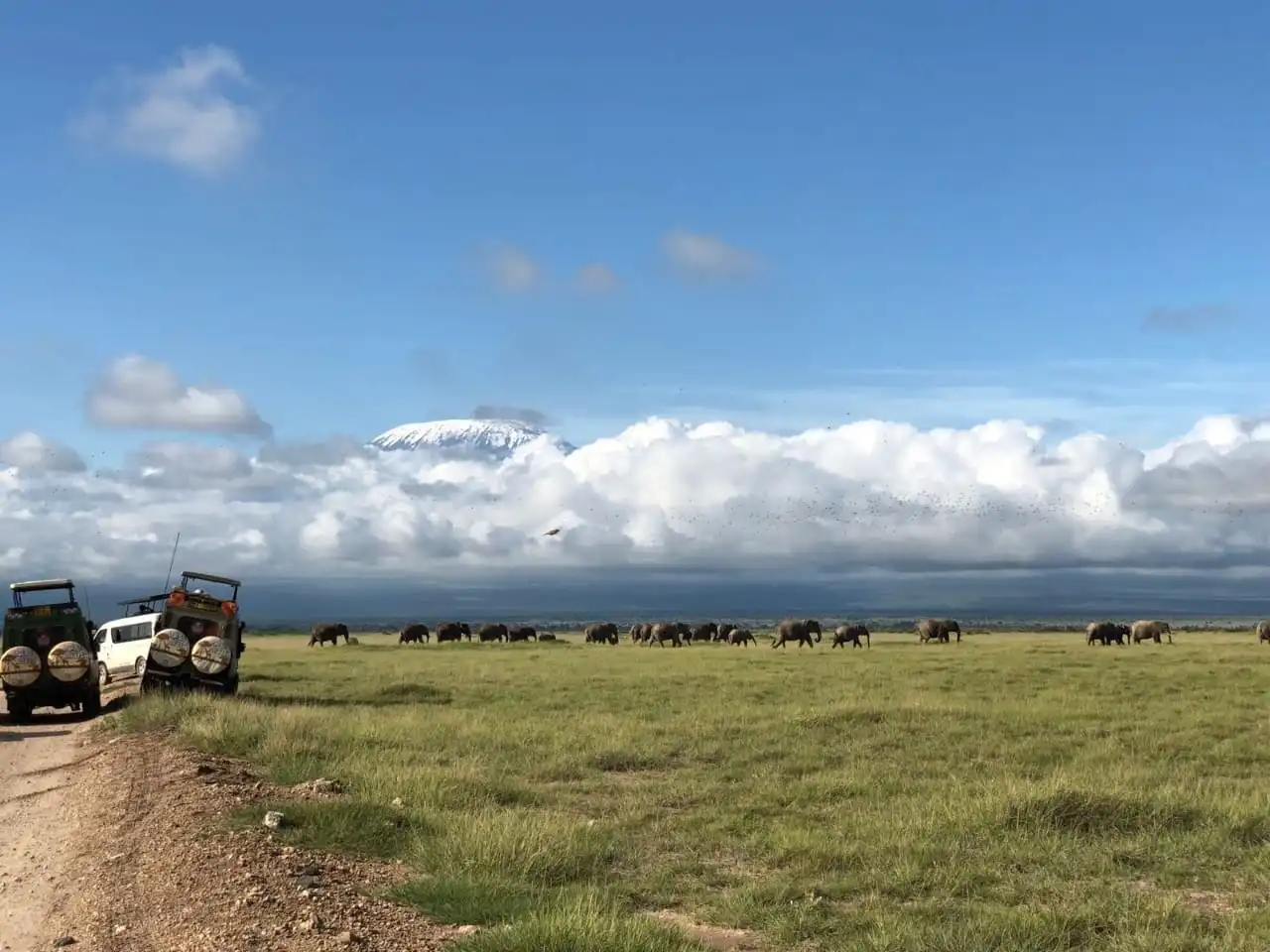
Explore the abundant wonders of Amboseli, home to the highest concentration of elephant herds. At Amboseli, expect to get blown away by the breathtaking views of the Kilimanjaro Volcano. The diverse wildlife of interest in Amboseli includes African elephants, warthogs, zebras, giraffes, cheetahs, lions, leopards, mongoose, jackals, hyenas, baboons, impalas, and about 400 species of birds. The birds in this stunning Park include the superb starling, Kori bustards, long-toed lapwings, grey-crowned cranes, martial eagles, secretary birds, and more. Main experiences to expect on a tour in Amboseli include balloon tours, game drives, cultural tours, and birding. Amboseli also offers unmatched photography experiences and other abundant exploration opportunities.
Tsavo National Parks
Tsavo National Parks offer refuge to all the Big Five game, including leopards, buffalo, elephants, lions, rhinos, and wild dogs, among others. The other key safari highlights include Mudanda Rock, Yatta Plateau, landscapes, Ngulia Sanctuary, and Lugard’s Falls. The Tsavo Conservation Area comprises Tsavo West and Tsavo East National Parks. Access gates to Tsavo East include Sala, Bachuma, Voi, and Manyani. Tsavo West can be accessed via the Tsavo Gate, Ziwani, Mtito Andei, Chyulu, Jipe Gates, and Maktau Gates.
Samburu
Not only is Samburu popular for its excellent views of the special five game, but it also offers unforgettable birding tours. The birds to find in Samburu National Reserve include black-chested snake eagle, bateleur, martial eagle, secretary birds, vulturine guineafowl, Somali ostriches, African fish eagle, Kori bustards, white-headed mouse birds, golden-breasted starling, and lilac-breasted rollers. The special five in Samburu include Grevy’s zebras, reticulated giraffes, Beisa Oryx, Gerenuks, and Somali Ostriches.
Top things to do in Kenya in September
September promises visitors on Kenya safaris amazing experiences. Expect to embark on a city tour in Nairobi, game viewing (game drives), bird-watching, and mountain climbing (in Mount Kenya, Aberdare ranges, Mount Satima, and Elgon.
Travel Tip: Pack valuable items, including comfortable hiking boots or shoes, sunglasses, a safari hat, insect repellent, a sweater, a camera, long trousers, a rain jacket, and a first aid kit.
Plan and book a safari to Kenya through a reliable tour operator such as Native Africa Tours.