
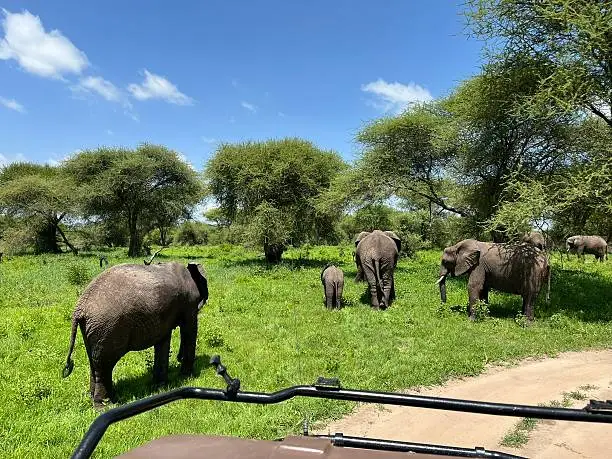
Visiting Masai Mara in April
Visiting Masai Mara in April is 100% possible. Unlike other months, April is a preferred period for most budget wildlife adventure seekers. While according to Kenya’s travel calendar, April falls within the extended rainy or wet season. It comes with abundant opportunities for birders, photographers, backpackers, or budget travelers. Visiting Masai Mara in April allows you to appreciate the breathtaking views of the Park’s lush greenery, diverse wildlife with no crowds, and the possibility of enjoying discounted offers. It comes with a lot for enthusiastic travelers, especially if you know what you want to expect from a Kenyan safari.
The weather conditions in Masai Mara in April
April offers a combination of sunshine and rain. The peak rainy season falls in April, and visitors can expect frequent rain showers at any time of the day. But interestingly, a burst of sunshine and clear skies is guaranteed. Yes, it can rain, but there is a possibility of continuing with a game drive. Rains usually come with a lush and abundant green vegetation cover.
Temperatures, on the other hand, vary. Daytime, average temperatures rise from 22 degrees Celsius to 26 degrees Celsius. Early in the morning and late evening, the reserve records a fall in temperatures to about 10 to 14 degrees Celsius. The humidity can be higher in the dry season. Because rains often come with its challenges, the easiest way to navigate around is by using a 4×4 tourist car and an experienced guide.
Wildlife in Masai Mara in April
There is a high possibility of encountering diverse wildlife in April. Most of them still tend to be active in April, just like other months of the year. April is perfect in the sense that you can closely observe wildlife in their calm state, unlike during the Great Migration in July, when they tend to be disturbed.
The different wildlife to encounter in Masai Mara in April includes, among others, cheetahs, lions, leopards, zebras, buffaloes, elephants, hippos, giraffes, and elands. Other wildlife to encounter in the active state include the Thomson gazelles, warthogs, impalas, topis, waterbucks, bushbucks, and more.
The birds to identify when you visit Masai Mara in April. Over 470 species of birds call Masai Mara home, making it an ideal birding tour destination. The key birds to identify here include the European white storks, yellow-billed storks, sacred ibises, grey herons, saddle-billed storks. African fish eagles, European barn swallows, Schawlow’s turacos, purple grenadier. Lazy cisticola, grey penduline tit, Denham’s bustards, cinnamon-breasted bunting, secretary bird. Ostriches, Swahili sparrow, Ross’s turacos, rufous-bellied herons, Southern ground hornbill, tabora cisticola, Rosy-throated long claw, and grey-crested helmet shrike.
Around April, several migratory bird species can be spotted. A huge concentration of these interesting avifaunal species is confined to the Masai Mara. Besides, most resident bird species also start breeding in the same period, making it an excellent month for birders to identify a range of birds.
Why visit Masai Mara in April?
Enjoy affordable tours: April comes with discounted offers from different accommodation options, and also park entry fees.
Explore Masai Mara with no worries of crowds: Fewer visitors often travel around April, making it the best month for tourists with plans to explore destinations like Masai Mara without experiencing huge crowds of other visitors.
Green scenery: April comes with heavy rains, and the reserve’s landscape turns green. This is perfect for photographers to capture something exceptional on their holiday in the Masai Mara National Reserve.
Encounter predators: Around April, it is possible to spot a range of Big cats as they become more active.
Excellent birding excursions: April offers a remarkable birding tour with a chance for you to identify both migratory and resident bird species it is usually the breeding season.
The cons of visiting Masai Mara in April
Like other months, April also comes with some disadvantages. These include;
Unpredictable weather conditions –it can rain, especially around afternoon or evening, but with the possibility of continuing with a trip.
Muddy routes –April is characterized by heavy rains, and navigating through the game tracks can be challenging. But you can do so using a 4×4 safari vehicle.
No wildebeest migration –if you are interested in the dramatic Mara River crossing, then April isn’t the right month. You may need to take a trip in July or spend time in August/September to observe the Great Migration.
What to do in Masai Mara in April
Birding
If you love birding, then visiting Masai Mara in April should be a must. In April, expect to identify diverse bird species including the red-collared widowbird, pin-tailed whydahs, fan-tailed widow birds, yellow bishops, European rollers, sacred ibises, ground hornbills, saddle-billed storks, ostriches, Ross’s turacos, Southern ground hornbills, rosy-throated long-claw, Jackson’s window birds, tabora cisticola, purple grenadiers, cinnamon-breasted bunting, grey-crested helmet-shrikes, rufous-bellied heron, silver birds, Swahili sparrow, yellow-throated sandgrouse, Usambiro barbet, and trilling cisticola.
Game viewing
In April, there is a possibility to encounter a wide array of wildlife as they can be active, especially the Big cats. The challenge though, is disruption from rains and navigating through the muddy or slippery game tracks. It is possible to have a successful game drive using a 4×4 safari car.
Where to stay (lodges & camps)
Masai Mara National Reserve never disappoints when it comes to accommodation options. The reserve features a wide selection of safari lodges and camps including Mahali Mzuri Lodge, Angama Mara, Governors Camp, Mara Serena Safari Lodge, Cottar’s 1920s Safari Camp, Fairmont Mara Safari Club, Elephant Pepper Camp, Sanctuary Olonana, AA Lodge Masai Mara, Sand River Masai Mara By Elewana, Richard’s River Camp, Basecamp, and Mara Expedition Camp. Other accommodation choices include Sala’s Camp, Porini Lion Camp, Entumoto Safari Camp, Masai Mara Sopa Lodge, Tayari Luxury Tented Camp, Marriott Masai Mara Lodge, and others.
Getting to Masai Mara by Road or Air
To reach Masai Mara National Reserve, expect to drive for about 5-6 hours and your journey can begin from Nairobi City. By air, domestic flights are available departing from Nairobi to the numerous airstrips in Masai Mara. The airstrips that serve Masai Mara include Serena Airstrip, Keekorok Airstrip, Ngerende Airstrip, Siana Conservancy, Kichwa Tembo, Musiara Airstrip, and more.
Masai Mara can be accessed through its available gates, including Oloolaimutia Gate, Musiara Gate, Sekenani Gate, Sand River Gate, and Talek Gate. Masai Mara has its gates open from 6:00 am and closes at around 6:00 pm.
Park entry fees to the Masai Mara
The park entry fees for Masai Mara vary depending on the visitor categories. The foreign non-residents pay USD 200, KES 2500 per day by Kenyan citizens and East African residents pay KES 5000 per day. Children under the category of foreign non-residents pay USD 50 per day, and those between 9 and 17 years old. Kenyan children aged 9 to 17 years pay KES 500, while East African residents are charged KES 2,000 per day. The park fees apply to guests with plans to visit Masai Mara from July to December 2025. We shall keep you updated in case new rates are set for 2026.
April is a suitable month of the year for budget or backpackers to embark on a journey to explore the Masai Mara National Reserve. Visiting Masai Mara in April comes with a combination of benefits, including affordable rates (from discounted offers), abundant wildlife, minimal crowds, and breathtakingly lush scenery.