
What Time Does The Gorilla Trekking In Bwindi Start And End?
Many visitors on safaris to Bwindi have always asked What Time does the Gorilla Trekking in Bwindi Start and End? Gorilla trekking in Bwindi starts at 7:00 am and ends anytime between 10:00 am and 3:00 pm, depending on the allocated gorilla family’s location. The ending time for gorilla treks is because gorilla behavior and movement, and each habituated gorilla family occupies a different location. Wake to early birdsong as the sun peeks over the horizon to signal the start of another day on a gorilla safari in Uganda. After a quick caffeine boost or hearty breakfast at the Lodge, hop into the safari vehicle or walk to the Park Headquarters.
Gorilla trekking tours are the highlight of most Uganda safaris. Imagine the cool, crisp air of the jungle morning blowing through your hair as the Ranger guide takes you through Bwindi Impenetrable Forest. Suddenly, you see a gorilla nest, and the guide signals to prepare your camera and leave your bags behind. These face-to-face encounters bring you right into the heart of the jungle, allowing you to get unbeaten sights of the amazing Giant Apes. This article explains everything you need to know about the time gorilla treks in Bwindi start and end to prepare for your safari.
What is Gorilla Trekking?
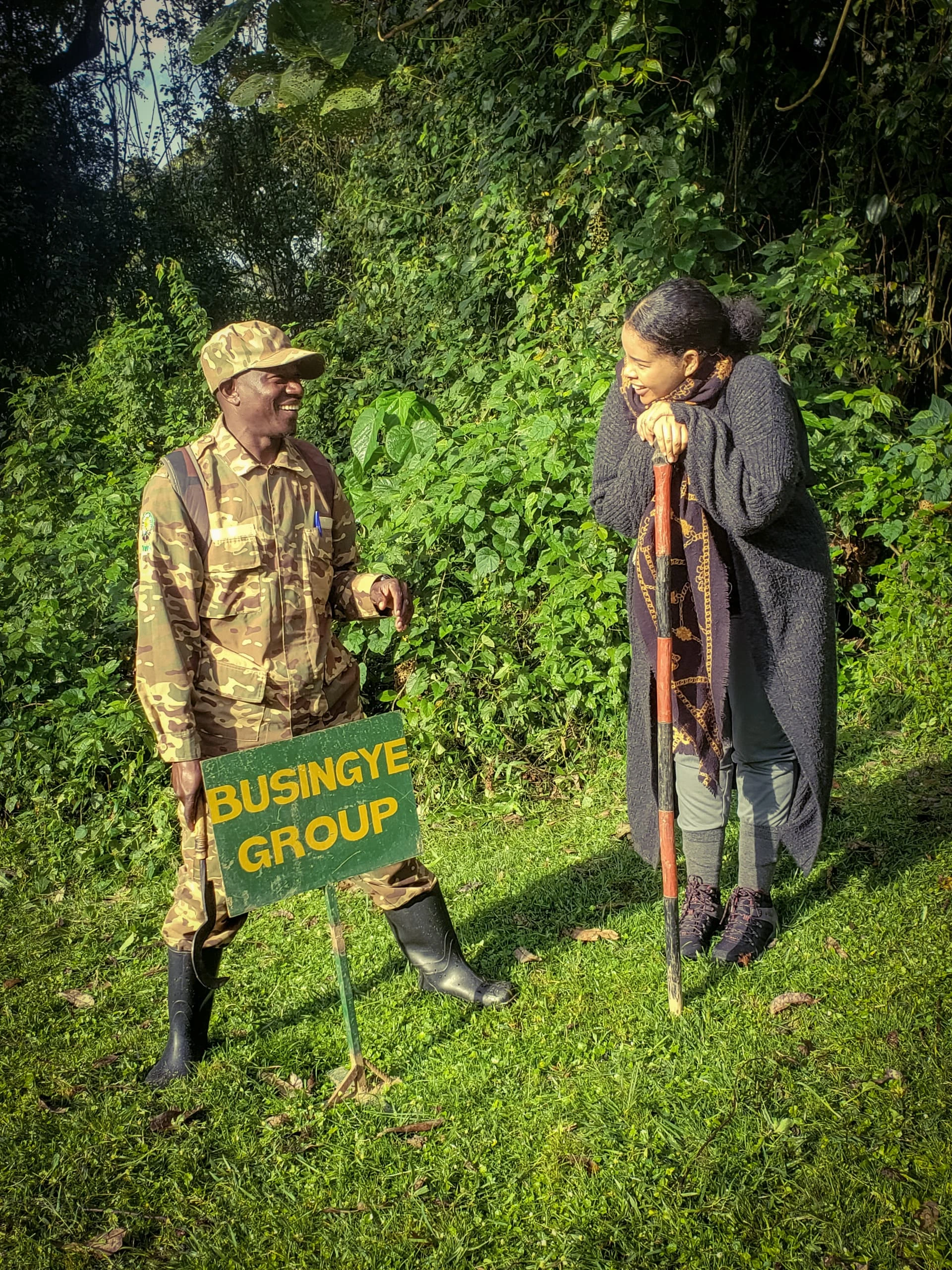
Gorilla trekking, or mountain gorilla trekking, is an excursion through the dense jungle to meet face-to-face with one of Africa’s most iconic and majestic primate species. Conducted on foot, gorilla treks in Bwindi are led by experienced UWA guides familiar with the Giant Apes and accompanied by armed Park Rangers to provide security from stray animals (especially wild forest elephants and others). Each group of 8 visitors (the maximum) is allowed to trek a habituated gorilla family daily to avoid overwhelming the Giant Apes as they go about their daily routines.
Before visitors and Rangers venture into the forest to search for the mountain gorillas, a team of trackers specializes in “reading” natural signs of gorilla location. These include broken tree branches, gorilla feces, and nests from the previous night to find the location of the allotted gorilla family. The trackers then communicate with Rangers using satellite phones to help Rangers determine which direction to take to see them.
Start of Your Gorilla Trekking Experience
Your gorilla trekking adventure begins early, with a wake-up call from your Lodge staff, and breakfast should be ready anytime from 5:00 am. After your quick caffeine boost, you might hop into the safari vehicle or walk to the Park Headquarters (depending on the location of the Safari Lodge from the Park headquarters). Some Lodges are a five to fifteen-minute walk, while others are a 30-minute to one-hour drive from the Park Headquarters. So, the location of the Lodge will determine the time you leave for the Park Headquarters, but regardless, you should be there by 7:00 am for briefing and registration.
At 7:00 am sharp, you will start your day with entertainment from members of the local community troupe/group to learn about the local cultures of the people living around the National Park. This should last about half an hour.
By 7:30 am, the pre-tracking registration and safety briefing (which is essential) officially start. This covers safety measures, what to expect during the gorilla trekking adventure, how to behave when the majestic Giant Apes are spotted, and potential challenges like rugged landscapes/terrains, surrounding dense vegetation, and the physical demands of the hikes. During the 30-minute briefing period, visitors will be requested to acquire a walking stick and hire a porter to provide support during the gorilla trekking process. Visitors are then allocated to one of the habituated gorilla families, based on physical abilities, age, or individual interests, as some gorilla families are considered “easy”. In contrast, others are “moderate” and “difficult” to trek.
The Walk to Search for the Gorillas
At 8:00 a.m., the gorilla trekking adventure begins with a drive or walk to the allocated gorilla family’s trailhead (starting point), as gorilla families are found in different locations. You start searching for the Giant Apes, and with the Ranger guide’s adept gorilla knowledge, you stand a good chance of encountering many forest residents —birds, primates, butterflies, and others.
Bwindi Impenetrable National Park is home to 120 mammal species, including 10 primate species, and 350 bird species, including 12 Albertine Rift endemic species (Regal sunbirds, Grauer’s broadbill, Rwenzori batis, Rwenzori Turaco, Shelley’s crimsonwing, Dusky crimsonwing, and others). As you search for the majestic Giant Apes, your guide might share valuable insights into the behavior, habitat, and individual roles of other wildlife species in their ecosystems.
The Ranger guide provides more information than just mountain gorillas. They occasionally stop observing mammals, birds, and other creatures contributing to the Park’s biodiversity, making the gorilla trek informative and rewarding. Additionally, you will likely learn a bit about the birds, trees, butterflies, and reptiles encountered, thus adding depth to your gorilla safari experience.
After one to six hours of tracking the allotted gorilla family (depending on its location), you will be signaled by the Ranger that the Giant Apes are close by. Some clues used to find the gorilla family include tracks, gorilla nests, and scent markers, which are significant for Park Rangers/guides locating them. From this point, it will take another 30 minutes to one hour to finally find the Giant Apes.
During the 1 Hour of Viewing the Gorillas
Before approaching the mountain gorillas, the Ranger guide advises you to leave your bags and walking sticks with the porters behind. When in their presence, the clock starts ticking. You have one hour to observe and take photos of them as they go about their day-to-day activities, including grooming each other, playing, foraging, resting, and caring for their young ones, while asking your guide any questions. You may glimpse gorilla babies swinging in tree branches and silverbacks (adult males) watching over their families while asserting Authority. After this gorilla encounter, you will return to the base for your gorilla certificate (a document that serves as proof of your participation in the gorilla trek and a reminder of the once-in-a-lifetime experience).
When gorilla trekking in Bwindi ends, it depends on the location of the gorilla family, but we can say anytime between 10:00 a.m. and 3:00 p.m.
Best time for Bwindi Gorilla Treks
The best time for Bwindi Gorilla treks generally falls within the dry season- June to September and December to February—which offers less rain and easier trekking experiences. The vegetation is sparser, and hiking trails are less muddy or slippery during this time, which makes it less challenging to search for the Giant Apes in their natural habitat.
The wet season, typically from March to May and October to November, brings frequent rain showers (although short-lived) and high humidity. This makes certain areas of Bwindi Impenetrable Forest inaccessible or difficult to reach, as forest trails are muddy or slippery. However, due to the dense vegetation and elevation of the Protected Area, rain should be expected at any time of the year. For this reason, you should be prepared at all times.
In conclusion, it is advisable to be prepared for anything and try to exercise patience as much as possible during the gorilla trekking adventure. With this detailed article, we hope your question of “What Time Does The Gorilla Trekking in Bwindi Start and End?” has been fully answered. You can confidently contact our safari team to organize your Next Uganda Gorilla Tour to Bwindi.