
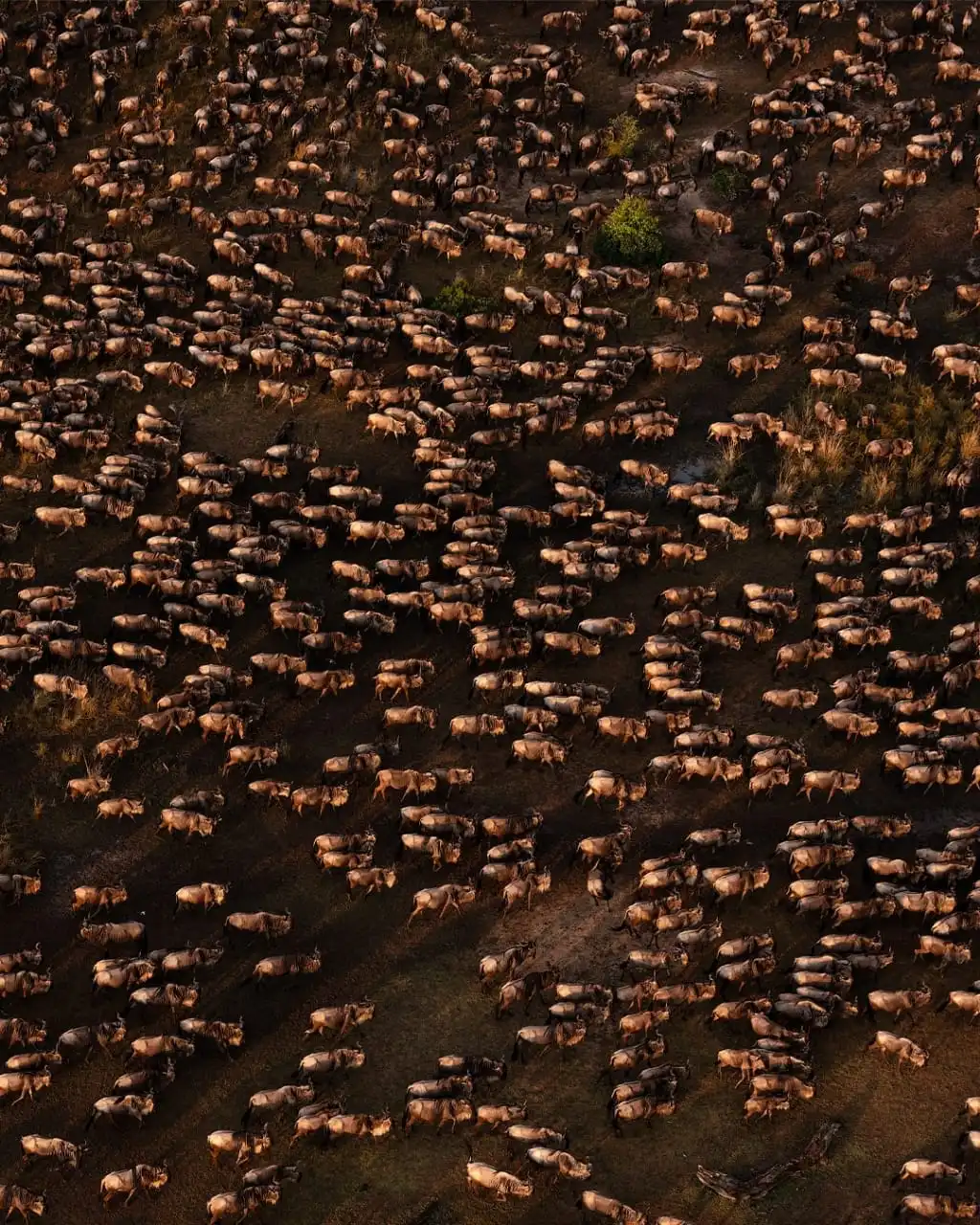
Where Are the Wildebeest in December?
December marks a pivotal shift in the wildebeest migration, drawing the herds to the southern Serengeti and Ndutu. While predicting their exact movements this month poses challenges, it is during this period that wildebeests gather in Ndutu and Ngorongoro to prepare for calving.
By December, the Southern and Ndutu region experiences short rains, and wildebeests have access to some nutritious grasses. The presence of palatable grass and water makes December a favorable month for the nursing mothers and their calves.
December also happens to be one of the best months of the year to find predators. The increase in predator activity is due to the high proliferation of prey. The Namiri Plains are the ideal spot for predator viewing. In December, the Namiri plains are excellent for predator sightings, rather than for wildebeest migration. By December, most wildebeest would have moved to the Southern region of the Serengeti for calving.

Significant Highlights of the Serengeti Migration in December
Witness the Southward Migration in December
Visiting Serengeti in December allows you to encounter wildebeests and other grazers as they head to the south. They migrate from the Maasai Mara and the North Serengeti to the southern region.
The southern Serengeti experiences short-grass plains by December, and so is the Ndutu region in the North, which forms a section of the Ngorongoro Conservation Area.
The Short Rainy Season Occurs.
The short rains often extend from November to December. The occurrence of this favors the growth of fresh, nutritious grass that draws most of the wildebeest herds to the southern end.
Predator Viewing with Experts.
December is when you can observe large prides of predators, especially leopards and lions. They become common in the southern region mainly to hunt the weak and vulnerable newborn wildebeest calves.
What to Expect During Wildebeest Migration in December?
Calving/Birthing Session
Calving season is best experienced starting from December. This is when large herds arrive in the Southern Serengeti and Ndutu, mainly to prepare for the birthing season. Over half a million newborn wildebeest calves can be born in the span of the short calving season. The peak calving season is in December, and there is a likelihood of recording over 8000 calves that are born each day.
Please keep in mind the calving or birthing season timeline, which covers December when most of the wildebeest migrate back to the southern sector and the Ndutu. January to early March mark the primary birthing season, with a large calf population being born. Late January to early February is characterized by a peak birthing event with over 8,000 calves born each day.
Predator Sighting
Predators can be spotted around the calving sites, but the premier location is usually the Namiri Plains. From July to October, the area offers excellent game viewing, particularly for predator sightings in the Namiri Plains.
Safari Lodges and Camps to Stay in December
Chaka Mobile tents
This is available in the Ndutu area, and provides a convenient accommodation option for visitors’ overnight stay as they explore the wonders in the region. The tents come with a private and shaded veranda for you to enjoy the mesmerizing view of the Serengeti plains. Other amenities include a wardrobe, a bathroom, and a desk.
Dunia Camp
This exclusive camp offers luxury tent accommodation services in the heart of the vibrant Serengeti National Park. If you want a complete immersion in the Serengeti plains, then there is no better place to stay than the Dunia Camp. It features approximately eight luxury tents situated in the Moru Kopjes region, conveniently located along the wildlife spotting route in the Serengeti National Park.
Perfect for visitors interested in game drives in the central Serengeti National Park. It comes with complimentary parking, air conditioning, spacious rooms, complimentary Wi-Fi, and an outdoor pool.
Singita Mara River Tented Camp- This is strategically set in the dramatic river bend in the remote Lamai triangle in the Serengeti. The lavish tented camp features 10 luxurious tents, each fitted with a double bed and en suite bathroom. It is a family-friendly accommodation facility, but children should be above 10 years old.
Additional lodges and camps to consider for your overnight as you experience the wildebeest migration in December in the Serengeti protected area: Singita Sasakwa Lodge, AndBeyond Klein’s Camp, One Nature Nyaruswiga, Nomad Serengeti Safari Camp, Lemala Kuria Hills Tented Lodge, AndBeyond Grumeti River Lodge, Roving Bushtops, Taasa Lodge, Mwiba Lodge, and many more.
How to get to the Serengeti National Park in December
The two main access options to the Serengeti National Park include road and air transport. Using road travel, you can depart from Arusha and drive for about 6-7 hours and access the Park through the multiple entry gates, such as the Ndabaka gate in the west, Naabi Hill gate to the Central/Eastern part, Bologonja gate for accessing the North, and Klein’s gate from the north-eastern direction. In addition, visitors coming from the western side of the Serengeti can also access the park through the Folk Ikoma gate, and if you are accessing from the southwestern region, then consider the Handajega gate.
Using domestic flights –set off from Arusha Airport to any airstrip found in Serengeti and cut down on the long hours if you embark on the road transport means. Once you have reached the Serengeti, expect to land at the Ndutu, Kogatende, or Seronera Airstrips. The location of your safari lodge or camp should determine the landing point.
When it comes to flights to the Serengeti, it is essential to take note of the weather patterns as they often affect the schedules. Around December, the Serengeti experiences an average temperature rise of 27 degrees Celsius during the day and a low of 16 degrees Celsius at night.
Serengeti-Masai Mara Combined tour
Serengeti migration safaris can be successfully combined with the Maasai Mara National Reserve. At the Masai Mara, the dramatic Mara River won’t be active in December as it is between July and October. But Visitors have a lot to explore in this nature reserve, from the big 5 –elephants, leopards, cape buffaloes, lions, and rhinos to giraffes, zebras, and many bird species, including the ostriches, secretary birds, and Kori bustards. Overall, Serengeti offers a longer migration season than the Masai Mara, but combining the two destinations guarantees thrilling wilderness experiences.
To summarize, December is an ideal time for you to experience the Serengeti wildebeest migration in the southern and Ndutu regions. It is also one of the best months to witness the calving season as it starts, and not to forget, big cat sightings. Not to miss any chances in December, contact Native Africa Tours to plan and book your dream trip.