
Wildebeest Migration in May: Central Serengeti Safari Highlight
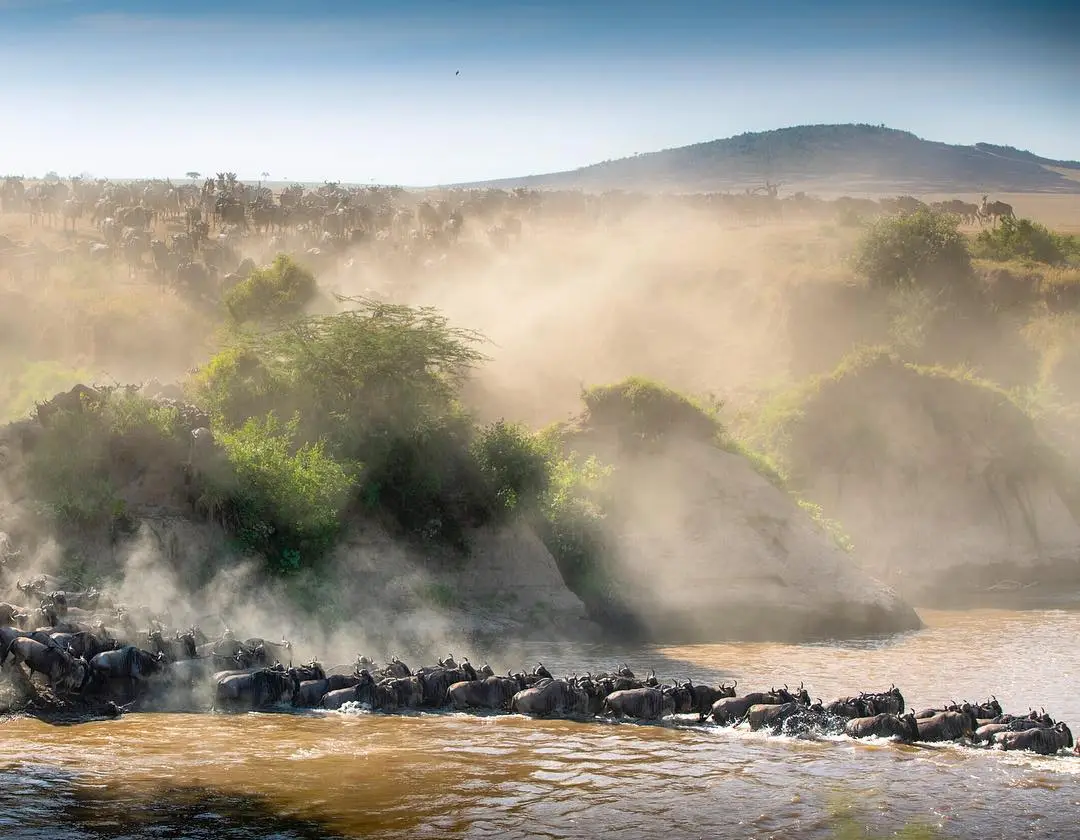
Wildebeest Migration in May offers a unique opportunity for you to witness the wildebeest and other grazers as they embark on their journey. Compared to the dramatic river crossing, the migration in May occurs at a slow pace, with wildebeests spotted mainly feeding on the fresh pasture. Slowly, they drift to the Western Corridor of the Serengeti.
A section of wildebeest herds proceeds to the North to settle in the Seronera region. The largest migration is witnessed in the Ndoha and Dutwa plains, spectacular areas of the Western corridor of the Serengeti.
Ndoha- Dutwa Plains are strategically located on the Great wildebeest migration route. Large herds of wildebeests and zebras traverse through the Dutwa and Ndoha plains, with peak season extending from April to July. The presence of the nutritious grasses attracts most of these mammals. The abundant fresh and healthy grass sustains the vast herds of wildebeest, zebras, and other grazers that concentrate in these plains.
The wildebeest wait at the Ndoha and Dutwa plains till the time of crossing the Mbalageti and Grumeti Rivers. The plains serve as a waiting spot where herds assemble before they start crossing. The Grumeti and Mbalageti river crossing is a dramatic event in its own right.
The Wildebeest Migration in May –Events
In May, calving season transitions to peak river crossing and mating/rutting season. It also marks the end of the peak wet or rainy season. Towards the end, the dry season starts, and wildebeests begin drifting to the North in search of fresh grass and water sources. The temperatures remain favourable for wildebeest, with huge herds congregating around the central area.
The western corridor –Around May, wildebeests congregate in the Moru Kopjes. They begin moving to the Western Corridor of the Serengeti while they wait to connect to the following location.
Grumeti River –wildebeest herds assemble at the Grumeti River area, awaiting to embark on a dangerous river crossing. Towards the end of May, the rutting season starts with males being witnessed as they engage in fierce head-to-head battles. As the rains end, the landscape becomes drier, with most wildebeests pushed further north to regions with abundant grass for them to feed.
Where to Experience the Best Wildebeest Herds in May
When you think about the wildebeest migration in May, expect to explore the Moru Kopjes in the Central Serengeti. At the Moru Kopjes, you can expect to witness huge herds of wildebeest and zebras. The Western Serengeti corridor provides excellent viewing opportunities, especially with the large congregation of wildebeests on the scenic Grumeti River.
What is the Wildebeest Migration Exactly?
The wildebeest migration is an annual wildlife movement involving over 2 million wildebeests, thousands of zebras, and gazelles migrating between the Serengeti and Masai Mara ecosystems. The Great Migration drifts from the Southern Serengeti plains and Ngorongoro to the vast Maasai Mara Reserve. Unlike other wildlife movements, the Great Migration takes a clockwise pattern, making it unique. The migration covers approximately 3,000 km, with a primary focus on finding fresh pasture and water.
The May Weather (Serengeti)
May marks the end of the longest wet months in the Serengeti. Driving through the Serengeti plains can be a challenging experience. The Park experiences warm temperatures with a daytime record of 27 degrees Celsius, and at night, it drops to 16 degrees Celsius. May falls in the green season, which occurs after the long rains have ended. The landscapes become more spectacular and the park records low crowds.
Wildlife on Migration in May
The Ndoha and Dutwa plains are part of the Serengeti’s rich ecosystem. Not only are they popular for the annual Great migration, but also for viewing other wildlife, including gazelles, elephants, cheetahs, lions, hyenas, and topis. Other wildlife to encounter include zebras, elands, leopards, giraffes, black rhinos, and more.
Bird-watching
During the migration holiday, there is a chance to watch some birds. Over 500 bird species live in the Serengeti National Park, including the grey-crested helmet shrike, red-throated tit, grey-throated spurfowl, rufous-tailed weavers, greater flamingos, helmeted guinea, superb starling, Kori bustard, and crowned cranes. Additional birds to identify include the Eastern plantain-eaters, Schawlow’s turacos, bare-faced go-away-birds, Hartlaub’s turacos, and black-crested snake-eagle.
What else do you need to know about the Serengeti National Park
Serengeti is 14,763 square kilometres and is a designated UNESCO World Heritage Site. Over 2 million wildebeest survive in the vast plains of the Serengeti, alongside other numerous wildlife species, including cheetahs, the Big 5, hippos, Maasai giraffes, Aardvarks, African hares, oribis, dik-diks, and more.
While in Serengeti, there are multiple accommodation options to consider for an overnight stay in May. They include Serengeti Serena Safari Lodge, Melia Serengeti Lodge, Sayari Camp, Four Seasons Safari Lodge Serengeti, Olakira Camp, Lemala Ewanjan Tented Camp, and more.
The Masai Mara National Reserve wildebeest migration is best enjoyed from July to October. At the Masai Mara, the iconic sites to witness the powerful migration include the Talek and Mara Rivers. The Talek River flows 240km from the Mau escarpment to the breathtaking Mara plains. It is a tributary of the Mara River, which is one of the main rivers that drain the Masai Mara.
The Mara Reserve spans 1,510 square kilometres, situated at altitudes ranging from 1,500 to 2,179 meters above sea level. The spectacular Masai Mara is home to a diverse array of wildlife, including wildebeests, African bush elephants, giraffes, lions, zebras, rhinos, hippos, cheetahs, leopards, and many other species.
The great Serengeti-Maasai Mara ecosystem offers a captivating wildebeest migration experience. The migration safari in this rich ecosystem offers nature enthusiasts a lifetime opportunity to witness millions of wildebeests.
Valuable Tips for Wildebeest Migration in May
- Consider booking a place for an overnight stay in the Central Serengeti, not far from the Seronera. Seronera is ideal for witnessing the first phase of the May migration. To witness the second half of the migration, especially the river crossings, you need accommodation around the western corridor.
- Booking your safari, including accommodations at safari camps/lodges, in advance should be a must. This can allow you to secure your dream safari camp without the challenges of last-minute booking.
- You must embrace flexibility and patience –the migration in May is entirely unpredictable. You may need to camp in mobile locations, as you will need to shift to regions where wildebeests congregate, depending on the seasonal changes in May.
- Timing is essential, even if you are travelling to experience the Migration in May. The wildebeest often drift to the North with large herds observed in the Seronera and a higher chance of proceeding to the western corridor.
- Book in advance – secure your migration slot with the local expert. This allows you to book lodges, camps, and other facilities early.
How to plan the May Wildebeest Migration
To make the most of the migration experience in May, plan and book your safari with a professional tour company. Reach out to your expert at Native Africa Tours early to secure your spot and join the once-in-a-lifetime wildlife adventure.
Great Migration and other Wildlife Tours
The great wildebeest migration in May can be enjoyed alongside other activities, including game drives, primate adventures (such as gorilla trekking in Bwindi or Volcanoes National Park), chimpanzee tours, cultural safaris, or hiking/mountaineering adventures. In the iconic migration destinations, there are still other opportunities to appreciate, including bird-watching, nature walks, hot air balloon rides, and more. Visit other destinations, including Amboseli National Park, Lake Manyara, Ngorongoro Crater, Tarangire National Park, and Kilimanjaro National Park, among many others.
Overall, migrating wildebeest in May provides an ideal chance to observe herds in the Ndoha and Dutwa areas. While the May migration isn’t as spectacular as the July Mara River crossing, it offers plenty to discover during this time. Plan your safari with Native Africa Tours, an expert in the field, and ensure a memorable wildebeest migration experience in East Africa.