The Four National Parks of Rwanda: A Wildlife Conservation Success
In the heart of East Africa lies a country roughly the size of Maryland, yet densely packed with biodiversity that rivals that of continents. Rwanda, often referred to as the “Land of a Thousand Hills,” has in recent decades metamorphosed from a nation scarred by tragedy into one of the world’s leading lights in wildlife conservation. This transformation is nowhere more evident than in the management and restoration of four national parks of Rwanda: Volcanoes, Akagera, Nyungwe, and the newest addition, Gishwati-Mukura.
Rwanda’s conservation model is unique because it is not solely focused on protecting animals; it is fundamentally about the intersection of ecosystem health, economic development, and community reconciliation. Through high-end tourism, strict anti-poaching laws, and a revolutionary revenue-sharing scheme, Rwanda has turned its parks into sanctuaries where endangered species are not just surviving, but thriving.
Volcanoes National Park
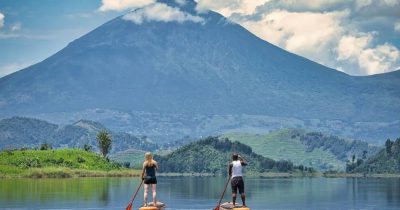
Perhaps the most famous of Rwanda’s protected areas is Volcanoes National Park (Parc National des Volcans). Located in the northwest, this park is home to the towering Virunga massif, a chain of dormant volcanoes that straddle the borders of Rwanda, Uganda, and the Democratic Republic of Congo. It was here that the late Dian Fossey established her Karisoke Research Centre, bringing the plight of the Mountain Gorilla to the world’s attention.
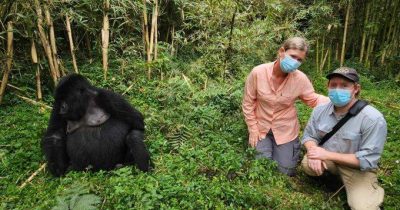
In the 1960s and 70s, the Mountain Gorilla population was decimated by poaching and habitat loss. However, thanks to decades of rigorous conservation efforts led by the Rwandan Development Board (RDB) and partners like the Dian Fossey Gorilla Fund, the gorillas of the Virungas are the only great ape population in the world that is actually increasing.
The success here is a testament to “ecotourism in action.” With a limited number of expensive trekking permits issued daily, the park generates millions of dollars annually. Crucially, 10% of this revenue is returned to the communities surrounding the park. This revenue sharing has transformed the local perception of the park. The gorillas are no longer seen as pests or a source of bushmeat, but as a valuable economic asset that builds schools, clinics, and roads. Today, visitors have a 90% chance of seeing a gorilla family, and the park stands as a global standard for primate tourism.
Akagera National Park
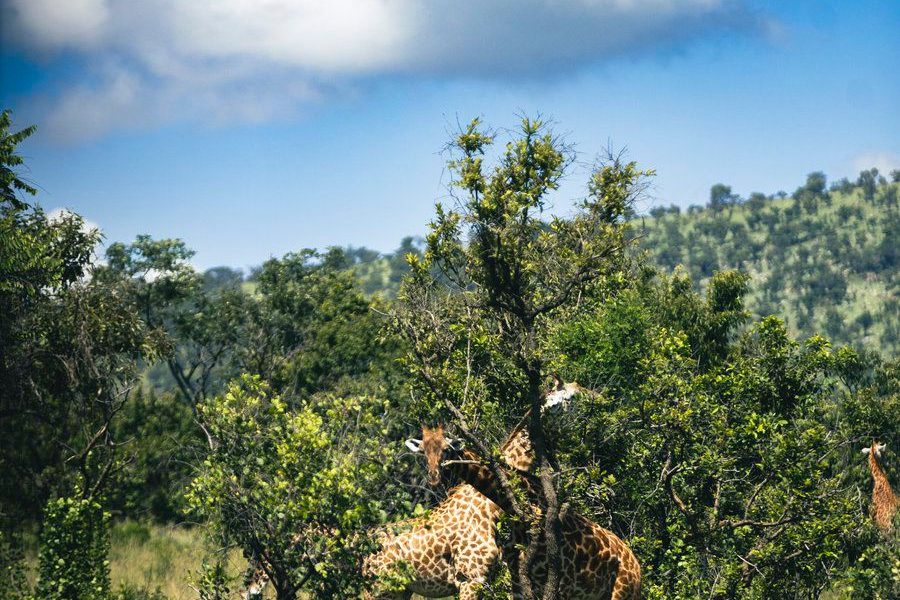
In the east of the country, bordering Tanzania, lies Akagera National Park. A landscape of savannah plains, rolling highlands, and labyrinthine lakes, Akagera presents a conservation story of near-total collapse and miraculous rebirth.
Following the 1994 Genocide against the Tutsi, Akagera was left in ruins. Refugees returning to the country settled in the park, cattle grazed unchecked, and poachers wiped out the lion and rhino populations. By the early 2000s, the park was essentially a barren shell of its former self.
The turning point came in 2010 when the Rwandan government partnered with African Parks, a non-profit conservation organisation. They immediately tackled the issues of law enforcement and fencing. A 120km solar-powered electric fence was erected to reduce human-wildlife conflict, and an elite rhino tracking unit was established.
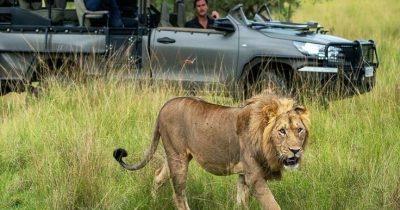
The crowning achievement of this partnership has been the “Big 5” reintroduction strategy. In 2015, seven lions were translocated from South Africa, the first lions to roar in Akagera in 15 years. Two years later, 18 Eastern Black Rhinos were introduced, bringing back a species that had been extinct in Rwanda for a decade. More recently, in 2021, 30 White Rhinos were introduced in the largest single translocation of rhinos in history. Today, Akagera is a flourishing savanna ecosystem home to over 8,000 large mammals and nearly 500 bird species, proving that degraded landscapes can be restored.
Nyungwe National Park
Moving to the southwest, Nyungwe National Park protects one of the oldest montane rainforests in Africa. Often described as the “water tower” of Rwanda, the park feeds two of the world’s great river systems: the Nile and the Congo. Its conservation value lies not just in its scenery, but in its immense biodiversity.
Nyungwe is a haven for primates, hosting 13 different species, including a large population of Chimpanzees and the acrobatic Ruwenzori Colobus monkeys, which move in troops of over 400 individuals. The forest is also home to over 300 bird species, many of which are endemic to the Albertine Rift.
The conservation success in Nyungwe centres on the fight against deforestation. While the forest remained relatively intact during the turbulent years of the 90s, the pressure for agricultural land and mining was immense. The government has successfully managed these threats by promoting tourism infrastructure that values the standing forest more than the cleared land. The construction of the famous Canopy Walkway, a suspended bridge 70 meters above the forest floor, provided a unique economic incentive to keep the trees standing. Furthermore, rigorous reforestation projects have expanded the park’s borders, connecting fragmented patches of forest to allow wildlife safe passage.
Gishwati-Mukura National Park
This is the newest of all the national parks in Rwanda. Gishwati-Mukura was officially gazetted as a National Park in 2015, though it carries the scars of heavy degradation. Located in the north-west, this park consists of two separate forests: Gishwati and Mukura.
Decades ago, Gishwati was a massive forest ecosystem. However, by the early 2000s, illegal mining and livestock farming had reduced the forest cover by nearly 90%. The area became prone to landslides and flooding, devastating the local communities.
The restoration of Gishwati-Mukura is a flagship project for Rwanda’s “Green Growth” strategy. The government, with support from the World Bank’s Forest Landscape Restoration initiative, has focused on planting native trees, stabilising slopes, and creating a biological corridor to link Gishwati with Nyungwe National Park in the future.
This park is currently the site of one of the most ambitious reforestation efforts in Africa. It is known as the “Forest of Hope” because of the resurgence of wildlife. Chimpanzees, once thought to be locally extinct, have returned to the area. Golden Monkeys and L’Hoest’s monkeys are also flourishing. The park serves as a living laboratory for ecosystem restoration, proving that with political will and community engagement, nature can heal even the deepest wounds.
Conclusion
The four national parks of Rwanda tell a story of resilience. They demonstrate that environmental conservation is not a luxury for wealthy nations, but a necessity for developing countries that rely on natural resources. From the misty peaks of the Virungas to the savannahs of Akagera, these parks offer a blueprint for the future of conservation in Africa.
For the traveller, visiting Rwanda is not just about checking off the “Big Five” or seeing a gorilla. It is about witnessing a conservation miracle. It is about seeing how a country has healed its relationship with nature, turning its natural heritage into a source of national pride and prosperity. As the world grapples with a climate crisis and biodiversity loss, the “Land of a Thousand Hills” stands as a beacon of hope, showing that when nature is protected, people prosper.