
Visiting the Masai Mara in February
Is February the best month for visiting the Masai Mara National Reserve? Yes, visiting the Masai Mara in February is an amazing deal. February is a favourite month of the year for tourists to travel and explore the wonders of the Masai Mara National Reserve in Kenya. The reserve enjoys friendly weather conditions around February, characterised by warm, dry, and clear skies, as well as lower rainfall. The unique weather conditions that define February make it the best month of the year for guided game viewing excursions.
In February, the Maasai Mara records hot and warm weather conditions. On average, the reserve can experience a temperature rise of about 28 degrees, and at night, temperatures reduce to 12 degrees Celsius. The skies tend to be clear with occasional evening thunderstorms.
The amazing bit about visiting the Masai Mara in February is that nature enthusiasts are astonished by experiences like birthing/calving. The wildebeest birthing season falls in February. Hundreds to thousands of newborn wildebeest calves are recorded in the Masai Mara and can be observed by visitors.
What to see when you visit the Masai Mara in February
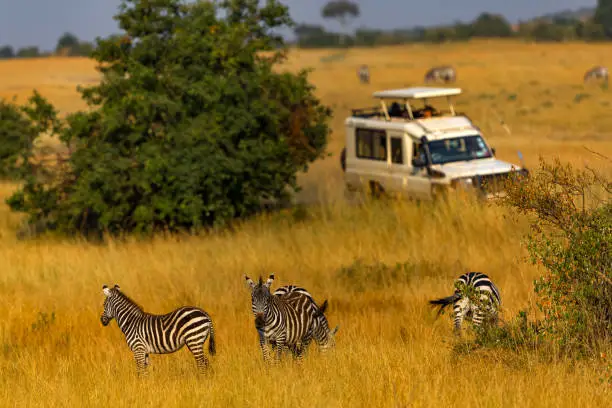
Visiting the Masai Mara in February offers you a great opportunity to spot a diversity of wildlife, including the babies and big cats. The expected animals to explore in the Masai Mara in February include cheetahs, leopards, lions, giraffes, gazelles, buffaloes, elephants, zebras, and many others.
The birds to identify on a tour in the Masai Mara National Reserve in February include grassland-dominated species and river species. Grassland bird species in the Masai Mara include black-headed heron, crowned cranes, rufous-bellied heron breeds, Madagascar squacco heron, great white egret, sacred ibis, Kori bustards, secretary birds, turkey-sized ground hornbills, and yellow-billed storks.
The different river birds to spot on a Masai Mara tour include martial eagle, pygmy falcons, bateleur, Ross’s turacos, giant kingfishers, and others. Masai Mara also holds birds such as the Lazy cisticola, Denham’s bustards, Ayres’s hawk-eagle, African fin-foot, rosy-throated long-claws, yellow-mantled windowbird, Temminck’s courser, saddle-billed storks, red-throated tit, ostriches, Swahili sparrow, trilling cisticola, yellow-throated sandgrouse, tabora cisticola, and more.
Why visit Masai Mara in February
There is no doubt that February is one of the favourite months of the year for tourists to unpack its treasures. Here are some of the unique reasons why you should consider visiting Masai Mara in February;
Game viewing
Visiting Masai Mara in February guarantees visitors exceptional encounters with abundant wildlife. The weather conditions are favourable, and you can find a huge collection of wildlife, including the Big 5 and antelope families. The antelopes to find on a tour in Masai Mara include dik-diks, oribi, klipspringers, hartebeest, bushbucks, and elands, etc.
Baby boom
Most wildlife start their calving sessions in February, thus allowing you to witness a range of the reserve’s newborns. The baby boom season is mostly dominated by zebras, wildebeest, plus other herbivores. During the baby boom season, expect to encounter different predators such as leopards, cheetahs, and lions.
Birding Tours
February offers excellent birding experiences with the opportunity to identify a range of interesting species. At Masai Mara, birds to find include the black-headed herons, Madagascar squacco heron, Kori bustards, saddle-billed storks, secretary birds, Usambiro barbet, silver birds, Ross’s turacos, red-throated tit, ostriches, lazy cisticola, yellow-mantled widowbird, woolly-necked storks, Temminck’s courser, Swahili sparrows, Southern ground hornbills, rosy-throated long claw, and rufous-throated wryneck.
Walking safaris
The dry ground and minimal rainfall offer a friendly environment for tourists to experience Masai Mara on foot. Nature walks can be experienced with the company of a professional guide from Kenya.
Excellent photography experience
Visiting Maasai Mara in February comes with abundant photography opportunities. During the photography session, expect to take pictures of the newborn calves, predators, and the breathtaking landscapes.
More Insights about Masai Mara
Masai Mara National Reserve is located South of Kenya and in proximity to the Serengeti National Park in Tanzania. It is a jewel of Africa, and extends over the land area of 1510 sq. km. Masai Mara is accessible about 270 sq. km, about 6 6-hour drive from Nairobi city.
The closest Airstrips offering access to guests who take flights to Masai Mara include Ol Kiombo, Keekorok, Serena, Musiara, and Kichwa Tembo. The access gates to Masai Mara include Oloolaimutia, Talek, and Sekenani gates.
Masai Mara is set at a varying altitudinal range of 1500 to 2180 meters. The reserve enjoys favourable weather and climatic conditions, making it a great place to visit for a Kenya safari.
Top Places to Stay in Masai Mara
When you think about visiting Masai Mara in February, there is no worry about accommodation facilities. Masai Mara has different options of accommodation ranging from budget, midrange, and luxury. Classic accommodation options to book for an overnight stay on a Masai Mara vacation include;
Governors’ Camp
Built at the Mara River, it is ideal for guests with plans to explore the heart of Masai Mara. This luxurious camp was officially established in 1972 and has up to 37 tents. The tents present comprise family tents. This lodge also features comfortable honeymoon suites. Other amenities include a fully stocked bar, a good restaurant, spa services, and a lodge. At the Governors’ Camp, you can engage in guided walking tours, cultural tours, hot air balloon rides, and game drives.
Mahali Mzuri
This lodge has 12 uniquely designed tented suites. The suites are built in the area where great views are guaranteed. The lodge features en-suite bathrooms, king-sized beds, private decks, a swimming pool, spa treatments, and other amenities. From Mahali Mzuri, guests can embark on guided game drives, the Great Migration, walking safaris, and cultural tours.
Mara Serena Safari Lodge
This has up to 74 rooms, and these include suites. Each suite has a private balcony for you to appreciate the Mara plains and surroundings. The amenities and services at the Mara Serena Safari Lodge include a spa, conference facilities, a fully stocked bar, a lounge, a dining area, and more.
AndBeyond Bateleur Camp
About 18 spacious tents make up this accommodation facility, including luxurious tented suites. These suites are set in the lush forested area. They offer a mix of comfort and a cool, relaxing environment. The key amenities to expect at AndBeyond Bateleur Camp include a safari shop, butler services, a swimming pool, and a restaurant.
Cottar’s 1920s Safari Camp
Consists of 10 tents, including honeymoon and family suites. The key amenities and services at Cottar’s Safari Camp include a swimming pool, library, butler service, dining, and more. While at this safari camp, visitors can easily engage in guided game drives, fly camping, walking safaris, and cultural encounters.
Sanctuary Olonana
Located in the private Mara River stretch, it features private plunge pools, contemporary suites, and many amenities. It is a typical modern luxury facility with a sustainable focus.
Getting to Masai Mara in Kenya by road or air
Accessing the lush Masai Mara National Reserve is possible by road or air. Road transportation means you can spend about 6 hours if you are departing from Nairobi. Air transportation offers the quickest option to connect to Masai Mara. Flights to Masai Mara are possible, and you can land at any of the nearby airstrips, including Keekorok, Ol Kiombo, Musiara, and others.
Visiting Masai Mara in February is possible. Native Africa Tours guarantees visitors an exceptional holidays. Travellers can explore Masai Mara National Reserve’s diverse attractions in February, one of the best months of the year, without worrying about rain disruptions.