

Where is Mara River Crossing?
Where can you witness the dramatic river crossing? The Mara River crossing offers a unique opportunity for you to witness Africa’s most dramatic wildebeest migration. This river crossing occurs in the Masai Mara National Reserve. The Mara River crossing is characterised by major highlights involving over 1.5 million wildebeests as they cross the river to the Masai Mara Reserve to enjoy new pastures. The Mara River crossing marks the climax of the powerful movement of wildebeests. Only the brave herds cross the infested crocodile Mara River to the mainland. Watching the emotional moments in the Mara River leaves nature enthusiasts in awe.
The Masai Mara National Reserve is spectacularly located in Southwestern Kenya, a 6-hour drive from Nairobi. The Masai Mara is the best place to witness the Mara River crossing, and you can have a personal experience by embarking on a Kenya safari.
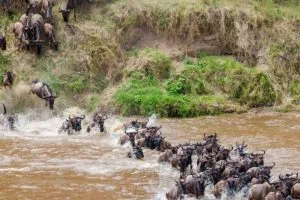
The Mara River Crossing in Kenya
Huge concentrations of wildebeests can be seen crossing the Mara River around July. Those that survive continue to the lush plains of the Maasai Mara National Reserve. Several visitors confined in the reserve to witness the Great Migration in October.
The Great Migration has a lot to showcase beyond the watching wildebeests. 1000s of other mammals usually join millions of wildebeests as they journey to find food, including topis, zebras, and elands. The population of these mammals often fluctuates from year to year.
1000s of zebras and wildebeests from the Serengeti cross to the Maasai Mara from July to September. The most astonishing aspect of this annual event occurs in the crocodile-infested Mara River. The Mara River flows from Narok County in Kenya and ends in the Mara area of Tanzania. This river is strategically located along the wildebeest migration route between the Mara and Serengeti ecosystems.
The Mara River basin covers 13,504 sq. km, with 65% on the Kenyan side and 35% in Tanzania. The Mara River flows 395 km from the Kenyan highlands, with the Mau Escarpment being its source. It later empties its water into Lake Victoria, a shared East African Lake.
The significant regions that make up the Mara River include the Mau Escarpments, which originate from the Napoiyapi Swamp; the Kenyan Rangelands; downstream areas in the Mara region; Protected Areas; and more. The Mara River basin lies between the elevations of 2932m and 1134m.
Understanding Other Wildebeest Crossings
Beyond the most dramatic Mara River crossing, there are other exceptional wildebeest crossing experiences to appreciate on an East African safari. They include the Grumeti River crossing. From January to March, wildebeest calves are born and wait to cross the Serengeti plains via the Grumeti River. The migration session often features several action-packed events, with the most vibrant circles in the Northern Serengeti and Kenya’s Mara River. While the primary focus is usually the Great Migration, there are also plenty of big cats to spot. The majority of these are predators and can be observed as they are ready to hunt the wildebeests. The possible big cats to observe during the wildebeest migration safari include hyenas, cheetahs, leopards, lions, jackals, and more.
The Mara Triangle Crossing (Cul De Sac Crossing)
The Mara Triangle features among the exceptional highlights of the wildebeest migration safari. Mara Triangle crossing occurs in the Western end of the Masai Mara Reserve. This is a perfect place to enjoy intimate migration holidays. The Mara Triangle crossing is largely unpredictable, but once it occurs, expect something stunning and great photography opportunities.
The Talek River Crossing
The Talek River wildebeest crossing is among the more minor migration crossings. A section of the wildebeests can be seen crossing the Talek River before they continue to the main Mara River. River Talek is slightly smaller, and you shouldn’t expect dramatic crossings like the Mara River. Talek River offers a quieter setting.
Lookout Hill Crossing Experience
The Lookout Hill is among the excellent spots to witness the River crossings in Kenya’s Maasai Mara National Reserve. Lookout Hill lies at a high altitude, offering visitors exceptional views of the river crossing below. Huge herds of wildebeests assemble here before crossing the water. Lookout Hill is most popular for its dramatic wildebeest migration, offering excellent sightings of 1000s of wildebeests as they gather at the river’s edge, ready to cross.
The Mara Paradise Plains
The Paradise plains offer a great spot to observe the powerful Masai Mara River crossing. This is located close to the scenic Mara River and is most famous for its huge concentrations of wildebeest, often spotted as they cross. The Paradise Plains have been considered for filming a wildlife documentary. The plains feature a unique, open landscape, making it easier to observe the River crossing.
The Kichwa Tembo Crossing Experience
The Kichwa Tembo is one of the best spots to witness the wildebeest crossing. The crossings at the Kichwa occur around July to early September.
The Serena Crossing
Serena is among the best places to observe the Great wildebeest migration. Located adjacent to the Serena Safari Lodge, the Serena area should be considered a must-visit to witness the breathtaking river crossing. The area features steep riverbanks, guaranteeing amazing views of wildebeests as they struggle to climb, while others fall back into the river.
The Mara Migration
The Maasai Mara wildebeest migration experience offers a unique wildlife encounter. The Mara Reserve is located in the Southwest of Nairobi, and covers 1510 sq. km. This nature reserve is situated in the Great Rift Valley Region, extending towards the Tanzanian border with the Serengeti National Park.
The wildebeest migration occurs between the Serengeti and Mara ecosystems in Tanzania. The Masai Mara prides itself on its breathtakingly diverse terrains featuring the Siria Escarpments, Ngama Hills, Mara Triangle, and the unique plateau. The reserve features vast acacia trees and lush grassland cover.
Best places to stay
Top accommodation options to book to enable you to enjoy the Mara River crossing experience in Kenya include Matira Camp, Mara Ngenche Luxury Tented Camp, Maasai Serena Safari Lodge, Cottar’s 1920s Camp, and Royal Mara Safari Lodge.
Other places to consider for overnight stay during the Mara River crossing tour include Mara Intrepids Tented Camp, Sentinel Mara Camp, Mara River Camp, Angama Mara Lodge, Mara Mara Sopa Lodge, Governors’ Camp, Mara Maisha Camp, Mara Simba Lodge, Saruni Mara, and Porini Lion Camp.
Getting to Kenya’s Mara River
To witness the Mara River crossing in Kenya, expect to reach the Masai Mara National Reserve either by road or air. By road, depart Nairobi City and head south to southwestern Kenya to access the Masai Mara. Nairobi-Masai Mara takes about 6 hours, and possible access gates include Sekenani Gate. A reliable 4×4 safari vehicle is recommended for accessing the Masai Mara National Reserve.
Take a pre-booked domestic flight from Nairobi, and you have multiple airstrip options to land at in the Masai Mara. The popular airstrips serving the Masai Mara include Mara Serena, Ngerende, Keekorok, Angama Mara, Kichwa Tembo Airstrip, and many others. As you plan your domestic flight, please consider the airstrip’s location for easier access from the safari lodge.
Conclusively, the Mara River crossing takes place in the Mara River, located in the Masai Mara Reserve. It is an excellent location in Kenya to enjoy the dramatic Migration in the Masai Mara-Serengeti Ecosystem. Book a Kenya safari with Native Africa Tours to witness the renowned world’s river wildebeest migration.