
Wildebeest Migration in July: Mara River Crossings and Safari Highlights
July is the best time of the year for tourists to witness the typical Great Wildebeest Migration. Witnessing the actual Great migration in July can be mind-blowing and is a dream-come-true opportunity any nature adventure seeker shouldn’t miss. Are you interested in the Grumeti or the dramatic Mara River migration crossing experience? July offers a prime time for planning and booking a successful migration safari to witness the Grumeti-Mara River crossing.
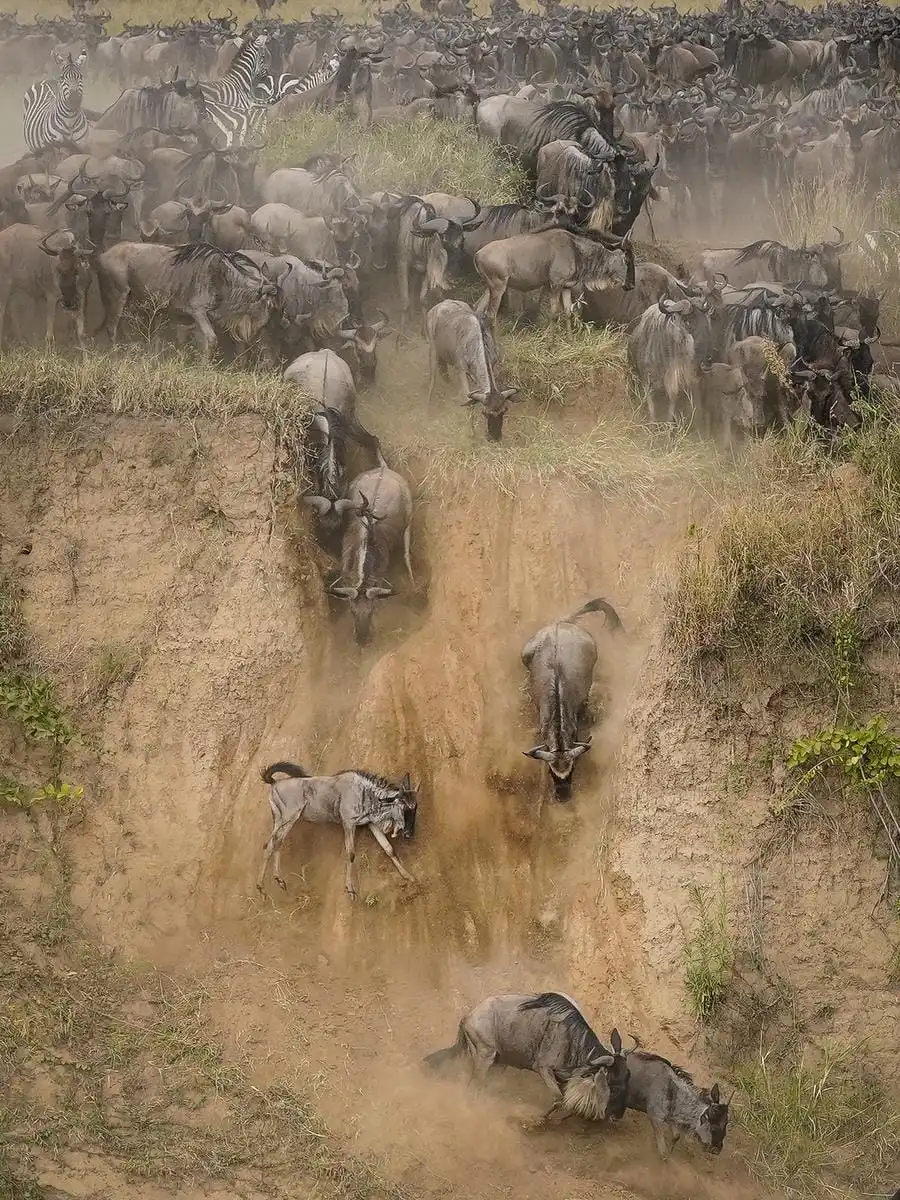
July is when large herds of wildebeest embark on their annual migration from the northern Serengeti plains to the Maasai Mara ecosystem. Huge herds of wildebeests can be easily spotted as they plunge into the river to escape predators and search for newly grown pasture. The dramatic wildebeest migration extends from Mid-July to late August.
Where to Observe the Wildebeest Herds in July
To witness the wildebeest migration in July, consider visiting the Serengeti and Maasai Mara National Reserve. July is the perfect month to observe the wildebeests as they cross the Mara River. The majority of the visitors flock to the Masai Mara in July, mainly to have a personal encounter with the Mara River, also referred to as the most dramatic event.
The July Grumeti River Crossing
The Grumeti River migration crossing offers you a chance to witness large herds of wildebeests and zebras as they begin their movement to the northern side. They traverse the western plains of Serengeti and later encounter huge, hungry Nile crocodiles patiently waiting to hunt them. The Grumeti River migration isn’t as dramatic as the Mara River, but it is excellent for visitors interested in a more intimate wildebeest migration experience.
Besides the Nile crocodiles, other predators such as lions, leopards, and cheetahs can be observed when they are busy hunting. July often marks the beginning of the Grumeti River crossings and runs till August. It is an excellent time for spotting early risers, and being a peak season, you should consider securing the migration safari slots in advance.
The wildebeest herds begin arriving at the Grumeti River by June till early July. The migration crossing in the Serengeti is best experienced in the western part of the Park, near the Grumeti River.
Kogatende
The Kogatende is one of the scenic and vital locations to explore on a wildebeest migration safari. Kogatende offers excellent viewing opportunities as you witness the Great Migration. It is proud of its spectacular landscapes and abundant fauna. Besides wildebeests, Kogatende is most popular for its diverse wildlife. It is an excellent spot to spot the Big Five game animals: rhinos, leopards, lions, buffaloes, cheetahs, zebras, and more.
Kogatende also shelters several seasonal migratory and local birds. The birds to identify here include rufous-tailed weaverbirds, Kori bustards, African fish eagles, secretary birds, Southern ground hornbills, grey-crowned cranes, ostriches, grey herons, crested francolins, and many helmeted guineafowl. Other birds include water thick-knee, red-faced crombec, Southern ground hornbill, flamingos, and more.
Lamai Region
Located in the Northern Serengeti is a scenic Lamai Wedge region, in proximity to the Mara River and the Kenya border. It is an excellent spot to consider for witnessing the Great Wildebeest River Crossing, especially around July and October. Lamai is characterised by rocky outcrops, providing spectacular panoramic views, and it is possible to find a diverse range of resident animal species.
The July Mara River Crossing
To witness the most dangerous, dramatic, or thrilling Great Migration in the Serengeti and Masai Mara National Reserve, July is your favourite month of the year to consider booking your trip. Large herds of zebras, wildebeests, and many other grazers characterise the July migration experience in the Mara Reserve. Around July, a massive profusion of these plunge into the Mara River, a scenic river that the Nile crocodiles most infest.
The Mara River migration crossing is the perilous stage of the annual Great wildebeest migration in East Africa. Over 1.5 million wildebeests and other grazers cross the Mara River to the plains of the Maasai Mara National Reserve.
The Mara River is located along the border of Kenya and Tanzania. This river extends up to 395 km with its basin measuring 13,504 sq. km. The most extensive section of the basin lies in the Kenyan part. The Mara River originates from the Kenyan highlands, flowing through the Masai Mara-Serengeti ecosystem. It later pours its water into Lake Victoria.
How to Experience the Wildebeest Herds in July
Game Drives
Guided game drives and hot air balloon excursions offer incredible opportunities for you to experience the Great Migration. During the game drive, expect to see more than wildebeests but also predators and other animals.
Hot Air Ballooning
Ballooning tours offer an excellent chance for you to enjoy an aerial view of the wildebeests and other animals in the savanna plains of the Serengeti and Masai Mara Reserve. The hot air balloon tour can be done in the morning and the afternoon. The Kogatende is an ideal location to consider for thrilling balloon excursions.
The Weather Conditions in July (in Serengeti & Masai Mara)
The Masai Mara and Serengeti experience dry, cool but pleasant weather conditions in July. The weather conditions in July are characterised by minimal rainfall, with varying temperatures. The weather patterns in July present a unique opportunity for you to enjoy the wildebeest migration experience. During the daytime, temperatures rise from 25 to 30 degrees, and at night, temperatures begin to drop 10-30 degrees Celsius.
The Accommodation Options in July
Masai Mara and Serengeti feature diverse accommodation options, including budget, midrange, and luxury. The popular lodging and safari camp options for overnight stays include Kenzan Mara Tented Camp, Gnu Migration Camp, Singita Faru Faru Lodge, Roving Bushtops, Serengeti Migration Camp, Four Seasons Lodge, Lemala Ewanjan Tented Camp, and Serengeti Mawe Camp.
Getting There
By road –Masai Mara and Serengeti National Park are accessible from Nairobi and Arusha, respectively. Nairobi-Masai Mara Reserve require about 6 hours of driving, and from Arusha to Serengeti, it can take you about 6 to 7 hours. Visitors can access the Maasai Mara through the Sekenani gate, located on the eastern part of the Maasai Mara. Visitors connecting to the Masai Mara from Narok have easy access to the Sekenani gate. You may also use other gates, including the Oloolaimutia, Musiara, Oloololo gate, or Talek gate.
The access gates to the Serengeti National Park include Ndabaka gates, Naabi Hill gates, Klein’s gate, Kogatende, and Bologonja gates. The Bologonja gate provides easier access to the northern and Kogatende areas. The Ndabaka gate is perfect for visitors interested in exploring the wonders of Serengeti’s diverse wildlife. The Northeastern part of the Serengeti is more easily accessed through Klein’s gate.
By Air
Domestic flight services are available, taking visitors from Nairobi or Arusha to the Masai Mara or the Serengeti. The available airstrips that are ideal for landing include the Grumeti Airstrip, Seronera, Ndutu, Serengeti Airstrip, Kogatende Airstrip, and Seronera. The Masai Mara features airstrips including Mara North, Keekorok Airstrip, Ol Kiombo Gate, Serena Airstrip, and Musiara Airstrip.
Why Choose Native Africa Tours for Your July Migration Safari
July’s Wildebeest Migration is one of nature’s most incredible spectacles, with millions of wildebeests and zebras crossing the treacherous Mara River. This electrifying moment brings together predator action, stunning landscapes, and unmissable safari experiences. For travellers, July is the ideal time to witness the raw drama of the Great Migration in both the Serengeti and Kenya’s famous Masai Mara.
At Native Africa Tours, we take pride in being Kenya’s top safari company, providing unparalleled expertise, carefully selected lodges, and expert guides who are as familiar with the migration as their own back yards. Our bespoke itineraries guarantee you’ll experience the best of the Mara River crossings, predator sightings, and cultural encounters with the Maasai.
Book your Wildebeest Migration safari in July with Native Africa Tours today and discover why Kenya is the ultimate safari destination, led by the very best guides in the business.