
Visiting Masai Mara in July
Visiting Masai Mara in July is an excellent choice for witnessing the Great Migration. It is a powerful event when millions of wildebeest and zebras cross Kenya’s Mara River. July is characterized by dry weather. It is ideal not only for usual game drives but also for spotting predators in the wild excellently. The dry season in July offers better visibility and is, without doubt, an incredible period to spot diverse wildlife.
Masai Mara is a preferred destination for game viewing in July, thanks to the ideal weather conditions it experiences. July is the second month of the longest dry season or peak season in Masai Mara. The reserve tends to be less flooded, and access to the game tracks is guaranteed, unlike in the wet months. The unique opportunity awaiting you in July is witnessing the dramatic Mara River crossings, then having a close interaction with predators.
The Weather of Masai Mara in July
July happens to be the second month in the long dry season and is the most popular month of the year for Masai Mara safaris. In July, the Masai Mara experiences clear vegetation, thus presenting a chance for you to have a clear view of wildlife.
Generally, temperatures vary from 16 to 26 degrees Celsius. The dry spell is in full swing, and large concentrations of wildlife are spotted around the few water sources or rivers. It is the best month for spotting wildlife. But in the evenings, temperatures decrease to 10 to 12 degrees Celsius.
July falls within the peak dry season with reduced rainfall. Masai Mara tends to be less humid than in the rainy months. The reserve enjoys amazing weather conditions, making it the best place for you to engage in outdoor excursions. The landscape in Masai Mara is characterized by lush greenery, while the skies can be clear, making it the best for game viewing.
Attractions to Explore Masai Mara in July
Wildlife to Encounter in July
In July, visitors get a chance to see diverse wildlife, including giraffes, bat-eared foxes, wildebeests, duikers, impalas, African bush elephants, dwarf mongoose, and cheetahs. There are also lots of African hares, oribis, dik-diks, Thomson’s gazelles, waterbucks, warthogs, cheetahs, impalas, and copper-tailed monkeys. The reserve is also known for its abundant lions, rhinos, cape buffaloes, and leopards.
The bird species
Masai Mara is a treasured birding destination, thanks to its diverse species of birds. At Masai Mara alone, there are more than 470 bird species to identify. They include the African pygmy-falcons, African live pigeon, and broad-billed rollers. Speckled mousebirds, black cuckoos, and emerald-spotted wood-dove. The reserve’s bird checklist includes tambourine dove, pennant-winged nightjars, barn owl, Southern ground hornbills, and blue-napped mousebirds. Klaas’s cuckoos, Horus swift, spot-flanked barbet, Pel’s fishing owl, grey-headed kingfishers, and rufous-napped lark. It is also a stronghold to birds such as Fischer’s sparrow larks, Abyssinian scimitar bill, bearded woodpeckers, white-fronted bee-eaters, African grey-hornbills, golden-tailed woodpeckers, broad-billed rollers, and black and white casqued hornbill.
Brief About the Masai Mara
The Maasai Mara is the leading destination for wildlife viewing in Kenya and East Africa. The reserve sits on a land of 1510 sq. km. It is set in Narok County, close to the Tanzania border. It makes up the Mara-Serengeti ecosystem. At Maasai Mara, there exist varied regions or areas like Mara North, Mara Triangle, Lemek, Maji Moto, Naikara, Ol Derkesi, and more. You can also explore the finest rivers that drain the reserve, including the Mara, Talek, and Sand Rivers.
Top Activities to do on the Masai Mara Tour in July
Game drives
July is the best month of the year to experience excellent game drives in Masai Mara National Reserve. The game tracks are generally passable, making your navigation as you search for the Big game and birds. Expect fewer disturbances as you drive through the game drive as you look for wildlife in Maasai Mara National Reserve. Checklist of wildlife to observe during a game drive in July: elands, zebras, lions, elephants, buffaloes, rhinos, mongoose, leopards, giraffes, impalas, hartebeests, and bird species.
Bird-watching
Masai Mara has a record of more than 470 species of birds that make it a great birding destination. They include 47 birds of prey and range in varied habitats. On a birding tour, birds to find include the woolly-necked storks, African fin-foot, secretary birds, Kori bustards, Jaunty crowned plovers, white storks, rufous-bellied herons, yellow-billed storks, Usambiro barbet, Jackson’s widowbird, cinnamon-breasted bunting, yellow-throated sandgrouse, saddle-billed storks, Ayres’s hawk-eagle, grey penduline tit, tabora cisticola, Hildebrandt’s starlings, and black-headed herons.
Other birds to find in this reserve include the Madagascar squacco herons, pygmy falcons, long-tailed cormorant, little grebe, rock dove, Knob-billed ducks, lemon dove, speckled pigeon, African olive pigeon, and more.
Guided nature walks
Visiting Masai Mara in July lets you experience the best of nature walks. On a nature walk, expect to explore a range of wildlife and birds. This is done along the hidden habitats, hardly accessible by visitors when in a 4WD vehicle.
Great Migration
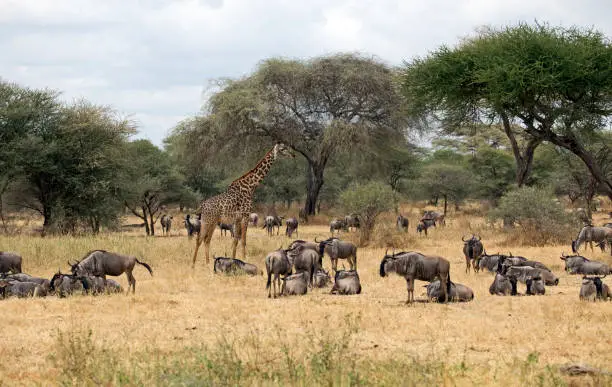
A journey to witness the Great Migration in Kenya’s Mara River starts around July. Get a chance to enjoy the powerful wildebeest migration in the plains and the Mara River. This experience is enjoyable only once a year, and July falls in the peak months.
Balloon tours
An addition of a hot air balloon excursion is a perfect way to spice up your trip in the Maasai Mara. With balloon excursions, you enjoy mainly aerial game viewing. You can have a clear view of the Big Game above breathtaking landscapes. A visitor can participate in the sunrise session or from the afternoon to sunset. Balloon tours in Masai Mara are flexible in that they can be incorporated into iconic experiences like game drives or the Great Migration.
What to pack for a safari in Masai Mara in July
The best way to go about a Kenya safari to Masai Mara is by ensuring that you pack right for your vacation. The long list of items to consider packing for the Masai Mara tour include sun protection gear, long-sleeved shirts, trousers, a safari hat, insect repellents, a camera, a valid passport, a pair of socks, plug adapters, portable battery charger, a torch, a comfortable rain jacket, first aid kit, and many others.
Accommodation in Masai Mara
The best places to book for an overnight on a Masai Mara tour include Kicheche Bush Camp, Royal Mara Safari Lodge, Sala’s Camp, Mara Serena Safari Lodge, Kichwa Tembo Tented Camp, Cottars Bush Village, Loyk Mara Camp, Tipilikwani Mara Camp, Angama Mara, Mara Plains Camp, and Siana Springs Camps. Other safari camps and lodges to stay at include Elephant Pepper Camp, Fig Tree Camp, Fairmont Mara Safari Club, and Mahali Mzuri.
How to Get to Masai Mara for a Vacation
Road and air transportation are the two special options for tourists to access the Masai Mara. By road, you can use a 4×4 tourist vehicle and expect to take about 6 hours driving. Navigate through Narok County with a chance to have a clear view of the countryside and the rift valley. On getting to the reserve, you can have access through Oloololo, Talek, Oloolaimutia gate, Sekenani, and Musiara gate. Traveling using air transportation, which takes you the shortest time. You depart from Nairobi to Siana, Kichwa, Ngerende Airstrip, Keekorok, Serena, and Ol Kiombo Airstrip.