
Gorilla Trekking Tours to Mgahinga
The heavy mist clings to the bamboo forests like a held breath, obscuring the rugged peaks of the Virunga volcanoes in a shroud of ethereal white. This is Mgahinga Gorilla National Park, a sliver of wilderness tucked away in the southwestern corner of Uganda. While its more famous neighbour, Bwindi Impenetrable National Park, often garners the lion’s share of the spotlight, Mgahinga offers a gorilla trekking experience that is distinct, intimate, and profoundly wild. It is a place where the dramatic altitude meets the ancient rhythms of the forest, offering adventurers a chance to connect with our closest relatives in one of the most visually striking settings on Earth.
Where is Mgahinga National Park Located?
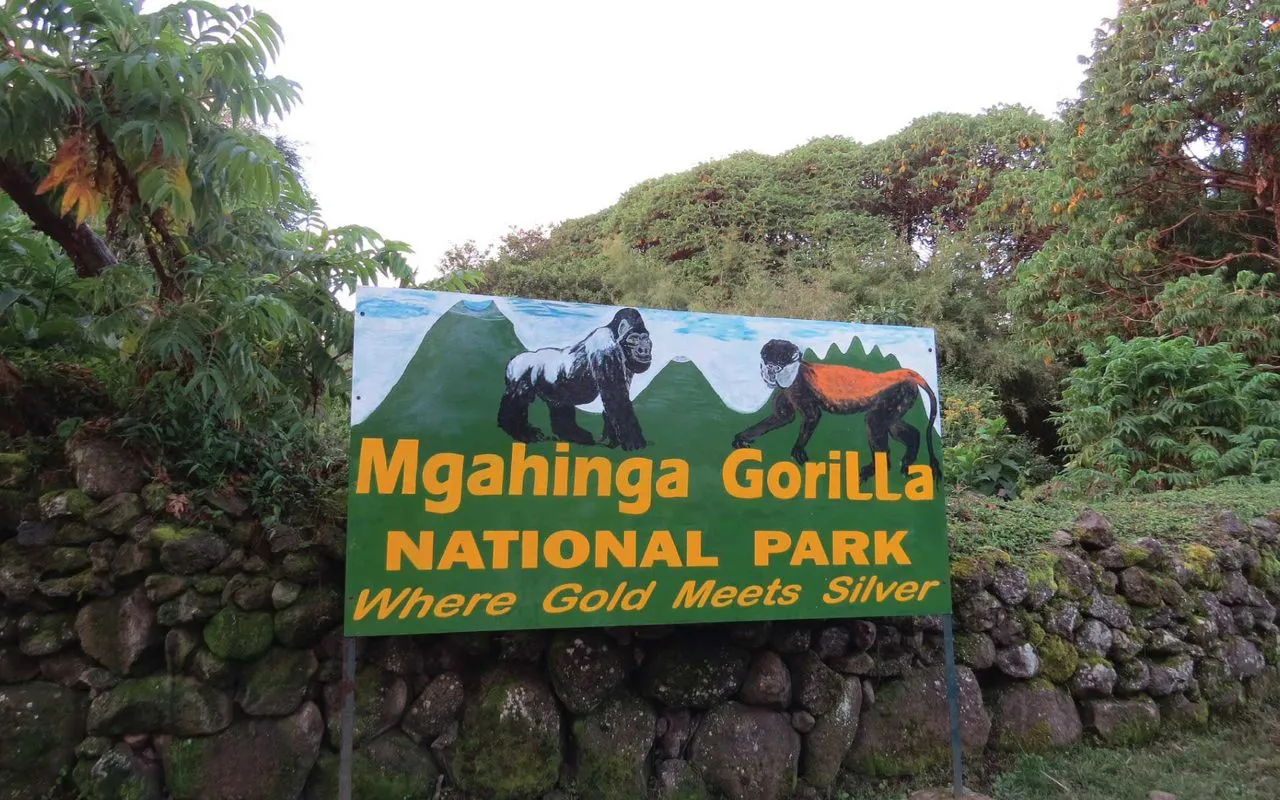
Mgahinga is Uganda’s smallest national park, encompassing only thirty-three square kilometres, yet it is part of a much larger ecosystem. The park sits at the intersection of three countries -Uganda, Rwanda, and the Democratic Republic of the Congo, and is dominated by three extinct volcanoes (Muhabura, Gahinga, and Sabyinyo). This confluence of geology and biology creates a unique haven for the endangered mountain gorilla. Gorilla Trekking in Mgahinga is not merely to see an animal; it is to step into a world that feels primordial, where the boundary between the elemental forces of the earth and the delicate breath of life seems to dissolve.
Why Gorilla Trekking Tours to Mgahinga Matter?
The journey to Gorilla Trekking in Mgahinga is an adventure in itself. The road from the bustling town of Kisoro winds upward, twisting and turning through a patchwork of agricultural terraces that cling impossibly to the steep hillsides. As the altitude rises, the air grows cooler and crisper, and the human settlements begin to give way to the enveloping embrace of the montane forest. By the time you reach the park headquarters, nestled at the base of the volcanoes, you are already miles away from the modern world.
The morning of a trek begins in the quiet chill of dawn. Trekkers gather at the ranger station, sipping hot coffee or tea to ward off the mountain chill. The atmosphere is a blend of anticipation and camaraderie. Strangers from different corners of the globe share nervous glances and excited whispers, united by a common goal. Here, you are assigned to a group. The allocation is not random; it is based on fitness levels, as the terrain in Mgahinga can be unforgiving. Unlike some parts of Bwindi, where the vegetation is thick and tangled, Mgahinga’s landscape is open and volcanic, often featuring steep ascents that test the lungs and legs.
Pre-trek Briefing matters
Before the adventure begins, the rangers conduct a comprehensive briefing. This is a crucial part of the experience. They explain the etiquette of gorilla tourism, rules designed not just for human safety, but for the well-being of the gorillas. You learn that you must keep a distance of seven meters, not to transmit diseases to which the gorillas have no immunity. You learn to lower your voice, avoid direct eye contact, which might be perceived as a challenge, and cover your mouth when you cough. These instructions strip away the arrogance of the human observer, placing you firmly in the role of a respectful guest entering a sacred sanctuary.
How many Gorilla Families Live in Mgahinga?
Mgahinga is currently home to one habituated gorilla trekking family known as the Nyakagezi group. In larger parks, there are multiple families spread across different sectors, but here, the focus is singular. This might seem like a limitation, but it actually enhances the intimacy of the experience. There are no other groups to compete with; every trekker in the park that day is focused solely on finding Nyakagezi. This exclusivity fosters a deeper connection to the specific history and dynamics of this particular family.
The Nyakagezi group is legendary among primate researchers and rangers. Led by the dominant silverback named Mark, who took over the mantle from his father, Bugingo. The group is known for its wanderlust. For years, they were notorious for crossing borders into Rwanda and the Congo, defying the political lines drawn on maps. However, in recent years, they have settled comfortably within the confines of Mgahinga, delighting visitors with their presence. The group is cohesive and large, typically comprising several females, juveniles, and infants, providing a dynamic tableau of gorilla social life.
The allure of Gorilla Trekking in Mgahinga
With the briefing complete, the trek begins. You are accompanied by armed rangers, a necessity in the wild, though their presence is largely a precaution against unhabituated wildlife or buffalo. You are also led by trackers who have been out since dawn, scanning the forest for the night nests and fresh dung trails that indicate the gorillas’ location. Walking through Mgahinga is a sensory experience. The forest floor is spongy with moss and volcanic soil. Depending on the season, you might push through fields of lobelia and giant senecio, prehistoric-looking plants that thrive in the high-altitude environment. The air is scented with wild mint and the damp, earthy smell of the jungle.
The duration of the hike is unpredictable. It can be as short as an hour or as long as six. The gorillas do not operate on a schedule. As you climb, the bamboo zone gives way to hypericum woodland, and the views open up dramatically. On a clear day, you can see the peaks dotting the horizon, a reminder of the volcanic fire that forged this landscape. The physical exertion is significant. At altitudes exceeding 2,500 meters, every step requires effort. But the fatigue vanishes the instant the radio crackles with the tracker’s voice: “They are close.”
The final approach is taken in silence. The rangers signal for you to leave your walking sticks and daypacks behind. You adjust your masks, a bio-security measure implemented in recent years to protect the gorillas from respiratory viruses. Heart pounding, you creep forward, parting the thick vegetation. And then, you see them.
Moments are turned into Memories.
The first sight of a mountain gorilla in the wild is a moment that defies description. It is a collision of awe, fear, and profound recognition. You might first see a small Black Hand reaching through the leaves, or a pair of deep, intelligent eyes watching you with mild curiosity. Suddenly, the forest opens up, and you are standing in the midst of the Nyakagezi family.
The sheer size of the silverback is the first thing that commands respect. Mark is a massive specimen, his muscled back rippling beneath the coarse black fur that gives the species its name. He sits with an air of regality, unperturbed by the sudden arrival of humans. He might be chewing on celery or bamboo stalks, the snapping sound echoing in the quiet clearing. Despite his imposing physicality, there is a gentleness in his movements, a calmness that anchors the entire group.
Around him, the life of the family plays out. Mothers cradle infants, their soft fur contrasting with the rough bark of the trees. Juveniles, full of boundless energy, wrestle and swing from vines, tumbling over one another in a game of tag that mirrors the behaviour of human children. Occasionally, one might approach you, coming heart-stoppingly close. The rangers will gently click their tongues or make soft grunting sounds to remind the gorillas to keep their distance, but these are wild animals, and they move on their own terms.
One Hour with the Gorillas
The hour you are allowed to spend with them passes with the surreal speed of a dream. There is no posing for photos; rather, you are a witness to life unfolding. You watch the grooming rituals that strengthen social bonds. You see the way a mother communicates with her baby through subtle touches and vocalisations. while you observe the silverback’s vigilance as he scans the surroundings, ever the protector. It is a window into a society that parallels our own in so many ways, stripped of the complexities of modern human existence.
Being in Mgahinga offers a unique clarity. Because the vegetation is less dense than the impenetrable forest of Bwindi, the lighting can be spectacular. Sunbeams pierce the canopy, illuminating the silver saddle on the back of the dominant male or the playful glint in a juvenile’s eye. The photographic opportunities are unparalleled, yet the urge to lower the camera and simply be present is overwhelming. This is a privilege that few in the history of our species have known.
As the hour draws to a close, the rangers signal that it is time to leave. Backing away slowly, maintaining eye contact subserviently, you extract yourself from their world. The walk back to the park headquarters feels lighter, buoyed by the adrenaline and the spiritual weight of the encounter. The forest seems different now; it is no longer just a wilderness, but a home.
Gorilla Graduation Certificate
Upon returning, trekkers are awarded a certificate, a small memento of the achievement. But the true reward is the memory etched into the mind. In Mgahinga, the conservation success story is palpable. The revenue generated from gorilla trekking permits has funded community projects and anti-poaching patrols, ensuring that the gorillas have a safe future. It is a symbiotic relationship where tourism directly fuels survival. Meeting the local communities, often the Batwa pygmies who are the original inhabitants of the forest, adds another layer of depth to the trip. Understanding their cultural connection to the land highlights the importance of preserving these ecosystems not just for animals, but for human heritage.
Golden Monkey Trekking (Beyond the Gorillas)
The beauty of Mgahinga extends beyond the gorillas. For those who choose to extend their stay, the park offers other wonders. The climb to the summit of Mount Sabyinyo takes you to the point where three countries meet, a geographical tri-point known as the “Three Peaks.” Golden monkey trekking is another popular activity, offering a chance to see these rare, playful primates with their distinctive golden coats darting through the bamboo. But it is the gorillas that remain the soul of the park.
Bwindi or Mgahinga, which one is better?
Many travellers ask whether they should choose Bwindi or Mgahinga. Bwindi has the numbers and the variety of sectors. Mgahinga, however, offers the scenery. The backdrop of the volcanoes creates a cinematic setting that is hard to beat. Furthermore, the park receives fewer visitors, which means the experience feels more exclusive and less crowded. You feel like an explorer rather than a tourist. The terrain, while steep, is often easier to navigate than the tangled undergrowth of Bwindi’s valleys, though the altitude in Mgahinga is a factor that must be respected.
Gorilla trekking is physically demanding, emotionally stirring, and expensive, yet it is consistently rated as one of the premier wildlife experiences on the planet. In Mgahinga, the intimacy of the single habituated group creates a focus that sharpens the senses. You are not ticking a box on a list; you are visiting a specific family. You learn their names, their quirks, and their history. By the time you leave, you feel as though you have formed a silent bond with them.
Visit Mgahinga and Support Conservation
The conservation of mountain gorillas is one of the few good news stories in modern environmentalism. From the brink of extinction, their numbers have slowly increased, thanks to the tireless efforts of governments, rangers, and the local communities. Visiting them is not just a holiday; it is an act of support for that conservation. The permits are pricey, but that money builds hospitals, schools, and roads, and it pays the rangers who risk their lives to protect the apes from poachers and snares.
As you descend from the mountains, leaving the mist behind, the world below seems to rush back in. The phone signal returns, the engine noise of the vehicle drowns out the forest sounds, and the concerns of daily life resume. But the image of the silverback sitting quietly in the bamboo, the mist swirling around his shoulders, remains. It is a reminder of our place in the natural order.
Trekking in Mgahinga is a humbling experience. It strips away the illusion of human dominance and replaces it with a profound respect for the resilience of nature. The trek teaches patience, as you wait for the gorillas to reveal themselves. It teaches gratitude for the privilege of witnessing such majesty. And it teaches hope, showing us that when we commit to protecting the wild, the wild can return.
Final Thoughts
For those seeking an encounter that transcends the ordinary, a journey to Mgahinga is a pilgrimage to the heart of the Virunga Mountains. It is a place where the earth is young, the mountains are ancient, and the giants of the forest still reign. In the shadow of the volcanoes, amidst the bamboo and the mist, you find something rare: a moment of pure, unadulterated connection with the wild world. And in that connection, you might just find a piece of yourself that you didn’t know was missing.