
Altitude for Gorilla Trekking in Uganda
To encounter a mountain gorilla in the wild is widely considered one of the most profound wildlife experiences on Earth. There is nothing quite like the rush of adrenaline that comes from pushing through a dense thicket of equatorial rainforest, parting a wall of vibrant green ferns, and locking eyes with a 400-pound silverback mere meters away. However, behind the magic of this encounter lies a physical challenge that many travellers underestimate: the altitude for Gorilla trekking in Uganda.
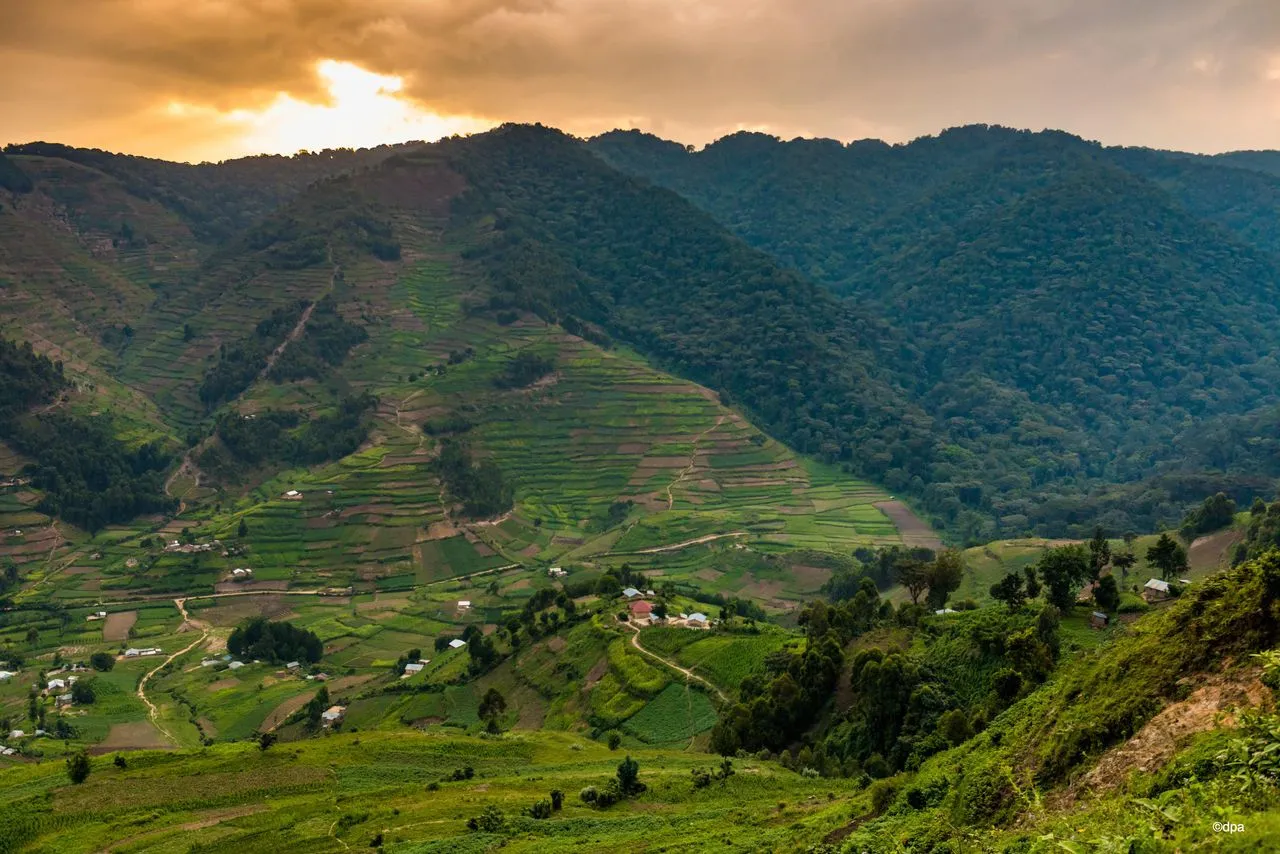
Uganda, known as the “Pearl of Africa,” offers a unique topography. Unlike the savannahs where lions and elephants roam, the gorillas inhabit the mist-shrouded slopes of the Albertine Rift. To reach them, one must ascend into a world where the air is thin, the temperature is crisp, and the mountains are steep. Understanding the realities of altitude is not just a matter of comfort; it is essential for ensuring that your once-in-a-lifetime trek is safe, enjoyable, and successful.
The Geography of the Gorillas’ Land.
In Uganda, mountain gorillas are found primarily in two protected areas: Bwindi Impenetrable National Park and Mgahinga Gorilla National Park. Both are situated in the southwestern corner of the country, right on the border with Rwanda and the Democratic Republic of Congo.
Bwindi Impenetrable National Park is the more famous of the two, home to roughly half of the world’s remaining mountain gorilla population. The name “Impenetrable” is not merely marketing; it is a literal description of a dense, ancient forest that covers a series of steep ridges and valleys. The altitude in Bwindi varies significantly, ranging from approximately 1,190 meters (3,904 feet) to 2,607 meters (8,550 feet) above sea level.
Mgahinga Gorilla National Park, part of the larger Virunga Massif (which spans three countries), is even higher. The park consists of three extinct volcanoes: Mt. Muhabura, Mt. Gahinga, and Mt. Sabyinyo. Trekking here often begins at an altitude of around 2,200 meters and can go significantly higher depending on the location of the Uganda gorilla group.
For a traveller coming from sea level or a low-lying city, this transition represents a drastic physiological change.
Why Altitude Matters
At elevations above 2,500 meters, the oxygen pressure in the atmosphere is roughly 25% lower than it is at sea level. While the percentage of oxygen in the air remains the same (about 21%), the lower air pressure means your lungs take in fewer oxygen molecules with every breath.
This triggers a series of physiological responses. Your heart rate increases to pump more blood, and your breathing becomes rapid as your body tries to compensate for the lack of oxygen. For a gorilla trekker, this manifests as shortness of breath, fatigue, and a much higher heart rate than you would experience walking a similar distance at home.
The challenge of altitude is compounded by the terrain. Gorilla trekking is rarely a walk on a flat path. It involves steep ascents and descents, often hauling yourself up muddy slopes by grabbing onto roots and vines. You are essentially doing an intense aerobic workout in an environment where oxygen is scarce. Even fit athletes often find themselves gasping for air within the first 20 minutes of a trek.
Understanding Acute Mountain Sickness
While severe altitude sickness is rare at the altitudes encountered while on Uganda Gorilla Trekking in Bwindi and Mgahinga, especially compared to climbing Mt. Kilimanjaro or Mountain Rwenzori, mild symptoms are common. Acute Mountain Sickness (AMS) can affect anyone, regardless of their fitness level, age, or gender.
Common mild symptoms include Headache, dizziness and Lightheadedness, nausea and Loss of Appetite, insomnia, and fatigue. Recognising these symptoms early is key. Most people adjust within a day or two, but ignoring the symptoms can ruin the trekking experience. If you have a severe headache, vomiting, or loss of coordination, you must descend immediately.
Preparing for the Elevation
Preparation for altitude should begin weeks before you board your flight to Uganda.
- Acclimatisation is Key. If your itinerary allows, avoid flying directly into the highlands and trekking the next morning. Ideally, spend a few days in Kampala or Entebbe (which are at a relatively low altitude of roughly 1,200 meters) before driving southwest. If you are combining Uganda with a safari in Kenya or Tanzania, note that those countries also have high-altitude regions (like the Laikipia Plateau or the Ngorongoro Crater), which can help pre-acclimatise your body. Once you arrive at the park, try to take it easy the day before your trek. Let your body adjust to the new normal.
- Hydrate Aggressively. High altitude accelerates dehydration. The air is generally drier, and you lose moisture through rapid breathing (respiratory water loss) and increased urination (the body’s response to lower oxygen levels). Drinking water is the single most effective way to stave off AMS. Aim for at least 3 to 4 litres of water per day, starting two days before your trek. Avoid alcohol and caffeine, as both are diuretics that exacerbate dehydration.
- The “Pole Pole” Philosophy. In East Africa, the Swahili phrase “pole pole” (pronounced “poh-lay poh-lay”) translates to “slowly, slowly.” This is the golden rule of high-altitude hiking. There is no prize for reaching the gorillas first. The trek is not a race; it is a journey. By slowing down your pace, you allow your body to maintain an oxygen equilibrium. Walk rhythmically, try to keep your breathing steady, and rest whenever you feel your heart racing uncontrollably.
- Medication and Nutrition. Consult your doctor before the trip. Some travellers benefit from Diamox (Acetazolamide), a medication that helps prevent and reduce the symptoms of altitude sickness by speeding up acclimatisation. However, it requires a prescription and has side effects. Regarding diet, eat a high-carbohydrate diet while at altitude. Carbs require less oxygen to metabolise than fats or proteins, providing your body with more efficient energy. Complex carbohydrates like whole grains, oats, and potatoes are excellent choices.
Dressing for the Altitude
One of the paradoxes of gorilla trekking is that you can start the hike sweating in the tropical sun and end up shivering in a cold mist cloud. The temperature drops approximately 6.5 degrees Celsius for every 1,000 meters gained.
Since you will be trekking at elevations often above 2,000 meters, the weather can be unpredictable and chilly. Layering is essential. Start with a moisture-wicking base layer (to keep sweat off your skin), add an insulating layer like a fleece or a down jacket, and top it off with a waterproof, windproof outer shell. The mist in Bwindi is pervasive and can soak you to the bone if you are not prepared, leading to rapid heat loss.
Furthermore, the UV radiation is stronger at higher altitudes because the atmosphere is thinner. Even on overcast days, sunburn is a risk. Wear a wide-brimmed hat, sunglasses, and high-SPF sunscreen.
Conclusion
Trekking for mountain gorillas in Uganda is an adventure that engages the body, mind, and soul. The altitude for Gorilla trekking in Uganda is an undeniable factor of this adventure, a force that demands respect and preparation. By understanding the elevation, acclimatising properly, hydrating, and pacing yourself, you turn the challenge of the thin air into a manageable part of the journey.
Do not let the fear of altitude deter you. With the right mindset and preparation, the slopes of Bwindi and Mgahinga are accessible to anyone with a reasonable level of health. The thin air will make your lungs burn, but the sight of a silverback in the mist will take your breath away in a completely different way. Prepare well, take it slow, and embrace the climb. The mountain giants are waiting.