
Bwindi Gorilla Permits
Everything you need to know about Bwindi gorilla trekking permits is just a matter of time. Bwindi Mountain gorillas are among the World’s most sought-after creatures during African safaris. They inhabit densely forested areas high in the mountains, hence their name.
Bwindi Impenetrable National Park is an incredibly gorilla trekking destination, with the highest population of majestic Giant Apes and habituated families to visit. Against the stunning vistas of densely forested landscapes, gorilla trekking in Bwindi is an awe-inspiring way to see these magnificent creatures in their natural habitat.
Every year, thousands of gorilla trekkers visit this National Park to witness the mountain gorillas’ iconic, human-like behavior and remarkable appearance. This is a bucket-list experience for any primate enthusiast. Still, you will need a gorilla trekking permit to spend time with one of the habituated gorilla families in Bwindi Impenetrable National Park (or any other park you choose to visit to see these giant apes). Planning your Bwindi gorilla safari in 2025? Getting the gorilla trekking permits is a crucial step in your preparation. Each day, one gorilla permit per person is required to trek the endangered mountain gorillas in Bwindi. Below is everything you need to know about Bwindi gorilla permits and their significance.
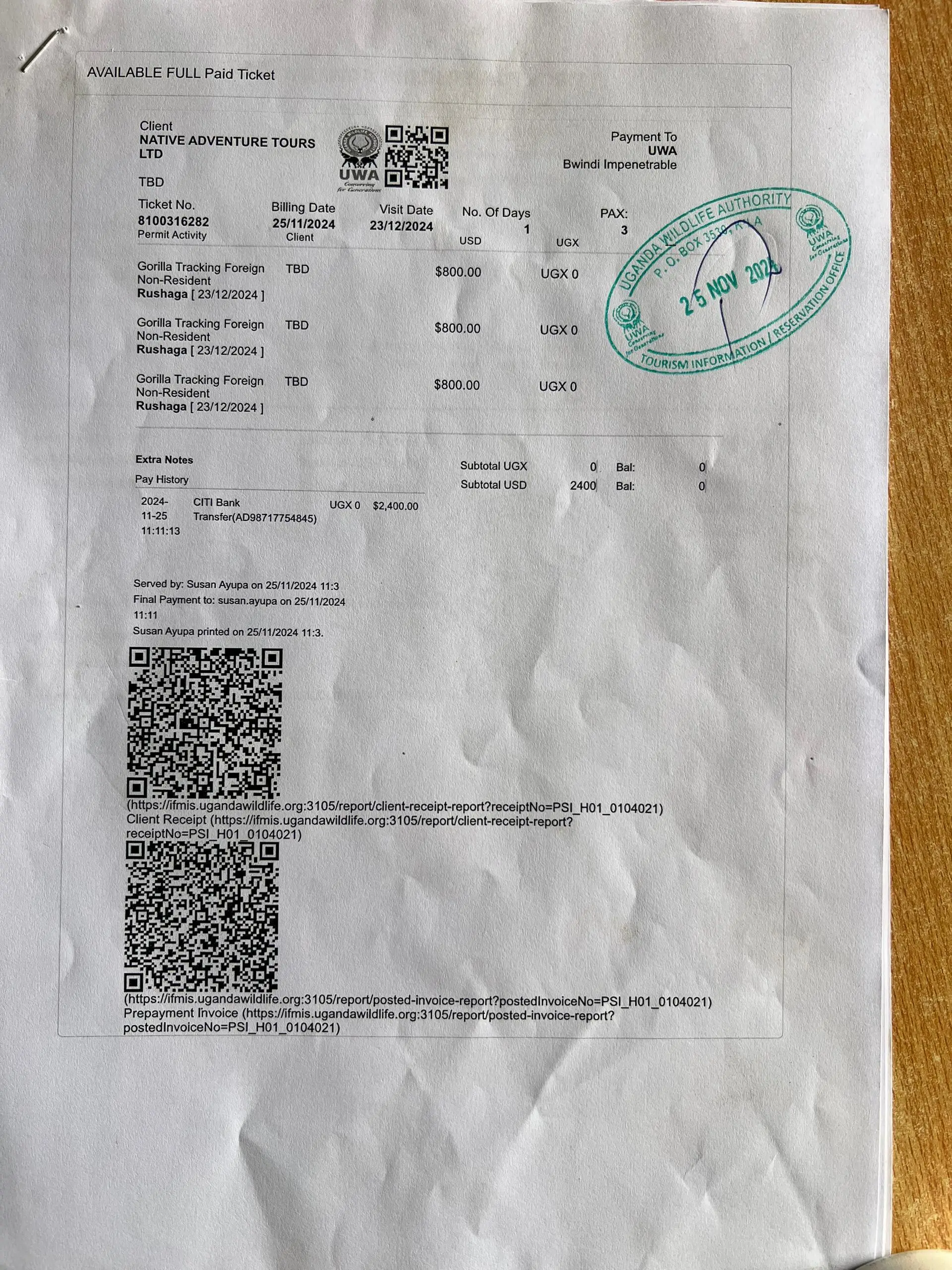
First, a Bwindi gorilla permit is a legal document that is only issued by Uganda Wildlife Authority on behalf of the Government and provides access to one of the four trekking sectors/regions- Nkuringo and Rushaga to the south, Buhoma to the North, and Ruhija to the East. This permit is only valid for the trekking date and sector/region shown.
How many permits are available for Bwindi Gorilla trekking?
Bwindi Impenetrable National Park has over 25 habituated gorilla families, which are distributed across the four sectors/regions: Buhoma, Ruhija, Nkuringo, and Rushaga. Uganda Wildlife Authority issues 200 Bwindi Gorilla permits each day, with eight people visiting each of the habituated gorilla families.
Besides the standard gorilla treks that provide for eight people visiting a gorilla family, Bwindi Impenetrable National Park provides for a more exclusive option where only four people visit a semi-habituated gorilla family in an adventure known as the “Gorilla Habituation Experience”.
Where to get Bwindi Gorilla permits
Bwindi Gorilla permits are only issued by Uganda Wildlife Authority, but you can get yours indirectly through a licensed Tour Operator like Native Africa Tours. All you have to do is contact us, clearly showing your intended gorilla trekking date/s, region/sector, and we can advise availability or advise the nearest dates to achieve your once-in-a-lifetime experience.
If you are only booking gorilla permits through us, we shall charge a small commission to cover administrative costs. However, we can also organize a seamless gorilla trekking tour for you. These packages cover gorilla permits, transportation (air or road transfers), an experienced safari guide, accommodation, and meals where required.
Why are Permits necessary for Gorilla Trekking?
You might wonder what the purpose of Bwindi gorilla permits is. Bwindi Gorilla permits are crucial for sustainability, ensuring the protection of the Giant Apes and their natural habitat. In simple terms, authorities issue permits to limit the number of people tracking and spending time with the mountain gorillas. If we conducted gorilla trekking adventures like game drives, everyone would get close to the Giant Apes, putting their lives at risk (as they share 98.2% DNA with humans, making them susceptible to human diseases).
Gorilla tourism regulation enables the Uganda Wildlife Authority to manage trekking adventures and ensure safety efficiently. Bwindi Gorilla permits help regulate gorilla trekking tours, thus promoting responsible viewing practices, as well as protecting the endangered Giant Apes from disturbance.
Bwindi Gorilla permits limit the number of visitors trekking a habituated gorilla family to eight people. Hence, it prevents overcrowding and reduces potential disturbances to mountain gorilla populations.
Bwindi Gorilla permits are essential for supporting the local community. The revenue derived from issuing gorilla permits is fundamental in promoting infrastructural changes and supporting sustainable development for local communities living around the national park, hence contributing to the overall protection of the Giant Apes.
Checking availability for Bwindi Gorilla Permit
When booking your Bwindi Gorilla Trekking safari, please verify availability before confirming and making payment, as permits are limited and issued daily. There’s a need to guarantee space for the intended dates to avoid disappointment. You can do this by contacting a Tour Operator, who will then check the availability of Bwindi Gorilla permits online. The Uganda Wildlife Authority controls and manages this system. This online system shows the dates with permit availability and those without. Hence, allowing us to recommend the closest dates with availability if those you desire aren’t available.
Once booked, Bwindi Gorilla Permits are only valid for the scheduled date of trekking. Therefore, always make sure that your safari dates align with the permit’s validity date to avoid disappointments and complications.
Cost of Bwindi Gorilla Permits
Bwindi Gorilla Permits cost vary according to a visitor’s residence/nationality status. For instance, foreign non-residents pay $800 per person to trek the endangered apes in their natural habitat. The park charges foreign resident visitors $700 per person for these permits, 300,000 (about $83) per person. Visitors from the Rest of Africa pay $500 per person.
These permits are non-refundable and non-transferable (a foreign non-resident can’t use a foreign resident Bwindi Gorilla Trekking permit). Therefore, if you lose your permit, you will need to apply for a replacement.
When is the best time to book Bwindi Gorilla Permits?
The best time to get Bwindi Gorilla Permits for getting up close and personal with the Giant Apes in their natural habitat is to apply 6-12 months in advance. As Bwindi Gorilla Trekking is one of the most popular treks in Africa, a vast number of people are waiting to enjoy this once-in-a-lifetime experience, hoping to learn about their human-like behavior and take photos of them as they go about their daily routines.
Especially in the dry season, from June to September and December to February, which is the best time for enjoying Bwindi Gorilla Trekking tours, when the number of visitors participating in these treks is highest. Ultimately, the number of visitors applying for a gorilla permit is also high.
During the dry season, which is also the peak season, visitors often face difficulty obtaining Bwindi Gorilla Permits, with some dates having no availability. Therefore, to avoid hassle and get permits on time, travelers should apply 6–12 months before their trek during peak season, or 3–4 months before during the low season.
Common mistakes to avoid when booking Bwindi Gorilla Permits
Some of the common mistakes to avoid when booking a Bwindi Gorilla Permit include;
- Showing an incorrect Bwindi gorilla trekking date.
- Late application for the Bwindi Gorilla Permit, hence leading to last-minute disappointments.
- Not having enough money for a permit, especially for your category- foreign non-resident, foreign resident, East African Community resident, or Rest of Africa visitor.
- Applying for a Bwindi Gorilla permit with an incorrect gate/trekking sector/region, which doesn’t match your accommodation details. For instance, booking a Buhoma gorilla permit while your accommodation is confirmed in Rushaga.
- Not paying attention to the trekking date and the terms and conditions of the permit.
In conclusion, Bwindi Impenetrable National Park is one of the best places to enjoy unforgettable gorilla trekking experiences. To get up close and personal with the Giant Apes in their natural habitat, trekkers must obtain gorilla permits, which the Uganda Wildlife Authority issues for tourism regulation and sustainability.