
Visiting the Masai Mara in November: Weather, Wildlife, and Travel Guide
Visiting the Masai Mara in November provides a more peaceful and personal safari experience. While the Great Migration typically returns to Tanzania, the Mara still teems with wildlife. These include lions, leopards, elephants, giraffes, and buffalo. November coincides with the short rainy season, transforming the plains into vibrant green landscapes and attracting migratory birds. This makes the Masai Mara reserve ideal for photographers and birdwatchers. Fewer visitors, lower prices, and striking skies make November an excellent time for travelers seeking a calm, budget-conscious safari while still enjoying Kenya’s famous game reserve.
The Encounters Awaiting You When Visiting the Masai Mara in November
In November, vast herds of wildebeests can be spotted as they congregate and prepare for their long trek to the south. The return journey starts with a few hundred to thousands of wildebeests. The African elephants also switch their diet to leaves and bark, with most of them often spotted depending on the warburgia trees.
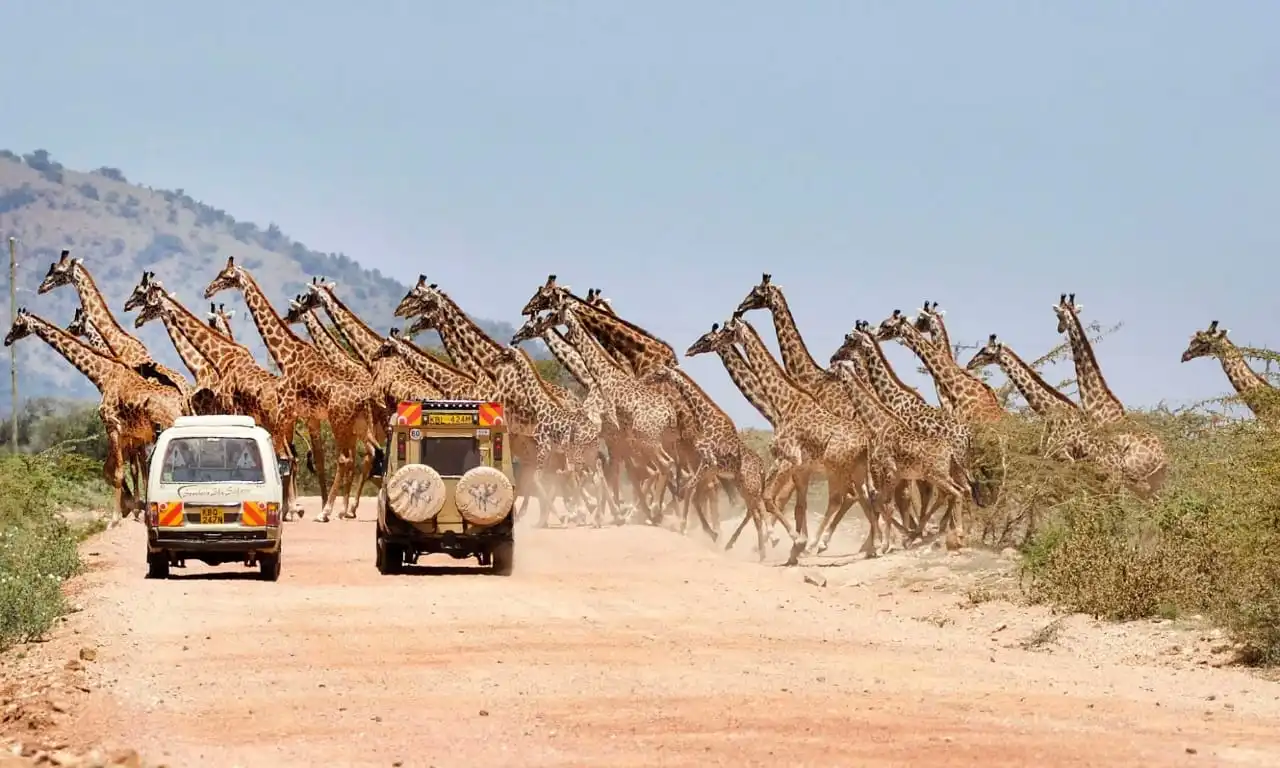
Visiting the Masai Mara in November also exposes you to several newborns dotted across the reserve. The common sightings of newborns usually include topis calves, impalas, and giraffes. The warthogs, on the other hand, can be spotted across the spectacular landscapes of the Maasai Mara. Additionally, several bat-eared foxes and Defassa waterbucks, along with their young, can be observed. Waterbucks breed in the woodlands along the marsh. On a game viewing, don’t forget to encounter several of the bushbuck antelopes.
Fascinating primates, such as baboons and blue monkeys, are confined to the woodland to feed on some of the fruiting trees. Other great insights that await you on the tour in Masai Mara National Reserve in November include cape buffaloes, giraffes, and, of course, the hyenas, plus their cubs.
November is also a popular month for tourists to find large prides of lions. There is plenty of food for these big cats to depend on, especially because the migration begins to end in the Masai Mara National Reserve. The majority of the lions can be spotted along the Mara River as they patiently wait for the wildebeests and zebras as they cross the river.
Cheetahs can be spotted in the short grass plains, and most wildebeests would have disappeared in such areas. You can also find some tiny cubs while in their hideouts.
The Birds
A variety of bird species can also be spotted around this time of year. This is because most trees in the riverine forests begin to fruit, and many of the avifauna are attracted. The notable birds to expect to identify in the Masai Mara around this period include the double-toothed barbets, pallid harriers, kestrels, green sandpipers, yellow wagtail, Eurasian bee-eaters, common snipes, Eurasian rollers, red-throated pipits, and marsh harriers. Around the open plains, expect to find the Isabelline wheatears, Northern wheatears, willow warblers, red-backed shrikes, spotted flycatchers, and more.
Top things to do in the Masai Mara
Great Migration
Whereas the peak wildebeest migration usually falls in July and September, visiting the Masai Mara in November still allows you to enjoy sights of large herds of wildebeests. Large herds of wildebeests can be observed as they start returning to the Serengeti National Park in Tanzania.
Guided game drives
Game drives are enjoyable all year round in the Masai Mara. The reserve is renowned for its diverse wildlife, and November offers exceptional game viewing opportunities for nature enthusiasts. Tourists can engage in a day of guided game drives, an excellent opportunity to witness the Big Five. The Big Five animals include the buffalo, leopard, lion, elephant, and rhino. Guided game drives in the Masai Mara also expose you to a variety of other mammals, such as cheetahs, giraffes, zebras, antelopes, and birds like ostriches.
Bird-watching
The Masai Mara alone is home to over 470 bird species, making it a unique birding tour destination in Kenya. Birding in November in the Masai Mara presents you with a chance to identify resident and migratory bird species. The various birds to find on a tour in the Masai Mara include the speckled mousebirds, Alpine swift, tiny pygmy kingfishers, yellow-billed storks, crowned cranes, Kori bustards, secretary birds, rufous-bellied herons, black-headed herons, great white egrets, saddle-billed storks, ostriches, purple grenadiers, grey penduline tit, Denham’s bustards, silver birds, lazy cisticola, Jackson’s window bird, Schawlow’s turacos, Swahili sparrow, rufous-throated wryneck, rosy-throated long claw, and woolly-necked stork.
Hot Air Balloon Tours
Hot air balloon excursion offers a unique perspective of the lush Maasai Mara and its breathtaking landscapes. Rise above the savanna plains while amazed by the encounters of the Masai Mara’s abundant wildlife. Balloon excursions in the Masai Mara are offered in the morning, afternoon/sunset. The morning hot air balloon tours include a tasty bush breakfast and a sunset champagne toast.
Cultural Visits to the Maasai Village
Cultural visits to the Maasai community provide an excellent opportunity for you to interact with the Maasai people. Take the opportunity to explore in depth the distinct traditions, cultures, and practices of the Maasai people, one of the few remaining indigenous groups in Kenya and Tanzania. Learn how they managed to coexist with wildlife for centuries in the Protected Areas like the Masai Mara Reserve.
Top Accommodation to Stay in the Masai Mara
Countless lodging options are available in the Masai Mara at affordable rates. They offer budget, mid-range, and luxury services. They include Basecamp Wilderness, Little Governor’s Camp, Basecamp Masai Mara, Mahali Mzuri, Richard’s River Camp, Mara Expedition Camp, Governors’ Camp, & AndBeyond Kichwa Tembo Tented Camp. Other lodges include Saruni Mara, Cottar’s 1920s Safari Camp, Elewana Sand River Camp, &Beyond Bateleur Camp, Sanctuary Olonana Safari Lodge, Mara Serena Safari Lodge, and Serian Nkorombo Mobile Camp.
Getting to the Masai Mara for a Tour in November
The Masai Mara lies in Narok County and can be accessed by road or by air. Using road transportation, you can take between 5 and 6 hours to drive from Nairobi to the Masai Mara. The main access gates to the Masai Mara Reserve include Talek, Musiara, Oloololo, Sekenani, and Sand River.
By air, take a domestic flight starting from the Nairobi Wilson Airport to any of the airstrips present at the Masai Mara Reserve. The currently active airstrips that serve the Maasai Mara include Ol Kiombo Airstrip, Kichwa Tembo, Musiara Airstrip, Serena Airstrip, Keekorok, Ngerende, Siana Conservancy, and others.
Is the Masai Mara good to visit in November? Yes, the Masai Mara can be explored even in November. This comes with its amazing benefits worth considering by nature enthusiasts with plans to unearth the wonders in the lush Maasai Mara. However, depending on your interests, and especially if your target is to witness the powerful Migration, we recommend traveling anytime from July to September.
Conclusion: Why the Masai Mara in November Is Worth Touring
While the Masai Mara in November might not showcase the Great Migration, it offers a distinctive safari experience. Lush scenery, striking skies, and lively resident wildlife characterize this. Fewer tourists, reduced prices, and the influx of migratory birds make November an ideal month for travel. This is mainly for those seeking a peaceful, budget-friendly trip with memorable wildlife encounters.
Native Africa Tours offers custom safaris in the Masai Mara for November. These features include expert guides, cozy lodges, and genuine cultural encounters. We can help you plan your ideal safari and experience the Mara’s tranquil beauty. You can book an adventure with us now.