
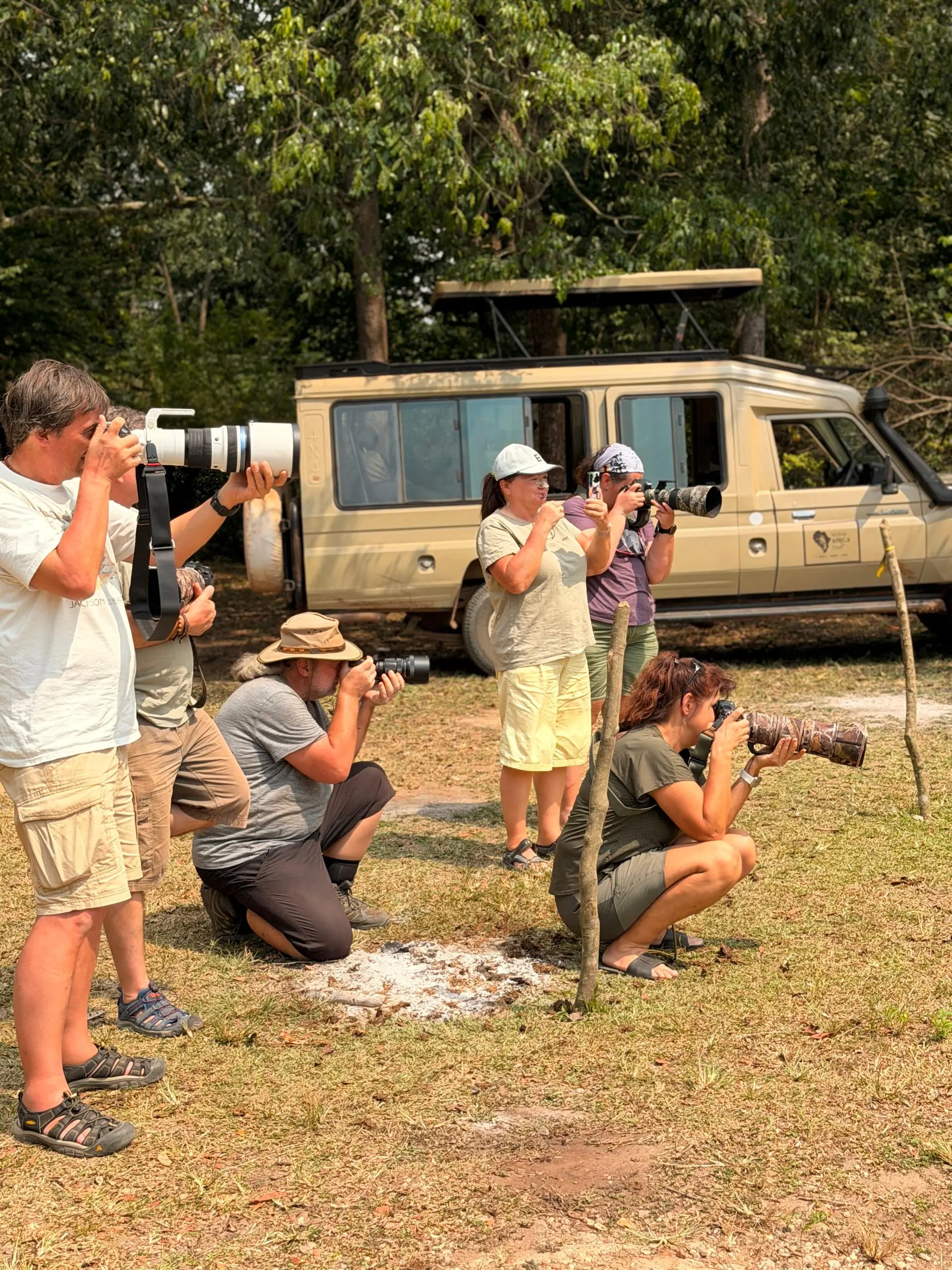
Big Five Photography Safaris in Uganda
The term “Big Five” was originally coined by big-game hunters to describe the five most dangerous animals to hunt on foot in Africa: the Lion, Leopard, Elephant, Cape Buffalo, and Rhinoceros. Today, the bullet has been replaced by the lens, and the hunt has become a passionate pursuit of the perfect photograph. While the savannahs of Kenya and the plains of the Serengeti are famous for these sightings, Uganda offers a distinct and visually arresting backdrop for Big Five photography safaris.
For a photographer, Uganda is not just about checking a list; it is about composition, mood, and the dramatic contrast of landscape and wildlife. From the rolling savannahs of Queen Elizabeth to the rugged wilderness of Kidepo and the palm-studded banks of the Nile, Big Five photography safaris in Uganda are an exercise in diversity and light.
Beyond the Dust
One of the first things a photographer notices upon arriving in Uganda is the light. Unlike the stark, blinding white light often found in the drier regions of East Africa, Uganda’s light is often softer, filtered through the humidity of a tropical climate. The country is lush and green year-round, providing a rich, deep colour palette that makes the warm tawny coats of lions and the red earth of the trails pop with vibrancy.
This unique environment demands a different approach to photography. The “green season,” which might be considered rainy elsewhere, is often a blessing for photographers in Uganda. The clouds act as a giant softbox, diffusing the harsh equatorial sun and reducing the contrast between deep shadows and bright highlights. This allows for detailed texture shots of animal skin and fur that might be blown out in harsher climates.
Where to Shoot the Big Five
To capture the Big Five on Photography safaris in Uganda, you must travel to specific, distinct ecosystems within the country. Each offers a different photographic challenge and reward.
The Lions
The quintessential Ugandan shot is the tree-climbing lion. While lions in other parts of Africa are occasionally seen in trees, the populations in the Ishasha sector of Queen Elizabeth National Park have made this behaviour a daily habit. For a photographer, this is gold.
The Leopards
Shadows of the Savannah Leopards are the most elusive of the Big Five, masters of camouflage. In Uganda, they are found in good numbers in Murchison Falls National Park and Kidepo Valley National Park.
The Elephants
Giants of the Nile. Uganda is home to both the savannah elephant and the forest elephant. Murchison Falls National Park offers incredible opportunities to photograph massive herds congregating on the banks of the Nile River. The “Red Elephants” of Murchison are a visual spectacle. After dusting themselves with the red iron-oxide soil of the track, they take on a vibrant ochre hue. Capturing a herd crossing the Victoria Nile with the mist of the Murchison Falls in the background is a landscape-wildlife composite dream.
The Cape Buffalo
Often underrated as a photographic subject. They look deceptively like bovine, but up close, their curving horns (the “boss”) and piercing eyes make for intimidating, character-filled portraits. In Uganda, the buffalo are often covered in mud or surrounded by lush grass. A close-up portrait of a “Dagga Boy” (old male) with a red-billed oxpecker bird perched on its horn adds a splash of colour and a symbiotic narrative to the image.
The Rhinoceros
The Conservation Comeback. The Northern White Rhino is functionally extinct in the wild, but the Southern White Rhino has been successfully reintroduced to Uganda at the Ziwa Rhino Sanctuary. This is the only place in Uganda where you can see them.
Unlike the other four, which are usually viewed from a vehicle, rhinos at Ziwa are often tracked on foot. This allows for eye-level photography and a completely different perspective. You can capture the texture of their skin and the prehistoric nature of their movement without the barrier of a car door. Walking safaris require silence and quick movements. A monopod offers stability for heavier lenses without being as cumbersome as a tripod. The environment here is bushy, so look for “patches” of light where the rhino steps into a clearing.
Technical Considerations for the Ugandan Bush
Big Five photography safaris in Uganda presents unique logistical and technical challenges. The Dust Factor Uganda’s parks can get incredibly dusty, especially in the dry season. This dust is the enemy of camera gear. When a vehicle follows another, or when a herd of buffalo kicks up dirt, you are shooting in a fog of particulate matter. Bring weather-sealed camera bodies if possible, and always have a blower and microfiber cloth handy. Keep your lens caps on until the very last second.
Uganda lies on the equator, meaning sunrise and sunset happen rapidly, almost like flipping a switch. The “golden hour” is short but spectacular. Plan your shots. Have your settings dialled in before the sun dips.
Power Management Most lodges in Uganda run on generators or solar power, and outlets in the tented camps are often limited or powered off during the day. Bring a high-capacity power bank to charge batteries in the vehicle or during lunch breaks. Carry extra batteries; cold mornings at high altitudes or in the open vehicle can drain battery life faster than usual.
The “Bonus” Gallery
While the focus here is the Big Five, a photographer in Uganda would be remiss to ignore the “Mini Five” or the primate stars. Uganda is the primate capital of the world. A photography safari here often includes Mountain Gorillas and Chimpanzees.
Photographing gorillas in the dense undergrowth of Bwindi Impenetrable Forest requires a shift in mindset. The light is low, the vegetation is thick, and the subject is dark. High ISOs are mandatory. However, the emotional connection captured in a gorilla’s eyes is unlike anything else in the wildlife kingdom. Including these in your portfolio rounds out the Ugandan story, contrasting the savannah giants with the forest dwellers.
Conclusion
Big Five photography safaris in Uganda are an adventure that tests your skills and rewards your patience. It moves beyond the postcard perfection of open plains and delves into a world of dramatic weather, thick vegetation, and intimate encounters.
Whether you are capturing the silhouette of a tree-climbing lion in Ishasha, the red dust on an elephant in Murchison Falls, or the prehistoric gaze of a rhino at Ziwa, you are working with a palette that is uniquely Ugandan. The country offers a raw, authentic, and lush backdrop that elevates wildlife photography from simple documentation to art. Pack your long lenses, your rain covers, and your sense of wonder; the Pearl of Africa is waiting to be captured.