
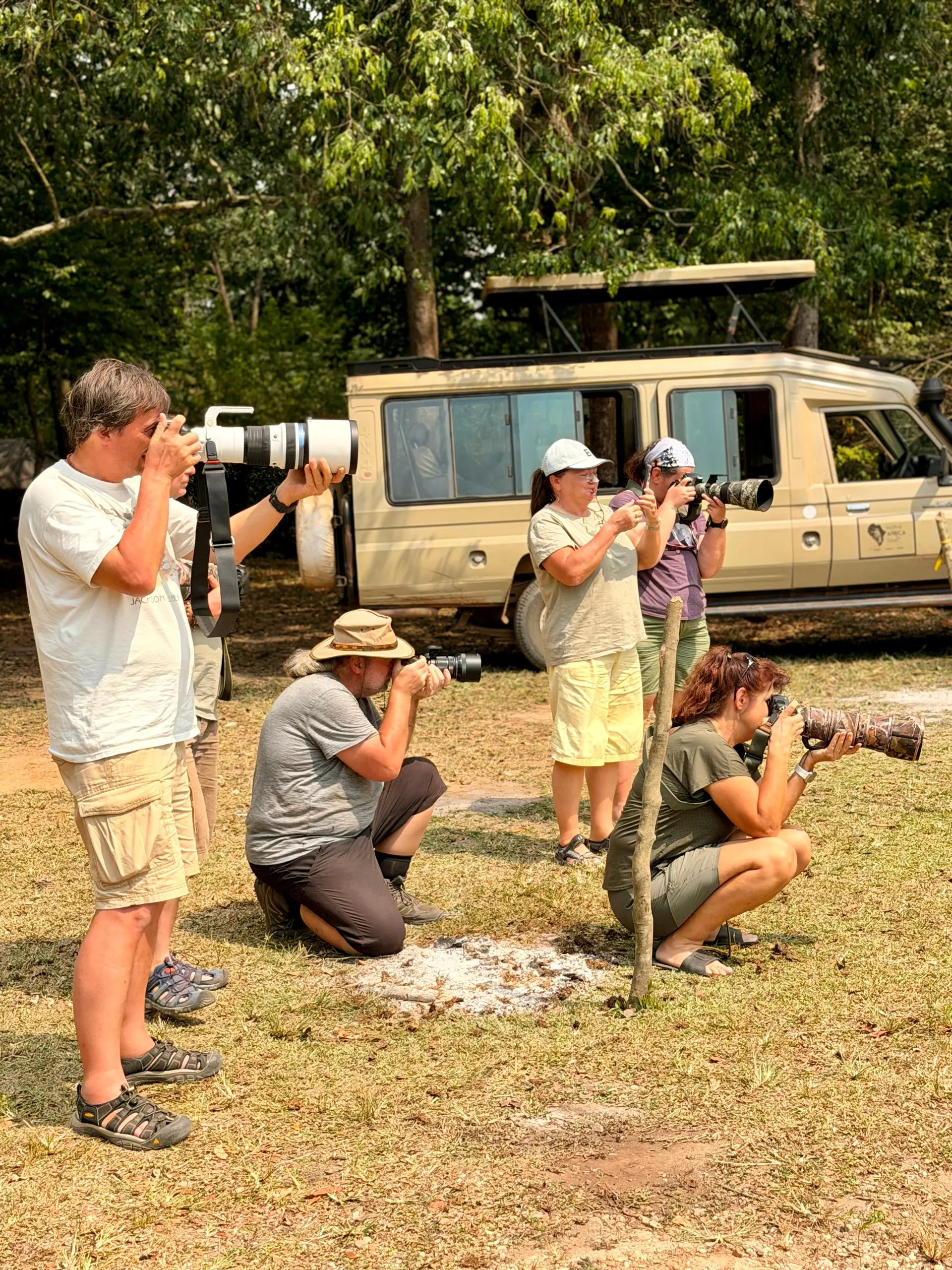
Combined Birding and Wildlife Safaris in Uganda
Winston Churchill famously described Uganda as the “Pearl of Africa,” a moniker that has lost none of its luster over the decades. For the modern traveler, however, Uganda is more than just a pearl; it is a kaleidoscope of biodiversity. While the Serengeti and Maasai Mara often dominate the conversation regarding African wildlife, Uganda offers a distinct and richer tapestry for the traveler who refuses to choose between the “Big Five” and the “Little Brown Jobs.” Combined birding and wildlife safaris in Uganda are not merely a compromise; it is the optimal way to experience the country.
In a single morning, one can track a family of Mountain Gorillas through the mist and simultaneously spot a dozen Albertine Rift endemics fluttering in the canopy above. Uganda is unique because it sits at the convergence of the East African savannah and the West African rainforest. This geographical crossroads means that in a ten-day trip, a visitor can essentially experience two entirely different biological worlds. Here is why a dual-focus safari in Uganda offers the most rewarding adventure on the continent.
The Convergence of Habitats
The magic of Uganda lies in its density. It is a country that packs a staggering punch into a relatively small area. While birdwatchers often lament that photographers care only for mammals, and mammal enthusiasts find birders too stationary, Uganda dissolves this friction.
The reason is simple: the habitats are inextricably linked. You cannot visit the papyrus swamps to look for the prehistoric-looking Shoebill Stork without drifting past pods of Hippos and basking Crocodiles. You cannot trek through the Forest for Chimpanzees without being surrounded by a cacophony of Greenbuls, Hornbills, and Turacos. In Uganda, the view through the binoculars changes seamlessly from a Leopard melting into the grass to a Malachite Kingfisher diving into the water.
Murchison Falls National Park
Any combined birding and wildlife safaris in Uganda should begin or end at Murchison Falls National Park. This is Uganda’s largest protected area. Here, the mighty Nile River forces its way through a narrow gorge in the Rift Valley escarpment, creating a thunderous spectacle that is as auditory as it is visual.
For the wildlife enthusiast, the Nile delta creates a fertile ground for large herds of Elephants, buffalo, and Giraffes, while the riverbanks are patrolled by countless Lions and Leopards. However, the birdlife here is equally staggering. The park boasts over 450 species.
A boat launch to the base of the falls is a masterclass in combined viewing. As the boat rocks in the current, passengers are treated to close encounters with Nile Crocodiles and Walling Hippos, but the guides are just as likely to point out the Red-throated Bee-eaters nesting in the sandy cliffs, the Goliath Heron standing motionless in the reeds, and the rare and bizarre Shoebill Stork, which is often spotted in the delta’s papyrus marshes. It is a location where the “Big Game” and the “Big Birds” coexist in perfect harmony.
Queen Elizabeth National Park
Moving south, Queen Elizabeth National Park (QENP) is often cited as having the highest biodiversity of any park on the planet. Its landscape varies from open savannah to dense wetlands and volcanic crater lakes.
QENP is famous for its tree-climbing Lions in the Ishasha sector and its large populations of Uganda Kobs. Yet, QENP is also an IBA (Important Bird Area) with over 600 species recorded. The Kazinga Channel, a 32-kilometer-long natural waterway that connects Lake Edward and Lake George, is the crown jewel of the park.
A boat trip on the Kazinga channel is arguably the best birding boat ride in East Africa. You will see African Skimmers swooping low over the water, Great White and Pink-backed Pelicans fishing in coordinated dives, and African Fish Eagles calling from the shoreline. Meanwhile, the banks are crowded with Cape Buffalo, Waterbuck, and massive herds of Elephants that come to drink. The experience is overwhelming in the best possible way; you do not know where to look first, as the drama of a predator hunt and the elegance of a rare migrant bird play out simultaneously.
The Gorilla Highlands of Bwindi and Mgahinga
As you move southwest, the landscape shifts from the flat savannah to the vertiginous, mist-covered volcanoes of the Virunga Massif. This is the domain of the Mountain Gorilla, the primary draw for tourism in Uganda. Trekking into the Bwindi Impenetrable Forest to sit with a Gorilla family is a life-changing experience, often described as a spiritual pilgrimage rather than a mere safari.
However, for those interested in ornithology, these forests hold secrets that rival the apes in scientific value. Bwindi is the Birders’ Eden. It is home to 23 of the 24 Albertine Rift endemic bird species found nowhere else on Earth. As you trek through the dense undergrowth, navigating vines and moss-covered trees, your tracker will be scanning the canopy for the African Green Broadbill, the Shelley’s Crimsonwing, and the handsome Rwenzori Turaco.
The dual focus here creates a fascinating dynamic. While the rest of the group is focused entirely on the Silverback, the birder is scanning the moss for the Dwarf Honeyguide. The beauty of a combined safari here is that the permits for gorilla trekking often lead you deep into the forest where casual tourists never go, granting you exclusive access to pristine birding habitats that would otherwise require days of difficult hiking to access.
Kibale Forest: The Primate Capital of the World
While the gorillas get the glory, Kibale Forest is the place for primates, boasting the highest density of Chimpanzees in the world. Tracking these agile, vocal, and intelligent apes is a high-octane adventure.
Yet, Kibale is also one of the best forest birding locations in Uganda. It is home to the “Big 5” of the forest birding world, a checklist that includes the Green-breasted Pitta. The Pitta is a shy, ground-dwelling bird that is notoriously difficult to spot, drawing dedicated birders from across the globe. Watching a Pitta hop through the leaf litter requires a level of patience and silence that mirrors the stealth required to approach a grazing Elephant. Walking through Kibale, you are surrounded by Black-and-white Colobus monkeys leaping through the branches and the fluttering of hundreds of butterfly species, creating a multi-sensory immersion in the tropical rainforest.
The Shoebill Tour in Mabamba Wetland
There is no Uganda safari that is complete without a dedicated mention of the Shoebill Stork. This evolutionary relic, looking like a mix between a dinosaur and a puppet, is perhaps the most sought-after bird on the continent.
For the pure wildlife lover, the Shoebill is a fascinating creature of biology, a hunter that can strike with the force of a crocodile. For the birder, it is the “Holy Grail.” Finding the Shoebill requires venturing into the Mabamba Swamp, a wetland on the edge of Lake Victoria. Here, you are paddled in a traditional dugout canoe by local guides who know the marshes intimately. The experience is intimate and serene. As you glide through lily pads, you may spot Sitatungas (semi-aquatic antelopes) and Swamp Flycatchers. When the Shoebill is finally spotted, it is a moment of triumph that unites the twitchers and the wildlife photographers on the boat.
When and How to Go
To maximize combined Uganda birding and wildlife safaris, timing is everything. The dry seasons, from December to February and June to September, are generally best for general wildlife viewing. During these months, the vegetation is thinner, and animals congregate around water sources, making them easier to spot. Roads are also more accessible, allowing for smoother travel between parks.
However, serious birders might argue for the wet seasons (March to May and October to November). The rains bring the breeding season, meaning birds are in their colorful breeding plumages and are more vocal, making them easier to locate by sound. Furthermore, the wet season is the best time to see migratory species from Europe and North Asia.
Because the requirements for birding and wildlife viewing differ slightly, it is highly recommended to hire a specialized guide who understands both. In Uganda, the guiding standards are exceptionally high, and the best guides are adept at managing the expectations of mixed groups, ensuring that everyone gets their shot at the prize.