
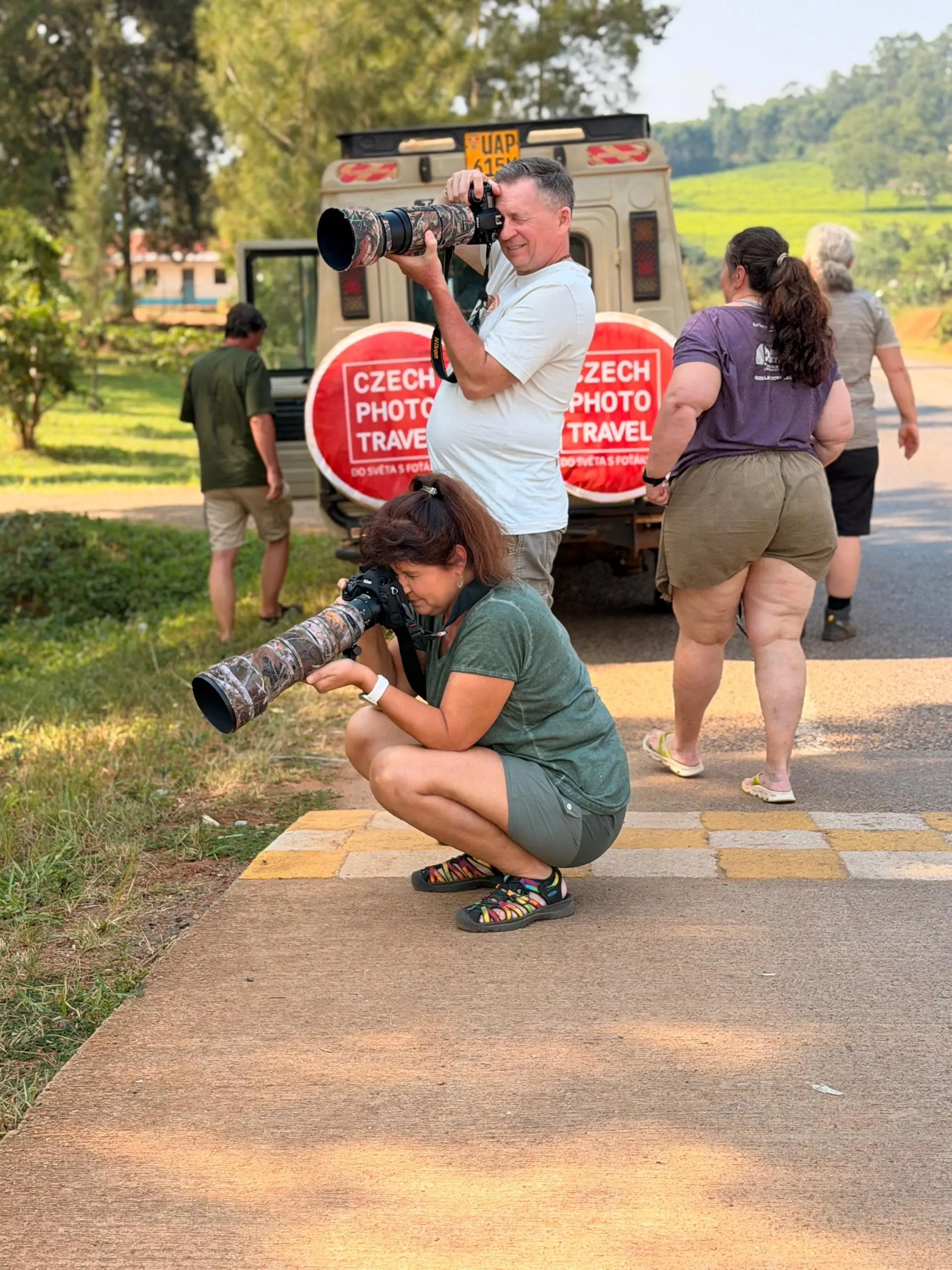
Uganda Wildlife Safaris for Nature Photographers
For the nature photographers, Uganda Wildlife Safaris are divided into easy-to-shoot destinations and transformative ones. Uganda, famously christened the “Pearl of Africa” by Winston Churchill, belongs unequivocally to the latter category. While neighbours Kenya and Tanzania boast the vast, open plains of the Serengeti and the Masai Mara, Uganda offers something different. It offers density, drama, and a raw intimacy that challenges the lens and rewards the soul.
Uganda wildlife safaris are not merely game drives; they are nature photographers’ expeditions into diverse biomes. From the mist-shrouded, impenetrable forests to the sprawling savannahs of Queen Elizabeth and the thundering cauldron of Murchison Falls, Uganda provides a canvas that is as varied as it is vibrant. For the photographer looking to build a portfolio that goes beyond the standard “lion on a rock” silhouette, Uganda is the frontier.
Mountain Gorillas of Bwindi
The primary draw for most photographers, and undoubtedly the emotional apex of any Ugandan safari, is the Mountain Gorilla. Located in the Bwindi Impenetrable National Park, these gentle giants offer a wildlife photography experience that is unparalleled on the planet.
Photographing gorillas presents a unique set of technical challenges. Unlike the open savannah, Bwindi is a dark, dense jungle. The “golden hour” concept is often irrelevant here; you are dealing with dappled light filtering through the canopy, creating high-contrast scenes that can confuse camera meters.
Success here requires a mastery of exposure. High ISOs are often necessary to freeze the movement of a playing juvenile or a chest-beating silverback. A fast prime lens, such as an 85mm or a 70-200mm f/2.8, is ideal. The intimacy of the encounter means you don’t always need a massive 600mm telephoto; sometimes, the gorillas are close enough to touch (though a 7-meter distance is strictly enforced).
The reward, however, justifies the struggle. Capturing the sepia-toned eyes of a silverback, the texture of their fur, or the human-like expressions of a mother cradling her infant results in deeply psychological portraits. These aren’t just animal shots; they are character studies.
Tree-Climbing Lions of Ishasha
After the shadows of the forest, the photographer moves into the light. Queen Elizabeth National Park is a diverse ecosystem, but for the lensman, the Ishasha Sector in the south is the magnetic pull. This is the home of the famous tree-climbing lions.
Witnessing a pride of lions draped over the branches of enormous fig trees is a surreal sight. It breaks the rules of textbook African behavior. Compositionally, this is a dream. The horizontal lines of the savannah are interrupted by the vertical thrust of the trees and the diagonal shapes of the lounging cats.
The challenge here is perspective. Most lions in Ishasha climb high to escape the heat and the tsetse flies on the ground. Shooting from a standard safari vehicle roof often means shooting up at the lion’s belly, which is rarely the most flattering angle. Experienced guides in Uganda understand the needs of photographers and will position the vehicle to allow for a slight elevation or an angle through the branches to capture the lion’s face at eye level. Patience is key; you must wait for the wind to rustle the leaves aside or for the lion to shift its gaze toward the lens.
Chimpanzee Trekking and More
Uganda is the prime capital of East Africa, and Kibale National Forest offers the best chimpanzee tracking on the continent. If gorilla photography is about portraiture and stillness, chimpanzee photography is about action and speed.
Chimpanzees are vocal, frenetic, and constantly on the move. They swing through the canopy at high velocity, creating a chaotic environment for the autofocus system. Fast shutter speeds are essential. Here, a zoom lens with versatility, like a 100-400mm, is critical. You might be framing a chimp grooming a companion at 20 meters one second, and pivoting to capture a dominant male charging across the forest floor the next.
Beyond the chimps, Kibale and other forests are home to the Black-and-White Colobus and the Red-Tailed Monkey. The contrast of the Colobus fur against the deep green foliage creates striking graphic images, particularly when they are caught mid-leap between trees.
The Prehistoric Shoebill Stork
No Ugandan portfolio is complete without the Shoebill Stork. Standing up to five feet tall with a prehistoric, shoe-like bill and a piercing stare, the Shoebill is one of the most sought-after avian subjects on the planet.
Found in the marshes of Murchison Falls and, more accessibly, Mabamba Swamp near Entebbe, photographing the Shoebill requires a departure from the 4×4 vehicle. You will be in a traditional canoe, gliding silently through papyrus reeds. This offers a unique water-level perspective that creates beautiful, out-of-focus foregrounds of vegetation, leading the eye directly to the bird.
The Shoebill is a master of stillness. It can stand like a statue for minutes, waiting for a lungfish. This stillness lulls the photographer into a false sense of security. The moment of the strike is lightning fast. Continuous shooting mode (burst mode) is your best friend here. Furthermore, the overcast sky often prevalent in the swamps acts as a giant softbox, illuminating the bird’s blue-grey plumage without harsh shadows.
Landscapes and Wide-Angles
While the wildlife is the subject, the stage upon which they act is equally photogenic. Uganda is a land of water and mountains.
Murchison Falls National Park offers the most dramatic hydrological subject in the country. The Nile River forces its way through a 7-meter-wide gorge in the rift valley escarpment, crashing down 43 meters. The spray creates a perpetual rainbow on sunny days. A wide-angle lens and a tripod (or a stable surface) are necessary to capture the power of the water, often requiring slower shutter speeds to blur the motion of the river.
In the southwest, the Virunga Volcanoes provide a stunning backdrop for gorilla trekking. The layered slopes and the mist create a moody, atmospheric “Lord of the Rings” aesthetic that adds scale and drama to wildlife shots.
Technical Considerations for the Uganda Nature Photography Safari
Gear Strategy: The diverse environments mean you need to be versatile. A two-body setup is highly recommended. One body should carry a wide-angle zoom (24-70mm) for landscapes and environmental portraits, and the other should carry a telephoto (100-400mm or 200-500mm) for distant wildlife and skittish birds.
Lighting: Uganda lies on the equator, meaning the sun rises and sets quickly. The “golden hours” are short but spectacular. The midday sun is harsh, but this is often when the cats are sleeping in trees (Ishasha) or when the light penetrates the canopy in interesting ways (Bwindi). Don’t put the camera down at noon; look for abstract patterns, textures, and macro opportunities in the insects and flora.
Protection: Uganda is lush, which means rain. Even in the dry season, a sudden shower in Bwindi or Kibale is common. High-quality rain covers for your camera and lens are non-negotiable. A microfiber cloth is essential for constantly wiping mist or rain off the front element. Silica gel packs in your camera bag will help manage the humidity that can fog up sensors and lenses.
Conclusion
Uganda wildlife safaris demand more from the Nature photographers than the savannahs of the east. They ask you to deal with difficult light, to hike through mud, and to contend with rain. But in return, it gives you access to the most intimate wildlife encounters on Earth. It offers the rare opportunity to photograph mountain gorillas at close range, to frame tree-climbing lions against the sky, and to drift silently through marshes in search of dinosaurs. For the nature photographer, Uganda is not just a destination; it is an adventure that redefines what is possible behind the lens.