
Compare Akagera and Queen Elizabeth National Parks
Choosing between Akagera National Park in Rwanda and Queen Elizabeth National Park in Uganda depends on the wildlife you want to see, the length of your safari, and your preferred travel route. Both parks offer rewarding African safari experiences, with opportunities to see elephants, buffaloes, hippos, crocodiles, and a variety of bird species. However, they differ in landscapes, wildlife experiences, and available activities.
Akagera National Park is Rwanda’s leading savannah wildlife destination, known for its open plains, lakes, wetlands, and Big Five safari opportunities. Queen Elizabeth National Park, in southwestern Uganda, is famous for its diverse ecosystems, tree-climbing lions in the Ishasha sector, boat cruises along the Kazinga Channel, and a wide range of wildlife and birdlife. It also offers opportunities to combine traditional game drives with chimpanzee tracking in nearby Kyambura Gorge.
Native Africa Tours organizes safaris in both Uganda and Rwanda, helping travelers compare these destinations and choose an itinerary that suits their interests, schedule, and budget. Whether you prefer a wildlife safari in Rwanda, a longer Uganda adventure, or a combined Akagera and Queen Elizabeth National Parks tour, our team can arrange permits where required, accommodation, transportation, and guided activities. This guide compares the parks’ wildlife, landscapes, activities, and overall safari experience to help you decide which destination suits you best.
Location and Accessibility
The first and perhaps most defining difference between the two parks is accessibility. Akagera is Rwanda’s pride, located in the east of the country, a mere two to three-hour drive from the capital, Kigali. Given Rwanda’s reputation for immaculate infrastructure and safety, the journey to Akagera is smooth, scenic, and stress-free. It easily fits into a gorilla trekking itinerary in Volcanoes National Park without requiring complex internal flights.
Queen Elizabeth National Park (QENP), by contrast, is a sprawling giant in western Uganda. While you can drive from Entebbe or Kampala, the journey takes six to seven hours. The scenery along the way is stunning, passing through the equator and the region’s terraced hills, but it is a significant trek. Most visitors to QENP fly into the nearby airstrips of Kasese or Mweya Peninsula, or combine the park with a visit to Bwindi Impenetrable Forest or Kibale Forest, which are neighbors in western Uganda. Akagera feels like a convenient extension of the city; Queen Elizabeth feels like a deep expedition into the wild.
Landscape and Scenery
The visual identity of these parks is shaped by their geography. Akagera is a park of contrasts, defined by the “Land of a Thousand Hills” moniker that Rwanda is famous for. It is a landscape of rolling highlands, deep valleys, and a complex chain of lakes and papyrus swamps that make up nearly one-third of the park. The scenery is lush, green, and enclosed. The views are often vertical, looking down over savannahs that fringe the shimmering waters of Lake Ihema.
Queen Elizabeth National Park offers a different aesthetic. It sits on the floor of the Albertine Rift Valley, flanked by the towering Rwenzori Mountains (the Mountains of the Moon) to the north and the Mitumba Mountains to the west in the DRC. The central feature of QENP is the 32-kilometer-long Kazinga Channel, which connects Lake Edward and Lake George. While Akagera is about hills and lakes, QENP is about vast open plains, crater-filled explosion craters, and the wide, winding waterway that serves as the park’s lifeblood. It feels vaster, more open, and quintessentially “African savannah.”
The Big Five and the Unique Attractions
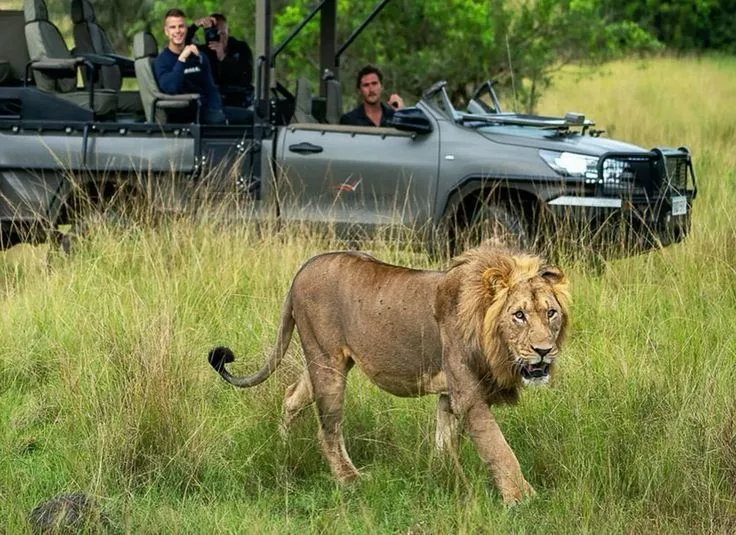
For the traditional safari-goer seeking the Big Five, the comparison reveals a trade-off. Akagera is currently one of the few places in East Africa where you can see the Big Five (Lion, Leopard, Elephant, Rhino, and Buffalo) in a single fenced park. This is a massive conservation success story, particularly regarding the reintroduction of Black Rhinos in 2017 and Lions in 2015, after they were poached out in the 1990s. Akagera also boasts a healthy population of Masai Giraffes and Zebras, species that are conspicuously absent in Queen Elizabeth.
Queen Elizabeth National Park, however, offers diversity that Akagera cannot match in sheer numbers. It is home to an astonishing 95 mammal species, the highest of any Ugandan park. While QENP does not have Rhinos (found only at the Ziwa Sanctuary in central Uganda) or giraffes (though reintroduction efforts are underway), it is famous for its Tree-Climbing Lions in the Ishasha sector. Seeing a pride of lions draped over the branches of large fig trees is a rarity found in only a handful of places on Earth. Furthermore, QENP is home to massive herds of Uganda Kobs, the semi-aquatic Sitatunga antelope, and dense populations of Hippos.
In terms of the “Safari Experience,” Akagera offers a more manicured, exclusive feel. African Parks manages the park in partnership with the Rwanda Development Board, resulting in strict regulation, excellent road networks, and a sense of order. Wildlife sightings here feel intimate. In QENP, the ecosystem is wilder and more expansive. The game drives in the Kasenyi plains offer vast panoramas dotted with thousands of antelopes, creating the classic “Predator vs. Prey” spectacle that feels raw and untamed.
Birdlife
Both parks are classified as Important Bird Areas (IBAs), but they offer very different avian checklists.
Akagera is a paradise for waterbirds. The papyrus swamps of Lake Ihema are home to the elusive Shoebill Stork, the Papyrus Gonolek, and the Sitatunga (which shares these marshes). With nearly 500 species recorded, the mix of savannah and wetland species makes birding easy.
Queen Elizabeth National Park, however, is in a league of its own, boasting over 600 species, the highest of any East African park. The diversity of habitats from the Kazinga Channel to the Maramagambo Forest and the Kyambura Gorge supports a staggering array of birds. The Kazinga Channel boat ride is often cited as one of the best birding launches in the world, offering close-up views of Great White and Pink-backed Pelicans, African Skimmers, and massive flocks of Cormorants. If you are a serious twitcher, QENP offers volume and variety that Akagera cannot match, particularly regarding forest species found in the gorge.
Beyond the Game Drive
When the sun sets, the parks offer different ways to explore. Akagera has gained a reputation for offering one of the best night game drives on the continent. Because the park is fenced and strictly managed, the night drives are safe and highly productive, offering frequent sightings of Leopard, Hyena, serval, and the elusive Bushbaby. Helicopter tours over Akagera are also a unique offering, providing a bird’s-eye view of the “thousand hills” landscape.
Queen Elizabeth’s signature activity is the boat cruise along the Kazinga Channel. While Akagera offers boat rides on Lake Ihema, the Kazinga experience is on another level because of the density of wildlife. The banks are literally choked with Hippos and buffalo, and the sheer volume of animals coming to drink is overwhelming. Additionally, QENP offers Chimpanzee trekking in the Kyambura Gorge, a deep, lush ravine cut into the savannah. Akagera has no primates other than Baboons and Vervet Monkeys, so the ability to track Chimps in the middle of a savannah park is a unique selling point for QENP.
Final Thoughts: Compare Akagera and Queen Elizabeth National Parks
Choosing between Akagera National Park in Rwanda and Queen Elizabeth National Park in Uganda depends on the kind of safari you want. If you prefer a compact wildlife safari with opportunities to see the Big Five, enjoy boat trips, and experience night game drives, Akagera is an excellent option. Its savannah landscapes, lakes, and wetlands also make it an attractive addition to a Rwanda itinerary that includes gorilla trekking in Volcanoes National Park.
Queen Elizabeth National Park is an excellent choice for travelers seeking a more varied safari experience. Its diverse habitats support elephants, buffaloes, hippos, and numerous bird species, while the Kazinga Channel boat cruise and the tree-climbing lions of Ishasha add distinctive experiences. Visitors can also combine their safari with chimpanzee tracking in Kyambura Gorge, making the park a rewarding destination for a longer Uganda adventure.
You do not necessarily have to choose just one. A combined safari featuring Akagera and Queen Elizabeth National Parks can offer a broader perspective on East Africa’s wildlife, landscapes, and conservation areas. The best itinerary will depend on your available time, budget, arrival airport, and other experiences you want to include.
At Native Africa Tours, we organize personalized safaris in both Uganda and Rwanda, including wildlife tours, gorilla trekking, and cross-border adventures. Whether you want to explore Akagera, discover Queen Elizabeth National Park, or experience both destinations on one trip, our team can help arrange your accommodation, transportation, guided activities, and itinerary. Contact Native Africa Tours to plan your East African safari and receive a quotation tailored to your travel dates and interests.