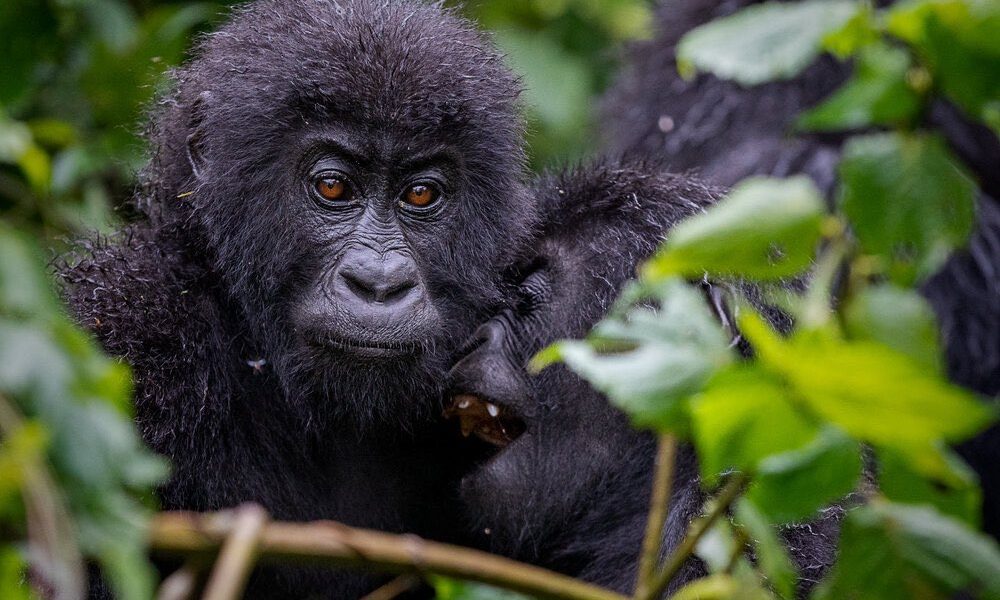
Rwanda and Uganda are home to more than half of the world’s remaining mountain gorillas, making them the two most sought-after destinations on Earth for anyone dreaming of a face-to-face encounter with these gentle, endangered giants in their natural rainforest habitat. Gorilla trekking tours in Rwanda and Uganda offer travelers the rare chance to spend an unforgettable hour observing a wild mountain gorilla family up close, guided by experienced trackers through some of Africa’s oldest and most biodiverse forests. Whether you choose Rwanda’s Volcanoes National Park, set against the dramatic backdrop of the Virunga volcanoes, or Uganda’s Bwindi Impenetrable National Park, a UNESCO World Heritage Site draped in mist-covered hills, both destinations deliver a wildlife experience that consistently ranks among the most profound on the African continent.
Choosing between a Rwanda gorilla trekking tour and a Uganda gorilla safari – or combining both into a single cross-border journey – depends on several factors: permit cost, trekking difficulty, travel time, accommodation style, and how the experience fits into a broader itinerary that might include chimpanzee trekking, Big Five game drives, or a relaxing stop by one of the region’s scenic lakes. This guide breaks down everything a traveler needs to know before booking a gorilla trekking tour in either country, from the practical details of permits and pricing to the physical demands of the trek itself, the differences between Rwanda’s and Uganda’s national parks, and how best to structure an itinerary around this singular wildlife encounter.
Mountain gorillas remain classified as endangered, with fewer than 1,100 individuals left in the wild, confined entirely to the Virunga Massif shared by Rwanda, Uganda, and the Democratic Republic of Congo, and the separate Bwindi-Sarambwe ecosystem in southwestern Uganda. Every gorilla trekking permit sold directly funds the conservation programs, ranger patrols, and community initiatives responsible for the species’ slow but steady recovery over the past three decades – meaning a gorilla trekking tour in Rwanda or Uganda is as much a contribution to wildlife conservation as it is a bucket-list travel experience.
What is Gorilla Trekking?
Gorilla trekking is a guided wildlife activity that takes travelers on foot into the rainforest to locate and spend time observing a habituated family of wild mountain gorillas. Unlike a traditional game drive, where wildlife is viewed from a vehicle, gorilla trekking is an active, hands-on experience that requires walking through dense forest terrain, often on steep, muddy, and unpredictable trails, guided by a team of park rangers and trackers who monitor the movements of each gorilla family daily. The activity is strictly regulated by the national wildlife authorities in both Rwanda and Uganda, with a fixed number of permits issued each day to protect the gorillas from overexposure to human presence and to preserve the fragile ecosystems they inhabit.
Each trek begins early in the morning at park headquarters, where visitors are briefed on trekking etiquette, safety protocols, and what to expect before being organized into small groups, typically no more than eight travelers per group, and assigned to a specific habituated gorilla family. This group size limit is one of the most important conservation measures in place, minimizing the risk of stress or disease transmission to the gorillas while ensuring that every visitor gets a meaningful, uncrowded encounter. Once assigned, each group sets off with an armed ranger for security, an experienced guide who interprets gorilla behavior throughout the encounter, and trackers who have typically already located the family earlier that morning, having followed signs like broken vegetation, feeding trails, and overnight nesting sites.
The duration of the trek itself is entirely unpredictable and depends on where the gorilla family has moved since the previous day. Some treks are relatively short, taking less than an hour to reach the gorillas, while others can stretch to four or five hours of hiking through dense undergrowth, across streams, and up steep volcanic or forested slopes. This variability is part of what makes gorilla trekking such a genuine wilderness experience rather than a scripted tourist activity – there is no guaranteed script, no set path, and no certainty about how physically demanding a particular day’s trek will be. Porters are available for hire at most park headquarters in both countries, offering to carry day packs, camera equipment, or provide a supporting arm on especially steep or slippery sections, and hiring one is also a meaningful way to support the local community members who depend on tourism income.
Once the trackers signal that the gorilla family has been located, groups are typically asked to leave behind bags and hiking poles a short distance away, approaching the final stretch quietly and calmly under the guide’s direction. From this point, visitors are permitted to spend a strictly limited window of one hour in the presence of the gorillas, a rule enforced across all three range countries to minimize stress on the animals and reduce the risk of disease transmission between humans and gorillas, who share close genetic similarity and are vulnerable to many human illnesses. That single hour, however brief it may sound on paper, is almost universally described by visitors as one of the most powerful wildlife experiences of their lives.
Within the family group, visitors typically observe a dominant silverback – often weighing over 400 pounds and commanding quiet authority over the rest of the troop – alongside adult females, juveniles, and infants, engaged in everyday behaviors such as feeding on vegetation, resting, grooming one another, or, in more active moments, playing and tumbling through the undergrowth within just a few meters of the observing group.
Strict rules govern behavior during this encounter, and every visitor is briefed on them before the trek begins. Flash photography is prohibited, as sudden bursts of light can startle or distress the gorillas. Visitors are required to maintain a minimum distance of seven meters from the animals at all times, although gorillas themselves are unpredictable and may choose to approach closer, in which case guides will instruct the group on how to respond calmly. Loud noises, sudden movements, and eating or drinking in the presence of the gorillas are also not permitted. Anyone feeling unwell, particularly with symptoms of a cold, flu, or other communicable illness, is asked to disclose this during registration and may be denied trekking access that day, a precaution taken seriously given the gorillas’ vulnerability to human-borne respiratory infections, which have caused fatal outbreaks in habituated groups in the past.
Beyond the standard one-hour trek, both Rwanda and Uganda now offer an extended alternative known as the gorilla habituation experience, available specifically in Uganda’s Bwindi Impenetrable National Park, which allows visitors to spend up to four hours with a semi-habituated gorilla family alongside researchers and trackers actively working to acclimatize the group to human presence. This experience carries a higher permit cost but offers a deeper, more research-oriented encounter, with far fewer visitors present and significantly more time to observe natural behaviors beyond the compressed standard trek.
It’s worth understanding that gorilla trekking is fundamentally different from viewing gorillas in a zoo or sanctuary setting; every family encountered during a trek is entirely wild, living freely within its natural forest range, and the “habituation” process refers only to the gradual, deliberate process by which rangers accustom a family to tolerating brief, respectful human observation, not to any form of captivity or control. This distinction is central to why gorilla trekking in Rwanda and Uganda is considered one of the most ethical and conservation-positive wildlife tourism activities in the world today, directly funding the anti-poaching patrols, veterinary monitoring, and community development programs that have allowed the mountain gorilla population to grow steadily since the species was first brought to the brink of extinction in the mid-twentieth century.
Rwanda vs Uganda Gorilla Trekking: Which is Right for You?
One of the most common questions travelers face when planning a gorilla trekking tour is whether to choose Rwanda, Uganda, or both. While the core experience of encountering a wild mountain gorilla family is remarkably similar in either country, there are meaningful differences in cost, accessibility, trekking difficulty, scenery, and overall travel style that make one destination a better fit than the other depending on your priorities, budget, and available time.
Cost Comparison
Cost is often the deciding factor for many travelers, and the gap between Rwanda and Uganda is substantial. A gorilla trekking permit in Rwanda’s Volcanoes National Park currently costs significantly more than a permit in Uganda’s Bwindi Impenetrable National Park, reflecting Rwanda’s positioning as a premium, high-value, lower-volume tourism destination. Uganda, by contrast, has deliberately kept its permit pricing more accessible to attract a broader range of travelers, including backpackers, families, and budget-conscious visitors who might otherwise be priced out of a gorilla trekking experience altogether. For travelers working with a tighter budget, Uganda’s lower permit cost, combined with generally less expensive accommodation options across its trekking sectors, makes it the more affordable choice without any reduction in the quality or authenticity of the encounter itself.
Accessibility
Accessibility and travel time also differ meaningfully between the two countries. Rwanda’s Volcanoes National Park sits just a two-to-three-hour drive from Kigali International Airport, making it one of the most convenient gorilla trekking destinations in the world for travelers with limited time. A visitor can realistically fly into Kigali in the morning, reach Musanze by early afternoon, and be trekking gorillas the following day, making Rwanda especially well-suited to short, focused trips or as an add-on to a broader East African itinerary.
Uganda’s Bwindi Impenetrable National Park, by comparison, is considerably more remote, typically requiring a six-to-nine-hour road transfer from Entebbe International Airport, or a shorter but pricier domestic flight into one of the airstrips serving the park’s four trekking sectors. This longer journey means a Uganda-focused gorilla trekking tour generally requires a few additional travel days, though many travelers use this extended journey time productively by combining it with stops at other Ugandan parks along the way, such as Queen Elizabeth National Park or Lake Mburo.
Trekking Difficulty
Trekking difficulty and terrain represent another important point of comparison. Rwanda’s gorilla families inhabit the slopes of the Virunga volcanoes, meaning treks often involve climbing through bamboo forest and volcanic foothills at altitudes that can exceed 2,500 to 3,000 meters, with correspondingly cooler temperatures and, for some visitors, the added challenge of higher-altitude exertion.
Uganda’s Bwindi Impenetrable Forest, true to its name, presents a different kind of challenge: dense, tangled undergrowth, steep and often muddy hillsides, and a generally more physically demanding trekking environment overall, with treks in certain sectors, such as Rushaga, known for being particularly strenuous. Neither country can guarantee an easy trek, since gorilla families move unpredictably and trek difficulty ultimately depends on where the animals happen to be on any given day, but travelers with concerns about fitness or mobility should discuss this openly with their tour operator, since certain families in both countries are known to range in more accessible terrain closer to park headquarters, and can sometimes be prioritized for visitors requesting an easier assignment.
Scenery and overall Atmosphere
Scenery and overall atmosphere differ as well, and this is often an underappreciated factor in the decision. Rwanda’s Volcanoes National Park offers dramatic views of the Virunga volcanic peaks, including Karisimbi, Bisoke, and Muhabura, and the country’s broader tourism infrastructure, from Kigali’s clean, orderly streets to the polished, high-end lodges surrounding Musanze, creates an atmosphere of refined, boutique exclusivity. Uganda’s Bwindi region, in contrast, feels wilder and more rugged, with a landscape of mist-draped, impossibly green hills and a more understated, community-oriented style of tourism, generally appealing to travelers who prioritize a raw wilderness feel over polished luxury. Neither approach is objectively better, nor does the right choice come down to personal travel style and expectations.
Fleibility
Uganda holds a distinct advantage in the sheer number and geographic spread of trekking options, offering four separate sectors within Bwindi Impenetrable National Park alone – Buhoma, Ruhija, Rushaga, and Nkuringo – each with its own habituated gorilla families, distinct terrain, and nearby lodge options, plus a smaller fifth location at Mgahinga Gorilla National Park near the Rwanda and DRC borders. This gives Uganda considerably more flexibility for larger groups or repeat visitors wanting to trek multiple times in different locations without needing to change countries. Rwanda’s Volcanoes National Park, while smaller in geographic footprint, compensates with a higher concentration of habituated families within closer proximity to one another and to Musanze town, generally resulting in shorter and more predictable drive times between lodge and trailhead.
Why we recommend Combining the Two Countries
For travelers who cannot decide, or who simply want the fullest possible experience, combining both countries into a single cross-border gorilla trekking itinerary has become an increasingly popular option. Overland travel between Bwindi and Volcanoes National Park takes only a few hours via the Cyanika or Katuna border crossings, making it entirely feasible to trek gorillas in Uganda one day and cross into Rwanda to trek an entirely different habituated family just a couple of days later. This approach appeals particularly to serious wildlife enthusiasts and photographers, who value the opportunity to observe gorilla behavior across two distinct ecosystems and gorilla populations, as well as to travelers who want to experience the contrasting travel styles and landscapes of both countries within a single trip.
Ultimately, the decision between Rwanda and Uganda, or a combination of both, should be guided by a combination of budget, available time, desired travel pace, and personal preference for either a more streamlined, premium experience or a longer, more immersive, multi-park journey. Both countries offer genuinely world-class gorilla trekking, backed by decades of conservation investment and some of the most experienced trekking guides and rangers found anywhere in Africa, and neither choice represents a compromise on the quality or authenticity of the encounter itself.
The Virunga Massif and Albertine Rift: Understanding the Ecosystem
The extraordinary concentration of mountain gorillas found across Rwanda, Uganda, and the Democratic Republic of Congo is not an isolated phenomenon but the product of a specific and remarkable geological and ecological setting: the Albertine Rift, a branch of the larger East African Rift System, and within it, the Virunga Massif, a chain of eight volcanoes straddling the borders of all three countries. Understanding this broader ecosystem helps explain not only where mountain gorillas are found, but why this particular region has become one of the most biologically significant landscapes on the African continent.
The Virunga Massif itself consists of eight volcanic peaks, ranging from the still-active Nyiragongo and Nyamuragira in the Democratic Republic of Congo to the extinct, forest-covered cones of Karisimbi, Bisoke, Sabyinyo, Gahinga, and Muhabura shared across Rwanda and Uganda. These volcanoes, formed over millions of years of geological activity along the rift, created a range of high-altitude habitats, from dense bamboo forest to Afromontane and even Afroalpine vegetation zones near the highest summits, that together support the specific ecological conditions mountain gorillas require, including an abundant, year-round supply of the bamboo shoots, wild celery, and other vegetation that make up the vast majority of their diet.
Separate from the Virunga Massif, but part of the same broader Albertine Rift ecosystem, Uganda’s Bwindi Impenetrable Forest represents an entirely different habitat type, a lower-altitude, ancient lowland and montane rainforest estimated to be more than 25,000 years old, having survived largely undisturbed through past ice ages that reshaped much of the surrounding region’s vegetation. This age and relative isolation have made Bwindi one of the most biodiverse forests in Africa, home not only to roughly half of the world’s mountain gorilla population but also to hundreds of bird species, numerous other primates, and thousands of plant species, several of which are found nowhere else on Earth.
The broader Albertine Rift region, stretching from the northern tip of Lake Albert down through Lakes Edward, Kivu, and Tanganyika, is recognized globally as one of the most important biodiversity hotspots on the African continent, home to exceptional concentrations of endemic species across birds, mammals, reptiles, and plants, a consequence of the dramatic variation in altitude, rainfall, and habitat type created by the rift’s volcanic and tectonic history. Mountain gorillas represent perhaps the most globally recognized species within this ecosystem, but they exist alongside an extraordinary supporting cast of other endangered and endemic wildlife, from golden monkeys and chimpanzees to a wealth of rare bird species that draw dedicated birdwatchers to the region alongside gorilla trekkers.
This shared ecological context is also why gorilla conservation across Rwanda, Uganda, and the Democratic Republic of Congo has increasingly relied on cross-border cooperation, since the Virunga Massif’s gorilla population moves freely across international boundaries as a single interconnected group, meaning the long-term survival of the species depends on coordinated protection efforts rather than the isolated conservation policy of any single country. Understanding this broader ecological and geological story, of ancient rifting, volcanic activity, and one of the most biodiverse landscapes on the continent, adds a rich layer of context to the gorilla trekking experience itself, transforming a single hour spent with a gorilla family into part of a much larger and genuinely fascinating natural history.
Volcanoes National Park (Rwanda) Gorilla Trekking in Detail
Volcanoes National Park, known locally as Parc National des Volcans, sits in the far northwest of Rwanda along the border with the Democratic Republic of Congo and Uganda, forming part of the wider Virunga Massif, a chain of eight volcanoes that together shelter one of only two remaining wild mountain gorilla populations on Earth. Covering roughly 160 square kilometers of montane and bamboo forest, the park rises across the slopes of five volcanoes within Rwanda’s borders – Karisimbi, Bisoke, Muhabura, Gahinga, and Sabyinyo – creating a dramatic, layered landscape of volcanic peaks, dense forest, and swampy valley floors that shifts noticeably in vegetation and terrain the higher one climbs. This is also the same landscape made famous by the pioneering conservationist Dian Fossey, whose research at the Karisoke Research Center between the 1960s and 1980s laid much of the groundwork for the gorilla protection efforts that continue in Rwanda today.
How to Access Volcanoes National Park
Access to Volcanoes National Park begins in Musanze, formerly known as Ruhengeri, a lively town roughly two-and-a-half to three hours by road from Kigali International Airport, along one of Rwanda’s best-maintained highways. This relatively short and comfortable drive is one of Rwanda’s biggest advantages as a gorilla trekking destination, allowing visitors to reach the park with minimal travel fatigue compared to the longer overland journeys required in Uganda. Most visitors base themselves in or around Musanze for one or more nights, with an extensive range of accommodation options spanning from simple guesthouses to some of the most luxurious lodges in East Africa, several of which offer private cottages with direct views of the volcanoes.
Rwanda currently maintains around a dozen habituated gorilla families available for trekking within Volcanoes National Park, each with its own distinct size, temperament, and typical range within the park. Some families, such as the Susa group, made famous through Dian Fossey’s original research, are known for larger group sizes and more challenging, higher-altitude terrain, historically requiring longer and more strenuous treks. Other families, including groups like Agashya, Kwitonda, and Sabyinyo, tend to range at lower, more accessible elevations closer to the park boundary, generally resulting in shorter approach hikes. Permit allocation to specific families is typically assigned on the morning of the trek at park headquarters in Kinigi, based on a combination of fitness level, group size, and ranger discretion, though visitors with specific requests, such as wanting either the most challenging or most accessible trek available that day, can usually communicate this preference during the morning briefing.
The trekking day begins early, with visitors gathering at Kinigi park headquarters by around seven in the morning for registration, a briefing on rules and safety protocols, and a lively cultural performance featuring traditional Rwandan dance and drumming performed by a local community group, a warm and energetic start to the day that has become one of the signature touches of the Rwandan gorilla trekking experience. Following the briefing, visitors are organized into their assigned trekking groups and driven a short distance to the trailhead corresponding to their gorilla family’s most recent known location, since different families require access from different points around the park’s perimeter.
From the trailhead, treks typically begin by crossing a boundary wall of loosely stacked volcanic stone that separates the park from surrounding agricultural land, a visible and symbolic line between cultivated fields and untouched wilderness. Beyond this point, the terrain shifts quickly into dense vegetation, often beginning with stinging nettles and thick undergrowth before transitioning into higher-altitude bamboo forest, a favored feeding ground for the gorillas, and eventually into more open montane forest characterized by giant lobelia and hagenia trees as elevation increases. Given that much of Volcanoes National Park sits above 2,500 meters, and some gorilla families range as high as 3,000 meters or more on the slopes of Karisimbi or Bisoke, visitors should be prepared for the physical demands of higher-altitude exertion in addition to the already challenging forest terrain, particularly those trekking families known to range at greater heights.
Once trackers signal that the assigned gorilla family has been located, the final approach is made quietly and calmly, with bags and trekking poles typically left behind under the supervision of a porter or ranger. From here, visitors are granted the standard one-hour observation window, during which the guide narrates gorilla behavior, identifies individual gorillas including the dominant silverback, and helps visitors position themselves safely and respectfully for photographs and observation. Given Rwanda’s higher permit cost, group sizes assigned to a single family are strictly capped, generally resulting in a slightly more spacious, unhurried atmosphere during the encounter itself compared to some of the busier trekking days in parts of Uganda.
Beyond gorilla trekking itself, Volcanoes National Park offers several complementary activities well suited to extending a stay in the region. Golden monkey trekking, available on a separate and considerably less expensive permit, takes visitors into the park’s bamboo zones in search of these endangered, strikingly colored primates, known for their playful, acrobatic movement through the bamboo canopy, and generally involves a shorter, less physically demanding trek than gorilla tracking. More ambitious travelers can also arrange guided hikes up Mount Bisoke, culminating in views of a crater lake at the summit, or a visit to the former site of the Karisoke Research Center and Dian Fossey’s tomb, a moving pilgrimage for anyone interested in the history of gorilla conservation in the region.
Best practice for anyone booking a Volcanoes National Park gorilla trek is to secure permits several months in advance, ideally three to six months ahead for travel during peak season, since Rwanda’s smaller number of daily permits compared to Uganda means availability can be limited, particularly around the June-to-September and December-to-February dry seasons when trekking conditions are most favorable. Musanze’s proximity to Kigali, combined with the relatively predictable, well-organized structure of the Rwandan trekking system, continues to make Volcanoes National Park one of the most efficient and rewarding gorilla trekking destinations anywhere in the world, particularly for travelers with limited time who still want a world-class encounter with wild mountain gorillas.
Bwindi Impenetrable National Park (Uganda) Gorilla Trekking in Detail
Bwindi Impenetrable National Park sits in southwestern Uganda along the edge of the Albertine Rift, a UNESCO World Heritage Site and one of the oldest and most biologically diverse rainforests in Africa, estimated to be more than 25,000 years old. Covering approximately 331 square kilometers of dense, tangled forest draped over a series of steep hills and valleys, Bwindi is home to roughly half of the world’s remaining mountain gorilla population, making it, alongside Rwanda’s Volcanoes National Park, one of only two truly world-class gorilla trekking destinations on Earth. The park’s name is well earned: “impenetrable” refers to the thick understory of vines, ferns, and tangled vegetation that blankets the forest floor, creating a genuinely wild, physically demanding trekking environment quite different in character from the more open volcanic slopes of Rwanda.
Unlike Volcanoes National Park’s single, centralized entry point, Bwindi is divided into four distinct trekking sectors, each with its own park headquarters, network of habituated gorilla families, and cluster of nearby lodges, giving Uganda considerably more geographic flexibility than Rwanda for travelers planning where to trek and stay. Buhoma, in the park’s north, was the original trekking sector established when gorilla tourism began in Uganda in the early 1990s, and remains one of the most popular and accessible, with a well-developed network of lodges and relatively gentler, though still challenging, terrain.
Ruhija, situated in the park’s higher-altitude eastern sector, offers cooler temperatures and is often favored by birdwatchers given its proximity to the renowned Mubwindi Swamp. Rushaga, in the south, has grown into the largest trekking sector in terms of the number of habituated families available, and is generally considered to offer some of the most strenuous treks in the park, given its hillier terrain. Nkuringo, also in the south, is known for spectacular scenery and a particularly demanding return climb back to the trailhead, rewarding fitter travelers with dramatic views over the Virunga volcanoes in the distance.
Each of Bwindi’s four sectors is allocated its own set of daily trekking permits and habituated families, meaning the choice of sector has a direct impact on trek difficulty, scenery, and travel logistics. Buhoma and Ruhija tend to be more convenient for travelers arriving from the north or combining their gorilla trek with Queen Elizabeth National Park, while Rushaga and Nkuringo are typically better suited to those approaching from the south, including travelers planning a cross-border extension into Rwanda, given their proximity to the Cyanika border crossing near Kisoro. This geographic spread is one of Uganda’s key advantages over Rwanda, allowing tour operators to design itineraries that flow naturally between gorilla trekking and other major attractions without unnecessary backtracking.
Getting to Bwindi remains one of the more demanding aspects of a Uganda gorilla trekking tour, with road transfers from Entebbe International Airport typically taking anywhere from seven to nine hours depending on the specific sector and route taken, often broken into a two-day journey with an overnight stop at another park such as Queen Elizabeth along the way. Travelers short on time, or simply wanting to minimize road travel, can opt for a scheduled or chartered light aircraft flight, landing at one of several small airstrips serving the different sectors, cutting the journey down to roughly an hour and a half from Entebbe.
The trekking day itself follows a broadly similar structure to Rwanda’s, beginning with an early morning registration and briefing at the relevant sector’s park headquarters, typically accompanied by a cultural performance from a local community group, followed by allocation to a specific habituated gorilla family and transfer to that day’s trailhead. From there, treks head directly into Bwindi’s dense forest, and the terrain here presents its own particular challenges: steep, often muddy hillsides, thick tangled undergrowth that can slow progress considerably, and, depending on the sector and family, potentially several hours of demanding uphill and downhill hiking before the gorillas are located. Trekking poles, sturdy waterproof boots, and gardening gloves to protect hands from stinging nettles and thorny vegetation are considered essential rather than optional equipment for a Bwindi trek, and hiring a porter here is particularly common practice given the physically demanding nature of the terrain.
Once the family is located, the same strict one-hour observation rule applies as in Rwanda, with visitors typically leaving bags behind for the final approach and following their guide’s direction on safe distancing and behavior. Bwindi’s gorilla families vary considerably in size and character, with some groups, particularly in the Rushaga sector, having several silverbacks within a single family, offering a particularly dynamic and hierarchically interesting group to observe, while other families elsewhere in the park may be smaller and quieter, offering a more intimate encounter. As in Rwanda, specific family assignment is generally determined by park rangers on the morning of the trek, factoring in group fitness levels and current gorilla locations, though travelers with particular physical concerns should communicate this clearly during booking and again at the morning briefing.
Uganda has also pioneered the extended gorilla habituation experience within Bwindi’s Rushaga sector, offering visitors up to four hours with a semi-habituated family alongside the researchers and trackers actively working to acclimatize the group to human presence, a considerably deeper and less rushed encounter than the standard one-hour trek, albeit at a higher permit cost and with a stricter cap of just four visitors per group. This experience has become particularly popular among photographers, researchers, and repeat visitors who have already completed a standard gorilla trek and are seeking a more immersive, less time-constrained encounter.
Beyond the trek itself, Bwindi offers a range of activities that reward a multi-day stay in the region, including guided nature walks along several well-established forest trails in search of the park’s exceptional birdlife and numerous primate species, as well as visits to local Batwa communities, the forest’s original indigenous inhabitants, who offer cultural demonstrations and insight into their traditional forest-based way of life before their displacement when the park was gazetted. Combined with its lower permit cost relative to Rwanda, its greater sector flexibility, and its deeply immersive, wild forest atmosphere, Bwindi Impenetrable National Park remains, for many travelers, the definitive gorilla trekking destination in Africa.
Gorilla Family Profiles
Every habituated gorilla family available for trekking in Rwanda and Uganda has its own distinct history, size, temperament, and typical range within the forest, and understanding a little about these individual families can add considerable depth to the anticipation and appreciation of a trek, even though the specific family assigned to any given visitor is generally determined by park rangers on the morning of the trek based on fitness level and current gorilla location rather than personal request.
In Rwanda’s Volcanoes National Park, the Susa family holds a particularly storied place in gorilla trekking history, having been one of the original families studied directly by Dian Fossey during her decades of research at the nearby Karisoke Research Center. Susa has historically been one of the largest habituated families in the park, at times numbering well over thirty individuals, and is known for ranging at higher, more remote elevations on the slopes of Mount Karisimbi, making treks to reach this family among the more physically demanding available in Rwanda, generally reserved for fitter trekkers. Other well-established Rwandan families, including groups such as Sabyinyo, Agashya, and Kwitonda, tend to range at lower, more accessible elevations closer to the park boundary, and are often assigned to trekkers seeking a shorter or less strenuous approach hike, while still delivering the same rich, close-range gorilla encounter at the heart of the experience.
Bwindi Impenetrable National Park’s four trekking sectors are each associated with their own set of habituated families, reflecting the park’s considerably larger overall population of trekkable gorillas. In the Buhoma sector, some of Uganda’s original habituated families continue to be visited daily, having been among the first gorilla groups anywhere in the world opened to tourist trekking in the early 1990s. the Rushaga sector, several families are notable for containing multiple silverbacks living within a single group, a comparatively unusual social structure among mountain gorillas that offers visitors a particularly dynamic view of gorilla hierarchy and interaction. Uganda’s Mgahinga Gorilla National Park is home to just one habituated family, the Nyakagezi group, similarly known for its unusual stability and multiple resident silverbacks, and for occasionally ranging across the international border into neighboring Rwanda or the Democratic Republic of Congo given the shared, contiguous nature of the Virunga forest ecosystem.
While specific family compositions shift gradually over time as infants are born, young males disperse to form new groups, and occasional territorial disputes reshape group structures, the broader pattern across both countries remains consistent: each family offers trekkers a genuinely unique social dynamic, and no two gorilla encounters are ever quite the same, even for travelers who trek multiple times across different visits.
Gorilla Trekking Permits: Cost, Booking, and Availability
Understanding gorilla trekking permits is essential before booking any trip to Rwanda or Uganda, since the permit itself represents both the single largest line item in any gorilla trekking budget and the non-negotiable gateway to the experience, without which no visitor is permitted to enter either country’s gorilla trekking zones. Permits are issued directly by each country’s national wildlife authority, are strictly limited in number each day to protect the gorillas from overexposure, and must generally be secured months in advance of travel, particularly for peak season dates.
In Rwanda, a standard gorilla trekking permit for Volcanoes National Park costs US$1,500 for visitors from outside Africa, a price that has remained stable for several years and reflects the country’s deliberate positioning as a high-value, lower-volume gorilla trekking destination. This figure applies specifically to international tourists trekking in Volcanoes National Park near Musanze and Kinigi, and covers the trek itself, ranger and tracker services, and the guaranteed hour spent with a habituated gorilla family.
Outside the busiest months, Rwanda has also periodically introduced low-season promotional pricing, with some international travelers able to access a discounted rate of around $1,050 when combining their gorilla trek with visits to other Rwandan national parks outside the peak June-to-October period, though during the high-tourism months from June through October, the standard $1,500 rate applies across all categories as part of Rwanda’s demand-management pricing policy. Rwanda’s permit system currently allocates 112 permits daily across 14 habituated gorilla families, each accommodating up to eight trekkers, and the country enforces a minimum trekking age of 15, consistent with the age policy across the region.
Uganda, by contrast, has positioned itself as the more budget-accessible gorilla trekking destination, with a standard permit for Bwindi Impenetrable National Park or Mgahinga Gorilla National Park priced at $800 per person during high season, roughly half of Rwanda’s international rate. Uganda has also introduced its own low-season incentive, with permits available for $600 during the discounted months of April, May, and November, though travelers should note that these discounted low-season permits are date-specific and cannot be rescheduled once booked. Uganda’s pricing structure includes several additional tiers beyond the standard non-resident rate, with foreign residents paying a somewhat lower rate and East African citizens and Ugandan residents paying substantially less. Across Uganda’s gorilla trekking zones, more than 19 habituated gorilla families are spread across Bwindi’s four sectors, plus the single Nyakagezi family in Mgahinga, together offering a considerably larger daily permit allocation than Rwanda.
For travelers seeking a longer, more immersive encounter than the standard one-hour trek, Uganda’s Gorilla Habituation Experience allows visitors to spend up to four hours with a semi-habituated family in Bwindi’s Rushaga sector, priced at a premium over the standard permit and limited to a smaller number of participants per day, making it a sought-after option for photographers and repeat visitors. Rwanda offers a comparable, though structurally different, premium option in the form of private gorilla trekking arrangements, which allow a group to visit an entire habituated family exclusively with a dedicated guide, priced substantially higher than a standard shared-group permit and best suited to travelers prioritizing an entirely private encounter over cost.
Booking procedures differ slightly between the two countries but follow a broadly similar process. In both Rwanda and Uganda, permits are most reliably secured through a licensed local tour operator, who handles the direct application with the relevant wildlife authority, submits the required passport and personal details on the traveler’s behalf, and manages payment processing.
Gorilla Trekking & Habituation Permit Prices
Official 2026 rates across Rwanda, Uganda, and the DRC. Figures are set by each country’s wildlife authority and reviewed periodically — confirm current pricing with a licensed operator close to your travel dates.
| Park & Country | Activity | Non-Resident | Resident | African Citizen | East African | Duration |
|---|---|---|---|---|---|---|
| Rwanda Volcanoes National Park | Standard Gorilla Trekking | $1,500 | ~$500 | ~$500 | ~$200 | 1 hour |
| Rwanda Volcanoes National Park | Low-Season Discount Nov–May | ~$1,050 | — | — | — | 1 hour |
| Rwanda Volcanoes National Park | Private Trekking Exclusive | ~$15,000 / group | — | — | — | 1 hour, private |
| Uganda Bwindi & Mgahinga | Standard Trekking High Season | $800 | $700 | $500 | UGX 300,000 | 1 hour |
| Uganda Bwindi & Mgahinga | Low-Season Discount Apr / May / Nov | $600 | $500 | — | — | 1 hour |
| Uganda Bwindi — Rushaga | Habituation Experience GHEX | $1,500–$1,800 | ~$1,000 | ~$1,000 | UGX 750,000 | Up to 4 hours |
| DRC Virunga National Park | Standard Trekking Confirm status | ~$400 | — | — | — | 1 hour |
Notes on pricing
- Rates reflect published 2026 figures from Rwanda’s Rwanda Development Board (RDB) and Uganda’s Uganda Wildlife Authority (UWA); both bodies adjust discount structures periodically.
- Uganda’s low-season permits ($600) are non-reschedulable once booked, unlike standard permits.
- Rwanda applies its standard $1,500 rate across all categories, including normally discounted ones, during peak season (June–October).
- GHEX permits are capped at 4 visitors per group, versus 8 for standard treks — part of why the price and exclusivity are higher.
- DRC’s Virunga National Park has had intermittent closures in recent years; confirm current access before including it in any itinerary.
Beyond the base permit cost, travelers should budget for the broader expenses that accompany a gorilla trekking trip, including park entrance fees, accommodation, private vehicle transfers, and the services of a driver-guide, all of which vary considerably depending on the level of luxury chosen. A complete Rwanda gorilla trekking trip, for instance, can range from a modest budget arrangement to well over the cost of the permit alone when staying at some of the country’s most exclusive lodges near Musanze, while Uganda’s generally lower accommodation costs across its four Bwindi sectors make it possible to build a complete gorilla trekking trip at a noticeably lower overall price point than an equivalent Rwanda-based itinerary.
Regardless of destination or budget tier, a significant proportion of every permit fee is channeled directly into anti-poaching patrols, veterinary monitoring of the gorilla population, and community revenue-sharing programs that fund schools and health clinics around both parks, meaning the cost of the permit is inseparable from the ongoing conservation success that has allowed the mountain gorilla population to grow steadily over the past three decades.
What is the Best Time to Go Gorilla Trekking in Uganda and Rwanda?
Gorilla trekking is technically possible year-round in both Rwanda and Uganda, since mountain gorillas remain in their forest habitats regardless of season and permits are issued every day of the year, but the timing of a trip has a meaningful impact on trekking conditions, trail difficulty, and overall comfort. Understanding the region’s seasonal rhythms allows travelers to make an informed choice about when to visit, whether prioritizing optimal trekking conditions, lower costs, or simply working around a fixed travel window.
The region’s two dry seasons, running roughly from June through September and again from December through February, are widely considered the best time to go gorilla trekking in both Rwanda and Uganda. During these months, rainfall is at its lowest across the Virunga volcanoes and the Bwindi Impenetrable Forest, resulting in firmer, less slippery trails, reduced mud on the steep hillsides and volcanic slopes that characterize both trekking regions, and generally easier hiking conditions overall. This period also tends to bring clearer skies, improving visibility for photography and, where applicable, providing better views of the volcanic peaks surrounding Volcanoes National Park and Mgahinga Gorilla National Park.
These dry-season months align with school holidays in North America and Europe. They also align with the most comfortable overall travel conditions across East Africa. More so, they also represent the busiest and most in-demand period for gorilla trekking permits, meaning travelers hoping to visit during June through September or December through February should book their permits particularly early, ideally several months to a full year in advance for the most popular dates.
The long rainy season, generally spanning March through May, and the shorter rains that typically arrive in November, bring a different set of trekking conditions. Rainfall during these months is more frequent and at times heavier, resulting in muddier, more slippery trails, particularly on Bwindi’s steep hillsides and the volcanic slopes of Rwanda’s Virunga range, and treks during this period can require more caution and physical effort underfoot. However, the rainy season carries several distinct advantages that make it an increasingly popular choice among informed travelers. Permit demand drops substantially, making it considerably easier to secure trekking dates on shorter notice, even for high-profile sectors or specific gorilla families.
Both Rwanda and Uganda have also used the rainy season to introduce discounted permit pricing in recent years, making this the most cost-effective time to trek for budget-conscious travelers willing to accept less predictable weather. The forest itself is also arguably at its most beautiful during the rains, with lush, vivid greenery, fuller waterfalls and streams, and excellent conditions for birdwatching, since many species are most active and vocal during the wetter months. Additionally, vegetation growth during the rains means gorillas often have more abundant food sources close to the forest edge, which can, in some cases, result in shorter treks to reach a family than during the drier months when gorillas may range further in search of food.
Temperature is another factor worth considering, particularly given the significant altitude of both trekking regions. Rwanda’s Volcanoes National Park and Uganda’s Mgahinga Gorilla National Park both sit at elevations frequently exceeding 2,000 to 2,500 meters, with some gorilla families ranging as high as 3,000 meters or more on the slopes of the Virunga volcanoes, meaning temperatures can be notably cool, particularly in the early morning and evening, regardless of season. Bwindi Impenetrable Forest, while somewhat lower in average elevation, still maintains a cool, often misty climate year-round given its dense canopy cover and highland location, and layered clothing is recommended for any trek in either country regardless of when it takes place.
Ultimately, the right time to trek depends on individual priorities. Travelers who want the most predictable trekking conditions, are comfortable booking well in advance, and are less concerned about cost or crowd levels are generally best served by the June-through-September or December-through-February dry seasons. Travelers who prioritize value, are drawn to lush, vivid forest scenery, have more flexibility in their booking timeline, or simply cannot travel during the peak windows will find that the rainy season, while requiring some additional preparation for muddy trails, offers a genuinely rewarding and often more affordable gorilla trekking experience with none of the compromise on the core encounter itself.
Gorilla Habituation Experience
For travelers who want to go beyond the standard one-hour gorilla trek, the Gorilla Habituation Experience, commonly abbreviated as GHEX, offers a rare and considerably more immersive alternative, allowing visitors to spend up to four hours in the presence of a gorilla family that is still in the process of becoming fully accustomed to human observation. Unlike a standard trek, which visits a family that has already completed the full habituation process and is accustomed to the presence of daily tourist groups, the habituation experience places visitors alongside the researchers, trackers, and veterinarians actively engaged in the ongoing work of acclimatizing a semi-wild family to tolerate close human proximity, offering a fundamentally different and more research-oriented perspective on gorilla behavior.
Currently, the Gorilla Habituation Experience is offered exclusively in Uganda, specifically within the Rushaga sector of Bwindi Impenetrable National Park, where a small number of semi-habituated families are set aside for this purpose rather than being opened to standard trekking. The extended four-hour window offers a markedly different rhythm from the compressed, tightly timed hour permitted during a standard trek, giving visitors the chance to observe a fuller range of natural gorilla behavior, including extended feeding, resting, and social interaction, as well as insight into the habituation process itself, as trackers and researchers explain how a wild family is gradually taught to tolerate, rather than flee from or charge, the presence of quiet, well-behaved human observers over a period that typically spans two to three years before a family is considered fully habituated and ready for standard tourist trekking.
Fitness, Age Requirements, and Trekking Difficulty
Gorilla trekking is a physically demanding activity, and understanding the fitness expectations, age restrictions, and variable difficulty involved is essential for any traveler planning a trip to Rwanda or Uganda. While the reward at the end of the trek is universally described as extraordinary, the journey to reach a gorilla family should never be underestimated, and a realistic understanding of what to expect helps travelers prepare properly and enjoy the experience fully rather than being caught off guard by its demands.
Both Rwanda and Uganda enforce a strict minimum age requirement of 15 years for standard gorilla trekking permits, a rule applied consistently across every trekking sector in both countries and grounded in genuine conservation and safety concerns rather than arbitrary policy. Younger children are considered more likely to make sudden noises or movements that could startle or distress the gorillas, and are also thought to carry a higher risk of transmitting common childhood illnesses, such as colds or other respiratory infections, to which mountain gorillas are particularly vulnerable given their close genetic relationship to humans. This age restriction has no exceptions in either country, meaning families traveling with younger children should plan alternative activities for them during the gorilla trekking portion of the trip, such as a nature walk, a cultural village visit, or time spent at the lodge, while older members of the group complete the trek.
There is no strict upper age limit for gorilla trekking, and travelers well into their sixties, seventies, and beyond regularly complete treks successfully in both countries, particularly when trekking with the assistance of a porter and communicating any mobility concerns to their guide in advance. That said, a reasonable baseline level of physical fitness is genuinely important, since treks frequently involve several hours of hiking over steep, uneven, and often slippery terrain at moderate to high altitude, sometimes without clearly defined trails, particularly in Uganda’s dense Bwindi Impenetrable Forest.
Travelers who exercise regularly, are comfortable with sustained hill walking, and have no significant joint or mobility limitations will generally find the physical demands manageable, even on a longer or more difficult trekking day, while those with health concerns, limited mobility, or significant uncertainty about their fitness level should discuss this candidly with their tour operator well before the trip, since certain gorilla families in both countries are known to range in more accessible terrain closer to park headquarters and can, in many cases, be prioritized for visitors requesting an easier assignment.
Trekking difficulty is ultimately unpredictable and depends almost entirely on where a given gorilla family has moved since the previous day, a factor entirely outside any traveler’s or operator’s control. Some treks are remarkably short, reaching the gorillas within thirty to sixty minutes of leaving the trailhead, while others stretch to four, five, or even more hours of demanding hiking before the family is located.
Terrain also varies meaningfully by location: Rwanda’s Volcanoes National Park and Uganda’s Mgahinga Gorilla National Park both involve climbing through bamboo forest and volcanic foothills at significant altitude, where thinner air can add layer of physical exertion for some visitors, while Uganda’s Bwindi Impenetrable Forest presents a different but equally demanding challenge in the form of dense, tangled undergrowth, steep, muddy hillsides, and, in certain sectors such as Rushaga, particularly strenuous terrain that has earned a reputation among past trekkers as the most physically demanding trekking experience in the region.
Hiring a porter is one of the most practical and widely recommended ways to manage the physical demands of a trek, and porters are available for hire at every park headquarters in both countries at a modest cost. Porters carry day packs, camera equipment, and offer a steadying hand on steep or slippery sections of trail, and hiring one is also a meaningful way to directly support local community members, many of whom depend heavily on tourism-related income and have, in some cases, transitioned from previous roles as poachers into work directly supporting gorilla conservation and tourism. Trekking poles, sturdy waterproof hiking boots with good ankle support, and layered clothing suited to changing temperatures and sudden rain are similarly considered essential preparation, particularly for treks in Bwindi’s more physically demanding sectors or at the higher altitudes found around the Virunga volcanoes.
Travelers with specific physical limitations, chronic health conditions, or general concerns about fitness should never feel that gorilla trekking is entirely out of reach; both countries have extensive experience accommodating visitors across a wide range of fitness levels, and open, honest communication with a tour operator and the trekking guide on the day itself remains the single most effective way to ensure a manageable, safe, and ultimately rewarding trekking experience regardless of individual physical circumstances.
Getting There: Flights, Visas, and Border Logistics
Reaching Rwanda or Uganda for a gorilla trekking tour involves a combination of international flights, visa arrangements, and, in many cases, an additional domestic or cross-border transfer to reach the specific trekking region, and understanding this logistical chain in advance helps travelers plan a smoother overall journey.
Most international travelers arrive in Rwanda through Kigali International Airport, served by a growing number of direct and connecting flights from major hubs in Europe, the Middle East, and increasingly from within Africa itself, reflecting Rwanda’s deliberate investment in positioning Kigali as a convenient regional gateway. From Kigali, Volcanoes National Park is just a two-to-three-hour drive northwest to Musanze, making Rwanda one of the most logistically efficient gorilla trekking destinations in the world for travelers with limited time.
Uganda’s primary international gateway is Entebbe International Airport, situated on the shores of Lake Victoria a short distance from Kampala, similarly well connected to major international hubs, though the onward journey to Uganda’s gorilla trekking regions is considerably longer, typically requiring six to nine hours by road to reach Bwindi Impenetrable National Park, or a shorter domestic flight of roughly ninety minutes to one of several small airstrips serving Bwindi’s individual trekking sectors.
Visa requirements for both countries are generally straightforward for the majority of international travelers. Rwanda offers visa-on-arrival and e-visa options for citizens of most countries, and has in recent years further simplified entry for many nationalities. Uganda similarly offers an e-visa system that most travelers are required to apply for in advance of arrival, and both countries participate in the East Africa Tourist Visa scheme, a single visa valid for travel across Rwanda, Uganda, and Kenya, which can represent meaningful savings and administrative simplicity for travelers planning to visit more than one of these countries within a single trip, including those combining gorilla trekking with a broader East African itinerary. Given that visa policies and pricing can change, travelers should always confirm current requirements directly with official government sources or a licensed tour operator close to their travel dates rather than relying on older information.
For travelers combining gorilla trekking in both Rwanda and Uganda within a single trip, overland border crossings represent the standard and most practical method of travel between the two countries, with the Cyanika border crossing near Kisoro, Uganda, and Musanze, Rwanda, and the Katuna border crossing further west both commonly used depending on the specific trekking sectors involved.
These crossings are generally efficient, though travelers should allow extra time for immigration formalities and should carry both a valid passport and, in most cases, proof of yellow fever vaccination, which is a formal entry requirement for both countries given their location within a yellow fever risk zone. Vehicles and drivers typically do not cross the border together with international travelers on standard cross-border itineraries; instead, most tour operators arrange for a new vehicle and driver-guide to meet travelers on the opposite side of the border, a routine and well-established practice that adds only minimal delay to the overall journey.
Accommodation Guide by Budget Tier
Accommodation options surrounding both Rwanda’s Volcanoes National Park and Uganda’s Bwindi Impenetrable National Park span an unusually wide range, from simple budget guesthouses to some of the most exclusive and architecturally striking lodges found anywhere on the African continent, making it possible to build a gorilla trekking trip around almost any budget without compromising on the quality of the core trekking experience itself.
At the budget end of the spectrum, both Musanze in Rwanda and the various trekking sectors around Bwindi in Uganda offer simple guesthouses, community-run rest camps, and modest lodges typically priced well under $150 per night, often run in partnership with or directly by local communities, channeling tourism income more directly into the surrounding area. These properties generally provide clean, comfortable rooms, solid home-cooked meals, and a genuinely warm welcome, though with fewer of the amenities, such as heated rooms, private decks, or extensive spa facilities, found at higher price points. For budget-conscious travelers, particularly those prioritizing spending their available funds on the gorilla permit itself rather than luxury accommodation, this tier offers an entirely comfortable and authentic base from which to trek.
The mid-range tier, generally spanning roughly $150 to $400 per night, represents the most heavily populated segment of the accommodation market around both trekking regions, and includes a wide variety of well-appointed lodges offering private cottages or rooms, quality dining, and comfortable common areas, often with views over the surrounding forest, volcanoes, or hills. This tier tends to offer the best overall value for most travelers, combining a genuinely comfortable, well-serviced stay with pricing that leaves meaningful budget available for permits, transport, and additional activities elsewhere in the itinerary.
At the luxury end, particularly concentrated around Rwanda’s Musanze area, a small number of internationally acclaimed lodges offer architecturally distinctive suites, private plunge pools, personalized guiding, and exceptionally high standards of service, typically priced well above $1,000 per night and often requiring booking many months ahead given their limited number of rooms. Uganda’s Bwindi region has similarly developed a strong luxury tier in recent years, particularly in the Buhoma and Rushaga sectors, offering private verandas with forest views, personalized dining experiences, and high-end finishes, generally at a somewhat lower price point than Rwanda’s most exclusive properties, consistent with Uganda’s broader positioning as the more accessible of the two gorilla trekking destinations across every part of the trip, not just the permit itself.
Regardless of budget tier, travelers should factor accommodation costs into their overall gorilla trekking budget as a significant line item alongside the permit fee itself, and should book well in advance for peak season travel, since the most popular properties at every price point, from community guesthouses to five-star lodges, tend to sell out months ahead of the June-through-September and December trekking seasons.
What to Pack for Gorilla Trekking
Packing correctly for a gorilla trekking trip can make a meaningful difference to comfort and enjoyment, particularly given the unpredictable terrain, variable weather, and physically demanding nature of the activity itself. While specific requirements can vary slightly depending on the season and the particular trekking sector chosen, a consistent set of core items applies across both Rwanda and Uganda, and travelers who arrive properly equipped consistently report a smoother, more comfortable experience than those who underestimate the practical demands of a forest trek at altitude.
Footwear is arguably the single most important item to get right. Sturdy, waterproof hiking boots with good ankle support and a grippy sole are essential, given the steep, often muddy, and uneven terrain found in both Bwindi Impenetrable Forest and the volcanic slopes of Rwanda’s Volcanoes National Park. Boots should ideally be broken in well before the trip, since a multi-hour trek is not the time to discover blisters from new footwear. Many travelers also pack a pair of gaiters, which help keep mud, water, and biting insects out of boots and trouser legs during particularly wet or overgrown sections of trail.
Clothing should be selected with layering in mind, since temperatures can shift considerably over the course of a single trekking day, particularly given the significant altitude involved in both countries. A moisture-wicking base layer, a warm mid-layer such as a fleece, and a waterproof, breathable outer layer or rain jacket together cover the range of conditions a trekker is likely to encounter, from cool, misty mornings to warmer midday exertion and sudden afternoon showers. Long trousers, ideally a durable, quick-drying fabric rather than denim, are strongly recommended over shorts, both for protection against stinging nettles and thorny vegetation and for modesty in line with local cultural norms. Neutral, muted clothing colors such as khaki, olive, or brown are generally preferred over bright colors, which can be more visually startling to the gorillas and other wildlife encountered along the way.
Gardening gloves or lightweight, sturdy work gloves are a frequently overlooked but genuinely valuable packing item, offering protection for hands when grabbing at vegetation, roots, or rocks to maintain balance on steep or slippery sections of trail, and are particularly useful given the prevalence of stinging nettles in parts of both Bwindi and the Virunga foothills. A wide-brimmed hat or cap and sunscreen are important even on overcast days, since UV exposure at altitude can be more intense than expected, while a lightweight pair of gloves or hand warmers can be worthwhile for early morning starts at higher elevations, when temperatures can dip surprisingly low before the day’s exertion warms trekkers up.
Insect repellent is essential, given the humid, densely vegetated environments found throughout the trekking regions of both countries, and a good quality, DEET-based repellent is generally recommended over more delicate natural alternatives for reliable protection over a multi-hour outing. A daypack large enough to carry water, snacks, a rain layer, and camera equipment, but not so large as to be cumbersome on narrow forest trails, rounds out the essential gear list, along with at least two liters of water per person, since the physical exertion of trekking at altitude leads to faster dehydration than many travelers expect.
Photography equipment deserves particular consideration, since flash photography is strictly prohibited during the gorilla encounter itself in order to avoid startling the animals. Travelers hoping to photograph gorillas in the often low-light conditions of dense forest canopy should consider a camera capable of good low-light performance, a fast lens where possible, and should practice adjusting settings quickly before the trip, since the limited one-hour window with the gorillas leaves little time for troubleshooting unfamiliar equipment. A simple lens cloth is also worth packing, given the humidity and occasional light rain encountered in the forest.
Finally, travelers should bring a valid passport, since this is required for permit verification at park headquarters on the morning of the trek, along with any relevant travel insurance documentation. Cash in small denominations, generally US dollars, is useful for tipping porters, guides, and rangers at the end of the trek, a customary and appreciated practice, though not formally required, that directly supports the individuals whose work makes the gorilla trekking experience possible. With the right preparation, the physical and practical demands of gorilla trekking become simply part of the adventure, rather than an unwelcome surprise, allowing travelers to focus fully on what remains, for most, one of the most extraordinary wildlife encounters of their lives.
Combining Gorilla Trekking with Other Activities
While gorilla trekking is, for most travelers, the central highlight and primary reason for visiting Rwanda or Uganda, both countries offer an extraordinary range of complementary wildlife and cultural experiences that make it possible to build a much richer, multi-dimensional itinerary around a single gorilla trek. Because gorilla permits typically require only one or two days of a broader trip, most visitors find that combining trekking with additional activities not only makes better use of the long-haul flight required to reach the region, but also delivers considerably better overall value from the trip as a whole.
Chimpanzee trekking is among the most natural and popular pairings with gorilla trekking, and both countries offer outstanding chimpanzee tracking experiences that provide a lively, energetic counterpart to the more solemn, quietly powerful gorilla encounter. In Uganda, Kibale Forest National Park is widely regarded as the premier chimpanzee trekking destination in East Africa, home to a large, well-habituated community and offering excellent sighting success rates, while Uganda’s Kyambura Gorge, tucked within Queen Elizabeth National Park, offers a dramatic alternative setting, tracking chimpanzees through a steep-sided riverine forest canyon nicknamed the “Valley of Apes.” In Rwanda, Nyungwe National Park, one of Africa’s oldest montane rainforests, offers similarly rewarding chimpanzee trekking, along with an impressive canopy walkway suspended high above the forest floor, making it an easy and logical addition to a Rwanda-based gorilla trekking itinerary given its relatively short drive from Kigali.
Big Five and classic savannah game viewing represents another highly popular addition, particularly for travelers who want to balance the forest-based, primate-focused days of gorilla trekking with more traditional open-plains safari activity. In Uganda, Queen Elizabeth National Park offers excellent game drives alongside a boat cruise along the Kazinga Channel, one of Africa’s richest wildlife-viewing waterways, as well as the rare opportunity to see tree-climbing lions in the park’s remote Ishasha sector, a behavior found in only a handful of locations worldwide. In Rwanda, Akagera National Park, in the country’s Far East, has become one of Africa’s genuine conservation success stories, having reintroduced both lion and black rhino after their local extinction decades ago, and now offers a legitimate Big Five game-viewing experience within a few hours’ drive of the same region used for gorilla trekking.
Cultural experiences add valuable depth and context to a gorilla trekking itinerary, offering insight into the human communities living alongside these protected forests. In both countries, visits to former poacher communities and cultural villages provide an opportunity to understand how local livelihoods have shifted from poaching toward conservation and tourism, often through firsthand accounts from community members themselves.
For Uganda, visits to local Batwa communities near Bwindi offer a particularly poignant perspective, since the Batwa were the forest’s original inhabitants before their displacement when the park was gazetted for gorilla protection, and many now share their traditional forest-based knowledge and customs with visitors as an alternative source of income. In Rwanda, a visit to the Kigali Genocide Memorial is considered by many travelers to be an essential, if sobering, complement to the wildlife-focused portions of a trip, offering a deeper understanding of the country’s history and its remarkable path toward reconciliation and development in the decades since.
Relaxation and scenic downtime are equally worth building into any gorilla trekking itinerary, given the physical demands of the trekking days themselves. Rwanda’s Lake Kivu, one of Africa’s Great Lakes, offers a genuinely restful stop with opportunities for kayaking, boat trips to nearby islands, and simply unwinding lakeside after a trek, while Uganda’s Lake Bunyonyi, ringed by terraced hillsides and dotted with small islands, provides a similarly peaceful counterpart to the physical exertion of gorilla trekking, with the added benefit of being one of the few lakes in the region considered safe for swimming, free of both crocodiles and hippos.
For travelers with additional time and a taste for adventure, Uganda’s Jinja region, situated at the source of the Nile River, offers an entirely different style of activity altogether, including white-water rafting, kayaking, and bungee jumping, making for a memorable and high-energy addition either before or after the more contemplative pace of gorilla trekking. Similarly, travelers drawn to more remote, less-visited wilderness might consider adding Uganda’s Kidepo Valley National Park in the country’s far northeast, one of Africa’s most dramatic and rarely visited savannah landscapes, though this addition requires either a domestic flight or a significant overland journey given its remote location near the borders of South Sudan and Kenya.
Ultimately, the flexibility to combine gorilla trekking with such a wide range of complementary activities, spanning chimpanzee trekking, Big Five safaris, cultural encounters, adventure sports, and relaxed lakeside stops, is one of the defining strengths of both Rwanda and Uganda as travel destinations, allowing every itinerary to be tailored to the specific interests, pace, and available time of the traveler, while still keeping the gorilla trekking experience itself firmly at the center of the trip.
Sample Itineraries for Gorilla Trekking
For travelers weighing how best to structure a gorilla trekking trip, it can be helpful to see how the individual elements discussed throughout this guide- permits, timing, complementary activities, and travel logistics- come together in practice. Below are several sample itinerary frameworks of varying lengths, each reflecting a genuinely popular and well-tested approach to combining gorilla trekking with the wider attractions of Rwanda and Uganda. These are intended as illustrative starting points rather than fixed packages, since every itinerary can be adjusted in length, pace, and focus depending on individual travel dates, budget, and interests.
A short, focused three-day gorilla trekking tour represents the simplest and most time-efficient way to experience mountain gorillas, typically built around a single overnight stay near the trekking area, one full day dedicated to the trek itself, and a final day allowing for either departure or an optional add-on activity such as golden monkey trekking or a cultural village visit. This style of trip is particularly well suited to Rwanda, given Volcanoes National Park’s short two-to-three-hour drive from Kigali, and can even be structured around a scenic helicopter transfer for travelers seeking to minimize road travel time entirely.
A five- to seven-day itinerary allows for a considerably fuller experience, typically combining a single gorilla trek with one or two additional wildlife activities, such as chimpanzee trekking in Nyungwe or Kibale Forest, a Big Five game-viewing stop in Akagera or Queen Elizabeth National Park, or a relaxed day at Lake Kivu or Lake Bunyonyi. This length of trip strikes a strong balance between depth and pace, giving travelers meaningful time in each location without the more demanding travel schedule required by longer, multi-park circuits, and remains one of the most commonly booked formats for both first-time and repeat visitors to the region.
For travelers with ten days to two weeks available, a combined Uganda and Rwanda cross-border itinerary offers the opportunity to trek gorillas in both countries, encountering entirely different habituated families and ecosystems, while also weaving in chimpanzee trekking, tree-climbing lions, savannah game drives, and scenic stops at Lake Bunyonyi or Lake Kivu along the way. Itineraries of this length are also well suited to incorporating Uganda’s more specialized destinations, such as Murchison Falls National Park for Nile boat cruises and classic savannah game viewing, or even the remote wilderness of Kidepo Valley National Park for travelers seeking a genuinely off-the-beaten-path addition to their trip.
Specialized itineraries built around a particular travel style are increasingly popular as well. Honeymoon and couples-focused itineraries typically emphasize boutique lodges, private guiding, and relaxed pacing between activities, often incorporating a dedicated rest day at a scenic lake between trekking days. Family itineraries generally work around the strict 15-year minimum age for gorilla trekking, focusing instead on child-friendly parks such as Lake Mburo and Queen Elizabeth National Park for younger travelers, while older teenagers join the gorilla trek itself. Luxury itineraries lean heavily on private charter flights between destinations, exclusive low-density lodges, and bespoke touches such as the extended Gorilla Habituation Experience, while solo traveler itineraries take advantage of the naturally social structure of trekking groups and communal lodge settings to make traveling alone easy and comfortable throughout the region.
Whichever format best matches your travel style, budget, and available time, a well-planned gorilla trekking itinerary should always build in a realistic buffer around the trekking day itself, avoid overly ambitious back-to-back long drive days, and allow enough flexibility to adapt if a particular gorilla family’s location on a given day results in a longer or more demanding trek than anticipated. For detailed, day-by-day breakdowns of each of these itinerary styles, including specific parks, drive times, and accommodation considerations, explore our dedicated itinerary guides covering everything from short three-day gorilla trekking tours to comprehensive two-week combined Uganda and Rwanda safaris.
Rules and Etiquette During Gorilla Trekking
Gorilla trekking is governed by a strict, consistently enforced set of rules across Rwanda, Uganda, and the Democratic Republic of Congo, developed collaboratively by conservation authorities and primatologists over several decades to protect both the gorillas’ physical health and the natural, undisturbed behavior that makes the encounter so remarkable in the first place. Every visitor is briefed on these rules before setting out on a trek, and understanding them in advance helps travelers approach the experience with the right mindset and avoid any unintentional missteps during what is, for most gorilla families, a carefully managed daily interaction with a small number of human visitors.
Health screening is taken seriously at every stage of the process, beginning well before any traveler sets foot on the trail. Because mountain gorillas share close genetic similarity with humans, they remain highly susceptible to many common human illnesses, including respiratory infections that have, in past decades, caused documented outbreaks and fatalities within habituated gorilla families. For this reason, anyone showing symptoms of a cold, flu, or other communicable illness on the morning of their scheduled trek is required to disclose this during registration and will typically be denied access to the gorillas that day, regardless of how far they have traveled or how much the permit cost.
Travelers who feel unwell in the days leading up to a scheduled trek are strongly encouraged to communicate this to their guide as early as possible, since alternative arrangements, including rescheduling where feasible, are generally preferable to risking transmission of illness to a wild gorilla population.
Once in the presence of a gorilla family, a minimum viewing distance of seven meters is required at all times, a rule designed to minimize the risk of disease transmission and to reduce any behavioral stress on the animals. In practice, gorillas themselves are unpredictable and will sometimes choose to approach visitors more closely of their own accord, particularly curious juveniles or, occasionally, an inquisitive silverback; in these situations, visitors are instructed to remain calm, avoid direct eye contact, which can be perceived as a challenge or threat in gorilla social behavior, and follow their guide’s direction on how to respond, typically by slowly backing away rather than making sudden movements.
Flash photography is strictly prohibited throughout the encounter, since sudden bursts of bright light can startle or distress the gorillas, potentially provoking defensive behavior from a protective silverback. Visitors are encouraged to adjust camera settings in advance, using higher ISO settings or faster lenses to compensate for the often low-light conditions found beneath dense forest canopy, since there is no opportunity to pause the encounter and troubleshoot equipment once the limited viewing window begins. Loud talking, sudden movements, and any behavior that could be interpreted as aggressive or threatening are similarly discouraged throughout the encounter, and guides will often communicate using quiet hand signals or a low, calm tone of voice to avoid disrupting the family’s natural behavior.
Eating, drinking, and smoking are not permitted while in the immediate presence of the gorillas, both to avoid distraction during the limited viewing window and to prevent any risk of food waste or foreign substances being left within the gorillas’ habitat. Visitors are generally asked to leave backpacks, walking sticks, and other non-essential items with a porter or ranger a short distance from the final approach, allowing the group to move quietly and without unnecessary encumbrance during the actual encounter itself.
The strict one-hour limit on time spent with the gorillas is non-negotiable and enforced by the accompanying ranger regardless of how the encounter is unfolding, whether the group has just settled into a particularly active viewing moment or whether the hour has been spent watching the family rest quietly. This limit exists specifically to minimize cumulative stress on the gorillas from repeated daily visits by different tourist groups, and while an hour can feel remarkably short in the moment, it reflects a carefully calculated balance between allowing meaningful tourist access and protecting the long-term wellbeing of an endangered species.
Conservation and Community Impact of Gorilla Trekking in Uganda and Rwanda
Gorilla trekking in Rwanda and Uganda represents one of the most compelling examples anywhere in the world of tourism directly funding the survival of an endangered species, and understanding this deeper conservation story adds meaningful context to what might otherwise be viewed simply as an extraordinary wildlife encounter. The mountain gorilla population, once projected to disappear entirely by the end of the twentieth century, has instead grown steadily over the past three decades, a recovery made possible in large part by the revenue generated through gorilla trekking permits and the protection, research, and community investment that revenue funds.
Mountain gorillas were, for much of the twentieth century, in serious decline, threatened by poaching, habitat loss from agricultural expansion, and the devastating instability of civil conflict across the wider Great Lakes region, including the genocide in Rwanda and prolonged unrest in the eastern Democratic Republic of Congo. By the late 1970s and into the 1980s, the total wild mountain gorilla population had fallen to a few hundred individuals, prompting international alarm and inspiring the pioneering conservation work of researchers such as Dian Fossey, whose long-term study of gorilla families in Rwanda’s Virunga Mountains helped establish much of the scientific understanding and public awareness that underpins gorilla protection efforts today. Her work, along with that of the rangers, trackers, and conservation organizations who have continued it in the decades since, laid the foundation for the habituation process that eventually made regulated tourist trekking possible in the first place.
Today, the mountain gorilla remains the only great ape species in the world whose population is increasing rather than declining, a distinction directly attributable to the combined efforts of Rwanda, Uganda, and the Democratic Republic of Congo in protecting the shared Virunga Massif and Bwindi-Sarambwe ecosystems, alongside sustained investment in anti-poaching patrols, veterinary monitoring, and community engagement programs funded substantially through gorilla trekking tourism revenue.
Each gorilla trekking permit sold, whether in Rwanda’s higher-priced, premium-positioned system or Uganda’s more accessible pricing structure, channels a significant portion of its cost directly into ongoing conservation work, including the salaries of the rangers and trackers who monitor each habituated family daily, the veterinary teams who intervene when gorillas are injured or ill, often as a result of poachers’ snares originally set for other animals, and the broader anti-poaching infrastructure that protects the parks’ boundaries.
Equally important is the revenue-sharing model that channels a defined percentage of gorilla trekking income directly into the communities living alongside these protected forests, funding schools, health clinics, clean water projects, and other local infrastructure in areas that might otherwise have limited economic alternatives to activities like poaching, illegal logging, or unsustainable agricultural encroachment into gorilla habitat.
This community investment has proven transformative in shifting local economic incentives away from activities harmful to the gorillas and their forest habitat, and toward direct participation in and support for conservation and tourism. Perhaps the most visible example of this shift can be seen in the growing number of former poachers who have transitioned into roles as trackers, guides, porters, and cultural performers, individuals whose intimate knowledge of the forest, once used to hunt or trap wildlife illegally, is now applied to protecting it and sharing its story with visitors from around the world.
Community-run tourism initiatives around both Bwindi and Volcanoes National Park further extend this economic model, offering visitors opportunities to engage directly with local communities through cultural villages, guided walks led by community members, and craft cooperatives, all of which channel tourism income directly to the people living closest to the gorillas’ habitat rather than solely to national park authorities or international tour operators. This community-level engagement is not incidental to the gorilla trekking experience but central to its long-term sustainability, since the continued protection of mountain gorilla habitat depends fundamentally on the support and active participation of the communities who share the landscape with these endangered animals.
The result of this decades-long, multi-layered conservation model is a genuine conservation success story that stands in stark contrast to the trajectory of most other great ape populations globally, many of which continue to face steep population declines from habitat loss, poaching, and disease. Every traveler who books a gorilla trekking permit in Rwanda or Uganda becomes, in a very direct and measurable way, a financial contributor to this ongoing recovery, choosing a destination not simply a matter of personal travel preference but a meaningful form of participation in one of the most successful wildlife conservation efforts of the modern era.
Frequently Asked Questions About Gorilla Trekking in Rwanda and Uganda
How much does a gorilla trekking permit cost in Rwanda and Uganda?
A standard gorilla trekking permit in Rwanda’s Volcanoes National Park costs $1,500 per person for international visitors, while a standard permit in Uganda’s Bwindi Impenetrable National Park or Mgahinga Gorilla National Park costs $800 per person, with both countries offering reduced rates for East African citizens, African residents, and, at certain times of year, discounted low-season pricing for international travelers as well.
Which is better for gorilla trekking, Rwanda or Uganda?
Neither destination is objectively better, since both offer genuinely world-class encounters with wild mountain gorillas; the right choice depends on individual priorities, with Rwanda generally favored for its shorter travel times from the airport, more premium accommodation options, and refined tourism infrastructure, and Uganda favored for its lower permit cost, greater number of trekking sectors, and wilder, more rugged forest atmosphere.
Can children go gorilla trekking?
No. Both Rwanda and Uganda enforce a strict minimum age of 15 for gorilla trekking permits, without exception, a rule grounded in genuine concerns about noise, sudden movement, and disease transmission risk to the gorillas, meaning families traveling with younger children should plan alternative activities for them during the trekking portion of the trip.
How difficult is a gorilla trek?
Trekking difficulty varies considerably and is unpredictable, since it depends entirely on where the gorilla family has moved since the previous day; some treks take under an hour to reach the gorillas, while others involve four or more hours of demanding hiking over steep, muddy, and uneven terrain, often at significant altitude.
How long do you actually spend with the gorillas?
Once located, visitors are permitted a strictly enforced one hour with the gorilla family during a standard trek, or up to four hours during Uganda’s specialized Gorilla Habituation Experience, available exclusively in Bwindi’s Rushaga sector.
What is the best time of year to go gorilla trekking?
The two dry seasons, running from June through September and again from December through February, offer the most favorable trekking conditions with firmer, less slippery trails, though gorilla trekking is possible and rewarding year-round, and the rainy season months often bring lower permit costs, fewer crowds, and lush, vivid forest scenery.
Do I need to be extremely fit to go gorilla trekking?
A reasonable baseline level of fitness is important given the physical demands of the terrain, but travelers of a wide range of ages and fitness levels complete treks successfully every year, particularly with the assistance of a hired porter and open communication with guides about any physical limitations in advance.
Is it safe to go gorilla trekking?
Yes, gorilla trekking is considered very safe when conducted through licensed operators and accompanied by trained park rangers and guides, who are experienced in managing gorilla behavior and ensuring visitor safety throughout the encounter; serious incidents involving trekkers are extremely rare.
Can I combine gorilla trekking in both Rwanda and Uganda on one trip?
Yes, combining both countries into a single cross-border itinerary is increasingly popular and entirely feasible, since overland travel between Bwindi Impenetrable National Park and Volcanoes National Park takes only a few hours via the Cyanika or Katuna border crossings.
What should I pack for gorilla trekking?
Essential items include sturdy waterproof hiking boots, layered clothing in neutral colors, a rain jacket, gardening gloves for protection against nettles and thorny vegetation, insect repellent, sun protection, and a daypack with sufficient water, alongside a valid passport for permit verification at park headquarters.
How far in advance should I book a gorilla trekking permit?
Given the strictly limited daily permit allocation in both countries, travelers are advised to book at least three to six months in advance for peak season travel in June through September and December, and six to twelve months ahead for particularly high-demand periods such as the New Year holidays.
What happens if I get sick before my scheduled trek?
Anyone showing symptoms of a cold, flu, or other communicable illness on the morning of a scheduled trek will typically be denied access to the gorillas that day, a precaution taken seriously given the gorillas’ vulnerability to human-borne respiratory infections; travelers who feel unwell in the days before their trek should communicate this to their guide as early as possible.
Can I take photos and videos during the gorilla trek?
Yes, photography and video are permitted and encouraged, but flash photography is strictly prohibited throughout the encounter to avoid startling the gorillas, meaning travelers should adjust camera settings in advance to account for the often low-light conditions found beneath dense forest canopy.
Is gorilla trekking worth the cost?
The vast majority of travelers who complete a gorilla trek describe it as one of the most profound wildlife experiences of their lives, and the high cost of permits is directly tied to funding the conservation work responsible for the mountain gorilla’s remarkable population recovery over the past three decades, making the experience as meaningful in its conservation impact as it is memorable as a travel encounter.
Do gorilla trekking permits include transport and accommodation?
No, the permit fee covers only park entry, ranger and tracker services, and the guided trek and gorilla encounter itself; transport, accommodation, meals, and guiding services outside the trek are arranged separately, typically through a licensed tour operator building a complete itinerary around the permit.
Plan Your Rwanda and Uganda Gorilla Trekking Tour Today
After exploring every dimension of what a gorilla trekking tour in Rwanda and Uganda involves, from the permits and pricing that shape your budget to the physical demands of the trek itself, the choice ultimately comes down to matching the right destination, season, and itinerary style to your own travel priorities. Whether that means a fast, efficient three-day trip built around Rwanda’s short transfer time from Kigali, a fuller week combining Uganda’s Bwindi Impenetrable National Park with chimpanzee trekking and classic savannah game drives, or an ambitious two-week cross-border journey through both countries’ national parks, the fundamental reward at the center of every version of this trip remains the same: an hour spent in the quiet, humbling presence of a wild mountain gorilla family, an experience that consistently ranks among the most significant wildlife encounters available anywhere on Earth.
What makes this experience even more meaningful is the knowledge that every permit booked contributes directly to one of conservation’s genuine success stories, funding the ranger patrols, veterinary care, and community programs that have allowed the mountain gorilla population to grow steadily against decades of historical decline. Few forms of travel offer such a direct and measurable connection between the cost of an experience and the ongoing survival of the species at its center, and that connection is part of what draws so many travelers back to Rwanda and Uganda again and again, whether to trek a different gorilla family, explore a new region of either country, or simply return to a landscape that left a lasting impression the first time.
Planning a gorilla trekking tour involves genuinely intricate logistics, from securing limited daily permits months in advance to coordinating transfers between trekking sectors, national parks, and lodges, and sequencing activities in a way that respects both travel time and physical recovery between demanding trekking days. Working with an experienced local tour operator who understands the practical realities of both countries’ park systems, permit booking rules, and seasonal conditions is the most reliable way to ensure a smooth, well-paced itinerary that avoids the common pitfalls of over-ambitious scheduling or last-minute permit unavailability, particularly during the busiest June-to-September and December windows.
If you’re ready to start planning your own Rwanda or Uganda gorilla trekking tour, or if you’re still weighing which destination, season, or itinerary length best fits your travel style, budget, and available time, reach out to discuss a tailored itinerary built around your specific priorities. From short, focused gorilla-only trips to comprehensive multi-week safaris spanning both countries’ national parks, chimpanzee forests, savannah plains, and scenic lakes, every itinerary outlined throughout this guide can be customized, extended, or combined to create the exact trip you’re looking for. Contact our team today to check current permit availability, discuss lodge options across every budget tier, and begin building your own unforgettable gorilla trekking journey through Rwanda and Uganda.
Your Next Step Toward Rwanda and Uganda’s Mountain Gorillas
Across this guide, one thread has run through every section: gorilla trekking in Rwanda and Uganda is not a single, standardized product but a genuinely personal decision shaped by budget, fitness, travel style, and how much time you have to give the experience the space it deserves. Rwanda’s Volcanoes National Park offers unmatched convenience and a polished, premium atmosphere just hours from Kigali. Uganda’s Bwindi Impenetrable National Park and Mgahinga Gorilla National Park answer with lower permit costs, greater sector variety, and a wilder, more rugged forest character. Neither is a compromise; each simply serves a different kind of traveler, and many of the most satisfied visitors are the ones who eventually experience both.
What ties every version of this trip together, regardless of which park, season, or budget tier you choose, is the hour itself: sixty minutes spent within a few meters of a wild mountain gorilla family, watching a silverback survey his troop with quiet authority, an infant tumble through the undergrowth, a mother groom her young. It is an encounter that resists exaggeration and consistently exceeds expectation, and it remains available today only because of the deliberate, decades-long conservation model this guide has traced from Dian Fossey’s earliest fieldwork through to the ranger patrols, veterinary teams, and community revenue-sharing programs funded by every permit sold in 2026.
The practical decisions- Rwanda or Uganda, standard trek or habituation experience, dry season or discounted rains, three days or three weeks- are all ultimately in service of that single hour. Get the logistics right, book far enough ahead to secure your preferred dates, pack for genuinely variable terrain and weather, and choose an itinerary paced to your fitness and interests, and the trek itself will take care of the rest.
Whether you’re drawn to Rwanda’s efficient, luxury-forward circuit, Uganda’s broader, more affordable network of trekking sectors, or a combined cross-border journey through both, the mountain gorillas of the Virunga Massif and the Bwindi-Sarambwe ecosystem are waiting in exactly the landscape their ancestors have inhabited for generations, protected, monitored, and, for one hour a day, quietly shared with the travelers who make the journey to find them.
If you’re ready to move from planning to booking, the next step is simple: reach out with your preferred travel dates, group size, and any specific interests, whether that’s chimpanzee trekking, Big Five game drives, or a particular lodge tier, and let us turn everything covered in this guide into a fully tailored Rwanda or Uganda gorilla trekking itinerary built around exactly what you’re looking for.