Sarambwe Reserve
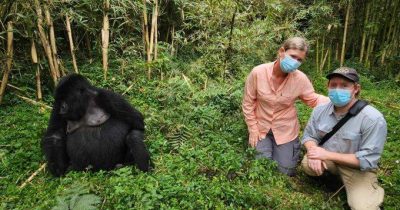
Sarambwe Reserve is located in the Democratic Republic of Congo as an extension of Bwindi Impenetrable National Park. It is situated in the North Kivu region of the Democratic Republic of the Congo, on the border with Uganda. Sarambwe Reserve is another protected area for mountain gorillas. It was established in 1998 to aid in regional conservation efforts. Moreover, Sarambwe Reserve encompasses a total land area of approximately 12 square kilometers (1,200 hectares).

Sarambwe is a relatively small reserve compared to other reserves in the country. Additionally, it is located within the Albertine Rift Valley, a hotspot of incredible biodiversity. Furthermore, the Sarambwe Reserve is home to some of the world’s most endangered species and is part of the larger Virunga region. Lastly, this reserve connection is crucial for the global gorilla population.
What kind of wildlife is found in the Sarambwe Reserve?
Sarambwe Reserve is populated with several wildlife species, most of which are endangered. Some of these include:
Primates
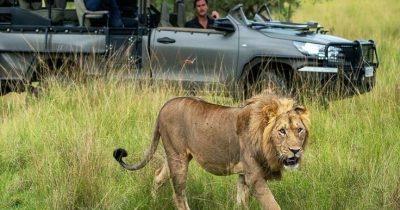
The various primates contribute to the high number of wildlife present in the reserve. Some of these include eastern chimpanzees, black-and-white colobus monkeys, blue monkeys, gorillas, and many others. Other wildlife in the reserve consists of forest duikers, forest elephants, buffalo, and more.
Bird species
In the Sarambwe, several bird species can be encountered by travelers during safaris. There are about 87 bird species, 15 of which are Albertine endemic. Most of these bird species are similar to those found in Bwindi Impenetrable National Park. Examples of these birds include the great blue turaco, black-billed turaco, collared apalis, short-tailed warbler, Rwenzori batis, red-faced woodland warbler, Shelley’s crimsonwing, and many others.
Reptiles
These cold-blooded animals also form part of the wildlife in the reserve. Some of these reptiles include cobras, small forest snakes, monitor lizards, skinks, chameleons, African rock pythons, and more.
What is the nature of the vegetation cover in Sarambwe?
The reserve is characterized by several types of vegetation, including montane forests, lowland forests, and secondary vegetation that humans have intentionally planted.
What are the major threats facing the Sarambwe Reserve?
The reserve faces several threats and challenges, including:
- Deforestation
- Poaching
- Land encroachment by communities seeking land for agriculture
- Inadequate funding for conservation efforts.
What organizations are in charge of the conservation efforts of the Sarambwe?
Several organizations oversee conservation efforts in Sarambwe, including:
- Great Virunga Transboundary Collaborations (GVTC)
- Institut Congolais pour la Conservation de la Nature (ICCN)
- Uganda Wildlife Authority
- World Wildlife Fund (WWF)
Can I visit Sarambwe Reserve?
Currently, Sarambwe is not a tourist destination as the authorities have not developed it. Several barriers hinder it from being a tourist destination, such as poor infrastructure, insecurity, and a lack of accommodation facilities.