
The Mundali Tribe in South Sudan
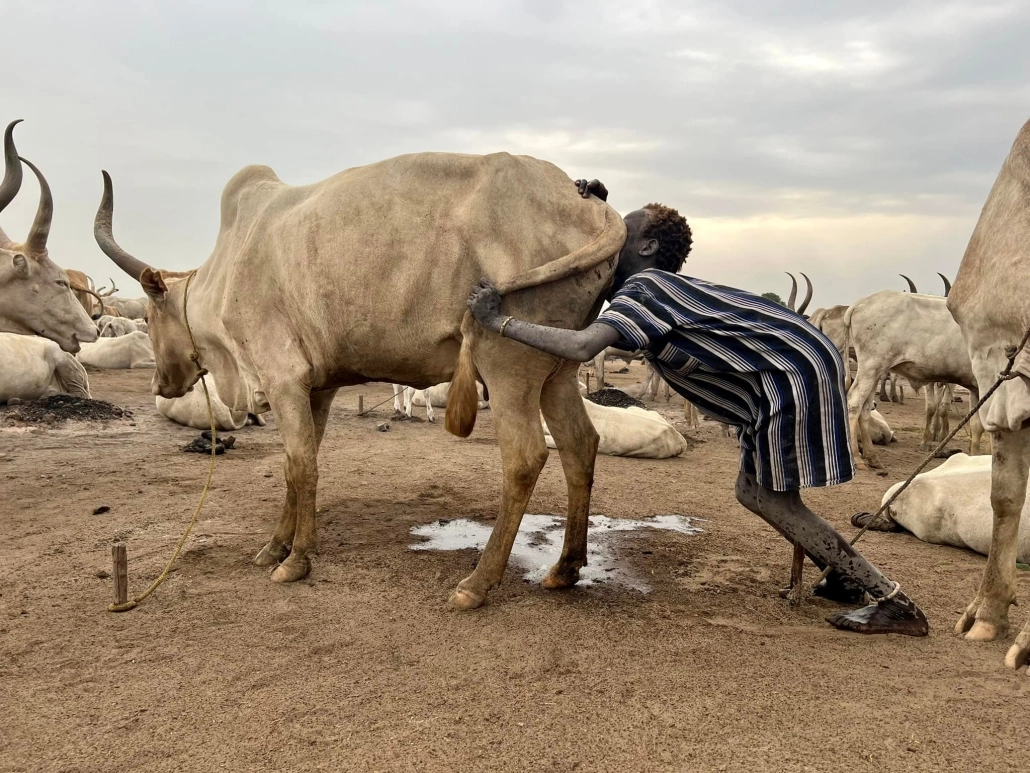
The Mundali tribe is an ethnic group of people belonging to the Nilotic living within the Nile Valley of South Sudan. They live near the Nile River in South Sudan. South Sudan is one of the world’s youngest nations, located in the North of Africa. The country experiences a semi-arid type of climate, and the major ethnic group is the Mundari. They are mainly cattle keepers and depend on their cattle. These people are fierce warriors and live a life where their cattle are the most important part of their lives.
Mundali people consider their cattle as a form of wealth, and during any form of trade, they love exchanging cattle for money. They usually reach the extent of sleeping with their cattle to protect them from the cattle wrestlers. Mundali lives in a chiefdom under the leadership of a chief. Leadership is hereditary through the sons of the chief. Now they lack political authority since the government of South Sudan imposes it. Elders in the community behave unsociably because they don’t share food with others in their homes in the kraal.
Where do the Mundali live in South Sudan?
The Mundali live in the Terekenka county, just near the Nile River, and the area floods during the rainy season. The area has fewer sand deposits. They live in a kraal protecting their cattle from the cattle wrestlers, and they tend to the hip cow dung. The hipped cow dung is usually set on fire to produce smoke. This smoke helps to send away the tsetse flies and other tropical insects within the area.
Are the Mundali people religious?
The Mundali people are highly religious, and they believe in the god Ngun, who assesses what men hear and people’s deeds. These people believe that their god Ngun shapes life and social behaviour. These people conduct the religious rituals through the sacrifices made by the Monyekak, who are responsible for the well-being of the community. The Bunitons are also in the community, who are responsible for the sickness in the community. The Mundali also believe in the Christian religion.
What do the Mundali people eat?
The Mundali do not kill their cattle for food, nor do they practice cultivation. They depend much on cattle products like milk, yoghurt, and bongo mixed with cow urine. Additionally, they also eat fish from the Nile River since it is near the community. More so, Mundali men tend to squat under the urine of the cow and shower it. This is a form to make them clean and fight infection amongst them. The use of urine to shower changes the colour of their hair and makes it orange in colour, and also protects them from scorching heat.
Other tribes in South Sudan
South Sudan is vast with other communities which are situated around the country, and they include;
Dinka
These are the tallest people in Africa, with a height of about 7 feet. They are part of the Nilotic group living in swampy areas around the Nile River. Historically, the community lived in a nomadic pastoral life where they never had a permanent settlement. They lived in groups of about 100 people per group. They are also cattle keepers who depend much on their cattle, like the Mundali. The Dinka are one of the largest ethnic groups living near the Nile basin.
Nuer
The Nuer are also part of the Nilotic group who live in the great upper Nile of the country. They speak the nearby language. The other groups of the Nuer live in Ethiopia in the region of the Gambella. It is the second largest group living within South Sudan. The Nuer call themselves the Naath. They live a pastoral life. The population of the Nuer has been officially undercounted due to their pastoral life. Most of their areas are located in the swampy areas of the Nile. Cattle are a symbol of wealth and symbolic. They usually depend much on cattle rearing and other farming, horticulture, fishing, and many other activities.
Which other destinations are worth visiting in South Sudan
South Sudan is not only vast with cultural communities but also is vast with other destinations that travellers can encounter during the safari, and they include;
Nimule National Park
Nimule National Park is located in southeastern South Sudan. It was established as a game reserve in 1939. The main purpose was to create a controlled hunting area for the British during the colonial period. In 1960, the park was governed by the Sudanese government, which expanded the boundaries of the park. From 1983 to 2005, the park was closed due to the civil wars within the country. During this time, the number of wildlife reduced in number due to increased hunting and poaching. The population of wildlife was resettled in 2008 when the park opened up for tourist activities. The park is along the Uganda-South Sudan border. The wildlife in the park includes elephants, leopards, Vervet monkeys, hippos, duikers, warthogs, chimpanzees, and many others. Chimpanzee trekking is best done in the wet season.
Boma National Park
Boma National Park is on the eastern side of the country near the Ethiopian border. The park was established in 1977, and it is one of the largest areas in South Sudan. The park is made up of the savannah grasslands, flood plains, and grassland plains where travellers can see the wildlife. The wildlife in the park includes elephants, kobs, leopards, cheetahs, giraffes, buffalo, Mongolla gazelle, and many others. The dominant community in the park is the Toposa and Nyangatom, whom travellers encounter during a safari.
What is the best time to visit South Sudan?
The country is open to travellers throughout the year. The best time to visit the country is during the dry season, from December to February and from June to August. During this time, the area is drier and clearer for animal viewing and other activities within the country.