
UNESCO World Heritage Sites in Uganda
UNESCO has inscribed three sites in Uganda as World Heritage Sites. They include Bwindi Impenetrable National Park, Kasubi Tombs, and Rwenzori Mountains National Park. These are places of cultural/natural heritage significance as per the UNESCO World Heritage Convention, which dates back to 1972.
Kasubi Tombs
UNESCO inscribed the Kasubi tombs in Kampala, Central Uganda, as a World Heritage Site in 2001. Builders first constructed the cultural site in 1882 and later converted it into a burial site for the Buganda kings, also known as Kabakas. The Buganda Kingdom regards the Kasubi tombs as valuable spiritual sites. The main building began as a palace in 1882, and in 1884, leaders converted it into a tomb.
During its inscription period, only four tombs were available in the complex. They were built using wood, reeds, and thatched roofs. The Kasubi tombs house the tombs of four former kings (Kabakas). These include King Muteesa I, who ruled from 1835 to 1884; Mwanga II, from 1867 to 1903; Daudi Chwa II, from 1896 to 1939; and Sir Edward Muteesa, from 1924 to 1969. The tombs’ structures are primarily made of grass thatch, wood, reeds, and elephant grass, along with other local materials. Many Baganda visit the site for blessings, as they believe it is a spiritual place.
Bwindi Impenetrable National Park
Located in southwestern Uganda, Bwindi National Park, part of Kanungu District, was officially inscribed as a UNESCO World Heritage Site in 1994. The park lies within the Albertine Rift region and at the intersection of 3 ecological zones. The Albertine Rift montane forests, which dominate Bwindi, are an endowed destination with exceptional biodiversity.
The 331 sq. km Bwindi protects over 120 mammal species, 100 fern species, 200 montane forest butterfly species, and 350 bird species, including forest species of birds. Among the essential mammal species to explore on Uganda safaris in Bwindi National Park are the mountain gorillas, which total up to 459 individuals. Overall, fewer than 1,063 mountain gorillas still live in the wild today, primarily inhabiting the lush forests of Bwindi, Volcanoes National Park in Rwanda, Virunga National Park in the Democratic Republic of the Congo, and Mgahinga Gorilla National Park in Uganda.
Bwindi Impenetrable National Park also supports a diverse range of mammal species, in addition to the mountain gorillas. These include chimpanzees, l’hoest monkeys, pottos, baboons, red-tailed monkeys, spectacled galagos, Demidoff’s galagos, and more. Bwindi also offers refuge to elephants, bush pigs, civets, bats, side-striped jackals, giant forest hogs, yellow-backed duikers, black-fronted duikers, and clawless otters, among others.
A home to endemic bird species
Bwindi is home to over 23 species endemic to the Albertine region, as well as other resident species. The checklist of birds in Bwindi Impenetrable Forest National Park includes the Archer’s robin-chat, green broadbill, blue-headed sunbird, dusky crimson wings, pied kingfishers, handsome francolins, Rwenzori turacos, Ross’s turacos, woodland kingfishers, mountain masked apalis, malachite kingfishers, purple-breasted sunbird, mountain yellow warblers, broad-billed rollers, piping hornbills, white-thighed hornbills, and tropical boubou.
There are also papyrus gonoleks, priapic, African thrushes, European rollers, lilac-breasted rollers, red-throated alethe, black-casqued hornbills, African firefinch, dusky twin spot, red-headed bluebill, zebra waxbills, pale-fronted nigrita, chestnut-breasted nigrita, Jameson’s antpecker, and more.
Adjacent to Bwindi, the Batwa and Bakiga communities showcase their distinctive traditions and cultures through performances. While on a safari in Bwindi, adding a cultural tour to the Batwa or Bakiga community is worth it. A Uganda tour in Bwindi Impenetrable National Park offers nature enthusiasts the opportunity to engage in various activities, including mountain gorilla trekking, gorilla habituation, hiking/forest walks, bird watching, and more.
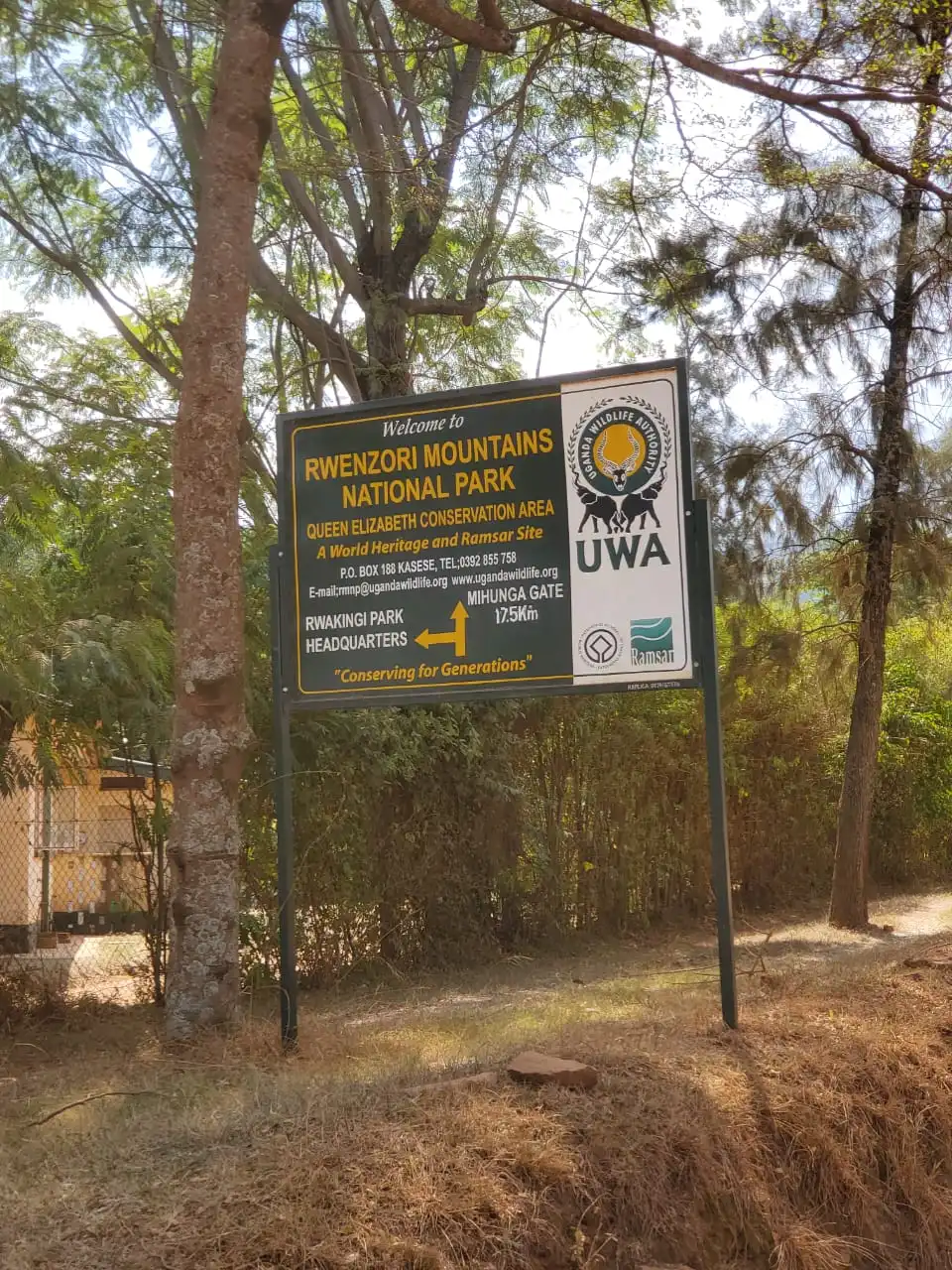
Rwenzori Mountains National Park in Kasese
Located in Western Uganda is the Rwenzori Mountains National Park, home to the world’s legendary Mountains of the Moon. This was inscribed as a UNESCO World Heritage Site in 1994 and is bordered by the Democratic Republic of the Congo (DRC). The Rwenzori Mountains National Park’s key highlights include the scenic Rwenzori Mountains, with its highest peak, Margherita (5109m), which stands on Mount Stanley.
Glaciers, waterfalls, and rivers characterise the Rwenzori Mountains. It is also known for its rich montane flora, consisting of 5 Afro-montane vegetation belts along its slopes. The plant life to explore in this block mountain includes giant lobelias and giant heathers. Around the slopes of the legendary Rwenzori Mountains, various wildlife species exist, including l’hoest monkeys, chimpanzees, African forest elephants, hyraxes, and black-fronted duikers.
The diverse habitats of the Rwenzori Mountains National Park also provide refuge to several birds. These include the regal sunbird, black-billed turacos, blue-headed sunbird, Cameron pigeon, slender-billed starling, strange weavers, white-tailed crested flycatchers, olive-breasted mountain greenbul, Rwenzori olive thrush, and Rwenzori turacos.
Other birds include Stuhlmann’s double-collared olive-back, scarlet-tufted malachite sunbird, handsome francolins, barred long-tailed cuckoos, mountain chat, cinnamon-chested bee-eaters, golden-winged sunbird, Rwenzori batis, white-starred robin, bamboo warblers, and bearded vultures, to mention but a few. The top things to enjoy in the Rwenzori National Park include mountaineering, bird watching, game viewing, and nature walks.
List of tentative sites to be inscribed as UNESCO World Heritage Sites in Uganda
Bigo bya Mugenyi: This is found in Sembabule and was listed back in 1997. It falls into the category of cultural sites according to UNESCO criteria. Bigo bya Mugenyi comprises several earthworks on the Katonga River, dating back to the 14th and 16th centuries.
Kibiro was listed in 1997 and lies on the shores of Lake Albert. People extract salt from the salt gardens in this area. They then boil the brine to produce salt.
Nyero rock paintings, located in Kumi, are among the tentative sites on the UNESCO list. UNESCO listed it in 1997. The area contains three rock shelters with paintings that date back to the late Iron Age.
Mgahinga Gorilla National Park, located in southwestern Uganda, is among the tentative UNESCO World Heritage Sites. Mgahinga protects a diverse range of wildlife, including the endangered mountain gorillas, black-fronted duikers, golden monkeys, blue monkeys, and African elephants.
UNESCO Biosphere Reserves in Uganda
Currently, there are only two UNESCO Man and Biosphere reserves in Uganda, including the Mount Elgon Biosphere Reserve and the Queen Elizabeth Biosphere Reserve. The Queen Elizabeth Biosphere Reserve and Game Park lies in Western Uganda, astride the equator.
Queen Elizabeth National Park was officially recognised as a Biosphere Reserve in 1979. It is the second-largest park, occupying 1,978 square kilometres, and protects over 95 mammal species, 620 bird species, and numerous other species.
Within Queen Elizabeth Park, an abundance of fauna is found, including Cape buffaloes, elephants, warthogs, waterbucks, and hippos. Chimpanzees, spotted hyenas, giant forest hogs, topis, leopards, lions, Nile crocodiles. African civets, mongoose, serval cats, side-striped jackals, and more.
Mount Elgon Biosphere is situated in the Eastern part of Uganda. This biosphere reserve and park lies at the border between Uganda and Kenya. It supports a total of about 300 bird species and other mammal species. The faunal species to explore here include buffalo, hyenas, duikers, elephants, and black-and-white colobus monkeys.
The birds in the Mount Elgon Biosphere Reserve and Game Park include Elgon francolins, Sharpe’s longclaws, and black-shouldered kites. Black-collared apalis, blue flycatchers, Chubb’s cisticola, and endangered lammergeyer. Moustached green tinkerbird, crowned hornbills, and many others.
Conclusively, UNESCO has recognised only three sites in Uganda as World Heritage Sites. They are worth exploring on Uganda safaris. These include Bwindi, Kasubi, and Rwenzori Mountains National Park. In each of the designated UNESCO sites, there is something unique to explore. Plan and book a trip with Native Africa Tours to unearth the hidden treasures in these sites and beyond.