
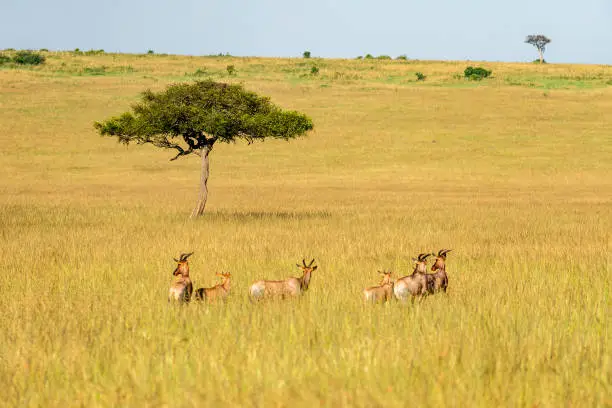
Visiting Masai Mara in October
Visiting Masai Mara in October is an incredibly great idea for Kenyan tours. October falls in the dry season, which extends from July to October, making it an ideal month for game viewing. The key highlight of a Kenya safari to appreciate in October is the Great Migration. You can still spot large herds of wildebeest and zebras in October, particularly at the beginning of the month.
In the first weeks of October, Masai Mara can be dry and windy. It is that period of the month to enjoy beautiful sunrises and sunsets. The sun rises earlier, at around 6:00 am, and day temperatures vary significantly, with midday temperatures rising to about 30 Celsius. Being part of the extended dry season, the grasses can still be shorter, thus allowing you to enjoy excellent views of diverse wildlife.
Traveling in October presents visitors with multiple photography opportunities. The favorable weather excites most wildlife and renders huge game movement and more Mara River crossings. With Native Africa Tours, you can witness the drama up close as the Mara River’s low water levels make wildebeest more vulnerable to crocodiles during these thrilling crossings.
The weather in October in Masai Mara
October comes with pleasant weather, which makes it an ideal month for Kenya wildlife tours. During the day, temperatures rise from 25 to 30 degrees Celsius. Then, in the mornings and evenings, the reserve cools down with temperatures ranging from 12 to 14 degrees Celsius. Around October, Masai Mara experiences light showers, which begin in the middle and end of the month. The road conditions are ideal for visitor navigation while exploring the wonders of this nature reserve. A 4×4 safari vehicle is the best option for your navigation in the Masai Mara, regardless of the month you intend to travel for your vacation.
What to see in the Masai Mara in October
Wildlife of Masai Mara
People can spot large herds of wildlife in the Maasai Mara in October, which is a favorite month to visit. These include the Big 5: buffaloes, elephants, rhinos, leopards, and lions. The other wildlife to see includes hyenas, jackals, giraffes, zebras, and many antelopes. The different antelope families include elands, topis, wildebeests, gazelles, bushbucks, duikers, reedbucks, impalas, and waterbucks.
The Birds to See
Masai Mara offers refuge to endemic and near-endemic species of birds. Overall, the reserve protects about 470 species of birds, including cinnamon-breasted bunting, Abdim’s storks, giant kingfishers, Ayres’s hawk eagle, African fin-foot, Denham’s bustards, grey-crested helmet-shrike, African wood owl, red-throated tit, purple grenadier, common ostriches, Jackson’s widowbird, rufous-bellied heron, rosy-throated long claws, and silver bird. Masai Mara additional birds include woolly-necked storks, yellow-throated sandgrouse, trilling cisticola, Southern ground hornbill, saddle-billed storks, tabora cisticola, Usambiro barbets, Temminck’s courser, and Swahili sparrow.
Why travel to the Masai Mara in October?
Excellent Game viewing
October is when you can encounter huge concentrations of wildlife as they converge around the water sources. They include the Big Game like elephants, leopards, buffaloes, rhinos, and lions. Visitors can also observe a range of other wild animals such as zebras, Maasai giraffes, elands, warthogs, gazelles, topis, and others.
Birding excursions
A wide range of birds awaits exploration in October. The Masai Mara alone protects over 470 species of birds. On a birding tour, birds to spot include Goliath herons, Kori bustards, rufous-bellied herons, Madagascar squacco herons, black-headed herons, martial eagles, pygmy falcons, grey-crowned cranes, ground hornbills, secretary birds, Great white egrets, European rollers, African hoopoe, common ostriches, hammerkop, and saddle-billed storks.
Bushwalkers/walking tours
The best way to reconnect to the wild is by embarking on a guided bushwalker or nature walk. With nature walks, expect an intimate and deep penetration into the savannas as you interact with the reserve’s attractions. On nature walks, you go deeper into the habitats that are hardly reached using a rental car. Experienced guides accompany tourists, and the journey involves walking through the savannas.
Witness the Great Migration with an expert.
October is undoubtedly an ideal month to experience the Great Migration in the Masai Mara. You can spot a large herd of wildebeest and other grazers as they move, searching for new nutritious pasture. These mammals move from the marsh areas to the Talek River and back. Unlike in the peak season, the Great Migration in October often starts early.
Horseback Riding.
Horseback rides in Masai Mara are enjoyable around the reserve and not deep inside. This means you can enjoy sights of wildlife along the surrounding private conservancies and game ranches. You can explore a wide range of attractions on a horseback ride, including zebras, birds, giraffes, and many others.
Hot-Air Balloon Adventures
Take to the skies on an exciting balloon excursion and experience an adventure of a lifetime. A hot-air balloon tour allows you to fly high above the spectacular Mara Plains as you witness the magnificent landscapes and abundant wildlife. Visitors can conclude their day with a bush breakfast and hearty champagne.
Plan your accommodation.
Masai Mara is one destination with a wide range of accommodation options for visitors to stay for a night. The countless lodging options in and around Masai Mara include, among others, Mahali Mzuri, Basecamp Wilderness Lodge, Basecamp Adventure, Mara Serena Safari Lodge, Little Governors’ Camp, Richard’s River Camp, Mara Expedition Camp, and Eagle View Camp.
In addition, the Mara Reserve also features lodges such as Basecamp Masai Mara, And beyond Kichwa Tembo Tented Camp, Elephant Pepper Camp, Ol Seki Hemingway’s Mara Camp, Cottar’s 1920s Safari Camp, Elewana Sand River Camp, Saruni Mara, Sala’s Camp, and Mara Kempinski.
Masai Mara also holds lodges such as Kicheche Valley Camp, Karen Blixen Camp, Offbeat Mara Camp, Rekero Camp, Angama Mara, Governors II Moran, Mara Plains Camp, Porini Cheetah Camp, and Ngare Serian.
How to reach the Masai Mara Reserve
Getting to Masai Mara is easier both by road and by air. When you opt for road transportation, expect to spend 6 hours but on an enriching journey characterized by scenic views of the countryside, including the Great Rift Valley.
Domestic flights are also available, offering visitors connectivity to the Masai Mara. The flights begin from Nairobi, and you can land at any of the nearby airstrips, including Musiara Airstrip, Keekorok, Ol Kiombo, Serena Airstrip, and Mara North.
What are the entry fees to the Maasai Mara?
You must pay entry fees to explore the Masai Mara. As of 2025, the entry fees stand at USD 200 per person for all adults under the foreign non-resident category. Children under the non-resident category pay USD 50, and this is valid for a day. Those under 8 years have free access to the reserve. Kenyans, especially adults, pay KES 2500 per day, and children pay KES 300 per day.
Residents under the East African community pay KES 5000 per day, while children from 9 to 17 years pay KES 2000. You should note that these rates are valid for a single entry or day and are effective until December 2025. With any new rates, our team will keep you updated.
How to book or plan your Masai Mara tour
Contact a reliable tour operator on the ground to plan and book an unforgettable wilderness adventure of a lifetime in Masai Mara. Trust Native Africa Tours for all Kenya safaris, not only to Masai Mara but countrywide.