
Visiting Masai Mara in September
Is September a good time to visit the Maasai Mara? Visiting the Masai Mara in September is a great time to witness the powerful wildebeest migration. It is around September when the Mara River is bustling with 1000s of wildebeest crossing over from the Serengeti to Masai Mara National Reserve. The weather in September is pleasant, and the sky is usually clear. The favorable weather that defines September makes it an ideal month of the year to embark on the guided game drive and other outdoor adventures in Masai Mara.
Around September, the Masai Mara is lush green, and the abundant wildlife guarantees visitors exceptional encounters. It is an ideal month for photographers with plans to embark on photo tours in Kenya.
Weather in the Masai Mara in September
September is warmer than August. On average, the daytime temperatures rise to about 27 degrees Celsius. At night, temperatures drop to about 12 degrees Celsius. September remains drier and records minimal rainfall, hence little disruption to the game viewing tour. With this weather, September remains a special month of the year to plan a wildlife tour in the Mara National Reserve.
What to See on Visiting Masai Mara in September
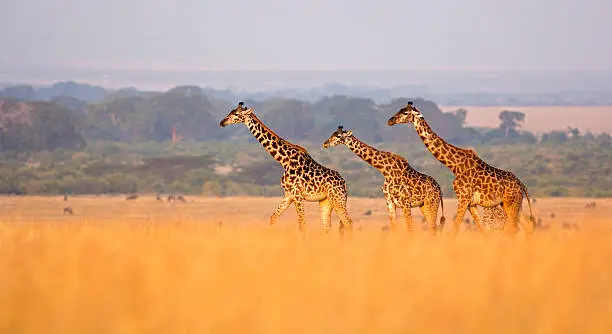
You can also spot a wide range of wildlife on the vast plains of the Masai Mara. The abundant wildlife to locate on a Kenya tour in the Masai Mara includes leopards, lions, cheetahs, zebras, giraffes, rhinos, elephants, elands, jackals, caracals, mongooses, and hippos. The Park also supports wildlife species such as the Nile crocodiles, aardwolf, Aardvarks, African hare, oribis, Kirk’s dik-diks, klipspringers, bush babies, bat-eared fox, elands, honey badger, Thompson’s gazelles, wildebeest, slender mongoose, spotted hyenas, vervet monkeys, topis, warthogs, and more.
The birds to spot- Masai Mara supports 470 species of birds, including lilac-breasted rollers, common ostriches, Kori bustards, Ross’s turacos, Abdim’s storks, African fin-foot, secretary bird, saddle-billed stork, woolly-necked storks, Schawlow’s turacos, giant kingfishers, grey-backed fiscals, Von der Decken’s hornbill, African grey hornbill, white backed vultures, red-billed buffalo weaver, Hildebrandt’s starlings, grenadier, rosy-throated long-claws, Usambiro barbet, Southern ground hornbill, and more.
General Information
Traveling to the Masai Mara in southwestern Kenya takes six hours by car. In 1961, they declared the Masai Mara Reserve a Wildlife Sanctuary, and it was only 520 sq.km. Its boundaries extended to encompass the Eastern section, and later, authorities designated it as a Game Reserve with a land area coverage of 1821 sq. km.
In 1974, authorities recognized Masai Mara as a National Reserve. Today, the Mara Reserve occupies a land area of 1510 sq. km. The Masai Mara features different sections, including Maji Moto, Mara North, Ol Chorro Oirowua, the Mara Triangle, Naikara, Lemek, and others.
What to do when you visit Masai Mara in September
If the Masai Mara is your dream destination, then the following should be part of your bucket list experiences.
Game drives in September
At the Masai Mara, visitors can enjoy guided game drives twice a day. Game viewing on the Masai Mara plains is mind-boggling. Visitors stand a chance to explore huge concentrations of wildlife in a 4×4 tourist vehicle. On a guided safari game drive, expect to search for the Big 5 game and other mammal species using a 4×4 safari vehicle.
A hot-air balloon in September
Enthusiastic nature lovers shouldn’t miss the hot-air balloon excursion. Take to the skies in a balloon and explore the wonders of the Masai Mara aerial game views. The key highlights of the balloon tour include observing the Great Migration and elephants, etc. Expect to get views of the reserve’s breathtaking landscape as well.
Horseback rides
Embark on an unusual wilderness adventure as you unearth the diverse wildlife in Mara Reserve. Forget about game viewing in a 4×4 safari car; horseback riding offers a unique experience altogether. You immerse yourself in the wilderness while appreciating the extensive landscape and abundant wildlife, including zebras, wildebeests, and more.
Observe the thundering hooves of the wildebeest migration.
The great migration is a distinct experience and comes only once in a lifetime. Visiting Masai Mara in September presents a unique opportunity for you to witness this powerful annual event. Observe millions of wildebeest and 1000s of other grazers as they embark on the trek in search of pasture and water. The special moment is the Mara River crossing, where these herbivores cross the Mara River. If you are searching for bucket-list experiences, then definitely the Great Migration should be a must.
Set foot on the vast savannas and explore the Mara on foot
Masai Mara is such a flexible destination with a myriad of experiences. Guided nature walking is such an amazing experience that allows you to reconnect with your spirit of adventure. Set foot into the wilderness and experience the Mara Reserve. Enjoy the fresh air, listen to the inspirational melodies, and watch your favorite wildlife.
Accommodation Choices
Masai Mara has a wide selection of lodging options, including budget, midrange, and luxury. Top places you can consider for relaxation after long day excursions in the Masai Mara wilderness include;
The Mara Serena Safari Lodge
Comprising 74 rooms, mainly suites, each room has a private balcony where guests can enjoy mesmerizing views of the plains. This luxury accommodation features a fully stocked bar, swimming pool, dining, conference facilities, spa, and gym, etc.
AndBeyond Bateleur Camp
A luxury lodge with 18 spacious tents and features like en suite bathrooms, stone showers, copper bathtubs, dining, private decks, a swimming pool, and more.
Cottar’s 1920s Safari Camp
Has 10 tents with a family, and a honeymoon suite. Cottar’s also has a range of amenities and services, including dining, butler services, a library, and a swimming pool.
Fairmont Mara Safari Club
Features 51 tents with multiple amenities, including a swimming pool, dining, gift shop, lounge, and library.
Elephant Pepper Camp
Book this comfortable accommodation for a great overnight stay on a safari in Masai Mara National Reserve. Costing of 8 luxurious tents serving both as honeymoon and family tents. This is a stylish camp with unique furnishings, en suite bathrooms, solar-powered lighting, private verandas, hot water showers, a campfire, dining, and more.
Sanctuary Olonana
Located strategically on a private stretch of the Mara River, Sanctuary Olonana offers a remarkable state of luxury and sustainability. The lodge has 14 suites with other features including an infinity pool, spa, bathrooms, dining, and more. At Olonana, you can be part of community tours, walking tours, and guided game drives.
Getting to Masai Mara in September
The Masai Mara is accessible all year round, and you can get there by road or air. If you travel by road, then be ready to spend at least 6 hours. But you can also cut the long hours of road transportation by taking a flight from Nairobi to Kichwa Tembo Airstrip, Keekorok, Musiara, Ol Kiombo Airstrip, Serena Airstrip, and Mara North Airstrip.
Entrance fees to Masai Mara stand at USD 200 per day for an adult under the category of foreign non-residents, and children pay USD 50 per day. Children aged 9 to 17 who are non-residents must pay, but those under 8 can enter for free. The Kenyans pay KES 2500 per day, and children of 9-17 years pay KES 300 per day. The East African residents’ entry fee is KES 5000, while children pay KES 1500 per day. These entry fees are valid until December 31st, 2025.