
What to Wear for a Mount Rwenzori Hike?
What to Wear for a Mount Rwenzori Hike? Mount Rwenzori, known as the “Mountains of the Moon”, is undeniably one of the most attractive places where adrenaline lovers dream of conquering. However, such an exceptionally ambitious goal will sound too much for ordinary Rwenzori visitors. Surprisingly, you don’t need to be a gym addict, undertake vigorous exercises/training, and risk your life to conquer the “Mountains of the Moon”. Interestingly, hiking Mount Rwenzori (5109 meters above sea level) can be manageable for any mountain climber.
Proper clothing becomes crucial as you prepare for your long-awaited dream and undertake the monumental journey. The extremely unforgiving temperatures at high elevations will demand packing clothing that combines durability and functionality. In our article, we will explore the essential clothing you need to conquer the Mountains of the Moon, ensuring that you not only reach the snow-capped peaks but also do it in style.
What is the best time to hike the Rwenzori?
It is worth noting that the best time to take part in the Mount Rwenzori Hike is from June to September or December to February. During these months, the weather is generally favourable. Temperatures are relatively higher than in the wet season (March to May and October to November). However, it can be very chilly regardless of when you travel to the Mount Rwenzori region. Especially in the early mornings and evenings. For this reason, you should be able to pack proper clothing when you plan to do a Mount Rwenzori Hike. Below is a list of recommended attire for Mount Rwenzori hike tours and safaris.
Technical (mountaineering-friendly) long pants/trousers
A critical piece of clothing for the Mount Rwenzori Hike is technical trousers specifically designed for mountain climbing and hiking. These trousers are uniquely designed to provide breathability and insulation. Please make sure the trousers have reinforced knees and seats for added durability, and look for options with full-length zippers for proper ventilation during these challenging Mount Rwenzori hikes.
Insulating layers
The extreme (low) temperatures at the top of the Mountains of the Moon critically demand a serious layering system. This system features a moisture-wicking base layer that keeps sweat away from your skin and a wind- and waterproof outer layer that protects you from extreme weather elements.
Warm jacket
Before embarking on your Mount Rwenzori Hike, invest in a durable, weather-resistant jacket that can withstand the harsh and unpredictable Mount Rwenzori weather (cold temperatures). Ensure the coat has unique features, including multiple pockets for essentials like navigation tools and energy-giving snacks, reinforced zippers, and adjustable hoods.
Gardening gloves and any other appropriate hand protection
Look for the most comfortable and weather-friendly gardening gloves with at least a three-layer design that includes a moisture-wicking inner layer, an insulating layer, and a waterproof outer layer. Also, don’t forget hand warmers, which will provide the much-needed extra warmth during colder stretches of the Mount Rwenzori summit.
Appropriate headgear and accessories
A Mount Rwenzori hike can be smoother if your extremities are well protected during extreme elevations. For this reason, a good-quality neck gaiter and an insulated safari hat are essential for preventing extreme heat loss, especially from the neck and head. Also, wear high-quality sunglasses with UV Protection to shield your eyes from the intense glare of ice and snow, especially at high elevations.
Mountain hiking footwear
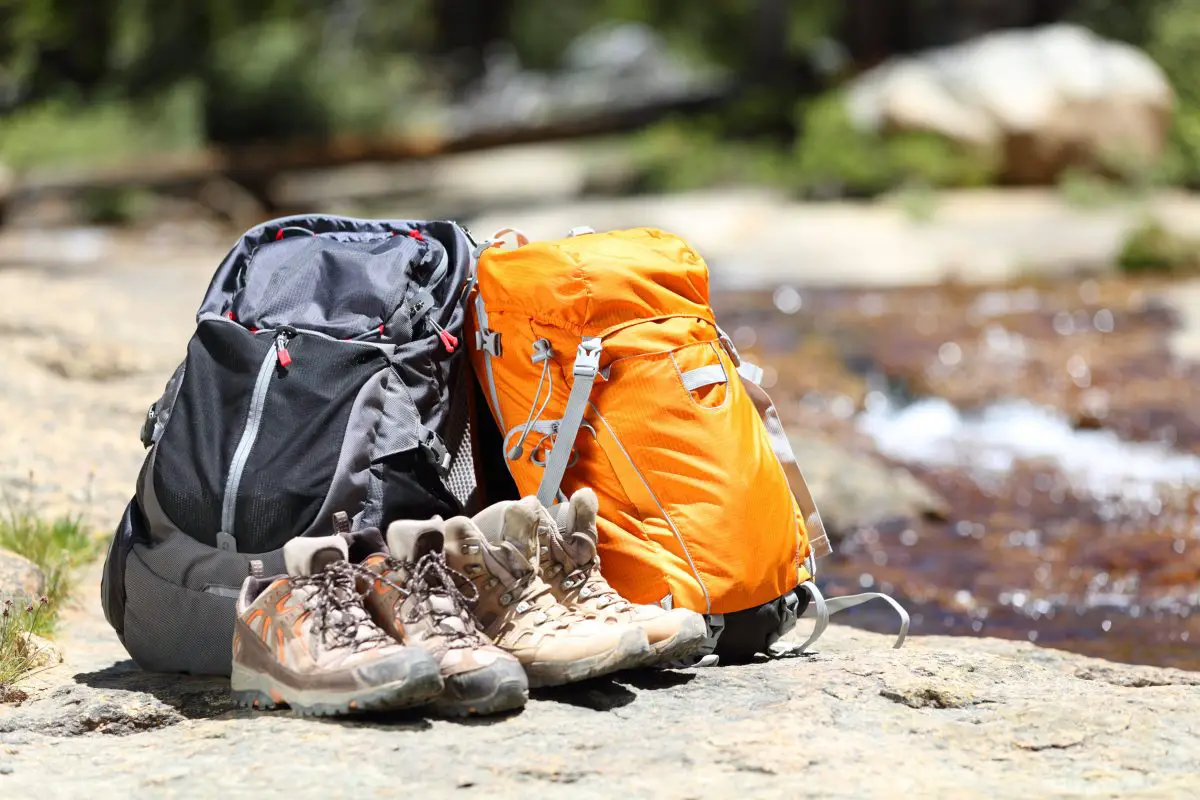
Choosing the proper mountain hiking footwear is essential for safety and comfort while conquering the Mountains of the Moon. We recommend carrying two pairs of footwear, including training shoes and hiking/trekking shoes. They should be mid-weight with enough ankle support. For trekking/hiking boots, the best footwear option is insulated, waterproof boots with strong soles, as they provide the much-needed traction for conquering/navigating icy terrains. Additionally, please make sure that your hiking boots are compatible with crampons for enhanced stability on steep ascents.
Additionally, cotton socks (at least three to four pairs of outer socks and two to three pairs of liner socks) are recommended for a successful Mount Rwenzori Hike. They should be thick enough for the chilly nights on the summit.
Gaiters
While Gaiters aren’t compulsory, they are handy for hikers/climbers who wish to keep their long pants clean in wet, dusty, and muddy conditions. However, conquering the forest’s lower slopes and icy terrains on the high altitudes of Mount Rwenzori demands not just the proper wear but also a strategic selection of different accessories for successful completion and general safety. As a bonus for any intending Mount Rwenzori hiker, consider our comprehensive list of essential accessories. These include a durable and high-capacity backpack for carrying essentials like drinking water, energy-giving snacks, extra layers, toiletries, and other personal items during the Mount Rwenzori hike.
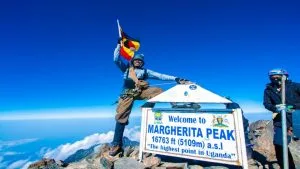
Also, please pack a robust and reliable headlamp, which will be necessary for navigating through low-light or dark places, especially during the early morning summit push when reaching the Margherita peak.
Sleeping Bag
Also, carry a sleeping bag that can withstand icy conditions, ensuring a comfortable night’s sleep in higher elevations. A sleeping pad is also handy for insulating you from the cold ground and enhancing your overall comfort while spending nights in Huts or camps at high altitudes.
A first aid (medical) kit with your crucial medications (such as anti-diarrhoea medication, medication for altitude sicknesses such as Diamox, and broad-spectrum antibiotics), Digestion syrups, any personal prescriptions, bandages, liniment, blister plasters, ointments for blisters and minor cuts, and others is crucial for your Mount Rwenzori Hike.
While this often goes without saying, a good camera is essential for capturing some captivating moments during the Mount Rwenzori Hike, such as when on Margherita Peak or after sighting wildlife and birds on the lower slopes. However, please ensure the camera is small and light to reduce extra weight while hiking.
A reusable water bottle is handy. It should allow you to carry enough drinking water to fill the hydration bladder. Also, pack toiletries such as a toothbrush and toothpaste, a multipurpose soap (most likely a biodegradable one), a small wash towel, deodorant, face and body lotion, toilet paper, lip balm, and hygiene products, to mention a few.
Other essential items include crampons, carabiners, ice axes, trekking poles, navigation tools, communication gadgets (such as detailed maps, GPS devices, and compasses), and others. Still, they will be provided by the trekking Company leading your Mount Rwenzori Hike. Pack (or request from the climbing/hiking Company) if you didn’t pack. A climbing helmet to shield your head from falling debris. Especially when hiking during icefall crossings.
Getting to Mount Rwenzori
Located in western Uganda, Mount Rwenzori (protected by Mount Rwenzori National Park) can be reached by road or air. For air travel, scheduled or chartered flights can be organised to Kasese airstrip, followed by a 40-minute drive to the Park.
For road transport, visitors can use two routes from Kampala: the shorter 300-kilometre Kampala-Mubende-Fort Portal-Kasese route and the second (longer) route, which goes over 350 kilometres via Kampala-Masaka-Mbarara-Bushenyi-Kasese. While it is longer, you can stop at the Equator crossing in Kayabwe for photography.
Now that you know what to wear for a Mount Rwenzori hike, book a tour and make your dreams come true.