
When Do Wildebeests Cross from Serengeti to Masai Mara?
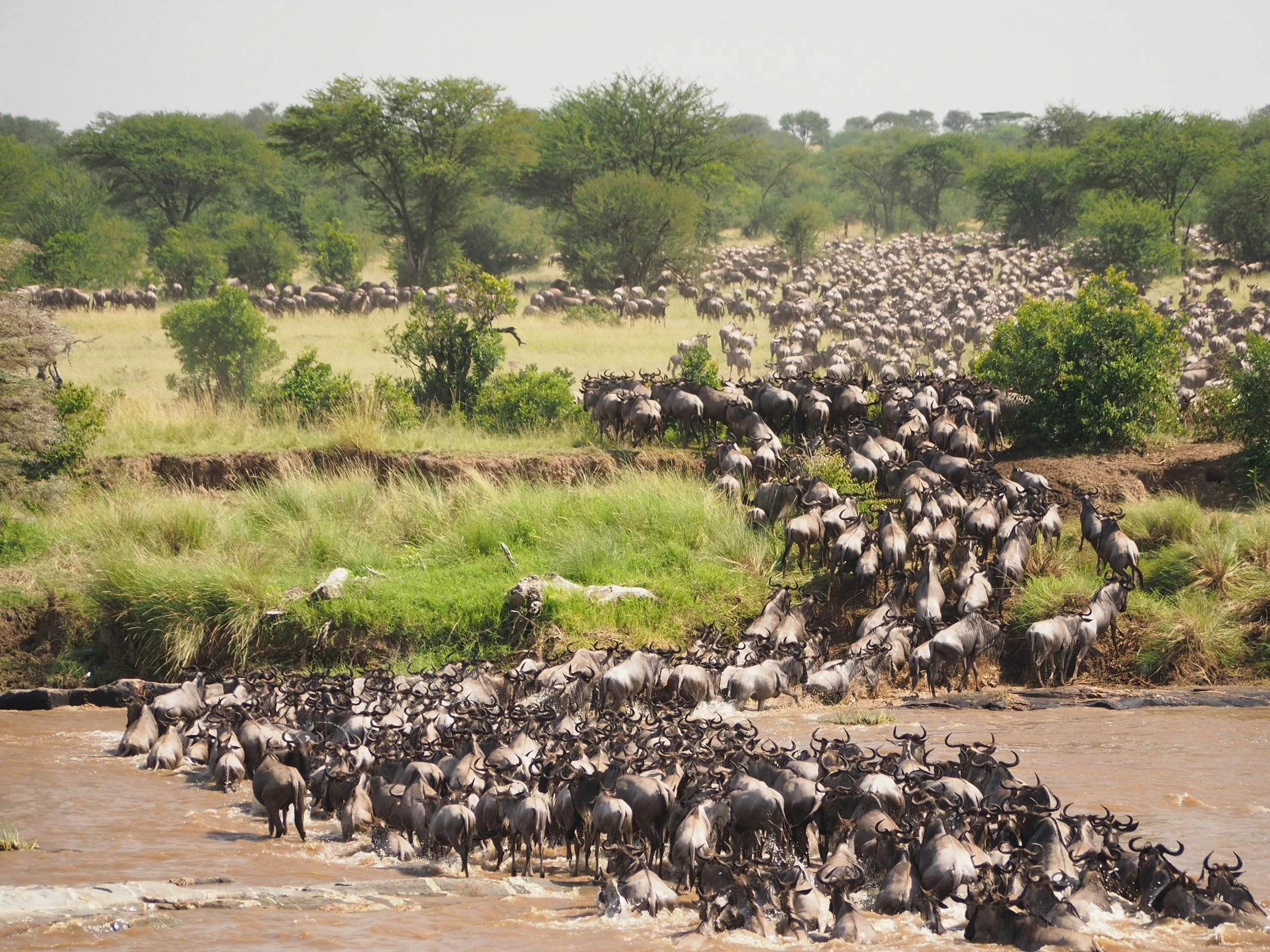
Knowing when wildebeests cross from the Serengeti to the Masai Mara National Reserve increases visitors’ chances of witnessing the dramatic Mara River Crossings. Given the unpredictable nature of wildebeest crossings, determining the exact timing before embarking on a Kenya safari to the Masai Mara is crucial. July to October is notably the most reliable period of the year when wildebeests cross the lush plains of Tanzania’s Serengeti to the Masai Mara in Kenya.
The Serengeti-Masai Mara crossing is characterized by a dramatic crossing of the Mara River. The Mara crossings are one of the world’s most powerful natural phenomena. Any nature enthusiast shouldn’t miss them. From July to October, large herds of wildebeest can be observed as they migrate across the Serengeti plains to the Masai Mara. The rains and the presence of fresh grass determine the pattern of wildebeest movement. The Serengeti-Mara crossings make up part of the dramatic annual migration. To increase your chances of witnessing this world’s spectacle, you may consider having more time in the Masai Mara.
Breakdown of Wildebeest Migration by Months
Calving/Birthing Season
The wildebeest birthing season is part of the remarkable wildebeest migration cycle. The calving season often runs from January to early March, with large herds of wildebeest gathered on the Ndutu plains in the Southern Serengeti National Park. About half a million calves are born during the calving season alone. The calving event occurs on the Serengeti’s grassland plains in the South and in the Ngorongoro Conservation Area. The Ndutu plains, however, offer the best viewing opportunities for tourists to experience wildebeest calving.
Wildebeests start arriving in Ndutu towards the end of December. By January, actual calving begins and continues through early March. An estimated 8,000 wildebeest are born every day. It is such a spectacular occurrence among these amazing mammals. The wildebeest stay back in the area up to April to enjoy the palatable grass, and later, they drift to the north. During the calving season, not only wildebeest gather in the Ndutu plains, but also other grazers like gazelles and zebras.
Short rains
November and December usually receive short rains that make the Southern Serengeti and Ndutu savannas lush and scenic, providing nutritious grass for grazers. The presence of fresh grass means even the calves have something to eat. During the calving/birthing season, visitors shouldn’t miss spotting the big cats. A large population of the big cats gathers in the area to hunt the vulnerable calves. The opportunistic predators become active during this period.
Ndutu often features as the favourite birthing spot for wildebeest, considering the presence of the short grasses. The short grass makes it easier for the wildebeest to observe the predators, including the hyenas, cheetahs, lions, and leopards. By early March, wildebeest begin to gradually spread across the Southern Serengeti, ready to embark on their journey to the North. The last set of calves can be spotted by March, with some wildebeest still hanging around up to the end of the month.
Wildebeest Migration Event in April
Around April, the wildebeest migration pattern is primarily characterised by grazing and rutting. The Moru Kopjes and Seronera –The Central Serengeti becomes an essential spot for visitors to witness the wildebeest. The majority of the wildebeest gather in the area due to abundant pasture, considering the dangerous Grumeti River crossing. From April to May, a short breeding season occurs in the Western and Central sections of Serengeti.
May is usually the month when zebras, wildebeests, and gazelles set off to the North, and rutting is the key event. The Grumeti Game Reserve is the central area of interest for witnessing wildebeest rutting.
June
The Grumeti River crossing is best witnessed in June. An immense profusion of wildebeest embark on a journey to the North, traversing the Western Corridor of Serengeti and later access the Grumeti Game Reserve. They cross the crocodile-infested Grumeti River, but this river crossing isn’t as powerful as the popular Kenya Mara River crossings. June also falls in the long dry season.
July-August event
The migration from July to August is marked by wildebeest herds moving north. The first batch of these mammals is confined in the Kogatende in the Northern Serengeti, and this happens around early July. They distribute themselves in the Western Corridors, Grumeti, and Kogatende regions. If you want to witness the dramatic moment of the whole wildebeest migration, then you shouldn’t miss the Mara River Crossing. During the Mara River crossing, large herds of wildebeest cross the river, and you also have a chance to witness these mammals along the steep banks while others fall back. The River crossing often starts from late July to August. It is the most spectacular and memorable event not to be missed when planning a migration safari in Kenya.
Once wildebeest herds have crossed the river, they settle in the Maasai Mara Reserve. July-August mark the peak dry months. This period has longer, sunny days that make it ideal for witnessing wildebeests and other wildlife on the vast plains of the Masai Mara.
September is still the peak season for Mara River crossings. Very few wildebeest are in the Northern Serengeti because the most significant population has crossed into the Masai Mara Reserve. They keep around the Mara plains to enjoy the nutritious grass and expect to find large concentrations of gazelles, zebras, and wildebeest. To anyone interested in the Mara River crossing or generally taking a tour in the Masai Mara, Kenya, September should be your travel month of the year to experience something unusual.
October
October –large herds of wildebeests cross the Mara River to the Northern Serengeti. After crossing, they settle in the Loliondo and Lobo Valley, the Northern section of the Serengeti. September-October still offer a fantastic opportunity for tourists to witness the mesmerising river crossings during the off-peak months.
November Event
By November, the wildebeest herd crosses back from the Masai Mara to the Northern Serengeti. The return journey runs up to mid-November, and they head towards the South. The central region of the Serengeti becomes more fertile, offering an ideal grazing area for wildebeest and accompanying grazers.
December Event
The main wildebeest herds arrive at the Ndutu plains located in the Southern Serengeti and Northern Ngorongoro. Gazelles, wildebeests, and zebras distribute across the savannas and can be observed feeding on the fresh grass. This is the month they settle and prepare to begin the calving session. While December receives short rains, visitor exploration can’t be distracted.
Where to stay to witness the Masai Mara wildebeest migration
The choice of your migration camps and lodges matters if you are to witness the wildebeest as they cross from the Serengeti to the Masai Mara. The key accommodation options to consider for your overnight stay include Sanctuary Olonana, Governor’s Camp, Kichwa Tembo Tented Camp, and Angama Camp.
Other places to book include the Mara River Camp, Entim Masai Mara Camp, Kuria Hills Lodge, Mara Serena Safari Lodge, Sarova Mara Game Camp, Sekenani Camp Mara, Royal Mara Safari Lodge, and Keekorok Lodge.
July-October offers the ideal time to witness wildebeests as they cross from the Serengeti to the Masai Mara. To enjoy the dramatic Wildebeest River crossings from Tanzania to Kenya’s Mara Reserve, consider booking your migration holiday with Native Africa Tours.