
Wildebeest Migration in February: Calving Season in Serengeti and Ndutu
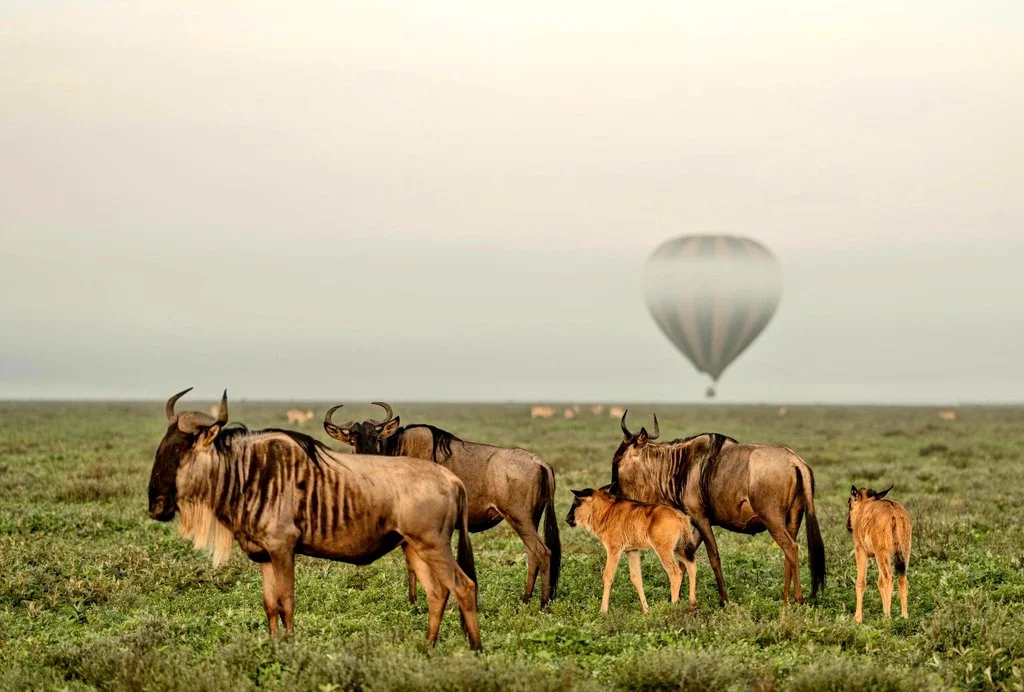
Observing the wildebeest migration in February is excellent in the Ndutu Conservation Area (Ndutu Plains). February marks the peak calving season in Ndutu with a daily birth record of about 8,000 calves. During the wildebeest migration, an annual record of over 500,000-800,000 wildebeest calves are born, with the largest birthing event often experienced from January to early March. The calving season intensifies with nature enthusiasts having the possibility to view over 50 new births on a single day. Embarking on the wildebeest migration in February with a local expert also allows you to witness the Big cats, especially in the Ndutu region.
The Ndutu region has a higher concentration of big cats due to the abundant presence of food for them to hunt. Unlike mature wildebeests, calves are easier to grab. February is generally the best month of the year to experience the best of the wildebeest migration.
What You’ll See During the Calving Season
February comes with anticipation, but here are key highlights, including where the wildebeest migration can be witnessed, calving season, predator watching, and more. Here is a complete breakdown;
Where to See the Herds in February
Vast herds of wildebeest assemble around the Ndutu and Ngorongoro Conservation Area. The Ndutu region is one of Tanzania’s most endowed wildlife areas and is located along the border with the Serengeti and Ngorongoro Conservation Area. Ndutu is most popular for its epic calving season and powerful predator sightings.
Calving Spot
Ndutu is undoubtedly the birthing ground/site for the wildebeest migrations. An estimated 800,000 wildebeest calves are born in the Ndutu area and can be observed from January to April. February is the peak month to observe 1000s of zebras, gazelles, and wildebeests with their playful calves.
Predator Hotspot
Ndutu Conservation Area is an ideal converging spot for most predators. During the calving season, Ndutu records the highest concentration of predators that come to hunt for the wildebeest and other mammals. The presence of an abundant food supply attracts more predators, including cheetahs, lions, hyenas, and more.
The Ndutu landscape is characterized by vast grasslands, marshes, acacia woodlands, and soda lakes, including Lake Ndutu and Masek. Ndutu is best explored on a guided game drive to witness the Great Migration, and hot air balloon tours to experience the breathtaking views of the vast plains and wildlife.
The Weather Conditions in February in the Serengeti
In February, Serengeti experiences summer weather conditions. February marks the third warmest month of the year on the travel calendar of Serengeti. Temperatures vary, ranging from 29 degrees Celsius during the day and 16 degrees Celsius during the night. February is also categorized as the 4th rainy month of the year in the Serengeti, and by this period, the park receives approximately 99mm of rainfall. The rains extend for about 13 days, but with moderate temperatures that allow visitors to experience the best of game viewing.
Regardless, traveling to explore the Serengeti on the wildebeest migration in February requires you to be more equipped to guarantee a successful great migration adventure. The warmest months in the Serengeti are from January to March, and also from October. During the warm months, temperatures can rise to 28 degrees Celsius.
The 13 days of rainfall come with an average precipitation of up to 100mm. According to the cumulative index, there are approximately 142 rainfall days per year, with a total precipitation of 840mm. Serengeti also experiences 12 hours or more of daylight with sunrise often recorded at around 6:47. The sunset starts from 19:00. Towards the end of February, sunrise can be at 6:48 while the sunset starts at 18:57.
Two Iconic East African Destinations for the Great Wildebeest Migration
The iconic East African destinations to consider a must-visit to witness the Great Wildebeest Migration include Kenya and Tanzania. In Kenya, the excellent destination to experience the Great Migration is the Masai Mara National Reserve/Park. In Tanzania, visit the Serengeti National Park. The Masai Mara and Serengeti form an exceptional ecosystem, with the Great Wildebeest Migration being a special experience to enjoy.
The Masai Mara of Kenya
The Maasai Mara National Reserve is located in Narok County, southwestern Kenya, approximately 224 km from the heart of Nairobi. The Masai Mara lies at the border with the Serengeti National Park in Tanzania. The Masai Mara alone extends 1510 sq. km, mainly comprising the vast savanna plains.
Visit the Masai Mara to witness not only the powerful migration but also lots of other wildlife, including zebras, giraffes, elephants, buffaloes, leopards, lions, and more. The reserve’s diverse wild animals concentrate around the breathtaking landscapes characterized by grassland plains. The best location to witness the Masai Mara wildebeest migration is the Mara River. The Mara River lies at the Kenya-Tanzania border and is most popular for its powerful river crossing experience.
The Mara River migration experience is excellently enjoyed from July to October. These peak migration months are characterized by a vast profusion of wildebeests that cross from the verdant Serengeti-Masai Mara ecosystem. The Mara River is also known for its huge concentrations of crocodiles, as well as numerous predators that dominate the nearby Mara River.
Serengeti –Tanzania’s Finest Savanna Park
Serengeti National Park straddles the Northern circuit of Tanzania, the Eastern part of the Mara region. This Park sits on an area of 14,763 sq. km and is an ideal place to witness the Great wildebeest migration on a Tanzania wildlife tour. It is a UNESCO World Heritage Site, most popular for its abundant wildlife, including wildebeests, zebras, giraffes, and the majority of the Big Five.
While in the Serengeti for the wildebeest migration, the key areas of interest include the Grumeti River. Crocodiles infest the Grumeti River, and the region also serves as an excellent breeding ground for wildebeests. At Serengeti, you can also explore places like the Lobo Hills. If you are interested in buffaloes, consider exploring the granite outcrop of the Moru Kopjes.
The abundant wildlife to be found in the Serengeti includes cape buffaloes, elephants, rhinos, leopards, lions, and, along the migration journey, several grazers can be expected. During the annual wildebeest migration in the Serengeti, you can expect to encounter millions of wildebeests, Thomson’s gazelles, common elands, and Grant’s zebras.
The Best Ways to See the Great Migration During Calving Season
The major options to consider for an optimal migration experience in February include guided game drives and a hot air balloon ride. The game drives offer an unforgettable encounter with large herds of wildebeest as they traverse the savanna plains and also the riverbanks. A 4×4 tourist vehicle is perfect for visitor navigation in the plains of Serengeti while observing the gigantic wildebeest migration in February.
The hot air balloon offers the thrilling view of 1000s of wildebeests as they embark on their migration in search of pasture. The ideal hot air ballooning to witness the migration in the Serengeti is best done in Ndutu from December to March.
The target locations to experience the remarkable wildebeest migration include the Northern Serengeti near the Mara River, particularly the Kogatende and Lamai, the Ndutu plains, and other surrounding areas.
Is February a Good Time to See the Great Migration?
From January to February, large herds of wildebeest converge around the short-grass plains. That is the lower northern slopes of the Ngorongoro Crater to the Olduvai Gorge. Witnessing the wildebeest migration in February is possible for any nature lover, especially if you are interested in the calving experience or watching wildebeests and the predators.
February brings the Wildebeest Migration, a stunning blend of new life, predator drama, and breathtaking scenery. For those on safari, it’s one of the top months to experience nature’s raw beauty firsthand.
With Native Africa Tours, you can design a customized safari that puts you right in the midst of the action in Serengeti and Ndutu. Book your February wildebeest migration safari today and witness Africa’s most incredible wildlife event up close.