
Wildebeest Migration in March: Calving Season and Safari Highlights
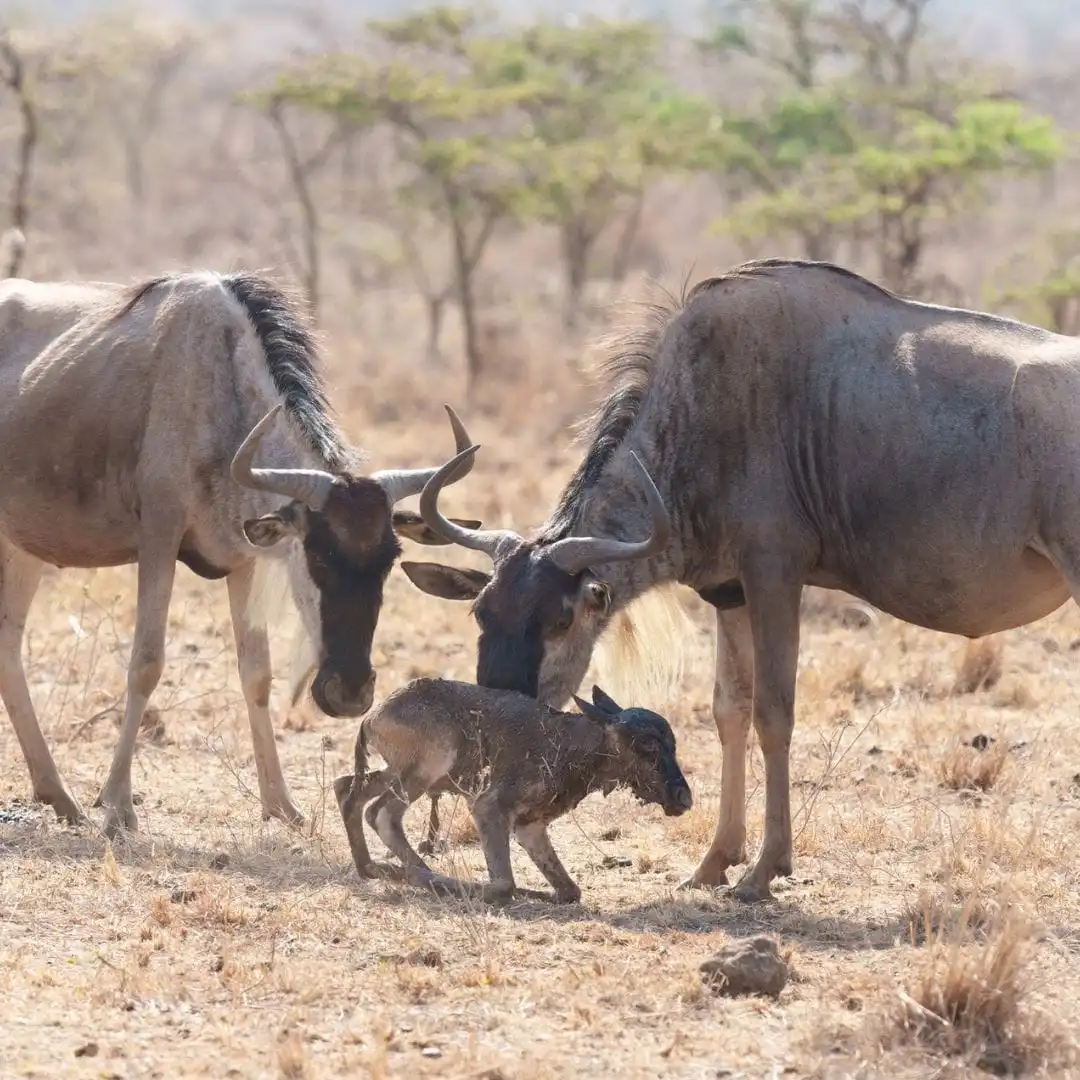
The Wildebeest Migration in March is one of the most dramatic events in the African safari calendar. March marks the peak of calving season for wildebeests. During this period, many newborn calves join the herds in the Ndutu and southern edge of Serengeti National Park, making these areas the focal points for migration adventures. Nutrient-rich grasses, fueled by the March rains, attract large concentrations of wildebeests to Ndutu and the southern Serengeti. Thousands of calves are born daily, accompanied by increased predator activity.
Being newly born, calves move slowly, making them more vulnerable to predators such as cheetahs, leopards, and lions. Late March is when the wildebeest start moving towards the North and the Central Serengeti National Park. Wildebeests move in search of more palatable pasture and water.
Where to See the Herds in March
The central locations to witness the March Migration include the Ndutu plains, Southern Serengeti, and Maswa Game Reserve. The Ndutu Plains are an excellent spot to witness the calving/birthing season. Huge concentrations of the wildebeest are confined in the Ndutu plains, a region that also makes up the Northern section of the Ngorongoro ecosystem. It extends up to the Southern part of the Serengeti National Park, the section where Serengeti and Ngorongoro meet.
Visiting the Ndutu in March allows you to encounter a wide range of other wildlife. March is when most resident animals congregate around the Ndutu region, including impalas, giraffes, foxes, cheetahs, lions, jackals, genet, and hyenas.
Located near the Serengeti, Maswa Game Reserve is one of Tanzania’s top wilderness spots. It’s known for its vast landscapes and incredible wildlife. Visitors can experience unbeatable game drives and guided walking safaris. The reserve also plays a crucial role during the wildebeest calving season. From January to May, massive herds of wildebeest gather here to breed and give birth. The nutrient-rich grasslands provide the perfect food source to support this natural wonder.
Maswa offers a safe birthing ground to wildebeests between March and May. The safe custody provided by Maswa Reserve allows the newly born calves to grow to maturity. A section of this reserve falls in the Southern part of the Serengeti, making it an integral region of the migratory path, attracting huge concentrations of wildebeests and zebras.
The Southern Serengeti National Park forms the heart of the Great Migration from December to May and is an incredible birthing/calving spot. Countless newly born calves from zebras, gazelles, and wildebeests can be spotted during the March wildebeest migration. The migration cycle begins the northward journey from the southern Serengeti as they head to the Central plains.
What should you expect on the wildebeest migration in March?
Calving/Birthing Season
March is one of the best months of the year in the migration cycle when visitors can witness thousands of calves. The calves comprise mainly zebras, wildebeests, gazelles, and others. Many predators also congregate in the birthing areas to hunt, making newborns particularly vulnerable to predation.
Could you observe the High Predator Activity?
In March, travelers often spot lions, cheetahs, wild dogs, and leopards, which are the main predators of the migration. During the wildebeest migration, visitors watch these predators hunt actively across the plains.
Presence of Abundant Pasture and Water
March is characterized by high rainfall, a factor that aids high pasture growth rates. The availability of nutritious grass in the pasture attracts several wildebeests in the Ndutu area, making it an ideal spot to explore a wide range of these amazing mammals.
Why Travel in March for the wildebeest migration
March is an ideal month to enjoy a budget-friendly wildlife tour. It is the low season, characterized by fewer visitors. The accommodation rates often fall during the peak dry season or peak wildebeest migration season. Visiting the Serengeti National Park around March as a budget traveler can save you a lot while you realize your lifelong dream in the wilderness.
Abundant photographic opportunities – Not only do you get incredible moments to capture calves, but also breathtaking landscapes. Most parts develop shorter grass, allowing wildlife to be clearly spotted, making it excellent for capturing both during the photography session. If you enjoy photography, then you have a reason to contact Native Africa Tours to begin planning and booking your memorable migration safari to Serengeti National Park or the Masai Mara.
Safari Lodges and Camp to Stay (accommodation in Ndutu)
The Ndutu and the entire southern Serengeti feature a wide range of accommodation options worth booking for an overnight stay. These lodges are situated in prime locations, providing guests with easy access to the calving season and wildebeest migration in the Ndutu plains. They include camps and safari lodges of budget, midrange, and luxury classes.
Lake Ndutu Luxury Tented Lodge
This is a classic accommodation option, perfect for an overnight stay in Ndutu. It is an ideal place to retire for a night for tourists interested in exploring the Serengeti ecosystem, the iconic migratory spot for zebras and wildebeests. The resort is strategically set in the region, offering access to the Ndutu, an area with huge concentrations of predator species. If your interest is mainly the calving season, still, Lake Ndutu Luxury Tented Lodge has you sorted. Visitors who book this lodge for an overnight stay can also connect to the breathtaking Ngorongoro Crater, Kusini, and Moru in the Southern part of the Serengeti.
Ndutu Safari Lodge
This is located 1 km off from the Ndutu Airstrip and is an ideal place to stay if you want to explore both the Ngorongoro Conservation Area. The luxurious Ndutu Safari Lodge features up to 34 en-suite cottages built using local materials and fitted with private verandas, offering excellent views of Lake Ndutu.
Lake Masek Tented Lodge
This lodge, built on the scenic shores of Lake Masek, offers a peaceful setting for visitors on holiday in Ndutu. It is strategically set for you to begin your wildlife excursions in the region with easy connections.
Sanctuary Kusini Camp
Travelers can reach it within half an hour from the Serengeti South Airstrip, where it sits on a scenic rocky outcrop. The safari camp is situated directly on the wildebeest migration path, providing guests with front-row access to the herds.
Ndutu Kati Kati Tented Camp
The Camp offers excellent accommodation services to guests with plans to explore the southern Serengeti. It is strategically built in the area where you can observe the wildebeest migration, plus other various wildlife. The key highlights awaiting you at the Ndutu Kati-Kati Camp include the Great wildebeest migration, calving/birthing season, and mesmerizing game drive experiences.
How to witness the wildebeest migration in March
Book a migration tour in March with Native Africa Tours and be part of the thrilling wilderness experiences. To experience the March migration, expect to embark on the guided game drives or hot air balloon excursions.