
Wildebeest Migration in October – Where to See the Herds and What to Expect
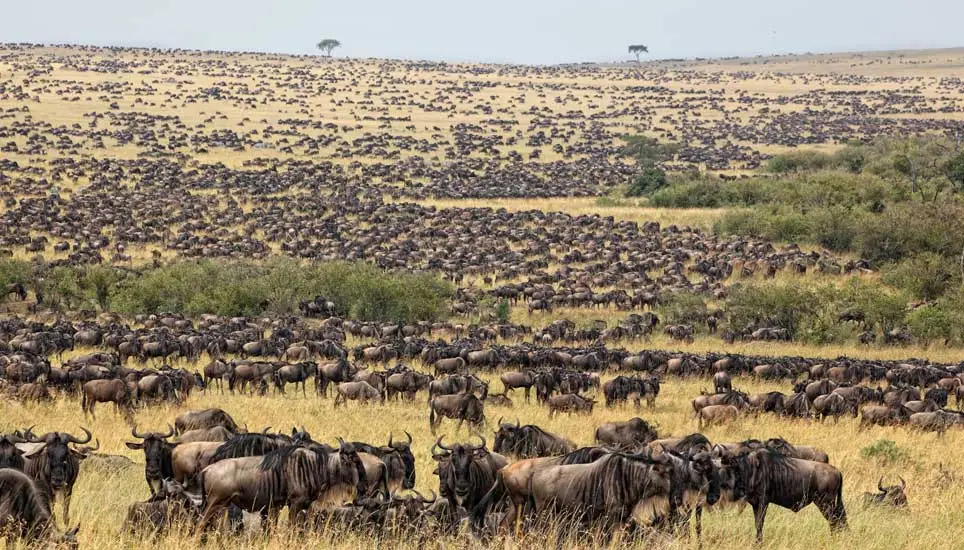
Wildebeest migration in October marks the start of the end of the peak season. By October, the largest herds of the wildebeest would have embarked on the journey to the South. The vast collection of expectant wildebeest flocks to the Ndutu Conservation Area, where the calving takes place. They begin moving to the Ndutu in early October, and to the Eastern part of the Serengeti, the movement takes place throughout October. They move Eastwards and the Central Serengeti mainly for the short rains.
Wildebeest begin drifting from the East-Central Serengeti shortly after the rains towards the end of October. By early November, they head towards Kenya and the Eastern Serengeti through the Namiri Plains. This is also an incredible spot to locate most of the cheetahs. Are you interested in experiencing the wildebeest migration in October and are not sure of where to start from? Then you’ll be able to take a look at our comprehensive guide, which delves deeper into the Great Migration in October.

Where to find the Great Migration in October
The Eastern and Central regions of the Serengeti offer excellent wildebeest sightings in October. A massive collection of wildebeest herds congregates around these regions in October, making them focal points for encountering your favorite mammals.
Still, in October, it is possible to enjoy the Mara River crossing, but in the Northern Serengeti. Some herds of wildebeest that remain behind can be spotted as they also cross the river as they head to the South.
What are the Best Places to Visit in October, aside from the Serengeti?
It is possible to combine the wildebeest migration in October in Serengeti and the nearby parks in the Northern tourist circuit. They include the Ngorongoro Crater Conservation Area, most popular for its enriching game drives. The Ngorongoro Conservation Area is home to the unique Ngorongoro Crater, which is also listed among the world’s wonders. The Ngorongoro Crater remains one of the few intact volcanic calderas on the planet, and at its base, an extensive collection of mammals exists.
-
Ngorongoro Conservation Area
Ngorongoro can be combined with Serengeti migration safaris. At the Ngorongoro, expect to encounter a diverse array of wildlife, including elephants, black rhinos, leopards, cheetahs, hyenas, hippos, lions, zebras, gazelles, wildebeests, and more than 500 bird species. The birds of Ngorongoro include the Egyptian goose, spur-winged goose, black kite, Kori bustard, white-eyed slaty flycatcher, and superb starling; Ngorongoro Conservation Area shelters diverse water birds, forest species, grassland avifaunal species, and migratory species.
-
Lake Manyara National Park
Lake Manyara National Park with the Serengeti migration safari. Get a chance to explore the abundant wonders of the spectacular Lake Manyara National Park, including the tree–climbing lions, wildebeests, hippos, giraffes, baboons, zebras, impalas, warthogs, hyenas, klipspringers, and more. Lake Manyara features open savanna plains, woodlands, and forests.
Over 390 birds make Lake Manyara a vital bird area in Tanzania, and they reside in the varying habitats. The Park’s bird list comprises migratory and resident avifauna species. They include the African jacanas, African hawk eagle, silvery-cheeked hornbill, Narina trogon, blacksmith lapwing, superb starling, goliath heron, Vulturine Guineafowl, pied avocet, blue-spotted wood-doves, Shelley’s francolins, double-banded courser, Egyptian vultures, shoebill storks, and black-headed mountain greenbul. At Lake Manyara National Park, expect to experience the best game drives (day and night drives), nature walks, and birding.
-
Tarangire National Park
Located in Tanzania’s Manyara Region, Tarangire National Park is an ideal addition to a safari focusing on the Serengeti wildebeest migration. Spanning 2,850 sq. km, the park was founded in 1970.
What makes Tarangire stand out is its incredible Big Five game viewing, plus massive herds of elephants. You’ll also find giant baobab trees and a wide variety of bird species, with over 550 species in the park.
Visitors can take in thrilling game drives with chances to spot wild dogs, zebras, lions, buffaloes, leopards, and vervet monkeys. Birdwatchers will be just as impressed, with species like mousebirds, ashy starlings, yellow-collared lovebirds, lilac-breasted rollers, freckled nightjars, European nightjars, coqui francolins, secretary birds, northern white-crowned shrikes, ostriches, and white-faced whistling ducks.
With its unique blend of landscapes, wildlife, and birdlife, Tarangire is a standout safari destination in Tanzania.
-
Lake Natron
Located in Tanzania’s Northern Circuit, near the border with Kenya, Lake Natron is a mineral-rich soda lake. Its alkaline conditions create a one-of-a-kind ecosystem that’s home to a diverse array of birdlife.
It’s one of East Africa’s most important breeding areas for lesser flamingos. Big flocks of pelicans, Kori bustards, secretary birds, knob-billed ducks, Cape teal, and white-faced whistling-ducks gather here, too. Visitors can also see red-billed ducks, northern shovelers, Namaqua doves, ring-necked doves, mourning collared-doves, and chestnut-bellied sandgrouse.
-
Masai Mara National Reserve
The Masai Mara Reserve is a top spot to catch the wildebeest migration in East Africa. It’s famous not just for the river crossing, but also for its incredible wildlife diversity. Travelers can see cheetahs, hippos, hyenas, zebras, giraffes, crocodiles, gazelles, buffaloes, warthogs, and over 500 species of birds.
October and April are the best times for birdwatching in the Masai Mara, as migratory species gather in the reserve. The area’s lush landscapes create habitats for well-known birds like the African fish eagle, common ostrich, bateleur, secretary bird, southern ground hornbill, saddle-billed stork, martial eagle, European bee-eater, malachite kingfisher, giant kingfisher, pygmy kingfisher, and Usambiro barbet.
With its unique mix of predator sightings, diverse wildlife, and incredible birdlife, the Masai Mara is a standout safari destination in Africa.
Experience the best Serengeti-Mara safari in October.
Guided game drives and balloon safaris offer an excellent option to experience the wildebeest migration. Using a 4×4 safari vehicle, visitors can safely connect to the focal points to witness the great wildebeest migration. You can witness the river crossing in the comfort of your 4WD safari car, and balloon tours offer the best aerial game viewing opportunity. You watch abundant wildlife sprawling in the vast savannas of the Serengeti and Mara. The hot air balloon excursions can be enjoyed during the morning session or the afternoon/evening.
Where to Stay on a Safari to Witness the October Migration
Plan for your overnight stay in advance. Don’t wait till the actual date of visiting the Serengeti/Masai Mara to book your lodge or safari camp. The popular lodges and camps to consider for your overnight include the Serengeti Serena Lodge, Mwiba Lodge, Singita Milele, Singita Sasakwa Lodge, Sanctuary Kichakani Camp, Sayari Camp, Mbuzi Mawe Serena Camp, and more.
At the Masai Mara, the standard lodges to book for your overnight stay include Mara Serena Lodge, Kichwa Tembo, Rekero Camp, Governor’s II Moran Camp, Mara Plains Camp, and more.
How to reach Serengeti & Masai Mara
Serengeti and the Masai Mara are suitably located with flexible access options available for tourists. By road, it takes approximately 6-7 hours to reach the Serengeti, especially if you are departing from Arusha. Upon arrival, you can have entry to the Serengeti Game Park via the Klein’s gate, Naabi gate, Ndabaka, Handajega gate, and others.
Airstrips that serve the Serengeti include Lobo Airstrip, Kogatende, and Seronera. So that you know, you should take a flight to the aerodrome offering easier access to the lodge you pre-booked or where your safari activities are to be enjoyed.
Getting to the Masai Mara takes just 5-6 hours starting from Nairobi city. If you plan to take a flight, then be set to land at the Siena, Ol Kiombo, Keekorok, or Serena Airstrip.
Conclusively, witnessing the wildebeest migration is possible even in October. The most essential part is to ensure that the time is right and you visit the right spots. But with the local experts like Native Africa Tours, you don’t need to worry about organizing a successful migration safari. Check throughout rewarding migration safari packages and book a dream trip that lets you witness the world’s spectacle at a pocket-friendly cost.